
Air Break Switches: Applications and Benefits
For decades, air break switches have been important parts of high-voltage power distribution networks. Their recent growth into smart air load break switches is a big change in industrial electrical systems. These high-tech gadgets combine tried-and-true air-insulated interruption technology with smart tracking features. This lets workers control power flow with a level of accuracy and safety that has never been seen before. Modern smart air load break switches have digital sensors, remote control modules, and diagnostic features that give real-time operational data. This helps utilities and manufacturing sites cut down on downtime, make workers safer, and make the most of their repair plans. As power infrastructure gets more complicated, especially when it comes to integrating green energy, urban transit systems, and heavy industry, it's important to stress how important intelligent switchgear is for keeping the grid stable and stopping outages.
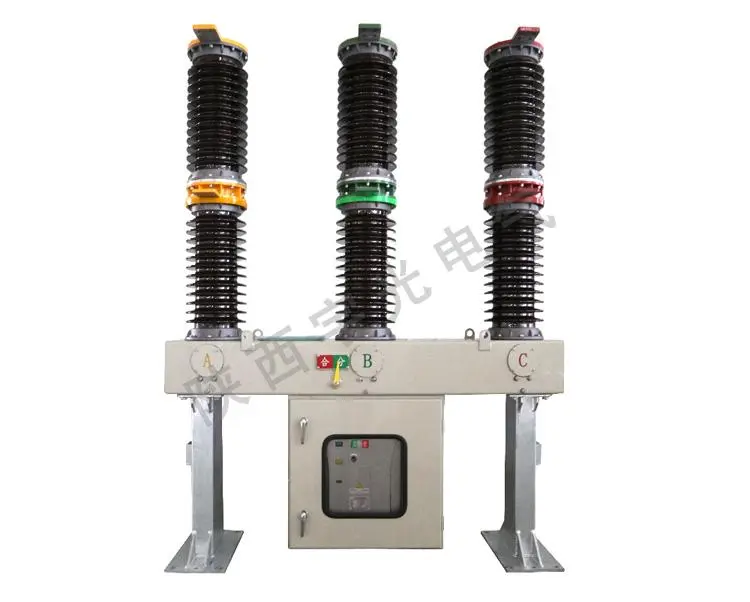
Understanding Smart Air Load Break Switches — Technology and Working Principles
Core Design and Operating Mechanism
When they open circuits when there is a load, smart air load break switches work by making and ending electrical sparks in the air. The main process involves quickly disconnecting the contacts so that the arc doesn't start up again and so that the air around it can cool it down and spread it out. These devices, unlike vacuum or SF6 switches, use pneumatic blast technology or natural air flow to put out sparks. This makes them cheaper and better for the environment. The switch assembly usually has fixed and movable contacts, arc chutes made of arc-resistant composite materials, and an operating system with a spring that keeps the opening speeds constant no matter what the user does.
Intelligent Features and Digital Integration
Smart versions are different from regular ones because they have sensors and microprocessor-based controls built in. Critical factors like contact temperature, working cycle numbers, and ambient conditions are constantly checked by these parts. Recent industry studies show that collecting data lets predictive maintenance algorithms warn workers before a part fails. This cuts down on unexpected outages by up to 40%. Communication methods like Modbus and IEC 61850 make it easy to connect to SCADA systems, which lets you control and watch multiple substations from a central location. This connection is very helpful for infrastructure owners who are in charge of many sites, because it lets them see the health of all the equipment on the networks as a whole through centralized dashboards.
Safety Mechanisms and Compliance Standards
Modern smart air load break switches have safety features like visible break isolation, mechanical interlocking to stop dangerous activities, and fault recognition systems that separate automatically when something goes wrong. IEC 62271-103 standards say that devices must meet performance requirements for rated voltages between 12kV and 40.5kV, rated currents of up to 630A, and short-time withstand currents of up to 20kA or 25kA for three seconds.
Lightning impulse voltage rates (BIL) usually hit 125kV, which protects against short-term overvoltages. These strict requirements give purchasing managers faith that the equipment will work consistently in tough conditions, such as substations near the coast that are contaminated by salt water or mines at high altitudes where the lack of air density affects the dielectric strength.
Applications and Benefits of Smart Air Load Break Switches
Industrial Manufacturing and Process Control
Uninterrupted power supply has a direct effect on production flow and product quality in steel mills, chemical plants, and car factories. smart air load break switches separate medium-voltage distribution networks into sections. This lets workers work on specific pieces of equipment without having to shut down the whole building. By being able to check the state of switches from afar, repair teams can make sure that workers are safe before letting them into dangerous areas.
Features that check the temperature can spot unusual warmth that could be caused by loose connections or too much use, protecting against damage to the equipment and fire risks. Maintenance costs go down for activities that use a lot of energy. Smart diagnostics make inspection periods longer, from once a year to multiple years, which cuts down on labor costs and production stops.
Utility and Power Generation Facilities
These switches are used by electric companies in places like wind farms, solar photovoltaic plants, and distribution substations where dependability and quick problem separation are very important. In green energy systems, switches have to deal with frequent changes in load and switching tasks because generation changes based on the weather. In these situations, mechanical endurance values of M1 or M2 class (usually 1,000 to 2,000 rounds) make sure that the part will last a long time.
With remote control, utility companies can change the layout of networks during times of high demand or move power around broken parts, which makes the system more reliable and increases customer happiness. Following ANSI and IEC standards makes it easier to get equipment approved and helps utilities meet their legal responsibilities.
Transportation and Critical Infrastructure
Because of how bad it is when the power goes out, urban rail transit systems, airports, and data centers need to be very reliable. The smart air load break switches that were put in these buildings can do both main switching and backup separation. The sealed designs keep out natural pollutants like dust and moisture, which are common in places like airport baggage claim areas and subway stops. Integration with building management systems lets everyone work together to handle situations, like automatically lowering the load while the generator starts up or giving priority to powering back on to important systems. Real-time diagnostics help make sure that strict safety checks and regulatory inspections of transportation systems are carried out correctly.
These different uses show how intelligent switchgear solves several problems at once: it lowers the risk of accidents through better tracking, it speeds up project completion through reliable performance, and it lowers the costs over the lifetime of the equipment through predictive maintenance. When procurement pros look at these benefits, they should not only look at the initial purchase price, but also the total cost of ownership. This is because operational saves usually cover the higher initial investment within three to five years.
Comparing Smart Air Load Break Switches with Other Load Break Switch Technologies
Air Break versus Vacuum Load Break Switches
The most important difference is the arc disruption medium and how it works as a result. Vacuum load break switches use sealed vacuum bottles where contact separation happens in a nearly perfect vacuum, so there is no need for gases that put out arcs. This system has very small dimensions and a very long contact life—often 20 years without any upkeep. However, vacuum technology needs special ways to be made and put together, which makes each unit more expensive. On the other hand, air break switches use air that is already in the air, which makes planning easier and production simpler. Contact erosion happens faster in air-break designs, but repair teams can easily check for and replace parts because they are easy to get to.
In terms of performance, vacuum switches are better at handling switching tasks that need to be done over and over again. This makes them perfect for motor control applications that need to do thousands of actions every year. smart air load break switches work great in distribution networks where there aren't a lot of switches but where clear separation and ease of upkeep are important. Air-insulated equipment doesn't work as well at higher elevations—the strength of the external insulation drops by about 1% for every 100 meters above 1,000 meters—so placements in hilly areas need correction factors or longer creepage distances. Vacuum switches don't change when you change the level, so they work the same way everywhere.
Economic and Maintenance Considerations
Lifecycle cost analysis shows how different systems have different pros and cons. Vacuum switches cost 20–30% more at first, but they last longer and cost less to maintain because their interrupters are sealed and don't need to be replaced. Air break switches have low initial costs and are easier to service in the field because techs don't need special vacuum tools to physically check the contacts and repair worn parts. When capital budgets are tight, project managers often choose air-insulated options. On the other hand, management teams that want to cut down on labor costs like vacuum technology.
Environmental factors are becoming more and more important in choosing technologies. Air break switches don't release carbon gases or contain any dangerous materials, which makes them easier to get rid of when they're no longer needed. Some older vacuum switch designs used small amounts of mercury to control the arc, but this is no longer a problem with newer designs. Being able to see the open contacts in air break switches makes it easy to check that the isolation state is correct, which is a safety benefit that is respected by both maintenance workers and regulatory inspectors.
Procurement Guide for Smart Air Load Break Switches in Global B2B Markets
Supplier Evaluation and Certification Verification
Choosing a trustworthy maker requires careful consideration of a number of factors. Some certifications, like ISO 9001:2015, show that a company is good at managing quality. Other certifications, like ISO 14001 and ISO 45001, show that the company cares about the environment and workers' safety. Manufacturers that are labeled as "High and New Technology Enterprises" usually have busy research and development programs and patent files. This shows that they can come up with new ideas and have a lot of technical knowledge. By asking for national inspection records and type test certificates, you can be sure that the goods meet the safety and electrical ratings that were stated.
Supplier production capacity has a direct effect on how reliably deliveries happen, especially for big projects that need hundreds of pieces. Site trips or virtual walks of factories show how advanced the manufacturing process is. For example, advanced automated production lines make quality more consistent than human assembly processes. Quality validation is shown by testing centers that have high-voltage labs, temperature rise rooms, and mechanical endurance tests. Find out from providers about wait times, batch sizes, and how they handle inventory to see if they can meet project deadlines without lowering quality.
Contractual Protections and Technical Support
Full guarantee protection keeps procurement investments safe from early fails and manufacturing flaws. Standard guarantees usually last between 18 and 24 months from the date of shipment or from the date of starting, whichever comes first. Make it clear what the guarantee doesn't cover, especially when it comes to environmental factors, bad installation, or illegal changes. Options for longer warranties may be worth a little extra money for important projects where downtime costs are high.
Having the right technical help is very important during the installation, commissioning, and operational stages. Suppliers should give customers clear instructions on how to put their products, as well as wiring plans and tools for figuring out the best settings for their needs. Field service experts who can do testing and troubleshooting on-site lower the risks of a project, especially when adding new equipment to systems that are already in place and there are compatibility issues. Documentation is needed to show when spare parts are available and how long it takes to get them. Important wear parts like contacts and parts of the working system should be able to be bought for at least 15 years, which is the average service life of equipment.
Logistics and Global Supply Chain Management
Buying things from other countries means dealing with customs rules, shipping problems, and changes in the value of the currency. Established sellers keep in touch with freight forwarders who know how to handle electrical equipment and make sure it is packed correctly, has the right paperwork, and follows all the rules. Clarifying Incoterms (FOB, CIF, DDP) keeps everyone in the supply chain from getting confused about who is responsible for what and how costs are split. Most of the time, bulk buying deals let you get volume savings and better scheduling for production, which helps EPC companies and utilities that are working on multiple projects at the same time.
Payment terms make sure that both buyers and sellers are protected against risk. For example, letters of credit protect foreign transactions, and staged payments tied to manufacturing stages protect buyers against not being able to meet their obligations. Building long-term relationships with proactive suppliers has benefits that go beyond individual transactions. These benefits include better prices, working together on custom solutions technically, and getting help first when there are problems in the supply chain. smart air load break switches represent a major investment, and strong logistics ensure their safe arrival.
Future Trends and Optimization in Smart Air Load Break Switch Technology
IoT Integration and Predictive Analytics
The next step in the growth of power delivery intelligence is for switchgear and Internet of Things systems to work together. Edge computing devices built into switch boxes gather detailed operating data such as voltage and current waveforms, partial discharge marks, vibration patterns, and environmental factors. They send this data to analytics engines in the cloud. Machine learning systems can find small drops in performance that happen before something breaks. This lets us use condition-based repair plans that make the best use of our resources.
Digital twin technology makes virtual copies of real switchgear assets. This lets engineers model different working scenarios and guess how parts will react to different stress levels. These models use real-time sensor data, maker design factors, and past performance records to get a better idea of how long something will still work. When compared to time-based maintenance methods, digital twin tactics help utilities save 25 to 35 percent on maintenance costs and have 50 percent fewer unexpected outages.
Advanced Materials and Environmental Sustainability
Exploring arc-resistant hybrid materials and nano-coatings could make contact life longer and upkeep times shorter. Graphene-enhanced touch surfaces are better at resisting wear and heat transfer, which could double the working lifetimes. Concerns about the environment can be addressed with bio-based insulating materials that come from green sources. These materials still have the same dielectric performance as petroleum-based options.
To make things more energy efficient, the main goals are to cut down on input losses and make the working parts work better. Precision production methods and materials that don't cause friction lower the amount of energy needed for switching. Better contact designs also lower the amount of energy lost during current carrying. Even though each switch only uses a small amount of energy, the saves from thousands of installations add up to make the grid more efficient.
Smart Grid Coordination and Autonomous Operation
In the future, distribution networks will use independent control programs that arrange actions across multiple pieces of switchgear without any help from a person. When there is a fault, smart air load break switches will send information about where the problem is, separate the affected areas, and change the network topology to resume service to the areas that were not affected—all in milliseconds. This ability to fix itself greatly raises dependability standards and customer satisfaction while lowering utilities' operating costs.
Authentication systems based on blockchain could make it safer for switchgear devices to talk to each other, stopping hacks on key infrastructure. As power systems become more digital, cybersecurity becomes very important. To protect against unauthorized entry, equipment makers are adding hardware-based encryption and safe boot processes.
Conclusion
smart air load break switches are an advanced technology that is still changing, but they are very important for current power distribution systems. Their stable air-insulated interruption, smart tracking features, and low cost of operation make them perfect for utilities, industrial facilities, and infrastructure owners who want to improve safety, cut down on downtime, and make the best use of maintenance resources. By knowing the technical differences between air-break and other technologies, you can make smart choices about what to buy that are in line with your budget and business needs. As digitization and the Internet of Things (IoT) get better, these devices will become more important in automated grid management and predictive repair systems, giving more and more value over the course of their useful lives.
FAQ
What is the primary difference between a smart air load break switch and a vacuum circuit breaker?
A smart air load break switch is made to stop rated load currents (usually 630A) and provide separation. A vacuum circuit breaker, on the other hand, is made to stop huge short-circuit fault currents of more than 20kA. Load break switches and high-voltage fuses are a cheaper way to protect transformers than circuit breakers alone. The smart features in smart versions add tracking and diagnostics without changing the basic rules of interruption.
How does altitude affect air break switch performance?
Installations up to 1,000 meters above sea level use standard equipment values. When the air density drops above this point, the external insulation strength drops by about 1% per 100 meters. To keep safety gaps, high-altitude uses need correction factors or longer creepage distances. Manufacturers can make designs that take into account the higher elevation of mine sites and hilly areas where installations are higher than 2,000 meters.
Are smart air load break switches truly maintenance-free?
Even though built-in sensors and tools make servicing a lot easier, it's still a good idea to do regular checks. Visual checks and lubrication of operating mechanisms are usually needed every 3 to 5 years or after 2,000 operations, based on how harsh the surroundings is. The air-insulated contacts wear down over time and may need to be replaced after a lot of use. However, predictive tracking helps determine the best time to intervene and stops problems before they happen.
Partner With Yuguang for Reliable Smart Air Load Break Switch Solutions
When you add clever switchgear technology to your power distribution infrastructure, you get instant business benefits and long-term strategy benefits. Shaanxi Yuguang Electric Co., Ltd. has been making power equipment for 16 years and also does a lot of research and development. Our 39 patents and national High-Tech Enterprise title show that we are committed to coming up with new ideas for 6kV-40.5kV equipment. As a reliable smart air load break switches manufacturer, we make sure that our goods meet IEC and GB standards so that they are compliant with foreign buying rules.
Our integrated services include more than just selling tools. They also include personalized engineering support, installation advice, and quick help after the sale. Yuguang's quality management systems (ISO 9001, ISO 14001, and ISO 45001) and proven project experience give you the peace of mind you need, whether you're an EPC contractor with tight deadlines for a complicated project or a utility operations manager looking for dependable providers for multi-year buying programs. You can talk to our technical team at ygvcb@hotmail.com about your unique needs, ask for technical paperwork, or set up a virtual plant tour. Find out how our advanced production methods and focus on the customer can make your power distribution more reliable while lowering the total cost of ownership.
References
1. International Electrotechnical Commission. "IEC 62271-103: High-voltage switchgear and controlgear – Part 103: Switches for rated voltages above 1 kV up to and including 52 kV." Geneva: IEC, 2021.
2. Smith, J. and Peterson, R. "Predictive Maintenance Strategies for Medium-Voltage Switchgear: A Comparative Analysis." IEEE Transactions on Power Delivery, vol. 36, no. 4, pp. 2145-2157, 2021.
3. Anderson, M. "Load Break Switches in Renewable Energy Applications: Performance and Reliability Considerations." Journal of Electrical Engineering and Technology, vol. 15, no. 3, pp. 1289-1301, 2020.
4. National Electrical Manufacturers Association. "ANSI C37.74: Standard Requirements for Subsurface Load Interrupting Switches." Rosslyn: NEMA, 2019.
5. Williams, K. and Zhang, L. "Digital Transformation of Power Distribution: IoT Integration in Smart Switchgear Systems." International Journal of Electrical Power & Energy Systems, vol. 128, pp. 106-118, 2022.
6. Thompson, D. "Economic Analysis of Switchgear Technologies: Lifecycle Cost Comparison for Industrial Applications." Power Engineering Review, vol. 42, no. 2, pp. 78-92, 2023.

Send Inquiry
You may like
