
Arc Extinguishing in Vacuum Circuit Breakers
Arc extinguishing in vacuum circuit breakers is an important technology that stops the flow of electricity safely in high-voltage situations. The arc extinguishing process in a vacuum circuit breaker happens when electrical contacts separate in a vacuum, making an ionized plasma channel that needs to be stopped quickly. This advanced interruption mechanism makes sure that power is reliably distributed throughout industrial facilities. This keeps mission-critical applications running and prevents damage to equipment.
Understanding Arc Extinguishing in Vacuum Circuit Breakers
In vacuum technology, the way the arc extinguishing mechanism works is very different from how circuit interruptions are usually done. An electrical arc forms between the contacts of a vacuum interrupter when they move apart. This happens because current keeps flowing through ionized metal vapor. The vacuum environment has a very high dielectric strength, which lets the deionization happen quickly once the current reaches zero crossing. Because of this special physical property, vacuum interrupters can put out arcs more quickly than systems that use oil or air.
The Physics Behind Vacuum Arc Suppression
In a vacuum, there are no gas molecules that could support the formation of an arc. This makes the conditions perfect for quickly cutting off the current. The only thing that can make an arc is metal vapor from the contacts. But as soon as the driving voltage goes away, this vapor quickly spreads out and condenses on the contact surfaces. Since there are no gas molecules, there is no arc reformation. This means that the current is interrupted cleanly with little contact erosion.
Key Components in Arc Extinguishing Systems
Several important parts in vacuum interrupters work together to make sure that the arc is extinguished reliably. The contacts, which are usually made of a copper-chromium alloy, are very good at conducting electricity and don't wear down easily when an arc forms. The ceramic or glass envelope keeps the vacuum circuit breakers' environment stable, and the bellows mechanism lets the contacts move without affecting the vacuum. These parts are put through a lot of tests to make sure they work the same way over thousands of switching operations.
Comparative Insights: Vacuum Circuit Breakers and Other Technologies
There are clear benefits to vacuum technology over other ways to interrupt a circuit, especially when it comes to the performance and maintenance needs of arc extinguishing. In contrast to SF6 gas breakers, which use sulfur hexafluoride to stop arcs, vacuum systems don't harm the environment and offer better switching performance. Air circuit breakers need complicated arc chutes and magnetic blow-out systems to work. Vacuum interrupters, on the other hand, can cleanly interrupt the flow of electricity because of how the vacuum medium itself works.
Environmental and Operational Benefits
The environmental benefits of vacuum arc extinguishing technology are becoming more and more important in industrial purchasing decisions. Because SF6 gas is thousands of times more likely to cause global warming than carbon dioxide, vacuum technology is the better choice for the environment. Additionally, vacuum systems eliminate the chance of gas leaks, making maintenance easier and guaranteeing consistent performance throughout the equipment's useful life.
Performance Comparison Across Technologies
Industry data demonstrates that vacuum circuit breakers achieve superior switching performance compared to alternative technologies. Most air circuit breakers can handle currents of up to 6,300 amps. Vacuum systems, on the other hand, can reliably stop much higher fault currents with less contact wear. Even though oil circuit breakers work well, they need a lot of upkeep and pose fire risks that vacuum technology completely gets rid of.
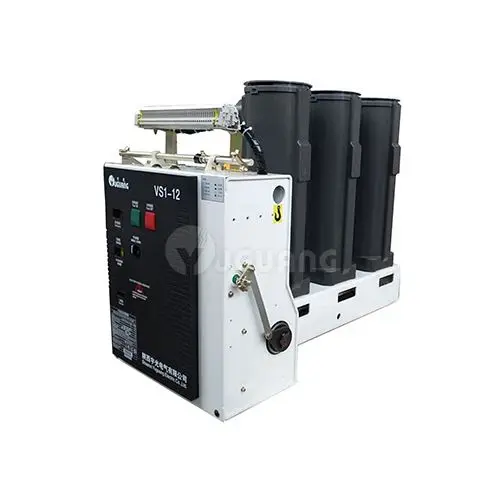
Maintenance and Testing for Optimal Arc Extinguishing Performance
To keep the best arc extinguishing performance, you need to pay regular attention to the vacuum integrity and contact condition. Testing the vacuum level on a regular basis makes sure that the interrupter keeps the low-pressure environment that is needed for reliable arc suppression. Contact resistance tests look for wear patterns that might affect how well the switches work, and insulation tests make sure the envelope is electrically sound.
Preventive Maintenance Protocols
Maintenance plans that work focus on keeping the conditions that are needed for best arc extinction. Using special equipment to find leaks, the level of vacuum circuit breakers should be checked once a year. Measuring contact travel and resistance is part of assessing contact wear. This finds potential problems before they affect performance. Modern vacuum interrupters are easier to maintain because they are made up of separate modules. This cuts down on downtime and labor costs.
Troubleshooting Common Arc Extinguishing Issues
When there are problems with arc extinguishing, a thorough investigation usually shows that the main causes are vacuum degradation or contact wear. When there is vacuum loss, there is more contact erosion and less ability to interrupt. Contact wear patterns show how often the contacts are switched and how much load they are under. This helps maintenance teams figure out the best times to replace the contacts. Professional diagnostic tools can find these problems early, stopping them from becoming catastrophic.
Procurement Guide: Selecting and Purchasing Vacuum Circuit Breakers
To choose the right vacuum circuit breakers, you need to carefully look at the arc extinguishing requirements based on the needs of the application. The voltage ratings must be higher than what the system needs, with enough safety margins, and the current interruption capacity should be able to handle the worst fault levels. Specifications for breaking capacity tell you how much current the breaker can safely stop. This is a very important factor for protecting the system.
Technical Specifications for Arc Extinguishing Performance
The ability to put out an arc depends on a number of technical factors that procurement professionals must assess. Rated voltage tells you how much system voltage the breaker can handle, and rated current tells you how much continuous current it can handle. The breaking capacity tells you the biggest fault current that the vacuum interrupter can safely stop. These requirements must match the needs of the system and safety standards.
Supplier Evaluation and Quality Assurance
When looking for vacuum circuit breaker suppliers, you need to look at their manufacturing skills, quality certifications, and technical support services. Getting ISO 9001 certification shows that you are dedicated to quality management systems, and getting certain certifications for electrical equipment shows that it meets industry standards. To make sure that the quality of their products is always the same, factories should use advanced production methods and thorough testing procedures.
Shaanxi Yuguang Electric: Your Trusted Partner for Advanced Vacuum Circuit Breaker Solutions
It has become well-known that Shaanxi Yuguang Electric Co., Ltd. is one of the best companies for vacuum circuit breaker technology and arc extinguishing solutions for tough industrial uses. Since our company started in 2008, we've learned a lot about high-voltage transmission and distribution equipment. We focus on the 6KV–40.5KV voltage range, which is used by most industrial power systems.
Our vacuum circuit breakers use cutting edge arc extinguishing technology to solve the most important problems that modern factories have. With our scenario-based customization tools, you don't have to worry about equipment not working with each other. This lets you adapt to harsh environments and meet the needs of your industry. The integrated modular design makes maintenance easier, and our permanent magnet operating mechanism makes sure that the machine will work without any problems for a long time.
Advanced Manufacturing and Quality Control
Our manufacturing process starts with choosing high-quality raw materials, such as alloys that don't rust and IP67-rated seals that go through strict inspection procedures. To make sure accuracy and sealing integrity, core parts like solid-sealed poles and arc-extinguishing chambers use aerospace-grade precision technology and special tools. The modular assembly method lets precise pre-assembly using special tools, making configurations that can be changed to meet different functional needs.
Ceramic coating and powder coating treatments, followed by constant temperature curing, make the surface treatment process better at making things last longer. This method makes corrosion resistance and aging performance much better, which increases service life in tough industrial settings. Our multi-round testing procedures make sure that the functional performance is valid, including the ability to put out arcs, the insulation properties, and the ability to adapt to different loads. This makes sure that the product meets national standards for high-voltage electrical equipment and ISO system requirements.
Comprehensive Service Capabilities
Our full-chain service model includes more than just delivering products. It also includes research and development, production, installation, and full support after the sale. This method solves the common problem of not having enough technical support by offering installation instructions, maintenance contracts, spare parts, and free planning for modifications. We can serve clients from other countries with the same level of technical excellence and responsiveness because we have experience working with clients in our own country and with clients in other countries.
The 39 patents that the company has show how committed we are to coming up with new ideas in vacuum circuit breaker technology, especially in control systems and mechanisms that put out arcs. With ISO 9001:2015 certification, recognition as a "High and New Technology Enterprise," and multiple awards as a "Quality and Trustworthy Unit," you can be sure that we can be relied on and that we can come up with new ideas.
Conclusion
Arc extinguishing in vacuum circuit breakers is a mature and reliable technology that meets the important need for stopping current safely in industrial power systems. The special features of the vacuum environment make arc suppression clean and effective while reducing the need for maintenance and the damage to the environment. Vacuum circuit breaker technology has clear advantages over other options as industrial facilities place more importance on operational reliability, cost efficiency, and environmental responsibility. The equipment will work at its best for as long as it is used if it is properly chosen, maintained, and partnered with a supplier.
FAQ
What makes vacuum arc extinguishing superior to air circuit breakers?
Vacuum arc extinguishing operates in an environment free from gas molecules that typically sustain arc formation in air circuit breakers. This fundamental difference allows vacuum systems to achieve faster, cleaner current interruption with minimal contact erosion. Air circuit breakers require complex arc chutes and magnetic blow-out systems to manage arc energy, while vacuum interrupters rely on the inherent properties of the vacuum medium for reliable performance.
How often should vacuum circuit breakers undergo maintenance for optimal arc extinguishing?
Vacuum circuit breakers require significantly less maintenance than alternative technologies due to their sealed design and absence of consumable arc-quenching media. Annual vacuum integrity testing and contact resistance measurement typically suffice for most applications. The permanent magnet operating mechanism eliminates the need for control circuit maintenance, while the modular design simplifies component replacement when necessary.
Can vacuum circuit breakers be customized for specific industrial applications?
Modern vacuum circuit breaker manufacturers offer extensive customization options to address specific application requirements. Voltage ratings, current capacities, and mechanical configurations can be tailored to unique operational environments. Specialized contact materials and vacuum interrupter designs accommodate applications with frequent switching operations or harsh environmental conditions.
Partner with Yuguang for Reliable Vacuum Circuit Breaker Solutions
Shaanxi Yuguang Electric stands ready to transform your electrical infrastructure with cutting-edge vacuum circuit breaker technology. Our 39 patents and comprehensive 6KV-40.5KV product range address the specific challenges facing modern industrial facilities. As a trusted vacuum circuit breaker manufacturer, we combine advanced arc extinguishing technology with exceptional service capabilities. Contact our technical team at ygvcb@hotmail.com to discuss your requirements and discover how our maintenance-free, long-life solutions can optimize your operational efficiency.
References
1. IEEE Standard C37.06-2009, "AC High-Voltage Circuit Breakers Rated on a Symmetrical Current Basis - Preferred Ratings and Related Required Capabilities for Voltages Above 1000 V"
2. Slade, Paul G., "The Vacuum Interrupter: Theory, Design, and Application," CRC Press Engineering Handbook Series
3. IEC 62271-100:2021, "High-voltage switchgear and controlgear - Part 100: Alternating current circuit-breakers"
4. Greenwood, Allan N., "Vacuum Switchgear: Principles and Practice of High-Voltage Circuit Interruption in Vacuum"
5. CIGRE Working Group A3.27, "Vacuum Circuit Breaker Knowledge Rules for Reliable Application and Operation"
6. IEEE Transactions on Power Delivery, "Arc Phenomena in Vacuum Circuit Breakers: Analysis and Mitigation Strategies," Volume 35, Issue 4

Send Inquiry
You may like
