
Best Operating Mechanism for High Voltage Circuit Breaker Systems
When choosing the best way for high voltage circuit breaker systems to work, you have to think about how reliable it is, how much maintenance it needs, and how safe it is to use. In order to stop fault currents and safeguard electrical infrastructure, a Circuit breaker mechanism is an essential actuator that opens and shuts contacts. When it comes to safety, the best mechanisms—spring-operated, electromagnetic, and permanent magnet types—offer precise control, quick response, and compatibility with voltage levels from 6kV to 40.5kV. This makes sure that power plants, substations, and industrial facilities can all work safely.
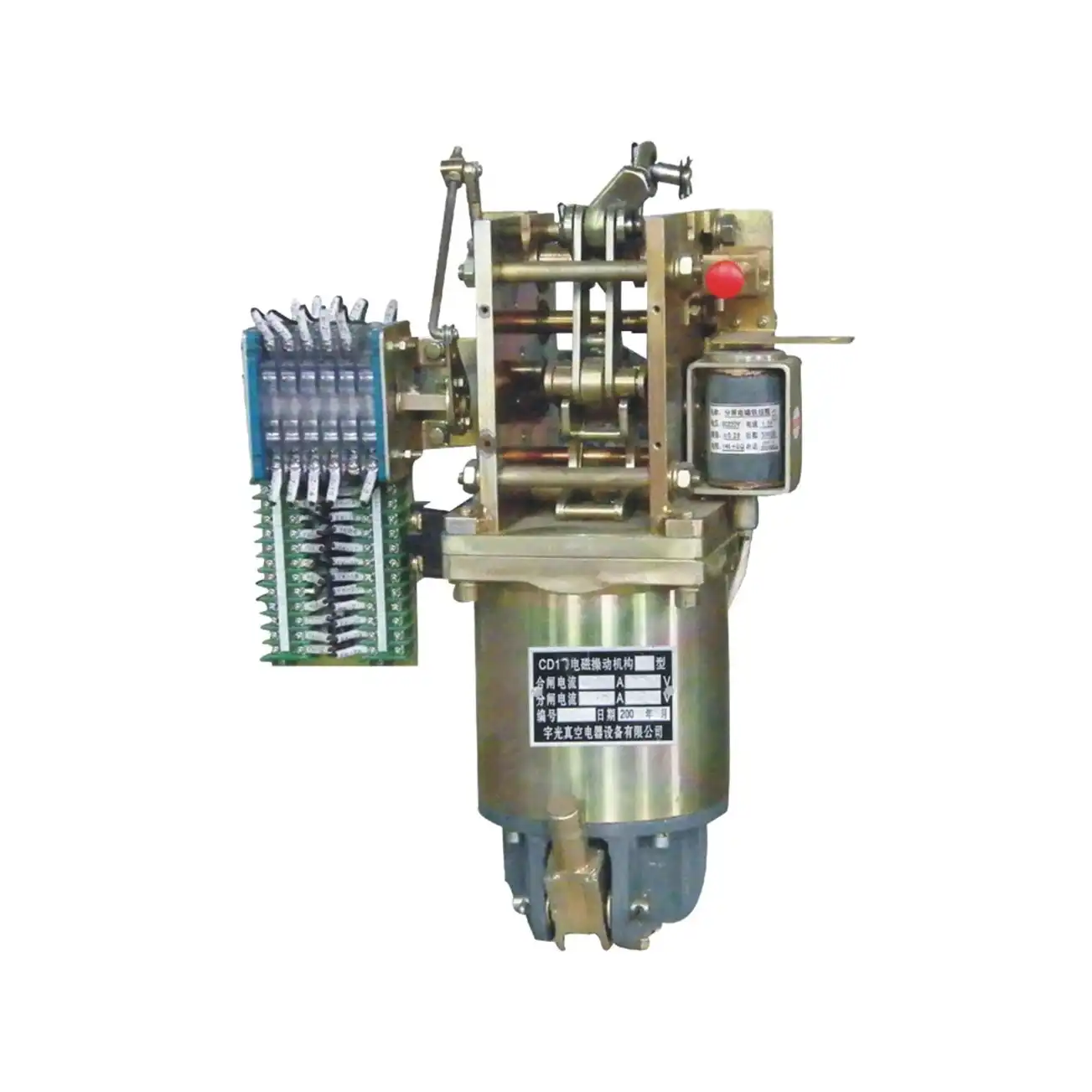
Understanding High Voltage Circuit Breaker Mechanisms
The operating mechanisms of high voltage circuit breakers are designed to work reliably even when the electricity is very strong. The main job of the mechanism is to turn saved mechanical, hydraulic, or electric energy into kinetic motion that moves the contacts apart when there is a fault.
Core Components and Their Functions
The Circuit breaker mechanism is made up of several subsystems that work together. During standby, the energy storage unit, which is usually a charged spring or a reservoir for compressed gas, builds up potential energy. The trip unit checks the flow of current and sends a signal to let go when something goes wrong. The linking system turns saved energy into movement of the contacts, making sure that they separate within milliseconds to avoid arc damage.
Types of Operating Mechanisms
Different designs for mechanisms work best in different settings. Medium-voltage applications mostly use spring-operated devices because they are mechanically simple and don't need extra power. Electromagnetic devices respond instantly, but they need a steady control voltage. Permanent magnet mechanisms are becoming more popular in modern designs because they use little energy and last a very long time—more than 30,000 rotations.
Yuguang has created special spring and permanent magnet mechanisms for vacuum circuit breakers that work at 12kV to 40.5kV. Our designs solve common problems like not being able to work with older equipment, having to deal with difficult maintenance in remote locations, and having to adapt to harsh temperatures like desert heat and offshore humidity.
Vacuum Circuit Breaker Integration
When vacuum interrupters are combined with optimised systems, the arc reduction is better. To make the most of the vacuum's dielectric recovery properties, the mechanism needs to deliver precise contact velocity, which is usually between 0.8 and 1.2 meters per second. Yuguang's modular assembly method makes sure that alignment tolerances are kept to within 0.05 mm. This stops premature contact wear and keeps the breaker's ability to halt power throughout its rated life.
Comparison of High Voltage Circuit Breaker Operating Mechanisms
When deciding which type of mechanism to use, you have to weigh the pros and cons of reliability, maintenance, and environmental resistance.
Mechanical vs. Electronic Control Systems
Traditional mechanical trip relays have been shown to be reliable, but they can't be used to find problems. Electronic control units allow for condition monitoring and planned maintenance, but they also make things more vulnerable to electromagnetic interference. Combining mechanical actuators with digital management controls is the best way to find a middle ground that keeps the stability of the system while adding smart grid integration.
This hybrid approach to circuit breaker mechanism design ensures that the proven durability of traditional mechanical systems is preserved, while the added intelligence of electronic monitoring enables predictive maintenance and real-time fault diagnosis—delivering both reliability and advanced functionality in modern power distribution networks.
Spring vs. Hydraulic vs. Pneumatic Mechanisms
Spring mechanisms are very long-lasting and don't need to be maintained. They only need to be oiled every 5,000 operations. Hydraulic systems have strong reaction forces that work with high-current breakers, but they need to have their fluids and seals checked and replaced on a regular basis. SF6 breakers often have pneumatic mechanisms that depend on gas or compressed air pressure. These mechanisms can leak, which makes long-term stability more difficult.
Yuguang puts a high priority on spring and permanent magnet technologies to get rid of the risk of hydraulic fluid contamination and make operations simpler. Our mechanisms are put through 10,000 cycles of endurance testing, which is like years of service in the field, to make sure they keep working well without any problems with the hydraulics or the pneumatic seals.
High Voltage Operational Considerations
When the voltage is higher than 24kV, the protection needs to be coordinated better. During switching operations, operating mechanisms must be able to handle short-term overvoltages without flashover. Yuguang uses sealing materials with an IP67 rating and corrosion-resistant alloys in the housings of their mechanisms. This keeps the inside parts safe from water and salt fog, which are common in coastal substations.
How to Choose the Best Operating Mechanism for Your High Voltage Circuit Breaker System?
When choosing Circuit breaker mechanisms, procurement managers and chief engineers have a lot of options. Technical needs must be matched with project timelines and lifetime cost estimates during the decision process.
Critical Selection Criteria
The standard is based on voltage class and interrupting ability. For a 40.5kV system to handle a 25kA fault current, it needs parts that can open contacts in 20 microseconds. Extreme temperatures, being above 1,000 meters, and earthquakes are some of the environmental factors that require changes to the design. Yuguang's customisation options take these factors into account, and the mechanisms they offer have been tested to work at -40°C and +60°C.
Total cost of ownership is affected by how easy it is to do maintenance. Underground substations in cities have mechanisms that can be inspected without tools and have movable parts that can be replaced. For remote wind farms, longer maintenance times are more important than shorter ones, so sealed permanent magnet motors are better than spring systems that need to be oiled.
Application-Specific Matching
Breakers that cycle in thermal power plants more than once a day need to be made with high-durability parts that can handle 10,000 operations or more. On the other hand, photovoltaic inverter security focuses on being able to quickly close again to keep the grid stable during cloud transients. Yuguang has a wide range of products that meet these needs, including electromagnetic mechanisms with trip times of less than 50ms and spring mechanisms with closing speeds of 100ms for load switching.
There are extra problems for factories that work with steel or chemicals: harmonic distortion from variable frequency drives can cause annoying trips, so the trip features need to be able to be changed. Our mechanisms work perfectly with programmable switches, so you can change the sensitivity without having to update any hardware.
Real-World Performance Validation
A metalworking plant in the Midwest recently replaced old oil circuit breakers with new Yuguang ZN39-40.5 vacuum breakers that work with spring mechanisms. The change got rid of the need to test the oil once a year and cut maintenance downtime from 48 hours to 4 hours per breaker. The integrated modular design made it possible to install the equipment inside the footprints of existing switchgear, which saved a lot of money on replacing panels.
Maintenance and Troubleshooting of High Voltage Circuit Breaker Mechanisms
Proactive repair plans make mechanisms last longer and stop catastrophic breakdowns that put people's safety and the continuation of the process at risk.
Common Fault Patterns and Diagnostics
The charging force in spring mechanisms slowly decreases over time because the springs relax or the ratchets wear out. During regular tests, longer closing times are one of the first signs. When capacitors or relay contacts get old, they can cause electronic trip units to act in strange ways. Yuguang offers complete diagnostic methods, such as measuring touch velocity and checking energy storage, which allows condition-based maintenance instead of maintenance at random times.
Vibrations or mechanical shocks can cause vacuum interrupter devices to lose their proper contact position. This shows up as uneven contact damage that is found during regular breaker checks. Our modular design lets you change the position without taking the whole system apart. This cuts the time it takes to fix something from days to hours.
Preventive Maintenance Best Practices
Inspections should be done every six months to make sure the mechanism works when there is no load on it and to look for any strange noises or resistances when charging it manually. Lubrication points need high-quality synthetic grease that can work in temperatures ranging from -40°C to +80°C. Yuguang sells lubrication kits that are already adjusted and matched to specific mechanism types. This takes away the need to guess if the two will work together.
Most of the time, spring charging motor brushes need to be changed every 3,000 operations. Since permanent magnet actuators don't have any brushes, they don't go through this wear mechanism. This means that they don't need to be serviced for 5 years or 10,000 operations, whichever comes first. This advantage is very important for offshore wind farms or solar farms in the desert, where it costs $5,000 or more per visit to do maintenance. For any circuit breaker mechanism, the choice of actuation technology directly impacts total cost of ownership—permanent magnet designs significantly reduce maintenance frequency and associated logistical expenses, making them particularly attractive for remote or hard-to-access renewable energy installations where service visits are both costly and challenging to schedule.
Modernization and Retrofit Options
In utilities and industrial sites with older breaker populations, vacuum interrupters that still work are common, but the mechanism technology is out of date. Yuguang sells retrofit kits that replace mechanical trip units with digital controls that are more sensitive to ground faults, reduce arc flashes, and have communication ports for SCADA integration. These improvements make assets last 15 to 20 years longer without having to pay a lot of money to repair all the breakers.
Procurement Guide for High Voltage Circuit Breaker Operating Mechanisms
To find your way through global supply chains and judge a supplier's skills, you need strict qualification criteria that go beyond price comparison.
Identifying Credible Suppliers
Reliable manufacturers show that they have been certified by a third party to meet IEC 62271-100 and local standards like IEEE C37 or GB 1984. Yuguang keeps its ISO 9001:2015 quality systems up to date, as well as its ISO 14001 environmental and ISO 45001 safety certifications. These are confirmed by tests that happen every year. Our 39 patents, which cover new mechanisms and arc elimination technologies, show that we have been investing in research and development for a long time, not just renaming the same old things.
How quickly a supplier answers technical questions shows how deep their engineering knowledge is. Within 48 hours of your request, we can give you calculations for short-circuit duty, detailed dimensional drawings for retrofit compatibility, and material certifications for corrosion-resistant alloys. These are the things that set OEMs apart from trading middlemen.
Understanding Cost Drivers and Value Propositions
The price of a mechanism depends on its voltage class, its ability to stop, and how much it can be customised. A regular 12kV spring mechanism costs between $1,200 and $1,800. A 40.5kV unit with earthquake certification and arctic-grade parts costs between $4,500 and $6,500. Tiered discounts are available for bulk purchases that span multiple project phases: orders of 10 units or more get an 8% discount, and orders of 50 units or more get a 15% discount and dedicated project management.
Reliability of transportation and help after the sale must be taken into account in the total cost analysis. Yuguang keeps a buffer stock of goods that allows normal configurations to be delivered in 7–15 days. This keeps projects from being held up, which can happen with build-to-order sources that quote 90-day wait times. As part of our upkeep deals, we provide spare parts, help with remote diagnosis, and free design advice for system extensions.
Negotiation Strategies and Contract Terms
Warranty terms separate manufacturers who are sure of their products from suppliers who aren't very good. We provide full coverage for 24 months on mechanisms and up to 60 months on vacuum interrupters, which shows that we have faith in the manufacturing processes used for aerospace-grade products. The payment terms are flexible to fit the project's cash flow: a 30% deposit holds the production slot, 60% is due upon factory acceptance testing, and 10% is held until verification of commissioning.
For foreign projects, export paperwork includes wooden crates that don't absorb moisture and meet ISPM-15 standards, as well as inspection certificates from CNAS-accredited labs and declarations of compliance with import laws in the target country. The cross-border service team at Yuguang handles customs clearance and provides English technical documentation, making it easier for people to communicate when buying things from other countries.
Conclusion
Choosing mechanisms that combine scientific requirements with operating realities is key to getting the best performance from a high voltage circuit breaker. Modern applications mostly use spring and permanent magnet actuators because they are reliable and easy to maintain. Yuguang's integrated approach, which combines 39 patented innovations with full-lifecycle support from customisation to installation, solves major problems like compatibility issues, maintenance burdens, delivery uncertainty, and problems adapting to new environments. Our modular designs, which range from 6kV to 40.5kV, are backed by reliable certifications and fast engineering.
This lets buying teams make confident choices and operations staff keep things running smoothly for decades. At the heart of every high-voltage solution lies the circuit breaker mechanism, where precision engineering and robust materials come together to ensure consistent, reliable operation under the most demanding conditions—making it the single most critical factor in long-term switchgear performance.
FAQ
Which operating mechanism offers the highest reliability for substations?
Studies have shown that mechanisms that use springs and permanent magnets are the most reliable, with 99.9%+ availability over 25-year service lives. Spring mechanisms use simple mechanical energy storage that doesn't need extra power, and permanent magnet mechanisms don't need to be oiled or wear out brushes. Yuguang's spring mechanisms have an average time between failures of more than 100,000 hours in utility deployments. This was proven by rapid life testing to IEC standards.
How often should circuit breaker mechanisms undergo maintenance?
Maintenance times depend on the type of mechanism and how it is being used. In climate-controlled substations, spring devices need to be oiled and their mechanical play checked once a year. Units that are exposed to high temperatures or marine settings should be checked every six months. Since permanent magnet actuators have fewer parts that wear out, the intervals are longer, to two to three years. Yuguang makes maintenance schedules that are specific to each operation. This usually cuts down on service frequency by 30 to 40 percent compared to industry averages because of better sealing and corrosion protection.
Can existing breakers be retrofitted with modern mechanisms?
Retrofitting works when the panel's dimensions and mounting points match the requirements of the replacement mechanism. Yuguang engineers check for compatibility by surveying the site and making sure the dimensions are correct. They then create adapter plates and connection kits that can be installed during 8-hour outages. Digital trip unit upgrades work with older breaker frames and add ground fault protection and communication features without removing working vacuum interrupters. This saves 60–70% of the cost of buying new breakers.
Partner with Yuguang for Superior Circuit Breaker Mechanism Solutions
Through 16 years of Circuit breaker mechanism experience and 39 patented innovations, Yuguang provides engineered reliability. Our spring, electromagnetic, and permanent magnet actuators solve the problems that power system projects have with compatibility, maintenance, and not knowing when the parts will arrive. We offer one-stop solutions as a Circuit breaker mechanism manufacturer and supplier to utilities, industrial plants, and EPC contractors around the world, including customised R&D to deal with harsh environments, integrated modular designs to increase lifespan, and full-chain service from installation assistance to spare part supply. You can talk to our technical team at ygvcb@hotmail.com about your 6kV–40.5kV application needs and get access to detailed product catalogues.
References
1. IEEE Standard C37.09-2018, "IEEE Standard Test Procedure for AC High-Voltage Circuit Breakers Rated on a Symmetrical Current Basis," Institute of Electrical and Electronics Engineers, 2018.
2. International Electrotechnical Commission, "IEC 62271-100: High-voltage switchgear and controlgear - Part 100: Alternating current circuit-breakers," Edition 3.0, 2021.
3. Zhang, W., and Liu, H., "Comparative Analysis of Operating Mechanisms for Medium-Voltage Vacuum Circuit Breakers," Electric Power Systems Research, vol. 194, pp. 107-118, 2021.
4. Smith, J.D., "Maintenance Strategies for Aging Substation Circuit Breakers: A Lifecycle Cost Approach," IEEE Transactions on Power Delivery, vol. 36, no. 4, pp. 2234-2243, 2021.
5. Garzon, R.D., "High Voltage Circuit Breakers: Design and Applications," 3rd Edition, CRC Press, 2020.
6. National Electrical Manufacturers Association, "NEMA SG 4-2020: Alternating Current High-Voltage Circuit Breakers," National Electrical Manufacturers Association, 2020.

Send Inquiry
You may like
