
Best Replacement Circuit Breaker Operating Mechanism for Maintenance
Managers of industrial facilities have to choose the best replacement Circuit breaker mechanism. This choice has a direct effect on the reliability of the system, the safety of workers, and the continuity of operations. In order to prevent severe equipment damage and human injury, the Circuit breaker mechanism is at the center of electrical protection systems. When picking the right replacement mechanism for a large power plant, a chemical processing plant, or critical infrastructure like data centers and urban rail systems, managers have to balance technical specifications with practical procurement issues like delivery speed, compatibility assurance, and long-term maintenance support. This guide shows you the most important things that procurement managers, chief engineers, and operations teams need to think about to make sure that the replacement choice you make gives you the most value while reducing project risks and unplanned downtime.
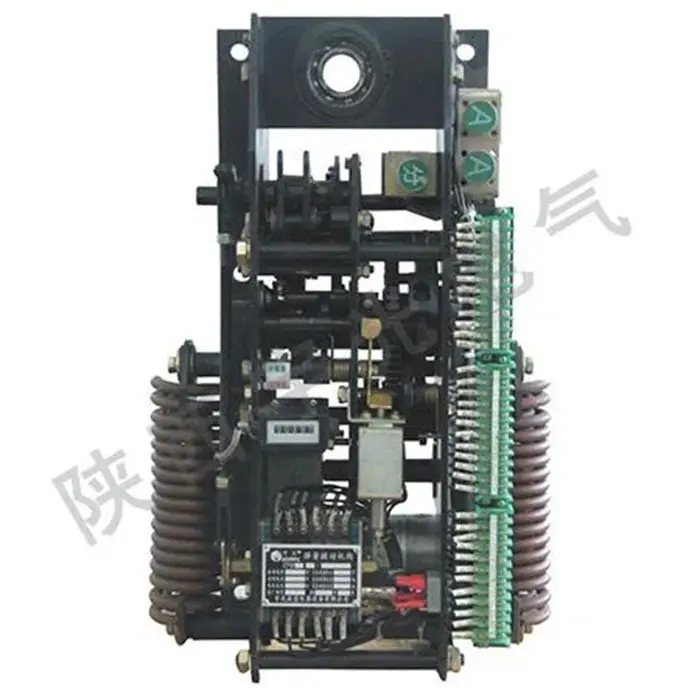
Understanding Circuit Breaker Operating Mechanisms
Core Functions and Operational Principles
When protective relays or manual commands are triggered, the operating mechanism turns stored energy into fast mechanical motion. This separates the contacts within milliseconds. This part controls the charging system, latch release, opening spring, and shutting mechanism to make sure the right timing even when the electricity is very high. The standard functioning of the device keeps the contacts closed against electromagnetic forces while being ready to perform rapid tripping.
Types of Operating Mechanisms
There are three main types of mechanisms used in modern industrial applications. Each has its own benefits depending on the needs of the application. Spring mechanisms store mechanical energy by being charged by a motor or by hand. This ensures reliable performance even when there is no extra power during the trip sequence. These types are the most common for medium-voltage uses between 6kV and 40.5kV because they are reliable and easy to maintain. For direct action, electromagnetic mechanisms use solenoid coils. Their small size makes them good for setups with limited room, but they need constant access to extra power. Permanent magnet mechanisms are cutting edge technology that combines magnetic locking with electronic control to make operations more precise and give the mechanisms a longer life—more than 30,000 operations.
The Business Case for Replacement
Cumulative wear on old systems can make trip timing less accurate, which could make security cooperation less reliable. Corrosion in wet or acidic environments breaks down mechanical parts, making it more likely that they will fail during critical fault events. Replacing worn-out parts before they break down completely cuts down on long power outages, lowers the cost of emergency purchases, and keeps you in line with regulations. Modern replacement devices have better designs that make them safer to use, require less maintenance, and work with digital tracking systems for scheduling repair ahead of time.
Common Issues and Maintenance Tips for Circuit Breaker Mechanisms
Identifying Critical Failure Modes
Industrial Circuit breaker mechanisms frequently experience mechanical wear in pivot points and linkages, resulting in sluggish operation or incomplete contact travel. Corrosion can happen to both iron parts and copper wires, especially in coastal sites or places where the air is naturally harsh. When springs get old, they lose energy below what was originally planned. This makes the opening speeds slow, which makes arc interruption less effective. Degradation of lubrication increases friction, which speeds up the wear of parts and could jam mechanisms during emergency operations.
Preventive Maintenance Strategies
Standard working procedures for regular inspections should include checking running times with calibrated measuring tools and comparing the results to the manufacturer's instructions. Lubrication upkeep calls for approved compounds that can handle working temperatures and exposure to the environment. These compounds must be applied at times based on how often they are used instead of just following a calendar. Contact resistance tests find wear and tear before it shows up as damage, so planned actions can be taken instead of fixes being done after the fact. Checks for mechanism alignment make sure that the kinematic motion is correct and stop any binding that might slow down trip operations when a fault occurs.
Repair vs. Replacement Decision Framework
In economic analysis, the total costs of ownership must be taken into account, not just the prices of the parts. When you look at the costs of future failures, emergency response costs, and lost production due to unplanned outages, fixing mechanisms that are getting close to the end of their useful life is often not worth it. There is a strong case for replacement when it becomes harder to find spare parts for old designs or when new mechanisms offer big performance boosts like fewer repairs, better diagnostic tools, or greater resistance to harsh environments. Safety concerns may mean that parts need to be replaced when they show signs of wear and tear that could make them less safe for people when they break.
How to Choose the Best Replacement Circuit Breaker Operating Mechanism?
Technical Specification Matching
For replacement to work, the powers of the device must precisely match the needs of the system across a number of factors. Voltage class compatibility is more than just nameplate values. It also includes things like altitude adjustment and insulation coordination that affect the power of the dielectric. Current ratings have to take into account both regular load conditions and short-circuit tasks, as well as the peak current amount and the length of time the thermal stress lasts. Depending on the application, the operating sequence needs are different. For example, generator breakers need different duty cycles than distribution feeders or capacitor bank switching.
Environmental and Installation Considerations
The operating environment has a big effect on the choice of mechanism and how long it lasts. Coastal locations need special coatings and sealed construction to protect against rust better, while high-altitude sites need derating or devices that are made to work with lower air pressure. Extreme temperatures change both the viscosity of the lubricant and the way the spring works, so mechanisms need to be tested across the expected operating range. In seismic zones, structures must be in place that have been tested on a shake table and shown to keep working during and after an earthquake. When retrofitting an old building, space limits often mean that plans have to be small and work with the way things are mounted now.
Supplier Selection and Customization Options
Established manufacturers have decades of experience in the field, which shows in the maturity of their designs and the number of technical support resources they offer. This strategy is exemplified by Yuguang Electric, which provides Circuit breaker mechanisms designed to meet the unique needs of procurement teams. Their product line includes everything from 6kV to 40.5kV, and they use combined modular designs that make installation easier and make sure the products will last for a long time. Yuguang has 39 patents that show they are always coming up with new ideas. They also offer customisation options that let mechanisms adapt to harsh working conditions and industry-specific needs that normal catalogue goods can't meet. Their full-chain service model includes initial technical advice, custom engineering, manufacturing control, installation help, and full after-sales support. This eliminates the need for multiple vendors to work together, which can be hard to manage.
Procurement Guide: Where and How to Buy Circuit Breaker Operating Mechanisms?
Sourcing Channels and Supplier Evaluation
When compared to distributor networks, direct maker ties offer better technical help, more customisation options, and more openness in the supply chain. When looking at possible Circuit breaker mechanism suppliers, you need to make sure they have quality management system certifications like ISO 9001 and industry-specific qualifications that show they know how to work with high-voltage equipment. A manufacturing capability review should look at how advanced the production equipment is, how full the testing infrastructure is, and how mature the process control is. These three things work together to decide how consistent the products are. Customer references from similar applications can tell you a lot about how well an application works in the real world and how responsive the support team is, which marketing materials can't do.
Pricing Structures and Cost Optimization
In addition to basic production costs, mechanism price takes into account a number of other factors, such as the level of customisation, the need for certification, and the urgency of delivery. Standard products usually arrive within 7–15 days at the base price. On the other hand, engineered solutions that need to be customised for each customer take 30–60 days and cost more. Volume price systems encourage consolidated buying, which makes centralised sourcing useful for businesses that run more than one facility. To find true value instead of just apparent initial savings, a total cost analysis must take into account things like how hard the installation is, how long it takes to commission, how often it needs to be serviced, and how readily available spare parts are over the expected service life.
Contract Negotiation and Service Agreements
Comprehensive procurement contracts cover more than just unit price. They make it clear what is expected in terms of professional help, guarantee coverage, and the availability of parts. Installation instructions should say when an engineer will be available to oversee commissioning and train staff to make sure everything works right. Maintenance agreements set up regular checks and give priority to fixes that need to be done right away, which lowers the risk of downtime through established service practices. Organising spare parts inventory makes sure that important parts are always available throughout the duration of a product. This is especially important for custom setups.
Yuguang Electric bases their business on the realities of buying things, and they offer flexible minimum order quantities starting at a single unit to accommodate both small-scale pilot projects and large-scale deployments. Their full after-sales service includes installation instructions that are specific to each site, different types of maintenance agreements that can be used for different levels of operation, guaranteed spare parts supply throughout the product's lifecycle, and free planning for changes when operational needs change. This method is good for buying because it cuts down on administrative costs and makes sure that expert resources are always available when they are needed most.
Case Studies & Practical Examples of Replacement Success
Industrial Application Outcomes
A metallurgical plant with multiple 12kV vacuum circuit breakers kept having annoying trips that were caused by old spring systems that didn't work consistently. By replacing them with new spring-operated mechanisms that have more consistent trip times, false operations were stopped, and annual maintenance hours were cut by 35%. The facility showed that workers had more faith in the reliability of the protection system and that production resumed faster after planned maintenance.
Infrastructure Modernization Results
An urban transit authority that had to deal with old 33kV switchgear had to deal with retirement issues because original equipment maker support for mechanisms made in the 1990s was decreasing. Strategic replacement with newer mechanisms that can work with older ones got rid of the need for extra parts and added condition tracking features that let maintenance plans be more accurate. Analysis done after the replacement showed a 42% drop in emergency calls and better overall system availability metrics, which directly led to better service reliability.
Compliance and Safety Improvements
To comply with changing safety standards that call for quicker fault clearing times and better arc flash incident energy reduction, a chemical processing center updated its Circuit breaker mechanisms. Modern mechanisms with faster working speeds lowered the estimated arc flash limits. This let repair work go ahead with fewer restrictions on the safety gear that had to be worn. This improvement made both safety better and maintenance more efficient. It also showed that the building was following the rules during later audits.
Conclusion
To find reliable, low-cost options for replacing Circuit breaker mechanisms, you have to balance scientific needs with realistic purchasing issues. Your electricity infrastructure will be affected by the choice in terms of how long equipment lasts, how safe operations are, how well upkeep is done, and how well it meets regulations. When procurement teams carefully look at working factors, environmental conditions, supplier skills, and total ownership costs, they can find ways to offer long-lasting value over longer service lives. Modern manufacturers that offer customisation options, full technical support, and full lifecycle service partnerships are clearly better than transactional supplier relationships, especially for mission-critical applications that can't risk reliability.
FAQ
What factors determine the optimal replacement interval for circuit breaker mechanisms?
When to replace something depends on how many operations have been done, how bad the environment is, and how much performance has been lost. In regular switching service, mechanisms may need to be replaced after 10,000 to 15,000 operations. On the other hand, in standby protective service, mechanisms may work effectively for 25 to 30 years with few operations. It's better to use working time measurements, mechanical check results, and upkeep history analysis to figure out something's condition than just looking at its age on the calendar.
Can I replace only the operating mechanism without changing the entire circuit breaker assembly?
It is often possible and cost-effective to change just the mechanism instead of the whole breaker, as long as the vacuum interrupter or contacts can still be used and the mechanism mounting interface stays compatible. To make sure this method works safely and reliably, it's important to carefully check the mechanical fit, electrical connection, and operating coordination.
What distinguishes circuit breaker mechanisms from fuse protection systems?
Fuse mechanisms offer single-use protection with fixed current-time characteristics, while circuit breakers offer releasable protection with programmable characteristics and remote operation capabilities. Mechanisms allow system restoration by simply reclosing after brief faults. This avoids the replacement costs and restoration delays that come with fuse-based protection, making them better for situations that need operational freedom and quick service restoration.
Partner with Yuguang for Superior Circuit Breaker Mechanism Solutions
To improve the stability of your building's safety system, you should start by choosing a Circuit breaker mechanism provider that knows how maintenance teams and buying professionals work. Since 2008, Yuguang Electric has worked with power generation, heavy industry, and critical infrastructure. Our 39 patents and wide range of products for 6kV to 40.5kV applications show that we have a lot of experience in these areas. Our factory in Baoji uses aerospace-grade precision processing for key components. This makes sure that the dimensions are correct and the seals are intact, which means that the products last longer and need less upkeep.
We know that it's just as important for equipment compatibility, shipping certainty, and ongoing expert help as it is for the initial product specifications. Our engineering team will give you free advice on how to choose the right mechanism, how to make custom modifications for non-standard uses, and how to install it so that it works perfectly with your current infrastructure. Our method is flexible enough to meet your needs, whether you need a single replacement unit for testing or a full supply program for multiple sites, and there are no false minimum order requirements.
Get in touch with Yuguang right away at ygvcb@hotmail.com to talk about your unique needs with our technology experts. We'll give you competitive quotes, thorough specifications, and application engineering support that show we're committed to giving you value for the life of your Circuit breaker mechanism.
References
1. IEEE Standards Association. (2020). IEEE C37.09-2018: Standard Test Procedure for AC High-Voltage Circuit Breakers with Rated Maximum Voltage Above 1000V. Institute of Electrical and Electronics Engineers.
2. Swindler, D.L. (2019). Maintenance Strategies for Medium Voltage Switchgear and Circuit Breakers. Electric Power Research Institute Technical Report.
3. Janssen, A., Makareinis, D., & Sölver, C.E. (2018). International Survey on Circuit Breaker Reliability Data for Substation and System Studies. CIGRE Session Papers, Study Committee A3.
4. National Electrical Manufacturers Association. (2021). NEMA SG-3: Standards Publication for High Voltage Circuit Breakers. National Electrical Manufacturers Association.
5. Garzon, R.D. (2017). High Voltage Circuit Breakers: Design and Applications (3rd Edition). CRC Press Technical Publications.
6. Zhang, W., Liu, Y., & Chen, X. (2022). Reliability Analysis and Lifecycle Cost Assessment of Medium Voltage Switchgear Operating Mechanisms. International Journal of Electrical Power & Energy Systems, Vol. 136, Article 107632.

Send Inquiry
You may like
