
Circuit Breaker Matching Made Easy: A Complete Supplier Guide
In workplace settings, picking the right circuit breaker matching system is very important for keeping electricity safe and running smoothly. Circuit breaker matching is the process of combining several safety devices to make sure the best system protection, the least amount of damage to equipment, and the least amount of costly downtime. This detailed guide solves the problems that purchasing managers and engineers encounter when trying to find dependable circuit breaker solutions. It does this by explaining technical requirements, evaluating suppliers, and the best ways to speed up the purchasing process while still meeting international safety standards.
Comprehending Circuit Breaker Matching Fundamentals
Circuit breaker planning is a planned way to protect electricity that goes beyond just picking out devices. The process involves looking at the features of the electrical system, the load patterns, and the fault conditions in order to come up with a protection plan that works well in a range of situations.
Core Principles of Electrical Protection Coordination
To match circuit breakers correctly, you need to know a few basic rules that describe how safety devices work. Any coordinating study starts with a load assessment, which includes a careful look at the normal working currents, starting currents for motors and other inductive loads, and possible fault current levels in the whole electrical system.
The coordination process looks at how safety devices work together when there is a problem. It makes sure that only the device closest to the fault is activated and that devices further up the line stay stable. This limited coordination keeps the system stable when things go wrong and stops power interruptions that aren't needed.
Breaker Types and Application Scenarios
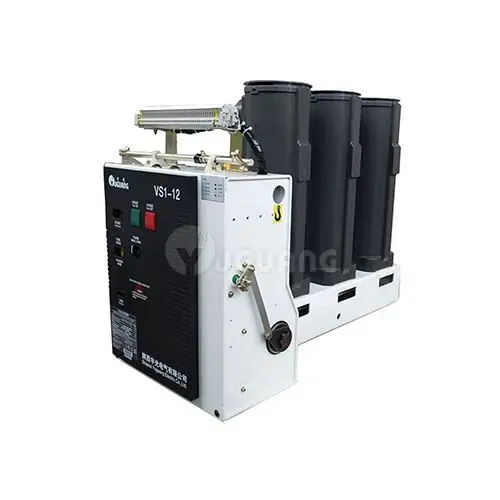
In industrial electrical systems, different types of Circuit Breaker Matching are used for different tasks. Vacuum circuit breakers work great in middle voltage situations because they can stop arcs better and need less upkeep. Heavy-duty industry settings like mining plants, chemical plants, and power plants can use these devices without any problems.
Thermal magnetic breaks are a cheap way to protect lower voltage systems, while electronic trip units offer more advanced safety features like communication, ground fault recognition, and arc flash protection. Being able to tell these differences helps procurement teams choose the right tools for each job.
How to Select and Match Circuit Breakers Effectively?
To choose the right circuit breaker, you need to follow a thorough process that takes into account both technical needs and working limitations. The process starts with a full analysis of the system and then moves on to thorough coordination studies to make sure that all the devices work together.
Load Analysis and System Assessment
The most important part of choosing the right circuit breaker is doing a proper load study. Engineers have to look at both steady-state and rapid conditions. These include starting motor currents, capacitor switching transients, and harmonic content from electronic equipment and variable frequency drives.
System fault studies find the highest amounts of fault current that can flow at different places in the power distribution system. These calculations have a direct effect on the amount of power needed for the circuit breaker to stop and the amount of time needed for coordination. Correct fault analysis makes sure that the right devices can safely stop fault currents without putting the system at risk.
Coordination Study Methodology
Time-current characteristic curves are used in coordination studies to make sure that devices are operating correctly when there is a fault. During the process, features of devices are plotted on logarithmic graphs, and their interactions are studied in a number of fault situations.
These days, coordination software makes this process easier, so engineers can quickly model complicated electrical systems and compare different safety methods. These tools make thorough reports that show cooperation gaps and possible problems before the equipment is installed.
Addressing Common Selection Challenges
Availability of devices, shipping plans, and compatibility needs are common problems that procurement teams have to deal with. Oversizing Circuit Breaker Matching might add extra safety, but it can make it harder for devices further down the line to work together and make the job more expensive than it needs to be.
Motor safety uses are hard because of the high starting currents and temperature conditions. Specialized motor protection breakers have thermal memory features and trip sets that can be changed to fit the way the motor works while still giving full protection.
Comparing Circuit Breaker Matching Solutions and Technologies
The electrical safety business has a lot of different technologies and ways of coordinating circuit breakers, and each has its own benefits and uses. Being aware of these differences helps you make smart choices during the buying process.
Technology Comparison: Vacuum vs. Air Insulated Systems
Vacuum circuit breakers use vacuum interrupters to stop electrical sparks, which makes them work better in medium voltage situations. These devices are very reliable, don't need much upkeep, and come in small sizes that make them easy to place in tight spaces.
Air-insulated circuit breakers are still commonly used in some situations because they have a history of reliability and are less expensive to buy at first. However, they need to be serviced more often and take up more space when installed than cleaner options. Which technology to use depends on the needs of the program, how easy it is to maintain, and how much it will cost to run in the long run.
Electronic vs. Thermal Magnetic Protection
Advanced safety features in electronic trip units include customizable trip settings, contact options, and a wide range of metering options. When exact protection coordination and system tracking are needed, these gadgets really shine.
For basic security needs, thermal magnetic devices are easier to use and cost less. Their fixed trip characteristics may make cooperation less flexible, but they offer solid security for simple uses. The choice is based on how complicated the system is, how much security is needed, and the cash.
Residential vs. Industrial Coordination Requirements
There are a lot of things to think about when coordinating industrial Circuit Breaker Matching, such as the need for selected coordination, the study of arc flash hazards, and making sure that industry-specific standards are met. These systems usually have a lot of different power levels and types of loads, so they need complex ways to keep them safe.
When comparing industrial applications to household systems, industrial applications need higher standards for stability and stricter coordination requirements. In industrial settings, electricity problems can lead to lost production, broken equipment, and safety risks that make it worth investing in more advanced security technologies.
Procuring Matched Circuit Breaker Sets for Your Projects
When buying circuit breaker systems strategically, you need to carefully consider the supplier's skills, the quality of the products, and the availability of long-term support services. For projects to be successful, the partners must understand the technology needs and be able to provide complete answers.
Supplier Evaluation Criteria
Siemens, Schneider Electric, ABB, and other well-known circuit breaker makers, as well as niche businesses like Yuguang Electric, offer a wide range of products and support services. Technical skills, manufacturing quality, shipping performance, and after-sales help should all be taken into account during the evaluation process. With 39 patents and a wide range of industrial skills, Yuguang Electric stands out in the 6KV–40.5KV range. Their integrated method solves common procurement problems like making sure that equipment works with other equipment, having trouble with upkeep, and having to change to different working situations.
Cost Optimization Strategies
Buying in bulk can save you a lot of money and make sure that the product specs are the same for all of your projects. Deals that include coordination studies, installation help, and extra parts can lower the overall cost of a job and make the buying process easier. Long-term relationships with suppliers allow for better project planning, faster supply schedules, and access to technical knowledge during the system design stages. These connections are especially helpful for big building projects that need a lot of planning between many people.
Quality Assurance and Compliance
Since fake electrical equipment is very dangerous, product identification is becoming more and more important. Reliable sellers provide a lot of paperwork, like test certificates, compliance statements, and tracking records, that proves the products are real. International compliance rules are different depending on the area and the use. Knowing about these rules is helpful for buyers when they are looking for suppliers. Suppliers with a lot of experience help customers meet safety standards and provide the paperwork needed for project approvals.
Technical Applications and Real-World Case Studies
Real-life examples show how important it is for Circuit Breaker Matching to work together properly in a variety of industry settings. These cases show how good coordination makes systems more reliable, lowers the cost of upkeep, and raises the safety of operations.
Industrial Motor Protection Applications
A steel manufacturing plant often had to stop making things because the motor safety wasn't coordinated properly. When starting up big motors, the original security plan shut them down for no reason, which messed up production schedules and shortened the life of equipment.
These problems were fixed by using vacuum circuit breakers that worked with electronic trip units. The new method protects only certain parts when there is a problem, while still allowing for normal motor starting transients. Production uptime went up a lot, and repair costs went down because the equipment wasn't under as much stress.
Power Generation and Distribution Systems
Because generation trends change and grid interaction rules must be followed, wind power sites are hard to coordinate in a special way. To keep the grid stable, circuit breakers must work together to handle both regular changes in power flow and faults.
Yuguang Electric's wind power-specific circuit breakers with modified safety settings were used in a recent wind farm project. The modular design made it easier to place in difficult outdoor conditions, and built-in safety features made sure it would work reliably in all kinds of weather. Availability was higher thanks to the project than with traditional security methods.
Data Center and Critical Infrastructure
Because the processes they serve are so important, data centers need to be very reliable. Circuit breaker coordination must provide selected safety while keeping the quality of the power high and reducing the chance of service interruptions as much as possible.
For a big data center, advanced coordination studies included arc flash analysis, needs for selected coordination, and the integration of a backup power system. The final safety system uses electronic trip units that can talk to each other, which lets the system be monitored in real time and repair plans made ahead of time.
Conclusion
To match Circuit Breaker Matching correctly, you need to know a lot about the electrical system needs, the technologies that are available, and what the provider can do. Coordination studies need to be done in a planned way, suppliers need to be carefully chosen, and long-term operating issues need to be thought through. Modern vacuum circuit breaker technologies have big benefits when it comes to dependability, ease of upkeep, and operating flexibility. Partnering with experienced providers that offer full support services guarantees the best system performance and lowers project risks throughout the duration of the equipment.
FAQ
What are the primary risks of improperly matched circuit breakers?
If you don't arrange your circuit breakers properly, they could fail one after another, causing power blackouts that aren't necessary and making arc flash risks higher. If people don't work together well, devices further up the line might get power outages instead of the devices closest to the problems, which could damage equipment.
Can different circuit breaker brands be mixed in the same system?
Mixing brands needs careful coordination analysis to make sure that the devices work right when they're broken. It is certainly possible to use equipment from more than one maker, but doing so often makes coordination studies easier and makes sure that the system as a whole has the same level of protection.
How frequently should coordination studies be updated?
When changes are made to the system, like adding more loads, replacing equipment, or changing the security settings, coordination studies should be looked over again. Best practices in the industry say that full reviews should be done every five to ten years, even if the system hasn't changed, to make sure that it stays effective and meets current standards.
Partner with Yuguang Electric for Superior Circuit Breaker Matching Solutions
Yuguang Electric has a lot of experience matching circuit breakers and has done this successfully in 6KV to 40.5KV uses. Our 39 patents and ISO certifications show that we are very good at technology, and our combined modular designs solve problems with connectivity and meet the needs of harsh environments. As a specialist in matching circuit breakers, we offer full lifecycle support, which includes custom engineering, fast shipping, fitting help, and full service after the sale. Email our expert team at ygvcb@hotmail.com to talk about your unique needs and find out how our advanced vacuum circuit breaker technologies can make your project more reliable and effective.
References
1. Institute of Electrical and Electronics Engineers. "IEEE Standard for Power System Coordination." IEEE Std 242-2001, Power Systems Engineering Committee, 2001.
2. National Electrical Manufacturers Association. "Application Guide for AC High-Voltage Circuit Breakers Rated on a Symmetrical Current Basis." NEMA Publication SG 4-2010, High Voltage Equipment Section, 2010.
3. International Electrotechnical Commission. "High-voltage switchgear and controlgear - Part 100: Alternating current circuit-breakers." IEC 62271-100:2008, Technical Committee 17, 2008.
4. Blackburn, J. Lewis, and Thomas J. Domin. "Protective Relaying: Principles and Applications." Fourth Edition, CRC Press, Taylor & Francis Group, 2014.
5. Das, J.C. "Power System Analysis: Short-Circuit Load Flow and Harmonics." Second Edition, CRC Press, Taylor & Francis Group, 2012.
6. American National Standards Institute. "IEEE Guide for Application and Specification of Harmonic Filters." ANSI/IEEE Std 1531-2003, Power Engineering Society, 2003.

Send Inquiry
You may like
