
Components and functions of high-voltage switchgear
High-voltage switchgear is the most important part of industrial electrical systems. It controls, protects, and separates power lines that work between 6kV and 40.5kV. Circuit breakers, disconnect switches, busbars, earthing mechanisms, and safety relays are all built into these complex systems. They are housed in strong enclosures that are made to handle high electrical stresses. Knowing what each part does helps people who buy things make sure that the equipment will work together, that safety rules are followed, and that long-term operating costs are kept low in places like substations, factories, and green energy sites that are very demanding.
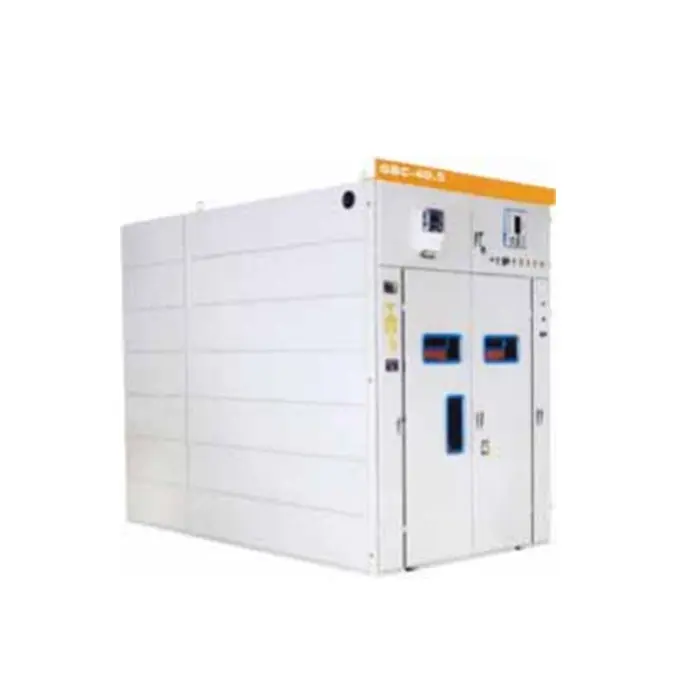
Understanding High-Voltage Switchgear: Key Components Explained
Modern power distribution systems depend on carefully designed units where each part works to make the whole system safe and reliable. Because these systems are so complicated, it's important to choose the right parts carefully, especially when jobs have to be finished quickly and in harsh situations.
Circuit Breakers: The Heart of Protection
Circuit breakers are the most important safety device in any switchgear system. These parts instantly cut off fault currents, which keeps equipment further down the line from being badly damaged. Vacuum circuit breakers have replaced older SF6 technology as the standard for 6kV to 40.5kV uses because they don't need to be maintained and are better for the environment. Yuguang's vacuum circuit breakers use permanent magnet working mechanisms that make them very reliable even after many switching cycles and don't need to be serviced regularly, which saves operations teams a lot of money when they are in charge of multiple installations.
The arc-extinguishing chamber in vacuum breakers makes a setting where electrical sparks can go out on their own in milliseconds. This quick stoppage feature keeps transformers, motors, and other important assets safe from damage caused by short circuits. Yuguang has created its own arc chamber designs that are protected by 39 patents. These designs ensure better dielectric recovery and longer contact life, even when fault conditions are very bad.
Busbars and Connection Systems
Busbars connect power sources to different circuit branches and spread electricity through the switchgear system. It is important that these copper or aluminum wires can handle the rated currents while also producing as little heat and resistance loss as possible. At higher levels, where shielding coordination is very important, the design problems get worse.
Yuguang uses aerospace-grade precise machining and metals that don't rust to make busbar systems with tight tolerances and great conductivity. The combined modular method lets field workers change individual parts without affecting nearby circuits, which is useful for emergency fixes or system expansions. The life of your equipment is directly affected by how well the busbars are designed. Bad connections can cause hotspots, insulation degradation, and unexpected power blackouts.
Disconnectors and Earthing Switches
Disconnectors in high-voltage switchgear make it easy to separate repair tasks and create visible air breaks that keep technicians safe while working on equipment. In high-voltage switchgear, disconnectors operate after circuit breakers have stopped load currents, but circuit breakers work before disconnectors do. This sequential process in high-voltage switchgear keeps the disconnector device safe from arc damage, ensuring proper isolation and maintenance safety for high-voltage switchgear systems.
Earthing switches work with disconnectors to ground separate circuits and get rid of any leftover charges that could put people in danger. Modern designs include mechanical interlocks that stop disconnectors and earthing switches from closing at the same time. This is an important safety feature that Yuguang builds into all of its products. Field feedback from power plants and factories where mistakes in operation could be fatal has helped improve these linked systems.
Control and Protection Relays
Digital safety switches keep an eye on things like frequency, phase angles, current, and voltage. When something goes wrong, these smart devices send trip signals to circuit breakers and record information about what happened so that it can be analyzed after the fact. Switchgear has changed a lot since traditional relays were replaced with microprocessor-based relays. This change has made predictive maintenance and remote troubleshooting possible.
Yuguang uses advanced relay systems that talk to each other using standard industrial protocols. This makes it easier to connect to SCADA systems that are already in place. This connection lets operations managers check on the health of the whole group of equipment from a central control room, which speeds up the time it takes to fix problems. Procurement managers can plan replacements before they break by keeping an eye on trends in switching cycles, contact wear, and insulator resistance.
Insulation Materials and Enclosure Design
The choice of insulation affects how well switchgear works in a wide range of temperatures, humidity levels, and pollution conditions. For air-insulated designs, the gaps must be carefully measured, and solid insulation uses epoxy resins and composite materials to make patterns that are small. Yuguang's closing systems with an IP67 rating keep internal parts safe from getting wet and getting contaminated with particles, which are common causes of failure in seaside, mining, and chemical processing settings.
Metal-clad containers protect against physical damage and electromagnetic radiation, keeping arc flashes inside of marked areas. Yuguang's modular building theory lets users set up switchgear systems that work with different voltage levels, breaking capacities, and environmental conditions. This ability to change solves a long-standing problem in the industry: standard goods often can't meet the specific needs of each place.
How High-Voltage Switchgear Works: Functions and Operations
The working ideas behind switchgear systems are a mix of electrical science and precise mechanics. Knowing these basics helps engineers choose tools that fits their approach to system security and the speed at which they work.
Fault Interruption and Current Limiting
In high-voltage switchgear, fault currents can rise to fifty times normal operating current within milliseconds. High-voltage switchgear circuit breakers must detect faults, separate contacts against electromagnetic forces, and extinguish the arc before thermal damage occurs. Vacuum breakers in high-voltage switchgear rapidly separate contacts, creating a high-dielectric-strength gap that extinguishes the arc in a vacuum environment. This high-voltage switchgear mechanism ensures reliable fault interruption and protection for power transmission and distribution equipment.
Yuguang's permanent magnet mechanisms keep working speeds constant even if the control voltage changes. This is a reliable benefit for systems that are having problems with power quality. The magnetic field stores kinetic energy that keeps the breakers working even when the power goes out. This keeps the security strong when it's needed the most. This design gets rid of the capacitor trip devices and spring charge motors that make regular systems harder to maintain.
Isolation and Switching Operations
When a fault interrupts normal switching processes, different things need to be thought about. Load swapping interrupts the current in a controlled way, without the strong forces that happen during faults. This job is done by disconnectors and circuit breakers working together in a certain order that keeps an arc from forming across the disconnector contacts.
Yuguang's KYN61-40.5 line uses a handcart design that lets workers take circuit breakers out of powered enclosures without affecting the voltage on the busbar. This feature is very helpful for regular testing, contact checks, and replacements in a situation. Precision guide rails and engagement mechanisms make sure that everything is lined up correctly, and mechanical interlocks stop the entry or removal of anything unless the breaker is open.
Safety Mechanisms and Operator Protection
Modern switchgear has many safety features that keep people from being hurt by electrical dangers. Interlocking systems stop operation patterns that are dangerous, and arc-resistant designs keep fault energy away from areas where the machine is being used. Pressure release vents move hot gases upward, keeping workers in front of the equipment safe.
Yuguang's engineering team has made these safety systems better by working with industrial plant workers and utility repair crews. The designs that were made meet international standards for arc flash while still being easy to use for normal tasks. Touch-safe protection systems keep people from touching live parts by accident, and trapped-key interlocking keeps multiple detached sections from becoming live at the same time. These features address real-life situations where mistakes in the process have led to injuries.
Types of High-Voltage Switchgear and Their Advantages
When choosing the right switching technology, you have to weigh performance needs against space limitations, environmental factors, and cost concerns. For certain uses, each major group has its own unique benefits.
Air-Insulated Switchgear (AIS)
Air-insulated designs use air as the main insulating medium, so there must be a lot of space between electrically charged parts. These systems work best in outdoor substations where there is enough room to accommodate their bigger size. AIS is easy to check because it can be seen. Technicians can use thermal photography and corona detection to spot problems as they start to form.
AIS maintenance is easier because parts are easy to get to, but weather and pollution speed up the insulation's age process. Yuguang's AIS goods have clay barriers that have long creepage distances, which stops contamination flashover in industrial settings. The modular framework design lets setups be done in stages, which works for project plans that need staged commissioning.
Gas-Insulated Switchgear (GIS)
Gas-insulated technology puts switching devices and busbars inside sealed boxes that are filled with sulfur hexafluoride or other gases. This method cuts down on installation space by 90% compared to similar AIS. This makes GIS perfect for substations in cities and indoor uses. Pollution-related problems don't happen in the sealed environment, and repair intervals are much longer.
The bigger original investment in GIS high-voltage switchgear pays off through lower land costs and simplified construction requirements. Yuguang's compact GIS high-voltage switchgear designs serve data centers, airports, and underground power networks where space constraints drive procurement decisions. Gas monitoring systems in high-voltage switchgear detect leaks before dielectric strength drops, maintaining operational safety throughout the high-voltage switchgear lifecycle. This proactive approach protects high-voltage switchgear investments and ensures reliable power distribution.
Metal-Clad vs. Metal-Enclosed Configurations
Metal-clad switchgear has metal barriers that are individually grounded and separate each working section. This dividing wall keeps arc flashes inside the affected area, keeping nearby equipment and people safe. Without turning off the power to the whole assembly, retractable circuit breakers make testing and upkeep easier. This is especially helpful in commercial settings that are open 24 hours a day, seven days a week.
Metal-enclosed designs offer a continuous grounded housing with no separate sections inside. Even though these setups are easier to use and cost less, they need to be completely turned off for upkeep. Yuguang suggests metal-clad versions for mission-critical uses where the extra cost is worth it for maximum uptime. This idea is shown by the GBC-40.5 and KYN61-40.5 models, which provide separated safety without limiting access.
Vacuum vs. SF6 Circuit Breaker Technology
In the 6kV–40.5kV range, vacuum circuit breakers are the most popular choice because they work better in harsh environments and cost less to own. The sealed vacuum interrupters don't need to be refilled with medium and don't release any carbon gases when they're working or when they're being thrown away. Even after thousands of operations, contact wear rates stay very low. This means that the service life is extended beyond 30 years in normal job cycles.
SF6 breakers are better in some high-voltage situations where they need to be able to stop very quickly and in a small package. But environmental laws are making it harder to use SF6, which is pushing people to use vacuums and other tools instead. This change is handled by Yuguang's vacuum breaker portfolio, which offers drop-in replacements for old SF6 equipment while increasing dependability and lowering the cost of upkeep.
Energy Efficiency and Reliability Comparison
Most of the energy lost in switches comes from resistive heating in parts that carry current and dielectric losses in systems that insulate them. High-quality contact surfaces and busbar links keep resistive losses to a minimum, and new insulation materials keep dielectric heating to a minimum. Over decades of use, these factors add up and affect the total cost of ownership.
Because Yuguang focuses on making things very precisely, the contact resistance stays the same after millions of swapping cycles. Ceramic coating and powder coating are surface treatments that are used during production to stop rust and keep transmission even in harsh environments. Independent testing proves that Yuguang goods meet ISO 9001:2015 quality standards and IEC 62271 performance benchmarks. This gives procurement managers realistic reliability data to help them choose which vendors to work with.
Maintenance, Testing, and Troubleshooting of High-Voltage Switchgear
Preventative repair plans keep things from breaking down without warning and increase the useful life of assets. Different types of switchgear have very different upkeep needs, which affects the total cost of ownership over the usual 25–30 year service life.
Routine Maintenance Best Practices
With vacuum circuit breakers, you don't have to do upkeep chores like cleaning the arc chute and dressing the contacts. Environmental forces can't get into the sealed interrupter design, so the dielectric stability stays the same without any help. Yuguang's permanent magnet systems don't need to be adjusted or oiled, so routine upkeep is limited to eye checks and electrical tests.
Busbar connections need to be checked for resistive hotspots on a regular basis to find signs of loose hardware or contact degradation. When done during peak load, infrared thermography shows problems that are starting to form before they break. Yuguang's modular construction theory makes it easy to change parts without taking the whole thing apart. This cuts down on the time needed for upkeep and the money lost because of it.
Every year, disconnector devices should be checked to make sure they are working smoothly and that the contacts are properly engaged. Putting lithium-based conductive grease on moving surfaces keeps them from getting stuck and keeps the electricity flowing. Functional verification of interlocking mechanisms is needed to make sure that safety systems stop dangerous activities, which is a law in most places.
Standard Testing Procedures
Using megohmeters to test insulation resistance makes sure that the dielectric is still there between stages and from powered parts to ground. When resistance goes downward, it means that wetness is getting in or the insulation is breaking down, which needs to be fixed. High-potential testing uses voltages above the maximum levels to show that the insulation can handle short-term overvoltages like those that happen when lightning hits or switches transients.
Contact resistance readings tell you how good the links are for carrying current. High resistance values mean that the material is oxidizing or becoming loose, which needs to be fixed before it gets damaged by heat. Yuguang gives maintenance teams specific testing methods with acceptance criteria that help them decide whether to repair or replace something. These guidelines are based on decades of experience working in a wide range of industries.
Timing tests make sure that the breaker's working speeds stay within the limits, which guarantees good fault interruption performance. Slow touch speeds mean that the mechanism is worn out or that the working mechanisms don't store enough energy. The permanent magnet technology that Yuguang uses keeps working well for a long time, unlike spring-charged devices that often lose their effectiveness over time.
Typical Failure Modes and Diagnostics
Many switching breakdowns are caused by things in the environment. Infiltration of moisture weakens solid shielding and speeds up the rusting of mechanical parts. Particulate pollution makes tracks that cross insulators, which finally lead to flashovers. These weaknesses are fixed by Yuguang's IP67 closing systems, which are especially important in coastal areas and heavy industrial settings where regular designs fail too soon.
Parts that move, like working systems and disconnector linkages, are affected by mechanical wear. Over time, contact loss in circuit breakers makes them less able to stop until they need to be replaced. Yuguang's unique vacuum interrupter designs stretch the life of the contacts, delaying the time when they need to be replaced. This lowers the lifetime maintenance costs compared to regular goods that need to change the contacts in the middle of their useful life.
Control circuit problems in high-voltage switchgear often stem from faulty wiring or inadequate secondary component protection. Surge suppressors for high-voltage switchgear protect sensitive equipment from power transients, while proper cable routing prevents electromagnetic interference. Yuguang provides high-voltage switchgear installers with detailed wiring diagrams and commissioning instructions to avoid common mistakes that compromise system reliability. These high-voltage switchgear guidelines ensure proper installation and long-term operational performance for power distribution networks.
Procurement Considerations for High-Voltage Switchgear
When making strategic buying choices, you have to weigh technical performance against business terms, delivery dates, and promises of long-term support. Because these purchases are so complicated, they need to be evaluated in a way that takes into account the needs of many stakeholders.
Technical Capacity and Switchgear Selection
The recommended voltage and current must match the needs of the system and leave room for future load growth. Fault interruption capability is based on breaking capacity. Ratings that are too low can cause catastrophic breakdowns during short circuits. Yuguang's product line of 6kV to 40.5kV meets most utility and industry needs, and there are also ways to make the products fit unique needs.
The type of operating system affects how much it costs to maintain and how long it lasts. When tasks need to be done often, permanent magnet systems are much better than spring-charged or pneumatic options. Over 20-year review periods, Yuguang's designs save money because they don't need to be maintained. This makes the case for high-end goods with lower total ownership costs stronger.
Environmental ratings must match the conditions of placement. Above 1,000 meters, elevation changes are needed, which means that insulation gaps need to be bigger. Extreme temperatures require special materials and design factors to make sure that the device works reliably within certain temperature ranges. Yuguang's engineering team offers free technical talks to help buyers understand these specs and avoid the costly mistakes that happen when projects only use catalog choices.
Reliability Metrics and Warranty Coverage
Mean time between failures (MTBF) is a measure of predicted reliability. Higher numbers mean that the design and production quality is better. Reputable makers back up their MTBF claims with statistical data and field performance from groups of products that have already been placed. Yuguang's approval as a High and New Technology Enterprise shows that it can be trusted, as shown by independent tests and customer comments.
Warranty terms show that the company that made the product is confident in its longevity. Full coverage that includes parts, work, and consequential losses shows that you care about your customers. Yuguang's warranty programs include installation help, maintenance agreements, extra parts delivery, and free change plans to fix problems that only happen at the job site that are found during commissioning.
Lead Times and Installation Support
Standard goods usually ship 7–15 days after an order is confirmed, which helps with jobs that need to be done quickly and on a tight schedule. For planning, production, and factory testing on custom designs, it takes 30 to 60 days. Yuguang keeps a stock of common parts that can be quickly put together in standard configurations. They also allow small purchases from single units, which gives them more freedom than mass-production sources that require minimum order amounts.
Installation services have a big effect on how long a job takes to finish. Commissioning help from the manufacturer makes sure that everything is set up correctly and trains customer staff on how to use the equipment. Yuguang's full-chain service approach includes installation help and real-time expert support, which makes it easier for maintenance teams that aren't familiar with certain product features to learn how to use them.
After-Sales Support and Service Networks
When problems happen, responsive technical help keeps breakdowns from lasting for a long time. When it comes to reaction time, manufacturers who keep their service infrastructure in the United States are faster than foreign suppliers who depend on shipping delays for parts and staff. Yuguang's Baoji factory base helps them quickly ship parts to domestic markets and form service partnerships with foreign customers who need help in their own language.
Equipment's life depends on how easy it is to get replacement parts. When makers stop making certain products, users can't find the necessary replacement parts, this is called obsolescence. Yuguang's dedication to backward compatibility and long-term parts support safeguards customers' investments, solving a procurement issue that is often missed when choosing the first provider.
Conclusion
Procurement workers can make wise choices that balance performance, stability, and cost when they are familiar with the parts and functions of High-voltage switchgear. Protection systems, busbars, circuit breakers, and disconnectors must all work together in sturdy cases that were designed to withstand particular working conditions. Which air-insulated, gas-insulated, or other breaker technology to use relies on the needs of the application, available space, and preferred upkeep methods. Yuguang's integrated approach, which combines proprietary technology, modular design, and full service support, solves problems in the industry like tools not working with each other, heavy upkeep needs, supply delays, and the need to change to different situations. Strategic buying that takes into account technical specs, reliability measures, and long-term support skills increases system uptime while lowering total ownership costs over many decades of service.
FAQ
What are the primary differences between air-insulated and gas-insulated switchgear?
Air-insulated switchgear is protected by the air around it. It needs bigger gaps and can be installed outside if there is enough room. Gas-insulated switchgear uses sealed chambers with better dielectric gases to reduce its size by 90% and protect it better from external contamination. This makes it perfect for substations in cities and indoor facilities.
How often should vacuum circuit breakers undergo maintenance testing?
Compared to other technologies, vacuum circuit breakers don't need as much upkeep. Inspections once a year that focus on measuring contact resistance, trying insulation, and checking motor timing make sure that the system keeps working well. Yuguang's permanent magnet systems don't need to be oiled or adjusted, so it's possible to go longer between big upkeep tasks.
Can switchgear be customized for harsh industrial environments?
High altitudes, corrosive atmospheres, harsh temperatures, and earthquake conditions are all things that modern makers can customize to meet your needs. Yuguang's scenario-based engineering skills can work in difficult settings by using better sealing, special coatings, and different insulation gaps. These skills are backed by 39 patents that protect unique design innovations.
Trusted High-Voltage Switchgear Manufacturer for Your Critical Power Infrastructure
Yuguang Electric helps buying teams with difficult power distribution projects by providing designed solutions. Our 6kV–40.5KV product line solves problems with equipment compatibility by using flexible designs that can be used in a wide range of situations, from heavy industrial work to integrating green energy. Yuguang blends technical greatness with useful service support. Its 39 patents protect new technologies and its ISO 9001:2015 certification makes sure quality is always the same. We know that project deadlines are tight, so we can deliver standard goods within 7–15 days and also meet special needs. Our team offers expert consultations, installation advice, and thorough after-sales support whether you need a High-voltage switchgear provider for small-volume trials or large-scale installs. You can email us at ygvcb@hotmail.com to talk about your unique needs and find out how Yuguang's maintenance-free vacuum circuit breaker technology can help you save money and make your system more reliable.
References
1. IEEE Standard C37.04-2018, IEEE Standard for Ratings and Requirements for AC High-Voltage Circuit Breakers with Rated Maximum Voltage Above 1000V, Institute of Electrical and Electronics Engineers, 2018.
2. International Electrotechnical Commission, IEC 62271-200: AC Metal-Enclosed Switchgear and Controlgear for Rated Voltages Above 1 kV and Up to and Including 52 kV, Edition 2.0, 2011.
3. Garzon, R.D., High Voltage Circuit Breakers: Design and Applications, Second Edition, CRC Press, 2002.
4. Kappenman, J.G., et al., "Reliability Considerations for Utility Substations Operating Under Extreme Environmental Conditions," IEEE Transactions on Power Delivery, Vol. 28, No. 3, 2013.
5. Ryan, Hugh M., High Voltage Engineering and Testing, Third Edition, Institution of Engineering and Technology, 2013.
6. Smeets, R.P.P., et al., "Switching in Electrical Transmission and Distribution Systems: Principles and Practice," John Wiley & Sons, 2015.

Send Inquiry
You may like
