
Guide to Circuit Breaker Mechanism Maintenance and Replacement
A circuit breaker mechanism is the operational heart of any high-voltage protection system. It controls the opening and closing of electrical contacts, coordinates the trip unit response, and manages arc extinction during fault conditions. Whether you manage a large power plant, an industrial facility, or a critical infrastructure project, understanding how to maintain and replace these mechanisms directly affects system uptime, personnel safety, and long-term operating costs. This guide walks through everything you need to know — from fundamentals to field-proven replacement strategies.
Understanding Circuit Breaker Mechanism Fundamentals
Key Components and Operating Principles
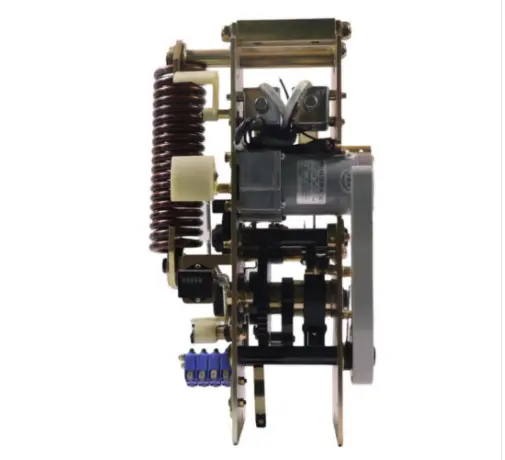
There are three main parts that make up a circuit breaker: the working mechanism (which can be a spring, electromagnetic, or permanent magnet type), the trip unit (which can be thermal, magnetic, or electrical), and the arc-extinguishing chamber. When there is a problem, the trip unit notices an unusual current and tells the working mechanism to release the stored energy, which moves the contacts apart. The arc is then put out within milliseconds by the arc-extinguishing chamber, which is usually a vacuum interrupter at medium voltage levels.
More and more modern vacuum circuit breakers that work at 12kV to 40.5kV use spring or permanent magnet systems because they respond faster, don't need to be oiled as often, and can handle more than 10,000 operations. Electronic trip units are even more accurate because they allow for real-time diagnostics and adjustable overcurrent thresholds.
For purchase engineers, understanding these basics is very important. If you choose the wrong type of mechanism for your voltage class or operating environment, there are compatibility issues that will cost a lot more to fix after installation than they would have before.
Maintenance of Circuit Breaker Mechanisms: Best Practices
One of the worst things that can happen in substation management is skipping regular maintenance. Standards IEC 62271-100 and GB 1984 say that medium-voltage circuit breakers should be inspected every three to five years or every 2,000 switching operations, whichever comes first. This inspection schedule is closely tied to the circuit breaker mechanism, since its mechanical components are the parts most likely to wear out over time.
Routine Inspection Checklist
A planned repair cycle keeps both the tools and the people who work on it safe. Here are the most important checks that skilled techs do at every service interval:
- Contact resistance measurement: Use a micro-ohmmeter to verify contact resistance stays within the manufacturer's rated range. Rising resistance signals erosion or contamination.
- Insulation resistance testing: Apply a 2,500V megohmmeter across open contacts and between phases. Values below 1,000 MΩ warrant immediate investigation.
- Spring mechanism verification: Inspect closing and opening spring tension, lubricate cam surfaces with approved grease, and check for fatigue cracks on retaining pins.
- Auxiliary circuit inspection: Verify that secondary control voltage remains between 85% and 110% of rated voltage. Deviations outside this band cause closing failures.
- Arc-extinguishing chamber assessment: For vacuum interrupters, check vacuum integrity using the manufacturer's prescribed high-potential test. For SF6 units, monitor gas pressure via the density relay.
When done on a regular basis, these checks don't take long and stop the kind of catastrophic fails that shut down whole feeders for days. In a steel mill or data center, a single unplanned outage can cost hundreds of thousands of dollars in lost production, which is a lot more than the annual budget for maintaining the whole substation.
Signs That Demand Immediate Attention
A mechanism has reached the end of its useful life when it makes strange noises while working, closes slowly, contacts weld together after a fault is fixed, and trips randomly when the load is normal. If two or more of these signs show up at the same time, you should plan to replace the item instead of fixing it.
Replacement Strategies for Circuit Breaker Mechanisms
Choosing the Right Mechanism Type
When choosing a replacement, it's not just about meeting the power class. Engineers have to think about technical parameters like rated short-circuit breaking current (25kA to 31.5kA at 40.5kV), power frequency withstand voltage, and lightning impulse withstand voltage (BIL), as well as application-specific factors like operating frequency, ambient temperature range, altitude, and seismic zone requirements. The circuit breaker mechanism must also be carefully evaluated to ensure reliable switching and protection performance.
Here are the main selection factors that lead to good replacements:
- Electromagnetic mechanisms suit low-frequency switching applications where simplicity and robustness matter more than speed.
- Spring mechanisms are the industry standard for medium-voltage switchgear, offering reliable stored-energy operation independent of control power during the actual trip event.
- Permanent magnet mechanisms excel in applications demanding high switching frequency, low maintenance, and precise position control — such as wind turbine step-up transformers or urban rail traction substations.
When replacing old switchgear in power plants or industrial facilities with short break gaps, these differences are very important. When procurement managers pick the wrong group, compatibility problems happen during launching. This is exactly what they want to avoid.
Sourcing and Installation Best Practices
Always buy operating mechanisms from companies whose products have IEC and GB certifications that can be checked. When fake or uncertified parts are used, they can fail in unpredictable ways that regular testing might not catch before they are turned on. During installation, make sure the interlock processes work, tighten the screws to the recommended levels, and run the circuit through at least three full cycles of open-close-open with no load before turning it on.
Comparative Insights: Circuit Breaker Mechanisms vs. Alternatives
In lower-voltage distribution networks, fuses are still common, but they can't be reset after use and don't have any protection settings that can be changed. In commercial settings with medium power, circuit breakers with electronic trip units always do better than fuses in terms of dependability, selectivity, and total cost of ownership over the course of 20 years.
High-voltage transmission equipment used to be mostly made of pneumatic mechanisms, but their compressed-air infrastructure needs a lot of upkeep and poses a risk of moisture contamination. High contact force is possible with hydraulic devices, but they need protected oil systems that break down at very high or very low temperatures. Both of the other options have mostly been replaced by spring and permanent magnet systems in new setups because they don't need an extra energy source and are simpler to build.
The move toward electronic trip units is part of a larger trend in the industry: digital substations and smart grid integration need ways to send troubleshooting data upstream. When facilities buy protection systems that meet IEC 61850 standards, they should look for ones that have built-in sensor outputs that help with predictive repair processes. The circuit breaker mechanism also plays a critical role in this digital ecosystem, as its status and operation data can be captured and transmitted upstream to support condition monitoring and predictive maintenance.
Why Yuguang Mechanisms Deliver Where Others Fall Short
Shaanxi Yuguang Electric Co., Ltd. was founded in 2008 and is based in Baoji, which is known as China's main production base for vacuum circuit breakers. The company designs and makes operating mechanisms that work with voltages ranging from 6kV to 40.5kV. Yuguang's goods meet the strict needs of power lines, metallurgical plants, industrial facilities, and people who run urban infrastructure all over the world. They have 39 patents and certifications, such as ISO 9001:2015, ISO 14001, and ISO 45001.
Yuguang is really different from other commodity suppliers because it uses an integrated approach. Precision aerospace-grade tools are used to machine core parts like solid-sealed poles and arc-extinguishing chambers. Ceramic and powder coating treatments are applied to semi-finished assemblies and then cured at a constant temperature to make them more resistant to corrosion in harsh environments. Before being put in wooden crates that meet international shipping standards and are resistant to shock and moisture, each unit goes through several rounds of functional testing that check for arc extinction, insulation integrity, and load adaptability.
Yuguang works with electromagnetic, spring, and permanent magnet mechanisms. All of them are designed to work accurately and reliably on a variety of switchgear platforms. Standard products are sent out within 7 to 15 days, and customized configurations that can work in high-altitude sites, humid coastal areas, or mining dust environments are sent out within 30 to 60 days. Full-chain support includes installation help, maintenance agreements, spare parts supply, and free planning for changes. The minimum order is one unit.
Conclusion
People and property are both protected when operating mechanisms are maintained and replaced on time. A good maintenance plan based on IEC and GB standards can make equipment last longer and cut down on unplanned downtime. When it's time to change something, the circuit breaker mechanism must be matched to the application factors, which include voltage class, switching frequency, and environmental conditions. Yuguang is a reliable supplier of circuit breakers for difficult global projects thanks to its patented technology, strict manufacturing, and full-lifecycle service.
FAQ
How often should a circuit breaker mechanism be serviced?
IEC 62271-100 recommends inspection every 2,000 operations or every three to five years. Spring mechanisms specifically need lubrication checks and fastener verification at each interval.
Can an electronic trip unit be retrofitted onto an older mechanical breaker?
Retrofitting is possible in many cases, but requires careful compatibility assessment of the secondary wiring, control voltage rating, and physical mounting dimensions. Consult the original equipment documentation before proceeding.
What causes nuisance tripping under normal load?
Common causes include a trip unit threshold set too low, secondary control voltage outside the 85%–110% band, mechanical interlock engagement, or partial discharge activity within the insulation system degrading signal integrity.
Does altitude affect circuit breaker performance?
Standard ratings apply up to 1,000 meters. Above that elevation, external insulation strength decreases, requiring increased creepage distances or the use of solid-insulated poles to prevent flashover.
What certifications should I require from a mechanism supplier?
At minimum, require IEC 62271-100 compliance, ISO 9001:2015 certification, and national-level type test reports. For projects subject to GB standards, confirm the supplier holds current national authoritative inspection certificates.
Partner With Yuguang — Trusted Circuit Breaker Mechanism Manufacturer
The engineers at Yuguang are ready to help you with your next project or upgrade. As a well-known company that makes circuit breakers for voltages between 6kV and 40.5kV, Yuguang meets all IEC and GB standards and is known for its scientific accuracy, on-time delivery, and excellent service from start to finish. You can look at the full product catalog at ygvcb.com, or you can email them at ygvcb@hotmail.com to get a technical consultation, review of custom specifications, or sample inquiry right away.
References
1. International Electrotechnical Commission. IEC 62271-100: High-Voltage Switchgear and Controlgear — Part 100: Alternating-Current Circuit Breakers. IEC, 2021.
2. IEEE Standards Association. IEEE C37.04: Standard for Ratings and Requirements for AC High-Voltage Circuit Breakers. IEEE, 2018.
3. Blackburn, J. Lewis, and Thomas J. Domin. Protective Relaying: Principles and Applications. CRC Press, 2014.
4. Greenwood, Allan. Electrical Transients in Power Systems. Wiley-Interscience, 1991.
5. National Standards of China. GB 1984: High-Voltage Alternating-Current Circuit Breakers. Standardization Administration of China, 2014.
6. Electric Power Research Institute. Substation Equipment Reliability and Maintenance Guide. EPRI, 2019.

Send Inquiry
You may like
