
High-Voltage Contactor vs Circuit Breaker: Key Differences
Electrical experts and people who work in buying need to know the difference between high-voltage contactors and circuit breakers. A high-voltage contactor is mainly a switching device that can be managed from a distance and is designed for use. It uses electromagnetic coils to turn on and off. Circuit breakers, on the other hand, are safety devices that instantly cut off electrical lines when they detect a fault. Both contactors and circuit breakers can handle high-voltage uses, but contactors are better at normal switching tasks and have longer electrical durability, while circuit breakers are better at fault prevention and have more advanced arc reduction capabilities.
Understanding High-Voltage Contactors: Design and Functionality
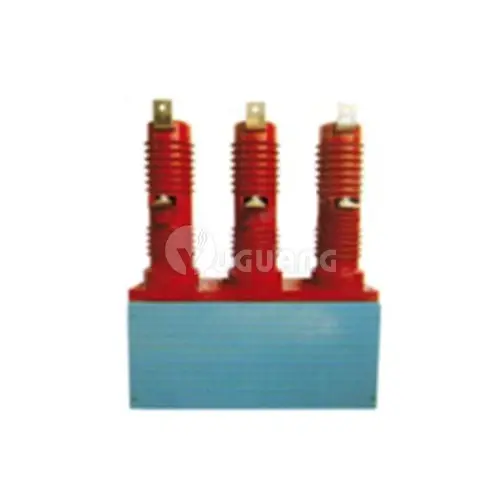
When it comes to controlling circuits reliably in harsh electrical settings, high-voltage contactors are very complex switching devices. These gadgets work by using electromagnetic fields. When the coil is turned on, magnetic fields are created that make the switching contacts move. The basic form is made up of several important parts that work together. When turned on, the electromagnetic coil creates exact magnetic forces and acts as the main triggering device.
Contact systems use special materials to keep contact resistance as low as possible and make sure that the flow of current is optimal. Arc suppression rooms keep electrical sparks under control during switching activities by using vacuum or gas-filled spaces. Modern contactors use high-tech shielding materials that are approved for certain voltage levels. In industrial settings, these levels are usually between 6KV and 40.5KV. Thermal management systems keep machines from getting too hot when they're running all the time, and safety interlocks keep operators safe.
Three core design advantages distinguish quality contactors:
- Exceptional switching frequency capability - up to 1,000,000 mechanical operations
- Minimal contact wear through advanced metallurgy and vacuum arc extinction
- Precise relay control integration for automated system operation
If you need frequent switching control for motor starting or capacitor bank operations, high-voltage contactors provide optimal performance and longevity.
Circuit Breaker Fundamentals: Protection-Focused Engineering
Protective features are more important to circuit breakers than switching frequency, and they have advanced problem recognition and blocking features. These devices constantly check the electrical factors and react immediately to overcurrent, short-circuit, or ground fault situations. Modern circuit breakers have more than one way to protect you. Voltage sensors keep an eye on the system's factors, while current generators find fault currents.
As soon as a fault is detected, trip devices go into action, quickly cutting off the circuit. Arc extinction devices stop fault currents safely by using SF6 gas, vacuum, or oil as a medium. For protection cooperation to work, trip features must be precisely calibrated. Time-current curves set the working settings and make sure that upstream and downstream safety devices work together in the right way. These days, digital breakers have choices that can be programmed to give you more options.
Important safety features are:
- Instantaneous trip capability for short-circuit protection
- Time-delayed characteristics for overload coordination
- Ground fault detection for enhanced safety
- Arc flash mitigation through rapid fault clearing
If you need comprehensive fault protection for power distribution systems, circuit breakers deliver superior safety and system protection capabilities.
Application Scenarios and Industry Requirements
Specific switching qualities are needed for industrial uses because of how they work. For engine support systems, power plants use High-voltage contactors, and circuit breakers protect the main distribution lines. Contactors are used to handle electric arc furnaces in steel factories, where switching processes happen thousands of times every day. For metalworking processes to work, the switching devices must be stable and able to handle inductive loads without breaking down. Putting in renewable energy sources comes with its own set of problems. For controlling the turbines in wind power systems, special contactors are used. On the other hand, advanced circuit breakers are needed for surge safety in solar installations.
Some uses for critical systems are:
- Urban rail transit systems - contactor-based traction motor control
- Airport ground power - circuit breaker protection for passenger boarding bridges
- Data centers - both devices for redundant power distribution
- Chemical processing - explosion-proof variants for hazardous environments
Environmental factors affect the choice of tools. Industrial settings that are rough need better seals (IP67 grade) and materials that don't rust. Extremes of temperature need special protection and heat control. If you need tools for certain industrial uses, scenario-based customization makes sure that it works well and follows all the rules.
Cost Analysis and Long-Term Investment Considerations
The costs of buying something are only a small part of the total costs of owning. Life-cycle analysis shows that contactors and circuit breakers are very different in how much upkeep they need and how well they work. High-voltage contactors usually need less money up front, but they need to be serviced regularly. When to check and repair contacts depends on how often they are switched and what kind of load they are dealing with.
When compared to air-insulated options, vacuum contactors have longer repair times. Circuit breakers cost more at first because they have more complicated safety features and are built to last. The main maintenance tasks are to calibrate the safety system and check the motor parts. Modern digital breakers can do predictive repair because they have tracking built in.
Operational cost factors include:
- Energy losses - contact resistance and auxiliary power consumption
- Downtime costs - planned maintenance windows and emergency repairs
- Spare parts inventory - contact sets, coils, and protection modules
- Training requirements - operator certification and technical expertise
Reliability metrics have a direct and significant influence on long-term operational costs, maintenance planning, and system availability. Mean Time Between Failures (MTBF) for high-quality contactors can exceed 20 years under normal operating conditions, reducing the frequency of replacements and service interruptions.
Circuit breaker reliability, however, is more closely linked to the complexity of the protection system and surrounding environmental factors. When conducting equipment selection, a comprehensive cost analysis that considers total cost of ownership—including maintenance, downtime, and lifecycle performance—supports more informed and optimal investment decisions.
Conclusion
High-voltage contactors and circuit breakers serve distinct roles in electrical power systems, each optimized for specific operational requirements. Contactors excel in frequent switching applications with superior electrical durability and minimal maintenance requirements. Circuit breakers provide essential fault protection through sophisticated detection and interruption capabilities.
Equipment selection depends on application-specific requirements, including switching frequency, fault current levels, environmental conditions, and maintenance capabilities. Understanding these fundamental differences enables optimal procurement decisions that enhance system reliability while minimizing total ownership costs. Partnering with experienced manufacturers ensures access to technical expertise and comprehensive support throughout the equipment lifecycle.
Choose Yuguang Electric: Your Trusted High-Voltage Contactor Manufacturer
Selecting the right high-voltage contactor supplier significantly impacts project success and long-term operational reliability. Yuguang Electric combines advanced manufacturing capabilities with comprehensive technical support to deliver exceptional value for demanding applications.
Our manufacturing excellence stems from 15 years of specialized experience in vacuum circuit breaker and contactor production. Located in Baoji, Shaanxi - China's premier vacuum circuit breaker production base - we leverage regional expertise and supply chain advantages to deliver superior products.
Yuguang's competitive advantages include:
- Comprehensive Voltage Range: Complete coverage from 6KV to 40.5KV with scenario-specific customization
- Proven Innovation: 39 patents demonstrating continuous R&D advancement and technical leadership
- Quality Certifications: ISO 9001:2015, national high-tech enterprise recognition, and authoritative industry qualifications
- Integrated Modular Design: Compact construction with IP67 sealing for harsh environmental conditions
- Extended Service Life: Advanced vacuum arc extinction technology ensures over 1,000,000 switching operations
- Rapid Response: Standard products delivered in 7-15 days, customized solutions in 30-60 days
- Flexible MOQ: Single unit availability supporting both small projects and large-scale installations
- Full-Chain Service: Complete support from R&D through installation, commissioning, and after-sales maintenance
- Global Capability: International shipping standards and cross-border technical support
- Cost-Effective Solutions: Competitive pricing without compromising quality or reliability
Our advanced manufacturing process ensures consistent quality through rigorous material selection, precision assembly, and comprehensive testing. Multi-round performance verification guarantees compliance with national standards and customer specifications.
Experience the Yuguang difference in high-voltage switching solutions. Our technical team provides comprehensive consultation, calculations, and drawings to support your specific application requirements. Contact us at ygvcb@hotmail.com to discuss your high-voltage contactor needs and discover customized solutions for your critical applications.
References
1. IEEE Standard C37.012-2014: "IEEE Application Guide for Capacitance Current Switching for AC High-Voltage Circuit Breakers Rated on a Symmetrical Current Basis."
2. IEC 62271-106:2021: "High-voltage switchgear and controlgear - Part 106: Alternating current contactors for voltages above 1 kV up to and including 12 kV V."
3. National Electrical Manufacturers Association (NEMA) Standard SG 4-2020: "Alternating Current High-Voltage Circuit Breakers."
4. Zhang, Wei, and Liu, Ming. "Comparative Analysis of Vacuum Contactors and SF6 Circuit Breakers in Industrial Applications." Journal of Electrical Engineering Technology, Vol. 18, No. 3, 2023
5. International Electrotechnical Commission IEC 62271-100:2021: "High-voltage switchgear and controlgear - Part 100: Alternating-current circuit-breakers."
6. Chen, Xiaoping. "Advanced Materials and Design Optimization in High-Voltage Switching Devices." IEEE Transactions on Power Delivery, Vol. 38, No. 2, 2023

Send Inquiry
You may like
