
High Voltage Electrical Systems: How to Handle them Safely and Professionally
Working with high-voltage electrical appliances requires accuracy, skill, and strict adherence to safety rules. High-voltage electrical appliances work at voltages higher than normal—usually from 6KV and up—and power important structures in fields like steel production, chemical processing, power generation, and public transportation. If these systems are not managed properly, they can fail catastrophically, cause accidents at work, and cause expensive business downtime. Professional handling includes knowing the different types of voltage, following international safety rules, doing regular maintenance, and working with dependable providers who can provide unique solutions with technical help and quick response times.
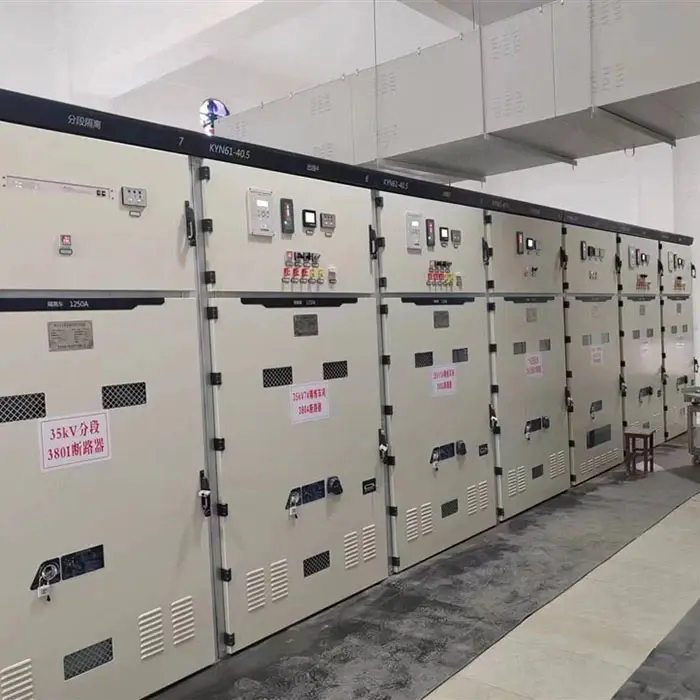
Understanding High Voltage Electrical Systems
Defining Voltage Classifications and Core Components
High voltage systems are the backbone of industrial power distribution. They include equipment that works between 6KV and 40.5KV. These systems have transformers that change the voltage, switchgears that manage and safeguard circuits, circuit breakers that stop fault currents, and vacuum load switches made to work many times. Each part does its own thing to keep the flow of electricity stable and protect against overloads, short circuits, and broken equipment. When procurement managers and top engineers know about these factors, they can choose equipment that fits the needs of their buildings in terms of working demands, voltage needs, and environmental conditions.
Typical Configurations Across Industries
Configurations need to be designed for each area. Thermal power plants look for circuit breakers that are strong and can handle high fault currents when the grid goes down. For wind and solar farms to work reliably for decades, the equipment they use needs to be able to handle dust, humidity, and changes in temperature. Metallurgical processes need load switches that can handle a lot of swapping rounds without breaking down. To keep services running smoothly, data centers and airports need flexible systems that take up little space and are very reliable. Yuguang's combined modular design meets these different needs by customizing equipment based on different scenarios. This lets it work in harsh settings and follow the rules of its industry.
Operational Principles Behind Reliable Performance
High-voltage systems that work well depend on vacuum arc-extinguishing technology and permanent magnet working mechanisms. When a circuit is interrupted, vacuum interrupters stop electrical sparks from happening. This keeps equipment from getting damaged and keeps fires from starting. By lowering mechanical wear and energy use during switching operations, permanent magnet systems get rid of the need for regular upkeep. These technologies make tools last longer while keeping up its performance even in tough situations. Yuguang's 39 unique innovations use aerospace-grade precision production for core parts like solid-sealed poles and arc-extinguishing chambers. This makes sure that the products are accurate, the seals stay strong, and they work well for a long time.
Safety Standards and Best Practices for Handling High Voltage Systems
International Compliance and Certification Requirements
Businesses that use high-voltage electrical appliances without following safety rules run the risk of fines and lawsuits from regulators. IEC 62271 sets rules for high-voltage control and switchgear, and IEEE C37 series rules cover circuit breakers and switching devices. Compliance makes sure that equipment can handle pressures from electrical, mechanical, and external factors for as long as it is used. Yuguang has certificates in ISO 9001:2015, ISO 14001, and ISO 45001, which show that he is dedicated to quality management, protecting the environment, and meeting health and safety standards at work. These skills meet the standards for bidding on infrastructure projects and give procurement managers peace of mind that they are putting source reputation first.
Risk Mitigation Through PPE and Site Protocols
When working with high voltage systems, people need to wear the right safety gear, like insulated gloves rated for the voltage levels they will be working with, arc-rated clothes, face shields, and voltage-rated tools. Site rules require lockout-tagout steps before repair, using voltage detectors to check clearance, and staying away from energized parts at all times. Regular safety training makes it easier to spot hazards and know what to do in an emergency. Operations teams benefit from providers who help with installation and offer expert support to make sure that the system is safely put into use and that it is maintained on a regular basis. Yuguang's full-chain service model includes expert help on-site during the installation and commissioning steps of the equipment. This lowers the risks that come with setting up the equipment incorrectly.
Maintenance Practices for Equipment Longevity
Inspections done on a regular basis find early warning signs like strange noises, too much heat, and insulation wear and tear before they become major problems. With predictive tracking technologies, things like contact resistance, insulation integrity, and working temperatures can be kept an eye on. This lets maintenance teams plan their work for planned downtime instead of having to respond to breakdowns that happen out of the blue. Compared to traditional designs, vacuum circuit breakers and load switches with permanent magnet mechanisms need less upkeep. This cuts down on both work costs and equipment that isn't available. Upkeep-free vacuum arc extinguishing and fixed magnet systems from Yuguang make sure that machines work reliably for long periods of time. This solves the problem of hard upkeep that many manufacturing facilities have.
Common Challenges and Professional Solutions in High Voltage Systems
Identifying Equipment Compatibility and Integration Issues
Equipment from different makers is often used in complex industrial power systems, which can make installation and operation more difficult. Communication methods that don't work together properly, mechanical gaps, and different security coordination schemes can all make a system less reliable. When equipment comes without the right technical documentation or when suppliers can't provide engineering help for system integration, it causes project managers to be late. To deal with compatibility, suppliers need to have strong research and development (R&D) departments that know how to adapt goods to different working settings. Yuguang's scenario-based customization tools make sure that equipment works well with existing infrastructure, whether it's being used to fix up old buildings or helping with brand-new construction projects.
Overcoming Delivery Delays and Supply Chain Disruptions
Due dates for projects are very tight, so suppliers can't be late. Late deliveries of tools mess up building schedules, stall commissioning, and raise project costs by making labor and financing costs last longer. Purchasing managers need sellers with dependable supply lines, enough stock, and the ability to change how much they can make. Planning a project is easier when you know what to expect. Standard goods take 7–15 days to make, and unique solutions take 30–60 days. Advanced production lines and quality control systems at Yuguang make sure that the output is always the same, and the company can handle both small orders starting at one unit and large orders for projects that need a lot of it. International standards-compliant wooden packing that is resistant to moisture and shock keeps equipment safe while it is being shipped long distances to customers abroad.
Resolving Operational Failures Through Expert Support
Rapid technical reaction decides whether problems cause short interruptions or long outages when equipment breaks down. Operations teams need providers who can help with diagnosis, provide extra parts, and do work in the field. Overheating from bad ventilation, insulation breaking down from exposure to the environment, and mechanical wear in switching processes are all common ways for things to go wrong. To solve problems effectively, you need to know how the equipment was made, how it has been used in the past, and what factors are affecting it. Yuguang's full after-sales service includes installation advice, maintenance agreements, spare parts supply, and free change planning. This gives you the quick answer and professional handling you need to keep operations running smoothly and minimize downtime.
Decision-Making Guide: Choosing the Right High Voltage Electrical Appliances for Your Business
Voltage Level Selection and Application Context
Choosing the right high-voltage electrical appliances relies on how much power is needed, how far the signal needs to travel, and how the load is configured. Systems that work at 6KV to 12KV are good for medium-sized buildings and distribution networks. Systems that work at 24KV to 40.5KV are better for power plants, big industries, and regional transmission networks that need to handle more power. It is most efficient and saves money on equipment costs to match power levels to operating needs. Yuguang can work with voltages from 6KV to 40.5KV, so it can be used in a wide range of situations. Its permanent magnet working mechanisms make it easy to use in situations where it needs to be used often, but would normally need a lot of care.
Evaluating Supplier Capabilities Beyond Product Specifications
When you compare providers, you need to look at more than just detailed datasheets. Dependability depends on how well something is made, how well it is tested, and how well it can be supported in the future. Suppliers that do their own research and development, have full testing centers, and have multiple certifications show that they are dedicated to making great products. Siemens, ABB, and Schneider Electric have built their names over many years by coming up with new ideas and setting up global service networks. New sellers with specialized skills that give them a competitive edge should be looked at if they can back up their claims with references that can be checked. Yuguang is a National High-Tech Enterprise with 39 patents, strong credentials, and production facilities in China's vacuum circuit breaker manufacturing hub. This gives the company the ability to be innovative and cost-effectiveness, combining experience with making things in China with the ability to provide services across borders that are tailored to international markets.
Procurement Considerations for Long-Term Value
The initial buy price is only one part of the total cost of ownership. Other parts include installation costs, upkeep needs, spare parts availability, and the expected service life. Equipment that costs less at first but needs to be maintained more often and doesn't last as long usually ends up costing more in the long run. Long-term value is affected by warranty terms, how quickly expert help is responded to, and how stable the supplier's finances are. Bulk prices and flexible minimum order amounts make it possible to meet the needs of both big projects and ongoing upkeep inventory. When you know about these things, you can make smart purchases that are in line with your business goals and budget, and you can reduce project uncertainty by working with dependable suppliers.
Yuguang's integrated modular design has a small footprint, good sealing, and a longer working life, which lowers the costs of both installation and long-term upkeep. Their one-stop service plan, which includes research and development, production, installation, and assistance after the sale, gets rid of the coordination problems that come with working with multiple vendors. Yuguang supports flexible buying by taking orders starting from a single unit and offering customization for specific needs. This way, solutions can be tailored to specific operating situations instead of causing facilities to work around the limits of standard products.
Future Trends and Innovations in High Voltage Electrical Appliances
Smart Grid Integration and IoT Connectivity
More and more, digital technologies are being used in modern high voltage systems to allow for remote tracking, automatic diagnostics, and planned upkeep. IoT-enabled sensors keep an eye on how things are running in real time and send information to central control systems, where analytics look for performance trends and new problems. Smart grid features allow for dynamic load balancing, the use of green energy, and demand response programs that make the best use of how power is distributed across complicated networks. Through proactive rather than reactive management, these improvements make systems more reliable, use less energy, and lower running costs.
Sustainability and Energy Efficiency Advances
Environmental laws and companies' promises to be more environmentally friendly make people want to buy high-voltage electrical appliances that are better for the environment. Energy-efficient designs keep power losses to a minimum while they're in use, and eco-friendly materials and manufacturing methods lower carbon loads. Longer machine lifespans mean less trash and replacements that are needed less often. To use renewable energy, you need tools that can handle changing generation trends and power flows going both ways. When suppliers put money into environmentally friendly ways of making things and new products, they set their customers up to meet changing government rules and help the environment at the same time.
Adapting Procurement Strategies for Technological Evolution
When technology changes quickly, it's important to have procurement models that balance short-term business needs with the ability to adapt in the long run. When making a purchase choice, you should think about how to upgrade, how well the product will work with new technologies, and how committed the supplier is to continued innovation. By working with providers who spend in research and development (R&D) and make changes to their products quickly, you can get access to new features without having to replace old equipment. Yuguang's 39 patents and recognition as a National High-Tech Enterprise show that the company is committed to ongoing innovation. This gives customers faith that they can access new technologies while still being able to use current infrastructure investments.
Conclusion
To handle high-voltage electrical appliances properly and safely, you need to know equipment capabilities, follow safety rules, and work with dependable suppliers offering technical support. Problems like compatibility issues, hard upkeep, unknown delivery times, and specific application needs for high-voltage electrical appliances require answers beyond product supply. Yuguang solves these high-voltage electrical appliances challenges with scenario-based adaptation, integrated modular design, full-chain service, and cross-border capabilities. Their high-voltage electrical appliances from 6KV to 40.5KV, backed by 39 patents and certifications, ensure stable operation, lower costs, and adaptability to new standards for tough industrial uses.
FAQ
How Often Should High Voltage Equipment Undergo Maintenance Inspections?
How often you need to maintain your equipment relies on the type of equipment, where it is used, and how much you use it. In normal situations, vacuum circuit breakers with fixed magnet systems should be inspected once a year, while regular designs may need attention every three months. More regular checks are needed in harsh settings with a lot of dust, high humidity, or extreme temperature changes. Yuguang's maintenance-free vacuum arc quenching technology lets you go longer without having to do regular checks while still keeping things reliable. This cuts down on downtime and labor costs.
What Criteria Determine Whether to Specify High or Medium Voltage Equipment?
The choice is based on the amount of power, the distance of the transfer, the type of load, and the structure of the system. Higher voltages (24KV–40.5KV) can handle higher power needs and longer transmission lengths with lower losses. Medium voltage (6KV–12KV) is best for distribution networks and medium-sized facilities. The best specs are guaranteed by talking to providers who offer wide voltage ranges. Yuguang covers all voltage classes, so it can make suggestions that are exactly what the business needs.
Which Manufacturers Provide Reliable Warranty and After-Sales Support?
Well-known names with service networks all over the world offer full warranty plans and quick expert support. Instead of just looking at the length of the warranty, you should judge providers based on their service promise, availability of spare parts, and ability to provide help in the field. Yuguang offers installation help, maintenance contracts, extra parts, and free planning for modifications. This quick support cuts down on downtime and guarantees long-term operating success.
Partner with Yuguang for Reliable High-Voltage Electrical Appliances Solutions
Choosing the right provider for high-voltage electrical appliances can affect the success of a project, the safety of operations, and the costs over time. Yuguang combines advanced production with full service delivery to deal with problems like incompatibility, complicated upkeep, and delivery risks that throw off project schedules. Our 39 copyrighted ideas, ISO certifications, and position as a National High-Tech Enterprise show that we are a reliable and technical leader. Yuguang can deliver standard vacuum circuit breakers within 7–15 days or custom solutions for specific uses within 30–60 days. They offer customized equipment with installation support, technical advice, and quick after-sales service. You can email our team at ygvcb@hotmail.com to talk about your needs with experienced makers of high-voltage electrical appliances who will understand your business goals and come up with solutions that lower risk while increasing efficiency.
References
1. Institute of Electrical and Electronics Engineers (IEEE). IEEE Standard for High-Voltage Switchgear and Controlgear. IEEE Press, 2021.
2. International Electrotechnical Commission. IEC 62271: High-Voltage Switchgear and Controlgear Standards. IEC Publications, 2020.
3. National Fire Protection Association. NFPA 70E: Standard for Electrical Safety in the Workplace. NFPA, 2021.
4. Electric Power Research Institute. High-Voltage Equipment Maintenance and Reliability Best Practices. EPRI Technical Report, 2022.
5. Jenkins, Robert M. High Voltage Engineering and Testing. Institution of Engineering and Technology, 2019.
6. Chen, William and Patricia Lopez. Modern Power System Protection: Equipment Selection and Application. McGraw-Hill Professional, 2020.

Send Inquiry
You may like
