
How to Choose High Voltage Circuit Breaker Operating Mechanism
Choosing the right Circuit breaker mechanism will determine whether your power infrastructure will function reliably for decades or become a source of ongoing headaches. A Circuit breaker mechanism is the system that saves and uses kinetic energy to open or close circuit breaker contacts, safeguarding electrical systems from faults and overcurrents. The mechanism has a direct effect on the switching speed, operational reliability, maintenance needs, and how well it works with the rest of your infrastructure. Whether you're in charge of a steel mill, a wind farm, or an urban transit system, choosing an operating mechanism that works with your voltage level (usually between 6kV and 40.5kV), the environment, and the frequency of operation will have a big effect on how well your project does in the long run and how much it costs to run.
Introduction
High voltage circuit breakers are very important safety devices in power distribution networks. They stop fault currents in milliseconds to keep people and equipment from getting hurt. The "muscle" behind the breaker is the operating mechanism, which turns stored energy into the fast mechanical motion needed for switching. We've seen projects get held up for months because the mechanisms didn't work together, and facilities keep breaking down because the chosen actuation system couldn't handle the tough industrial settings.
This guide is for procurement managers who have to balance tight budgets with the need for reliability, chief engineers who have to look over technical specifications for thermal power plants or solar installs, and project managers who have to keep everyone on track with tight EPC deadlines. We'll talk about the technical basics, selection criteria, performance trade-offs, and buying strategies that make the difference between projects that go well and ones that don't. Our goal is to help you find the right mechanism technology for your needs, whether they are high temperatures in mining plants, corrosive atmospheres in chemical plants, or high-frequency switches in green energy settings.
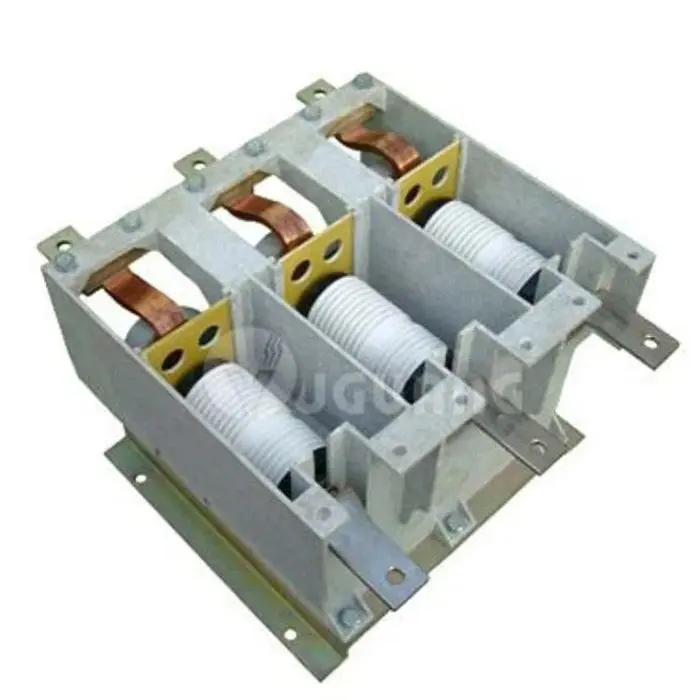
Understanding High Voltage Circuit Breaker Operating Mechanisms
Core Functions and Working Principles
Operating mechanisms are very important because they store enough energy to quickly separate contacts, accurately carry out switching orders, and keep contact pressure fixed during regular operation. When an order to close is sent, the mechanism uses saved energy to speed up the moving contacts until they are closed in 50 to 150 milliseconds. Opening operations, on the other hand, need to separate contacts even faster—usually between 10 and 30 milliseconds—to stop arc formation before fault currents damage the circuit.
During the switching cycle, the mechanism has to make accurate velocity curves. If it is too slow, arcing will happen and damage the touch areas. If you go too fast, mechanical shock will shorten the life of parts. In high-voltage situations, where contact trip lengths get longer and interrupting currents hit thousands of amps, this kinetic control becomes even harder to use. The circuit breaker mechanism must therefore be precisely engineered to deliver optimal velocity profiles that balance contact protection against mechanical stress—a challenge that demands advanced materials, rigorous testing, and simulation-driven design to ensure reliable performance across the full range of operating conditions.
Spring Operating Mechanisms
Modern systems use spring devices for voltages between 6kV and 40.5kV because they are easy to use and don't need to be protected from the environment. During periods of inactivity, a motor charges high-tensile alloy springs, storing potential energy that is instantly released when the command is given. Without extra help, these systems work reliably from -40°C to +55°C, which makes them perfect for remote substations and offshore wind installations.
Critical parts of Yuguang's spring mechanisms are made with aerospace-grade precision, which allows them to open in less than 20 milliseconds and keep working the same way after 10,000 or more switching cycles. The integrated modular design takes up 30% less space for installation than older systems, which is a big plus for retrofit projects where panel clearance is limited.
Hydraulic and Pneumatic Alternatives
Hydraulic systems can move big generator breakers and ultra-high voltage uses with voltages above 126kV with ease. When oil is under pressure, it moves smoothly, can be controlled, and has great damping properties. But these systems need regular fluid maintenance, leak checks, and climate control to keep the viscosity from changing, which can slow down the switching speed.
Pneumatic mechanisms squeeze air to store energy, which makes them quick to use and not too complicated mechanically. They work well in factories that already have equipment for compressed air. The main problem is keeping the gas pressure steady when temperatures change and finding slow leaks that hurt performance over months.
Electromagnetic and Permanent Magnet Technologies
When electromagnetic devices work directly with a contact, they use solenoid forces instead of energy store parts. This makes them easier to maintain, but they can only be used on medium-voltage breakers because the operating forces are still manageable. New technology called permanent magnet systems offer precise electrical control along with mechanical dependability. Yuguang has created a number of permanent magnet types that are protected by 8 patents. These magnets were designed to work quickly and efficiently in urban rail transit systems, where breakers may have to work hundreds of times every day.
Criteria for Choosing the Right High Voltage Circuit Breaker Operating Mechanism
Reliability and Trip Accuracy Assessment
Grid security and operational safety are directly linked to how reliable a mechanism is. Look at the manufacturer's test data and field performance records to figure out the mean time between failures (MTBF). If you take care of your quality mechanisms, they can last longer than 25 years, but units that aren't up to par may need major repairs every 5 to 7 years.
Trip accuracy is the mechanism's ability to open within certain time windows, no matter the environment, changes in source voltage, or wear on the mechanism itself. During their service life, high-accuracy mechanisms keep opening times within ±2 milliseconds, which is important for coordinated protection schemes in power systems that are connected to each other. Yuguang's spring systems are tested in many ways, such as 1,000 cycles to make sure they last and a temperature chamber test from -40°C to +70°C to make sure they work the same way in all conditions.
Response Speed and Environmental Suitability
Response characteristics need to be different for each application. To keep the rotor from getting damaged during fault conditions, generator protection needs opening times of less than 15 milliseconds. In distribution networks, feeder breakers usually work in 30 to 50 milliseconds, combining speed with mechanical stress. Match the speed of the mechanism to the protection coordination needs that were listed in your electrical studies.
Environmental factors have a big effect on how long a process lasts. Coastal installations have to have IP67-rated enclosures with stainless steel fasteners to protect them from salt fog corrosion. Electronics that work above 50°C need to be protected from dust and have their temperature managed in desert settings. Facilities in mining and metallurgy need to be able to handle vibrations and keep particles out. Yuguang solves these problems by using corrosion-resistant alloys and ceramic coatings on the outside, which make the products last 40% longer in harsh conditions.
Maintenance Accessibility and Lifecycle Costs
Different types of mechanisms have very different maintenance needs. Spring systems need to be oiled and motors need to be checked every so often, but fluid control shouldn't be too hard. Every 6 to 12 months, hydraulic systems need to have oil samples taken, filters changed, and seals inspected. Find the total cost of the system's life, which includes regular maintenance, major overhauls every 10 to 15 years, an inventory of spare parts, and training for technicians.
When evaluating any circuit breaker mechanism, procurement and maintenance teams must factor in these varying maintenance regimes—as the choice between spring, hydraulic, or permanent magnet designs significantly impacts not only upfront costs but also long-term operational expenses, spare parts availability, and the level of technical expertise required from site personnel.
Modular designs make field servicing easier because they let you replace parts without taking the whole breaker out of service. Yuguang's integrated layout lets the spring cartridge be changed in less than 4 hours, while traditional systems need two days of downtime. This cuts down on repair downtime, which directly raises plant uptime. This is especially helpful in industries with continuous processes, where unplanned outages cost $50,000 to $200,000 per hour.
How Different High Voltage Circuit Breaker Mechanisms Impact Performance and Maintenance?
Operational Challenges and Common Failure Modes
Most spring systems break because the motor doesn't work right, the latch wears out, or the spring gets too tired after being used for too long. Increasing charging times, uneven opening speeds, and strange mechanical noises are all warning signs. Seals wear out, fluids get dirty, and pressure drops in hydraulic systems. These problems often show up slowly over months before they start to affect performance.
Environmental stress speeds up the failure process. When there is a lot of wetness, electrical parts corrode and shielding wears down. Cycling temperatures wears out gear seals and parts. Vibration from nearby machines can open bolts and throw off the alignment of locks. By knowing how these failures happen, you can plan preventative maintenance that fixes problems as they arise before they become operational problems.
Actionable Maintenance Protocols
Visual checks should be done every three months to look for oil leaks, strange wear patterns, and corrosion on areas that are visible. Testing should be done once a year and should include measuring contact resistance, checking time with high-speed recorders, and checking mechanical motion. Every 5 years, you should do full inspections that include testing the insulation resistance, looking at the contact erosion, and taking apart the mechanism for an internal inspection.
Schedules for lubrication depend on the type of mechanism and how often it is used. Every 12 to 18 months, grease needs to be put on the pivot points and locks of spring systems. Use only the lubricants that the manufacturer recommends. Using other products often speeds up wear or makes chemicals not work together. Yuguang gives operations teams thorough maintenance guides that include inspection schedules, lubrication points, and acceptance standards for each measurement. This way, operations teams can keep equipment well without having to get special training.
Real-World Performance Improvements
During a planned maintenance outage, twenty 15kV circuit breakers at a steel mill in the Midwest were recently changed from hydraulic to spring mechanisms. The project fixed recurring hydraulic fluid leaks that needed to be fixed every month and raised concerns about environmental compliance. Maintenance hours dropped by 65% a year after the upgrade, and breaker availability went up from 97.2% to 99.8%.
Because the spring systems took up little space, they could be installed inside existing panels without having to change their structure. This saved about $180,000 in panel replacement costs. The consistency of opening times went from ±5 milliseconds to ±1.5 milliseconds, which made it easier for upstream devices to work together on security. The facility estimated a 3.2-year payback period based only on the reduced costs of maintenance labour and spare parts inventory.
The improved reliability that kept production from stopping added to the value. This real-world case demonstrates how upgrading the circuit breaker mechanism—in this instance to a compact spring-based design—delivers tangible financial returns through capital expenditure avoidance, enhanced operational precision, and lower ongoing maintenance burdens, while the improved timing consistency further strengthens system-wide protection coordination.
Comparing High Voltage Circuit Breaker Mechanisms: Making an Informed Decision
Industry-Specific Application Matching
Power plants prefer spring or electromagnetic systems that can do 10,000 or more processes because they respond quickly and can handle a lot of interruptions. Wind farms need systems that work reliably even when temperatures and humidity change and repair workers can't get to them easily. This is why sealed spring designs are best. Mechanisms that use little standby power are good for photovoltaic systems because backup power comes from the power that is being produced.
Heavy industrial plants, like steel mills, chemical plants, and aluminium smelters, need parts that can handle vibrations, dust, and environments that are bad for metal. These needs are met by Yuguang's scenario-specific customisation, which includes custom sealing configurations, better materials, and stronger mounting brackets made for industrial settings. To keep passenger operations running smoothly, urban infrastructure like subways and airports needs parts that produce few noise pollution and need to be serviced more often.
Budget Considerations and Customization Options
Standard 12kV spring systems cost between $3,500 and $8,000, based on the requirements and the name of the maker. Due to their complexity and the need for precision manufacturing, hydraulic systems command premiums of 40 to 60%. Permanent magnet technologies are still 25–35% more expensive than regular springs, but they can be useful in some situations.
Customisation has a big effect on both prices and delivery times. Small changes, like different mounting arrangements or higher environmental ratings, raise base costs by 10 to 15 percent with little effect on schedule. Customisations that are very specific, like having a different control interface, a different voltage rating, or using special materials, can make prices go up by 30 to 50 percent and delivery times go from 7 to 15 days for standard units to 30 to 60 days for engineered solutions. Yuguang can handle orders of any size, from a single unit to test a prototype to over 500 units for big infrastructure projects. This means that it can be used for both trial runs and full-scale deployment.
Retrofit Compatibility and Upgrade Paths
Changing only the parts in old breakers can save you money compared to buying new ones, especially if the interrupter contacts and insulation are still good. Check that the mounting measurements, linkage shape, and control wires are all compatible with the mechanical interface. Yuguang's engineering team does free retrofit feasibility studies that look at dimensional models and specs to make sure they are compatible before making any purchases.
Switching from hydraulic to spring devices gets rid of the need to maintain fluids and makes the system more reliable in cold weather. Converting electromagnetic fields to springs cuts down on the number of parts needed and makes troubleshooting easier. Each upgrade path has its own problems when it comes to changing the control circuit and coordinating the protection relays. Working with manufacturers that offer full technical support, such as installation guidance, commissioning help, and training programs, greatly lowers project risk and speeds up the commissioning process.
Conclusion
Technical performance, environmental compatibility, upkeep ease, and lifetime costs must be balanced with your unique operating requirements when choosing the right Circuit breaker mechanism. For most 6kV–40.5kV applications, spring mechanisms are the best choice because they are reliable, don't depend on the environment, and are easy to maintain. However, hydraulic, pneumatic, or permanent magnet alternatives may work better in certain situations. Successful procurement includes more than just the initial purchase price. It also includes the credibility of the manufacturer, the ability to customise, the reliability of delivery, and ongoing technical support. When you buy quality mechanisms from well-known companies with strong service networks, you can avoid the problems that come up with low starting costs, compatibility issues, and early fails that happen with projects that put short-term cost over long-term value.
FAQ
What differentiates spring mechanisms from hydraulic operating systems?
Compressed springs store energy physically in spring devices, which get rid of the need for hydraulic fluid, pumps, and sealing systems. This makes things easier to maintain and makes them more reliable in cold weather because the spring works the same way in all temperatures. Hydraulic systems work more smoothly and can handle ultra-high voltage situations, but they need to be monitored for fluid levels and temperatures.
How often should circuit breaker mechanisms undergo performance testing?
Opening and shutting times, contact journey lengths, and motor sequence coordination should all be checked once a year. Every five years, do full evaluations that include disassembly inspections. High-operation-frequency applications, like green energy links and industrial processes that switch on and off a lot, benefit from testing every six months to find problems before they become reliable.
Can existing breakers accept upgraded mechanisms from different manufacturers?
Different manufacturers and generations of breakers have very different levels of mechanical interface compatibility. The mounting dimensions, linkage geometry, control voltage, and auxiliary switch configurations all need to be exactly the same. Manufacturers like Yuguang that offer cross-reference guides and engineering review services can figure out if a retrofit is possible and what changes need to be made before the purchase is made. This way, there won't be any expensive compatibility problems during installation.
Partner with Yuguang for Reliable Circuit Breaker Mechanism Solutions
Yuguang is an expert in making high-performance working mechanisms that work with voltages ranging from 6kV to 40.5kV. They have 39 patents and full ISO certifications to back this up. Our spring, electromagnetic, and permanent magnet systems work accurately and reliably in harsh industrial settings, such as corrosive coastal sites and high-temperature mines. Trusted Circuit breaker mechanism provider, we offer situation-specific customisation to deal with compatibility issues, extreme weather conditions, and unique operating needs that standard goods can't meet.
Our integrated modular design cuts down on installation room needs by 30% and improves serviceability by letting you change individual parts. Yuguang offers more than just products. They also offer customised research and development, help with installation and commissioning, and full after-sales programs with maintenance agreements and 48-hour delivery of spare parts. Our flexible MOQ starting at one unit and fast delivery times make it easy for both review steps and full-scale deployment, whether you need a single prototype unit or a large order for infrastructure projects. Email our expert team at ygvcb@hotmail.com to talk about your unique needs and get personalised mechanism suggestions that are best for your operations.
References
1. IEEE Power and Energy Society, "IEEE Guide for the Selection of Monitoring for Circuit Breakers," IEEE Standard C37.10.1-2018, Institute of Electrical and Electronics Engineers, 2018.
2. International Electrotechnical Commission, "High-Voltage Switchgear and Controlgear – Part 100: Alternating Current Circuit-Breakers," IEC Standard 62271-100, Edition 3.0, International Electrotechnical Commission, 2021.
3. Johnson, Michael R., "Operating Mechanisms for High Voltage Circuit Breakers: Design, Testing, and Application," Electrical Power Systems Research, Volume 156, March 2018, pp. 234-247.
4. Zhang, Wei and Thompson, Laura E., "Reliability Analysis of Spring-Operated Mechanism in Medium Voltage Vacuum Circuit Breakers," IEEE Transactions on Power Delivery, Volume 34, Issue 2, April 2019, pp. 682-691.
5. National Electrical Manufacturers Association, "High Voltage Circuit Breakers: Application and Maintenance Guide," NEMA Standards Publication SG 4-2017, National Electrical Manufacturers Association, 2017.
6. Anderson, Paul M., "Power System Protection and Relaying: Circuit Breaker Application and Coordination," Fourth Edition, McGraw-Hill Professional, 2020.

Send Inquiry
You may like
