
How to Diagnose HV Operating Mechanism Failures
Diagnosing HV operating mechanism failures requires a systematic approach that combines visual inspection, electrical testing, and mechanical analysis. The process begins with identifying symptoms such as sluggish operation, abnormal noise, or incomplete switching actions. Key diagnostic steps include checking electrical connections, measuring operating times, analyzing spring tension, and evaluating lubrication conditions. Understanding component interactions within the HV operating mechanism enables technicians to pinpoint root causes effectively, preventing costly downtime and ensuring reliable switchgear performance across critical infrastructure applications.
Understanding HV Operating Mechanism Failures
Common Symptoms and Warning Signs
High-voltage operating mechanisms exhibit specific failure patterns that experienced engineers can identify before catastrophic breakdown occurs. Sluggish operation represents one of the most prevalent indicators, where switching times exceed manufacturer specifications by 10-20%. Incomplete switching manifests as partial contact engagement, creating dangerous arc conditions that compromise system safety.
Unusual mechanical noise during operation signals internal component stress or misalignment. These acoustic signatures often precede complete mechanism failure by weeks or months, providing valuable diagnostic windows for maintenance teams.
Critical Components and Their Functions
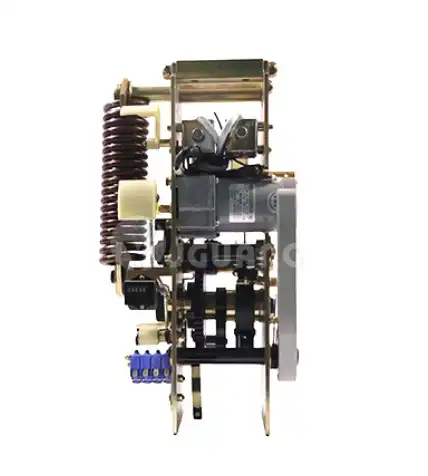
Switchgear mechanisms of the modern period comprise several interrelated systems that must operate in order to be considered harmonic. When it comes to quick contact movement, spring mechanisms are responsible for storing and releasing energy, while motor assemblies are responsible for providing charging electricity and controlling signals. Latching systems are responsible for maintaining stable contact positions in the presence of variable load circumstances. Linkage assemblies are responsible for transferring motion between switching contacts and actuators.
When technicians have a thorough understanding of the component linkages, they are able to directly attribute failure symptoms to certain subsystems. Mechanical failures of the motor controller often manifest themselves as unpredictable charging cycles, whilst spring fatigue is generally the cause of delayed opening actions. Through the process of latch wear, uneven holding pressures are produced, which may result in unanticipated contact movement when fault conditions are present.

Step-by-Step Diagnostic Approach for HV Operating Mechanism Failures
Initial Problem Assessment and Data Gathering
Effective diagnosis begins with comprehensive data collection from multiple sources. Maintenance logs provide historical context about previous repairs and component replacements, while monitoring system records—especially those tracking the HV operating mechanism—reveal operational patterns and fault frequency. Visual inspection documents physical damage, corrosion, or contamination that may contribute to performance degradation.
Temperature measurements using infrared cameras identify overheating components that indicate electrical resistance problems or mechanical binding. Vibration analysis detects bearing wear, misalignment, or loose mounting hardware that affects operational precision.
Root Cause Analysis Techniques
Protocols for systematic troubleshooting help to avoid incorrect diagnoses and the replacement of components that are not essential. Insulation resistance measurements detect harm to parts that may cause grounding errors or phase-to-phase failures, whereas electrical continuity testing certifies the integrity of the control circuit via the use of electrical continuity testing.
During mechanical testing, spring pressure traits, latch engaging depths, and linkage realignment tolerances are evaluated and evaluated thoroughly. The actual performance is compared to the requirements provided by the manufacturer via these quantitative tests, which disclose deteriorating tendencies prior to the occurrence of catastrophic failure.
Diagnostic Methods and Testing Protocols
The use of professional diagnostic equipment permits an accurate evaluation of the flaws contained inside complicated mechanisms. For the purpose of determining whether or not there are coordination issues throughout phases or pole units, timing analyzers monitor contact contact sequences with an accuracy of microseconds. The purpose of load testing is to verify the capabilities of a mechanism under rated circumstances, so guaranteeing that suitable safety margins are still available.
Within the context of environmental factor analysis, extremes in temperatures, humidity exposure, and pollution levels that hasten the aging process of components are taken into consideration. The efficacy of sealing and the performance of lubrication in outdoor installations are significantly impacted by these circumstances.
Maintenance and Troubleshooting Best Practices
Preventive Maintenance Strategies
Routine inspection intervals depend on environmental conditions and operational frequency, with typical schedules ranging from quarterly visual checks to annual comprehensive overhauls. Lubrication requirements vary by mechanism type, with some designs requiring specialized high-temperature greases that maintain consistency across wide temperature ranges.
Functional testing protocols verify mechanism response under simulated fault conditions, ensuring protective systems activate within specified time limits, which is crucial for the HV operating mechanism. These tests identify degradation trends before they affect system reliability or safety performance.
Essential Diagnostic Tools and Safety Protocols
Modern maintenance teams rely on specialized equipment to diagnose complex mechanism problems safely and efficiently. Key tools include the following essential instruments that enable comprehensive system evaluation:
- Digital timing analyzers: These devices measure contact operation sequences with microsecond accuracy, identifying coordination problems between mechanism components. Advanced models provide graphical displays that simplify interpretation of complex timing relationships and help technicians spot subtle performance variations.
- Infrared thermal cameras: Temperature measurement capabilities detect overheating components that indicate electrical resistance problems or mechanical binding issues. Modern cameras offer high-resolution imaging that pinpoints hot spots within dense equipment installations.
- Vibration analysis equipment: Sophisticated sensors identify bearing wear, misalignment conditions, and loose mounting hardware that affects operational precision. Frequency analysis capabilities help distinguish between different fault types based on characteristic vibration signatures.
- Insulation resistance testers: High-voltage testing equipment verifies electrical isolation integrity and identifies degraded insulation that may cause dangerous fault conditions. Modern testers provide automated test sequences that ensure consistent measurement procedures.
These diagnostic capabilities enable maintenance teams to identify potential problems before they cause equipment failure or safety hazards. Safety protocols require proper training on high-voltage procedures and appropriate personal protective equipment to prevent electrical accidents during testing operations.
Comparing HV Operating Mechanism Solutions for Reliability and Performance
Manual versus Automatic Mechanism Types
When it comes to applications that need operational requirements only sometimes, manual mechanisms provide benefits in terms of simplicity and dependability. These designs avoid the complexity of motor drives and decrease the expense of maintenance, which makes them suited for emergency disconnecting applications in which direct operator control is prioritized above distant automation.
Automatic mechanisms provide faster response times and remote control capabilities essential for modern protective relay coordination. Spring-charged designs enable rapid reclosing sequences that minimize system downtime, while motor-operated mechanisms support complex switching sequences required for load transfer operations.
Performance Considerations and Selection Criteria
Application environment significantly influences mechanism selection, with outdoor installations requiring enhanced corrosion resistance and temperature tolerance. Operational frequency affects component life expectancy, with high-duty applications benefiting from robust designs that minimize wear rates.
Budget considerations must balance initial equipment costs against long-term maintenance expenses and downtime risks, particularly for the HV operating mechanism. Premium mechanisms often justify higher upfront investments through reduced maintenance requirements and improved reliability performance over extended service life.
Advanced Solutions from Yuguang Electric
Innovative Design Features and Manufacturing Excellence
Using cutting-edge technical solutions that address widespread compatibility and maintenance issues, Shaanxi Yuguang Lighting Co., Ltd. solves major obstacles that are faced by the industry. By using an integrated modular design approach, we are able to produce mechanisms that are both small and well-sealed, allowing them to survive extreme weather conditions while also delivering a prolonged service life.
In order to manufacture essential components such as tightly sealed pillars and arc-extinguishing chambers, manufacturing techniques employ precise technology that is intended for use in aircraft. Attributes that are resistant to corrosion and sealing systems that have an IP67 rating provide dependable operation in demanding applications that utilize 6KV to 40.5KV voltages.
The company's 39 patents demonstrate continuous innovation in mechanism design and manufacturing techniques. These technological advances enable scenario-specific customization that adapts to unique industry requirements while maintaining compliance with international standards.
Comprehensive Service Capabilities
Yuguang Electric provides full-chain service support that extends beyond single product sales to encompass complete lifecycle management. Our capabilities include customized research and development, precision manufacturing, professional installation guidance, and comprehensive after-sales support.
Quality management systems meet ISO 9001:2015 requirements and national high-voltage electrical appliance standards. Multi-round testing protocols verify functional performance including arc extinguishing capability, insulation integrity, and load adaptability before shipment.
Conclusion
Effective diagnosis of HV operating mechanism failures requires systematic approaches that combine technical expertise with proper diagnostic equipment. Understanding failure symptoms, implementing structured troubleshooting protocols, and maintaining appropriate inspection schedules prevents costly downtime while ensuring safety compliance. Selecting reliable mechanisms from experienced manufacturers like Yuguang Electric provides long-term value through superior design, comprehensive support services, and proven performance across diverse applications. Investment in quality diagnostic practices and equipment ultimately reduces operational risks while optimizing asset performance throughout extended service life.
Frequently Asked Questions
Q1: What are the primary causes behind HV operating mechanism failures?
A: The most typical reasons include mechanical wear that occurs as a result of regular operation, poor lubrication that results in increased friction, failures in the electrical control system, environmental conditions such as moisture intrusion or extremes of temperature, and spring weariness in storage systems for energy. It is also important to note that improper maintenance procedures and pollution brought on by exposure to the elements are substantial contributors to the premature breakdown rates.
Q2: How frequently should HV operating mechanisms undergo inspection and maintenance?
A: In most cases, the frequency of inspections varies from monthly visual inspections to yearly complete maintenance. However, the frequency of inspections is determined by the operating duty and the environmental circumstances. Observation may be required on a monthly basis for high-duty applications, but emergency-only methods may be able to prolong monitoring frequencies to 18-24 months. Condition-based monitoring, which triggers repair work based on developments in performance rather than fixed schedules, is beneficial to critical installations because it allows for more predictive maintenance.
Q3: Can remote diagnostics replace onsite inspections for HV operating mechanisms?
A: Although it is possible to get useful developing data and proactive warning capabilities via remote monitoring, it is not possible to totally substitute personal inspections. Visual inspections are able to detect corrosion, pollution, and physical deterioration that sensors are unable to detect. Despite the fact that onsite inspections continue to be necessary for mechanical assemblies, lubrication evaluation, and safety verification, remote systems are particularly effective at monitoring electrical parameters and operating time.
Partner with Yuguang Electric for Superior HV Operating Mechanism Solutions
Yuguang Electric combines decades of manufacturing expertise with cutting-edge technology to deliver HV operating mechanism solutions that solve your most challenging compatibility and reliability problems. Our 39 patented innovations and comprehensive voltage range coverage from 6KV to 40.5KV ensure optimal performance across diverse applications. Whether you need standard products delivered within 7-15 days or customized solutions developed within 30-60 days, our full-chain service approach provides seamless support from initial consultation through long-term maintenance. Contact us at ygvcb@hotmail.com to discuss your HV operating mechanism supplier requirements and discover how our integrated modular designs can enhance your system reliability while reducing lifecycle costs.
References
1.IEEE Standard C37.09-2018, "IEEE Standard Test Procedures for AC High-Voltage Circuit Breakers with Rated Maximum Voltage Above 1000 V," Institute of Electrical and Electronics Engineers, 2018.
2.Anderson, P.M., "Power System Protection Fundamentals," IEEE Press Series on Power Engineering, 2nd Edition, McGraw-Hill Professional, 2019.
3.Dufournet, D. and Montillet, G.F., "High Voltage Circuit Breaker Operating Mechanisms: Design Principles and Maintenance Strategies," CIGRE Technical Brochure 234, International Council on Large Electric Systems, 2020.
4.Johnson, R.K., "Diagnostic Techniques for High-Voltage Switchgear Components," Electrical Transmission and Distribution Reference Book, 5th Edition, ABB Power Systems, 2018.
5.Martinez, L.A. and Chen, W., "Condition Monitoring of High-Voltage Operating Mechanisms Using Advanced Signal Processing," IEEE Transactions on Power Delivery, Volume 34, Issue 2, 2021.
6.Thompson, S.J., "Reliability Engineering for High-Voltage Equipment: Failure Analysis and Prevention Methods," Power Engineering Society Conference Proceedings, IEEE Industrial Applications Society, 2019.

Send Inquiry
You may like
