
How to improve the breaking performance of an indoor vacuum circuit breaker?
To make an Indoor circuit breaker work better, you need to do three main things: choose tools with better arc extinction technology, follow strict preventive maintenance plans, and use advanced permanent magnet working mechanisms. When it comes to 6KV to 40.5KV voltage range Indoor circuit breakers, the best ones use vacuum interrupters with precisely designed contact materials and the best chamber shape to make sure that the arc goes out quickly. Routine tests, correct installation that matches the system specs, and picking makers with proven R&D skills all work together to make things more reliable, lower operating risks, and extend the service life of things used in industry.
Understanding the Breaking Performance of Indoor Vacuum Circuit Breakers
Inside Indoor circuit breakers, electrical contacts are separated in a vacuum room that is shut off from the outside world. The lack of gas molecules in this chamber stops arc support. When contacts open under load, a short arc forms that goes out quickly at the natural current zero point, usually in milliseconds. This concept has several benefits, including a small size, quiet operation, and less upkeep than oil or air-blast options.
Key Components Driving Performance
There are set and moving contacts inside a clay or glass casing that make up the vacuum interrupter. This is the heart of the device. The working mechanism, which is usually a spring, hydraulic, or permanent magnet actuator, and other systems, such as trip units and insulation supports, are located around this core. The permanent magnet working mechanism is being used in more and more current designs. It doesn't need to be maintained and can handle frequent changes, which makes it perfect for fields like wind power and steel manufacturing.
Critical Performance Metrics
The breaker's breaking capacity, which is given in kiloamperes (kA), tells us the biggest problem current it can safely stop. Voltage levels from 6KV to 40.5KV allow for a wide range of industrial uses, from controlling medium-voltage motors to protecting substations. Response time, or the amount of time between finding a fault and ending the arc, has a direct effect on how well property is protected. High-quality units stop within 30 to 50 milliseconds, which keeps damage to assets further down the line to a minimum.
Comparative Context
Indoor circuit breakers can handle much higher voltages and currents than plastic case circuit breakers while taking up much less room. Unlike SF6 breaks, vacuum technology doesn't produce warming gases and makes it easier to follow environmental rules. But Indoor circuit breakers need very exact manufacturing standards. Even tiny leaks lower dielectric strength, which shows how important strong closing methods are.
Environmental factors have a big effect on success. Extreme temperatures put stress on mechanical parts and change the resistance of contacts. Ingress of humidity can weaken insulation, especially in seaside or underground systems. When dust builds up in mine or cement plants, the enclosures need better protection. They usually need IP67-rated covers and special coats to keep working reliably in tough circumstances.
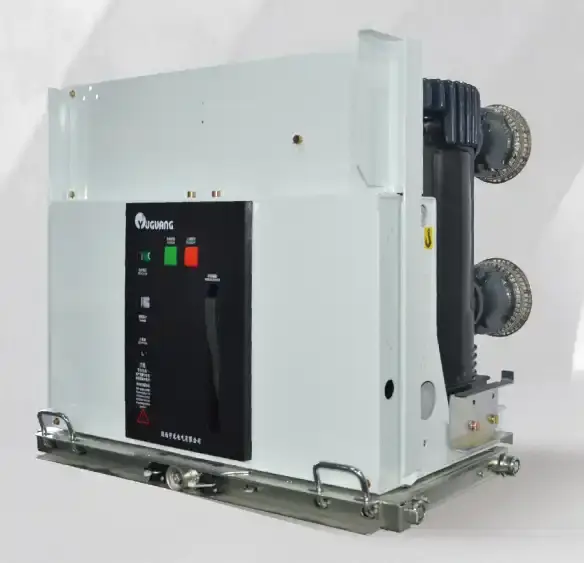
Identifying Bottlenecks in Existing Vacuum Circuit Breaker Systems
Early detection of performance decline stops catastrophic breakdowns and unexpected shutdowns. Contact erosion is the most common problem. Each time something is broken, tiny bits of contact material are evaporated, lowering the useful surface area over time. Over thousands of rounds, this wear raises the contact resistance, which creates heat and could cause welding when the lid is closed.
Diagnostic Symptoms and Methods
When the breaker doesn't react within the expected time frame or goes too early, this is a sign of a mechanical error or a fault in the control circuit. A micro-ohmmeter can measure high contact resistance, which is a sign of wear or rust. Visual checks show cracked bellows, ceramics that have turned yellow from being too hot, or worn-out drive mechanisms.
IoT-enabled tracking tools of today change the way diagnoses are done. In real time, sensors record the speed of the contact, the shape of the coil current waves, and the amount of pressure in the room. They send this information to central platforms. Predictive algorithms find changes from the normal level of performance and let support teams know about them before they happen. A chemical company in Texas put this kind of tracking on all of its 35kV switchgear. This cut down on unplanned power outages by 40% and made the equipment last seven years longer.
Real-World Failure Patterns
Case studies from metallurgy operations show that indoor circuit breaker failures happen when arc furnaces start up and inrush currents rise sharply. This is because the short-circuit capacity selection isn't good enough. Also, setups close to machinery that vibrates experience faster mechanical wear, which means they need stronger fixing and shock-absorbing hardware. These new ideas show how important it is to customize equipment for each situation and test it thoroughly before it is put into use so that its capabilities match the stresses of real-life operations.
Principles and Strategies to Enhance Breaking Performance
Improving breaking speed starts with the planning phase. Axial magnetic fields are used in more advanced arc cooling methods to move arc roots along contact surfaces. This spreads weathering evenly and increases contact life. Yuguang's engineering team uses aerospace-grade precision technology to make solid-sealed poles and arc-extinguishing chambers. This makes sure that the contacts are lined up perfectly and that the chamber vacuum stays intact down to the micron level. This careful method makes gadgets that can withstand more than 10,000 mechanical processes without losing any of their performance.
Material Innovations
Contact materials are a very important factor in efficiency. Copper-chromium metals achieve a good mix between electrical conductivity and corrosion protection. On the other hand, tungsten-copper composites work very well in high-current situations. Ceramic coats and powder processes used in insulation systems make them more resistant to age, especially in places where the temperature changes or chemicals are present. Yuguang's surface treatment method, which includes constant-temperature hardening after ceramic and powder coating, shows how material science directly leads to longer service life and less upkeep.
Installation Best Practices
60% of field problems can be avoided with proper installation. To keep hotspots from happening, wiring must be done exactly as shown in the pictures, with the phase order checked and torque requirements met on all wire connections. Checking voltage compatibility goes beyond just looking at label values. For example, when using a variable-frequency drive, you need to think about derating because of harmonic distortion. The way the mechanism is mounted affects how it moves; for example, if it's installed vertically, the spring tension may need to be changed to account for the effects of gravity on moving parts.
Visual checks every six months, contact resistance measurements every year, and dielectric withstand tests every two years are all part of preventive maintenance plans. Using manufacturer-specified chemicals to lubricate mechanical links stops wear caused by friction, and helium mass spectrometry for important uses to check for vacuum leaks on a regular basis ensures the integrity of the chamber. When you combine these organized methods with built-in safety features like mechanical interlocks and circuits that stop pumps from working, you have a strong defense against operating failures.
Integrated flexible design makes upkeep even easier. Yuguang's small, tightly sealed units let field workers change whole interrupter modules without special tools. This cuts the average time to fix from days to hours. This flexibility is very helpful in faraway sites where transportation problems make downtime more expensive.
Advanced Techniques and Technologies in Vacuum Circuit Breaker Performance
The move toward clever switches changes how we take care of our electrical assets, and the indoor circuit breaker plays a key role in this transformation. Adjustable trip settings make it possible for upstream and downstream safety devices to work together perfectly, improving choice and reducing the number of unnecessary trips. Electronic trip units react to complex current patterns and can tell the difference between motor starting transients and real problems. This makes the system safer and more energy-efficient.
Remote Monitoring and Predictive Maintenance
Integration with SCADA systems lets workers see the state of breakers in sites that are spread out physically in real time. Vibration sensors find worn-out bearings, and heat imaging finds links that aren't tight enough before they break. Cloud-based analytics systems collect operational data from tens of thousands of units, finding patterns of failure and suggesting ways to fix them before they happen. This change from reactive to predictive maintenance cuts down on unplanned downtime, which is important for places like airports and data centers where 99.999% uptime is needed.
Comparative Technology Overview
Leading makers set themselves apart by coming up with their own unique innovations. Schneider Electric puts a lot of emphasis on connecting IoT devices and integrating energy management. ABB works on stoppage speeds that are very fast to protect circuits that are easily damaged. For upgrade uses, Eaton puts flexible flexibility first. Against this background, Yuguang stands out by being able to customize designs based on different scenarios. For example, designs can be changed to fit faraway wind farms, desert solar farms, and deep mines where harsh conditions make standard equipment useless.
Yuguang has 39 patents in 39 different areas, such as improved vacuum chamber shapes, flexible working mechanisms, and built-in problem diagnostics. This intellectual property base lets adaptation happen quickly without affecting dependability. Permanent magnet systems don't have the coil deterioration that happens in electromagnetically-actuated designs. This means that they can run without any upkeep for 30 years. With such a wide range of technologies, Yuguang is able to offer not only goods but also complete solutions that deal with the main problems of connection, maintenance, and practical adaptation.
Procurement and Decision-Making Guidance for B2B Clients
When choosing an Indoor circuit breaker provider, you need to look at both their technical specs and their business skills. To account for future load growth, breaking capacity must be higher than the highest projected fault current by a safety range, which is usually 20 to 30 percent. According to IEC standards, voltage rates should match the average values of the system while also being able to handle short-term overvoltages.
Supplier Evaluation Criteria
Certifications are the first signs of trustworthiness. Systematic practical rigor is shown by ISO 9001:2015 quality management, ISO 14001 environmental compliance, and ISO 45001 workplace health. Technical ability is shown by national inspection reports and utility model patents. However, licenses aren't enough to judge a company's manufacturing skills. You should also check the company's facilities, look at how automated their production lines are, and test the quality of their tools and quality control procedures.
Speed of delivery has a huge effect on project timelines. Yuguang's production method follows a set plan, from processing raw materials to modular assembly, surface treatment, multi-round testing, and packing. Standard goods ship within 7–15 days, while personalized solutions take 30–60 days. Because everything is clear, procurement managers can time the delivery of tools with important building goals. This keeps many infrastructure projects from running behind schedule, which costs a lot of money.
After-Sales Support and Parts Availability
Full service after the sale is what sets good sellers apart from real partners. Installation instructions make sure that starting goes quickly, and upkeep agreements make sure that checks happen on time and that you get help right away. Supplying spare parts, especially for old or custom-made units, keeps operations running smoothly when replacements are needed. Yuguang's promise includes free modification plan design to meet changing operating needs as facilities grow or change their layout.
When it comes to test projects and phased rollouts, minimum order amounts are important. Yuguang's ability to accept orders from a single unit while also allowing big customization works with a variety of purchasing strategies. This flexibility lowers financial risk and makes it easier to combine vendors, whether you're setting up a new center or changing old equipment piece by piece.
Cross-border services help people in different parts of the world connect. Manufacturers with a lot of experience know about export paperwork, foreign shipping processes, and differences in compliance between regions. Yuguang blends experience in the local market with service infrastructure in other countries. They help clients from the first question they ask to decades of operating support, no matter where they are located.
Conclusion
To make indoor circuit breakers break more reliably, you need to take a comprehensive approach that includes design quality, operational care, and strategic sourcing. Fundamental performance drivers can be met by choosing tools with fixed magnet systems, integrated flexible construction, and strong environmental protection. Using diagnostic tracking, regular maintenance plans, and the right way to put things will get the most use out of your assets.
Working with makers that offer full-chain services, from research and development to after-sales care, makes it easier to change to changing business needs. Modern vacuum breakers are essential for industries that need to ensure maximum safety and reliability. They combine advanced materials, smart diagnostics, and the ability to be customized.
FAQ
How often should vacuum circuit breakers undergo maintenance inspections?
How often an inspection is done relies on the working job and the elements of the surroundings. Units in clean, climate-controlled substations that don't need to be used very often may only need eye checks once a year and full tests every two years. Indoor circuit breakers in tough industrial settings, like steel mills or chemical plants, that have to switch on and off a lot should be inspected every six months.
During these checks, the contact resistance should be measured, the mechanism should be oiled, and the vacuum integrity should be checked. Manufacturers like Yuguang offer maintenance plans based on job cycle that are in line with M2 mechanical durability rates. Usually, they suggest a full review every 2,000 to 5,000 processes or five years, whichever comes first.
What distinguishes vacuum circuit breakers from traditional fuse boxes in high-voltage applications?
Indoor circuit breakers protect only certain circuits and can be used again and again. They do this by automatically stopping problems while keeping healthy circuits running and restarting after clearing. Fuses only cover one time; they need to be replaced after use and can't be adjusted for different load situations. Vacuum technology can handle higher breaking capacities—up to 40kA or more—across bigger voltage ranges (6KV–40.5KV). This makes them necessary for complicated distribution systems that need to work together and have remote control features that passive fuse protection doesn't have.
Do adjustable trip settings justify the investment for medium-voltage industrial applications?
Adjustable trip units are very useful because they improve the coordination of security, lower the number of unnecessary trips caused by motor starts or changing loads, and can adapt to changing operating patterns without requiring hardware changes. This flexibility lowers the cost of downtime and increases the life of technology by reducing breaks that aren't needed. Facilities with changing loads, like those that use green energy, make things in batches, or see demand change with the seasons, see a quick return on investment (ROI) through higher performance and better operating efficiency.
Partner with Yuguang for Superior Indoor Circuit Breaker Solutions
When you want to upgrade your electrical equipment, you need a source that can provide both expert excellence and full support. Yuguang, which was founded in 2008 in Baoji, which is known as the center of vacuum circuit breaker production, offers this exact mix. Our 39 patents and status as a national high-tech company show that we are constantly researching and developing new ideas across the voltage range of 6KV to 40.5KV. We make internal circuit breaker systems with sealed aerospace-grade chambers, maintenance-free permanent magnet mechanisms, and flexible designs that can be changed to fit your needs.
As a company that makes Indoor circuit breakers for power plants, mining operations, rail transit, and data centers around the world, we know what you're going through: problems with connectivity, the hassle of maintenance, and the need for quick delivery. These worries are taken care of by our one-stop service, which includes personalized research and development, fast production (standard units in 7–15 days), professional fitting help, and expert support for life. Quality is guaranteed by ISO 9001:2015 certification and official national inspection reports. Our cross-border service team makes sure that communication and processes run smoothly.
Email us at ygvcb@hotmail.com to talk about the needs of your project. Yuguang provides dependable, approved solutions that lower lifetime costs and improve operating safety, whether you need to buy a single unit or make a lot of them to fit your needs. You can look at all of our products at ygvcb.com and get a unique quote right away.
References
1. IEEE Standards Association. (2021). IEEE Guide for Application of Indoor High-Voltage Circuit Breakers Rated on a Symmetrical Current Basis. IEEE C37.010-2021.
2. Slade, P.G. (2017). The Vacuum Interrupter: Theory, Design, and Application (2nd ed.). CRC Press, Taylor & Francis Group.
3. International Electrotechnical Commission. (2019). High-voltage switchgear and controlgear – Part 100: Alternating-current circuit-breakers. IEC 62271-100:2019.
4. Zhang, L., & Wang, J. (2020). Contact Erosion Mechanisms and Life Prediction Models for Vacuum Circuit Breakers. IEEE Transactions on Power Delivery, 35(4), 1892-1901.
5. National Electric Manufacturers Association. (2018). Application Guide for AC High-Voltage Circuit Breakers Rated on a Symmetrical Current Basis. NEMA SG 4-2018.
6. Greenwood, A.N. (2019). Electrical Transients in Power Systems: A Practical Guide to Mitigation Using Circuit Breakers. Wiley-IEEE Press.

Send Inquiry
You may like
