
How to replace an indoor circuit breaker safely?
To replace an Indoor circuit breaker safely, you need to follow all the rules, use the right tools, and have technical knowledge. In factories, power plants, and businesses, an Indoor circuit breaker is the first line of defense against electrical problems. It keeps important equipment safe. Following lockout/tagout processes, carefully removing the broken unit, and carefully installing a suitable replacement are all parts of safe replacement that must be done in accordance with NFSI 70E and OSHA standards. This method lowers the chances of arc flash, electrocution, and expensive downtime that can stop businesses that use a lot of power from working.
Understanding Indoor Circuit Breakers and Their Role in Electrical Systems
What Indoor Circuit Breakers Do?
Circuit breakers are like automatic switches that stop the circuit before damage happens when they sense that the current is flowing in a way that isn't normal. Unlike fuses, which need to be replaced every time they blow, new breakers can be reset to keep working. Because they can be used again and again, they are essential in industrial areas where load changes happen often. The gadget continuously checks the current and acts within milliseconds when certain limits are crossed using heat or magnetic trip mechanisms.
Types Commonly Found in Industrial Settings
For different uses, different breaker methods are needed. Molded case circuit breakers (MCCBs) can handle 15A to 2500A in distribution panels and have safety sets that can be changed to protect motors in factories. ACBs, which handle bigger currents of up to 6300A, are often found in the main switchboards of large buildings. Indoor circuit breaker technology for medium-voltage (6kV–40.5kV) uses often involves vacuum interrupters to stop arcs. Yuguang has improved this technology through 39 protected inventions. These designs get rid of oil dangers and let them work for 10,000 mechanical cycles without any upkeep.
Why Proper Selection Matters?
When breakers don't work properly with upstream security or don't match the load traits, operations have trouble with equipment compatibility. If a breaker isn't rated properly for magnetic loads, it might trip when a motor starts, which would stop production lines. On the other hand, units that are too big might not notice fault currents that slowly get stronger, which could damage the insulation before the unit trips. Yuguang fixes these problems by customizing breaker settings to work better in harsh places like offshore wind farms or high-altitude substations, where regular goods don't work well.
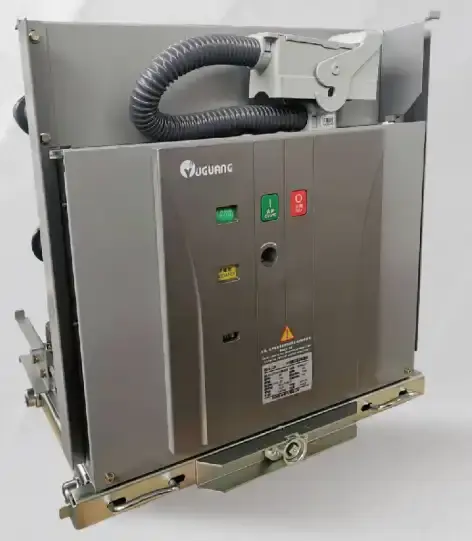
Preparing for Safe Replacement: Essential Safety Tips and Tools
Critical Safety Protocols
There must be a written order for power shutdown procedures: notify everyone who will be impacted, open upstream disconnects, use calibrated test tools at multiple places to confirm zero voltage, and lockout/tagout (LOTO) all energy sources. Accidental re-energization can be physically stopped by LOTO devices. This is a necessary step because arc flashes can cause serious burns even from low-voltage systems. Clothing that can withstand arcs, insulated gloves that can handle system voltage, face shields, and voltage-rated tools are all examples of personal protection equipment (PPE) that must be worn.
Equipment and Tools Checklist
Good tools keep you safe and make sure the job is done right. Some important tools are shielded screwdrivers and wrenches, digital multimeters that can measure system voltage and resistance, torque wrenches that are set according to the manufacturer's instructions, and contact cleaner for getting the terminals ready. The new Indoor circuit breaker has to exactly match the old one in terms of voltage rating, current rating, stopping capacity, and mounting measurements. Yuguang's modular design philosophy makes retrofits easier by using small dimensions and standard connections that make installation easier in panels with limited room.
Recognizing Common Hazards
If capacitors stay charged or backfeeding happens through parallel circuits, the risk of electrical shock stays even after the power is turned off. Before touching any parts, you have to test the voltage at the switch connections. Installing a unit that doesn't have enough stopping capacity can also be dangerous, as it can lead to an explosion when there is a fault. Yuguang's technical support team gives advice before installations and looks at single-line plans to make sure they are compatible and suggest the best specs for each job.
Step-by-Step Guide to Replacing an Indoor Circuit Breaker Safely
Diagnosing the Faulty Breaker
Some signs that a breaker is broken are not being able to be restarted after tripping, seeing burning or melting at the wires, heat buildup that isn't normal during normal loads, or the breaker failing completely during test operations. Thermal imaging shows hot spots that mean links are loose or the inside is breaking down. Using a megohmmeter to test insulation resistance can find degradation before it leads to a catastrophic failure. Thoroughly write down all of the symptoms; this information helps find the root cause and shapes the requirements for buying an alternative.
Shutdown and Lockout Implementation
Start by cutting off the circuit at the next safety device upstream. Use a properly rated voltage tester to make sure that the Indoor circuit breaker you want to change has zero voltage on both the line and load sides. Put LOTO devices on all of the disconnects and power sources, and have each worker put on their own lock. Put up alert signs in the control room and office. This multiple-layer safety makes sure that even if one fails, the others will still keep the power off while the work is being done.
Safe Removal Process
Before disconnecting, take a picture of how the wiring is currently set up, because color-coded wires might not match up with older setups. To avoid short circuits if your tools slip, loosen the terminal links one at a time, going from the load side to the line side. Support the weight of the breaker while it is being taken out; bigger units weigh more than 50 pounds and need motorized help. Check the bus bars for rust or damage that could have caused the breaker to fail. When Yuguang's equipment arrives, it comes with full installation plans that show how to route the cables correctly and what the torque values should be at each connection point.
Installing the Replacement Breaker
To make sure low-resistance connections, clean all touch areas with the right solvent and abrasive pads. Carefully line up the new breaker with the mounting rails or bolt patterns. Forcing units that aren't lined up right breaks the insulators. Connect the wires again according to the instructions, and if you're in a humid area, put dielectric grease on any uncovered circuits. Using a calibrated tool, tighten the connections to the required torque values. Insulators crack when the torque is too high, and resistive heating happens when the torque is too low. Yuguang's combined modular construction uses pre-assembled parts that have been aligned by the factory. This cuts down on installation mistakes that hurt performance.
Testing and Verification
Before turning the power on, you should test the insulation resistance between the phases and from each phase to earth. The results should be higher than the manufacturer's minimums, which are usually 1000 megohms for new equipment. Check the breaker's mechanical function by turning it on and off by hand several times and making sure it moves smoothly and latches securely each time. Slowly turn on the circuit: close any upstream disconnects, listen for strange sounds or smells, check the voltage at the load terminals, and then add real load while keeping an eye on the current balance across phases. Thermal imaging during the first process shows that the connections are evenly heated.
Troubleshooting and Maintenance for Indoor Circuit Breakers Post-Replacement
Common Post-Installation Issues
Most of the time, nuisance trips are caused by wrong trip settings rather than broken equipment. Make sure that the temperature and magnetic settings are right for the load. For example, motor circuits need higher immediate settings to handle the starting currents. If the ends get too hot, it's likely because the fitting wasn't torqued enough. Tighten the connections again after the first thermal cycle to let the conductor expand. When mounting something loosely, vibrations can put stress on internal parts; make sure the connection to the panel structure is safe for the Indoor circuit breaker.
Preventive Maintenance Practices
As part of yearly checks, all connections should be thermally imaged, their mechanical function should be tested, and the insulation resistance should be checked. Clean dust buildup from ventilation holes with dry compressed air; contaminants make ways for current to leak. Follow the manufacturer's instructions for lubricating moving parts and avoid using too much oil, which can attract dirt. Many upkeep tasks are eliminated by Yuguang's vacuum circuit breakers, which have sealed-for-life chambers and fixed magnet mechanisms that don't need to be adjusted or oiled for decades of use.
When to Request Professional Service?
Get help from experts if faults keep happening even after the settings are correct, if arc flash risk assessments need special tools, or if changes affect how security works across multiple voltage levels. Yuguang offers full after-sales service, including installation instructions, upkeep contracts, and spare parts delivery within 7 to 15 days for regular parts. When building changes or additions mean that the safety scheme needs to be updated, our technical team offers free modification plans.
Procurement Considerations for Indoor Circuit Breakers in B2B Markets
Evaluating Technical Specifications
Voltage and current ratings must be higher than the system's highest values by a safe amount. For example, breakers rated for 600V are needed for a 480V system to handle transients. The interrupting capability (in kA) must be the same as or greater than the available fault current at the installation point. To figure this out, you need to do a thorough study of the system's impedance. Yuguang's Indoor circuit breaker technology works better for medium-voltage (6kV to 40.5kV) uses because it stops vacuum arcs and has permanent magnets that work well for frequent switches in wind power and industry settings.
Supplier Reliability and Certification Compliance
Authoritative certifications prove that a product is safe and works well. When shopping for things to sell in other countries, look for marks like UL or CE, ISO 9001:2015, and IEC 62271 for high-voltage equipment. Yuguang has ISO 9001, 14001, and 45001 certifications, as well as national high-tech company recognition. They also follow strict testing methods that include functional performance verification and multi-round reliability validation. Our 39 patents show that we are always coming up with new ways to solve problems in the real world, like making sure that new equipment works with old systems and helping things adapt to harsh environments.
Addressing Common Procurement Pain Points
Project schedules are put at risk by slow shipping times, especially for custom tools. Yuguang delivers standard goods in 7–15 days and custom-engineered solutions in 30–60 days, which is a lot faster than the norm for the business. As little as one unit is needed to place an order, we can handle both small upgrades and large-scale deploys. Concerns about equipment compatibility are taken care of by our full-chain service model, which includes research and development, manufacturing, installation support, and servicing after the sale.
Yuguang uses an integrated modular design philosophy that lowers the physical size of their products while improving their sealing performance (IP67 rating) and service life through the use of corrosion-resistant alloys and ceramic coating treatments. This method solves important problems in tough industrial settings, like metallurgical plants with corrosive air, coastal sites that are hit with salt spray, and mines that have to deal with a lot of dust and shaking.
Cost-Performance Analysis
Total cost of ownership includes more than just the initial buy price. It also includes how hard it is to install, how often it needs to be maintained, and how long it is expected to last. Designs that don't need regular maintenance save money on service costs and downtime. Yuguang's permanent magnet mechanisms and vacuum interrupters work effectively for 20 to 30 years with little to no upkeep. This is in stark contrast to oil breakers, which need to be serviced regularly and cleaned up after use. Even though buying in bulk can save you money, our open MOQ policy makes sure that small companies can get the same advanced technology as big utilities.
Conclusion
When you replace an Indoor circuit breaker safely, you protect people and property while keeping important systems running. The process needs strict adherence to safety rules, the right tools, and professional know-how to figure out problems and make sure the work went smoothly. When B2B procurement workers choose sellers who offer not only high-quality goods but also full expert support and quick response times, buying equipment goes from being a transactional necessity to a strategic benefit. Yuguang's use of advanced vacuum circuit breaker technology, scenario-specific customization, and full lifecycle service solves the main problems that industrial operations face every day, such as equipment not working with each other, too much maintenance, and tight project schedules.
FAQ
How Do I Know When a Circuit Breaker Needs Replacement?
Breakers that are clearly damaged, keep tripping under regular loads, can't be restarted, or produce too much heat need to be replaced right away. If thermal imaging shows hot spots that are more than 40°C warmer than the surrounding temperature, it means that problems are starting to form. When units have been used for 25 to 30 years, no matter how good they look, or when they hit the manufacturer's recommended mechanical processes (usually 10,000 to 25,000 cycles), they need to be replaced.
Can Our Team Perform Replacement In-House or Should We Hire Specialists?
Replacement of low-voltage (under 600V) breakers can be done by licensed electricians who follow NFSI 70E standards. Due to the high risk of arc flash and the need for complex safety planning, work with medium and high voltages (above 1kV) must be done by trained professionals. Even for low-voltage projects, talking to equipment makers like Yuguang makes sure that the right specs and construction methods are used, which keeps mistakes from costing a lot of money.
What Safety Standards Apply During Replacement Procedures?
De-energization and LOTO are required by OSHA 1910.333 for electrical work. Based on estimates of incident energy, NFSI 70E sets arc flash safety limits and PPE standards. The IEC 61439 standard covers the safety of low-voltage switchgear assemblies, and the IEEE C37 series covers the use and testing of medium-voltage circuit breakers. Manufacturers should provide proof that their goods follow the rules. For example, Yuguang products meet national standards for high-voltage electrical appliances and ISO system requirements, which have been proven through multiple testing methods for the Indoor circuit breaker.
Partner with a Trusted Indoor Circuit Breaker Manufacturer for Reliable Solutions
Yuguang makes designed Indoor circuit breaker solutions that get rid of problems with equipment compatibility and upkeep that are a problem in many industry settings. Our 6kV–40.5kV product line uses vacuum arc extinguishing technology and fixed magnet systems to work well for over 20 years without any upkeep. We are an ISO-certified producer with 39 patents and national high-tech company recognition. We can customize our products for harsh settings like chemical plants that use acids or mines that have a lot of vibrations.
Our combined service model includes more than just selling products. It also includes free creation of modification plans, help with installation, and quick delivery of extra parts. Yuguang's expert team works with your engineers to find the best solutions, whether you need a single replacement unit or a full switchgear change project. You can email our experts at ygvcb@hotmail.com to talk about your application needs, ask for technical paperwork, or get cheap quotes.
References
1. National Fire Protection Association. (2021). NFPA 70E: Standard for Electrical Safety in the Workplace. Quincy, MA: NFPA.
2. Institute of Electrical and Electronics Engineers. (2018). IEEE Std C37.06: AC High-Voltage Circuit Breakers Rated on a Symmetrical Current Basis—Preferred Ratings and Related Required Capabilities. New York: IEEE.
3. International Electrotechnical Commission. (2017). IEC 62271-100: High-voltage switchgear and controlgear – Part 100: Alternating current circuit-breakers. Geneva: IEC.
4. Occupational Safety and Health Administration. (2020). 29 CFR 1910.333: Selection and use of work practices. Washington, DC: U.S. Department of Labor.
5. Garzon, R. D. (2017). High Voltage Circuit Breakers: Design and Applications (3rd ed.). Boca Raton, FL: CRC Press.
6. Das, J. C. (2016). Arc Flash Hazard Analysis and Mitigation. Hoboken, NJ: IEEE Press/Wiley.

Send Inquiry
You may like
