
How to select a customized vacuum circuit breaker for industrial use?
To choose a customized vacuum circuit breaker, you need to look at the voltage needs, environmental conditions, operating frequency, and system interface needs of your building. The right circuit breaker should be able to handle the voltage you need to break (from 6KV to 40.5KV) and have features that are specific to your needs, such as better sealing for tough environments, heavy-duty connections, or built-in control modules for automation systems. Customization makes sure that your equipment can handle specific problems, like frequent switching cycles in metallurgical plants or rust resistance in coastal renewable energy installations. This gives you solid protection that off-the-shelf models can't offer.
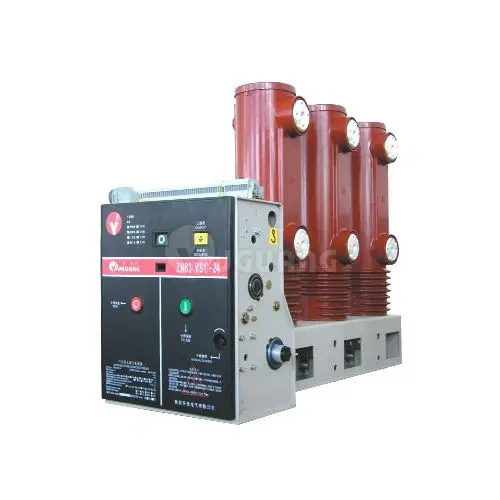
Understanding Customized Vacuum Circuit Breakers and Their Industrial Relevance
Electrical sparks are put out by vacuum circuit breakers in a protected vacuum environment, so they don't need insulating gases or air. When contacts separate during a fault situation, an arc is created that vaporizes the contact material. However, the lack of air molecules stops the ionization from continuing, which means the arc goes out very quickly, in milliseconds. Because of this basic process, vacuum technology is safer and better for the world than other options.
Unlike SF6 breakers, which use sulfur hexafluoride gas, which is a strong warming gas that is heavily regulated by environmental groups, vacuum circuit breakers don't have any dangerous materials and don't need any special rules for handling gases. While air circuit breakers are cheaper for lower voltage uses, they can't compete with vacuum technology's small size and better ability to stop arcs at medium voltage levels. We've seen that when power plants move from air to vacuum technology, repair downtime goes down by about 40% and room is better used in current switchgear designs.
When working with tough manufacturing situations, the customization part becomes very important. In places like high-altitude wind farms where the air is thinner and cooling is harder, or in chemical plants where acidic atmospheres attack normal protective coats, standard breakers may fail before they should. A properly customized vacuum circuit breaker has changes made for specific situations, like stronger sealing grades, special contact materials, or adaptive working mechanisms, that make sure it works reliably no matter what the operational pressures are.
Why Industrial Facilities Need Tailored Solutions?
Heavy businesses have to do things that can't be done with standard tools. Steel plants need breakers that can handle thousands of switching processes a year without losing their contact. To protect delicate equipment, data centers need to be able to respond very quickly to faults. Because it's hard to get expert help in remote mining areas, repair needs to be done more often. Because of these different needs, tech solutions must be built around specific use cases instead of goods that work for everyone.
The Role of Permanent Magnet Mechanisms
Instead of standard spring-loaded systems, more and more modern vacuum circuit breakers use permanent magnets to operate. This technology gets rid of the wear and tear that comes from multiple compression cycles, so it can be used for more than 30,000 mechanical actions. The permanent magnet design also lowers the amount of energy used during switching operations and speeds up reaction times, both of which are very important for keeping important industrial processes safe from electrical problems.
Key Criteria for Selecting a Customized Vacuum Circuit Breaker for Industrial Use
Before you make your choice, you should carefully look at the load characteristics and the working conditions. Engineers can correctly define breaking capacity if they know the peak current needs, fault current levels, and switching frequency patterns. Electrical stress is very different in a metallurgical facility using electric arc furnaces compared to a medicine manufacturing plant. This means that the breaker requirements need to be very different.
Technical Specifications That Matter Most
Any standard for a circuit breaker starts with the rated voltage and breaking ability. Medium voltage is used in industrial settings and usually falls between 6KV and 40.5KV. Breaking powers are recorded in kiloamperes (kA). Higher breaking ability gives you more safety gaps in case of a fault, but it makes the product bigger and costs more. Finding the right mix is hard because being too specific wastes money and cabinet room while being too vague poses safety risks.
Consistency in contact pressure has a big effect on long-term dependability. Good breakers keep the contact resistance steady over the course of their useful life. This stops localized heating that wears down insulation and speeds up the age of parts. Yuguang solves this problem by making tulip contact units with nonmagnetic stainless steel ring springs that account for temperature expansion. This way, the contact stays solid even after years of use.
Cooperation between the insulation is especially important in places with sensitive electronics or strict power quality rules. The breaker's insulation system has to be able to handle both normal working voltages and short-term overvoltages that happen when it switches on or off or when lightning hits. While testing standards like IEC 62271-100 set the withstand voltage levels, custom designs can include extra safety gaps for placements in places where there are a lot of electrical disturbances.
Customization Options for Specialized Applications
The flexible design of advanced vacuum circuit breakers lets you make a lot of changes without affecting their durability. For example, extra contacts can be set up to meet the needs of interlocking sequences for motor safety, position feedback for SCADA integration, or warning circuits for predictive maintenance systems. Changes were made to the enclosures to make them work in tough settings. For example, IP67-rated sealing keeps dust and high-pressure water jets from getting into the internal parts, which is common in chemical processing or mining facilities.
Yuguang's way of making things takes advantage of this freedom by using combined modular design ideas. Core parts, like solid-sealed poles and arc-extinguishing chambers, are precisely machined to aerospace standards. This makes standard building blocks that assembly teams put together based on the needs of each project. This method combines the advantages of mass production with the flexibility of custom manufacturing. It solves the problem of long lead times in buying without lowering the quality.
Environmental Considerations Driving Design Choices
Coastal sites are more likely to rust because the air is salty, so they need better surface treatments than just powder covering. Ceramic coats followed by curing at a steady temperature make things more resistant to chloride attack. Low air density can make it harder for high-altitude green energy projects to get rid of heat and could lower the insulating strength. To make up for it, customized solutions use better insulation and different cooling paths that keep working at higher levels where regular equipment starts to lose efficiency.
Extreme temperatures are another thing that can drive customization of customized vacuum circuit breakers. For Arctic sites, lubricants and materials that stay flexible at -40°C must be selected. In desert settings, thermal management techniques are needed to prevent component degradation at 60°C for extended periods. We've designed customized vacuum circuit breakers for Middle Eastern petroleum plants with passive cooling features and UV-resistant exterior finishes for enhanced longevity in harsh conditions.
Comparing Customized Vacuum Circuit Breakers with Other Circuit Breaker Options
When procurement workers look at different circuit safety technologies, they have to compare how well they work with the total cost of ownership. Standard vacuum circuit breakers are reliable and don't cost too much for simple jobs. However, their set shapes may mean that design choices have to be made when they are used in unique situations. SF6 breakers work best in very high voltage situations above 40.5KV, where vacuum technology has its boundaries. However, regulations about greenhouse gas emissions are making it harder and harder to use them.
Air circuit breakers are still commonly used in low-voltage industrial distribution up to 690V because they are easy to build and keep up. However, their ability to stop arcs decreases in dirty areas, and their size makes them impractical at middle voltage levels. When an interruption happens, the arc energy released causes more severe wear on the contacts than with vacuum technology. This shortens the operating lifetime in situations where swapping happens often.
Performance Metrics in Real-World Industrial Settings
Fault energy release is directly affected by breaking time, which is the time between the trip warning and the end of the arc. Most vacuum circuit breakers have total clearing times of less than 50 milliseconds, which means that they protect downstream equipment from damage during short circuits. This quick reaction is very helpful for keeping sensitive process control electronics, variable frequency drives, and other things safe from power drops and short-term problems.
The rate of contact erosion determines how often to do repair and how much to replace something. Because vacuum interrupters don't have an acidic atmosphere, they don't wear down very easily. The contact material loss is only a few micrometers per breaking action. This means that it can operate without any upkeep for tens of thousands of switching cycles, which is very different from air breakers that need to be inspected and their contacts reconditioned on a regular basis. Heavy industry users say that switching from air to vacuum technology cuts running costs by more than 35% over the life of an asset, which is 15 years.
Manufacturer Capabilities and Support Infrastructure
Global names like ABB, Siemens, and Schneider Electric have a wide range of products and a lot of knowledge in the field. Their well-established service networks give global companies the confidence to standardize equipment across all of their sites. Large producers, on the other hand, usually have stricter customization rules and higher minimum order amounts that make delivery times longer.
Yuguang is a regional specialist who combines technical knowledge with operating flexibility that helps meet the needs of a specific project. Our 39 patents show that we are always coming up with new ideas for vacuum interrupter design, terminal engineering, and control integration. The company is based in Baoji, which is known as the manufacturing hub for vacuum circuit breakers in China. This gives them access to specialized sources and skilled techs, which lets them make customizations at low costs without lowering quality standards. Our engineering team is ready to come up with custom solutions for projects that need special mechanical connections, protective coatings, or voltage ratings that aren't standard. They do this rather than just forcing catalog goods to fit.
Procurement and Maintenance: Ensuring Long-Term Value
To find trusted suppliers of customized vacuum circuit breakers, you need to look at both their manufacturing skills and their approach to customer service. Ask for proof of quality management certifications. For example, ISO 9001 shows that quality is controlled in a planned way, and industry-specific certifications like IEC compliance show that international electrical standards are met for customized vacuum circuit breakers. Yuguang keeps its ISO 9001:2015 certification along with ISO 14001 for environmental management and ISO 45001 for workplace health standards. This shows that the company has fully developed its operations for manufacturing customized vacuum circuit breakers.
Total buying costs are greatly affected by the availability of technical help. When problems happen during testing or years after installation, quick engineering help keeps downtime from lasting too long. As standard, we give installation instructions, and field service teams are ready to help with commissioning on-site when the complexity of the job calls for it. This full-chain service model, which includes everything from product development to after-sales support, solves the problem of having multiple sellers' relationships that need to be coordinated, which is a pain point in buying.
Managing Lead Times and Inventory Strategy
Standard vacuum circuit breakers from stock usually ship within 7 to 15 days, so they can be used for both emergencies and regular repair. Customized designs need technical review, the purchase of specialty parts, and validation testing. Depending on how complicated the changes are, this can make delivery times 30 to 60 days longer. We suggest that procurement managers guess what custom needs will be during the planning stages of a project and place orders as soon as the design is finalized, rather than waiting until building plans call for instant delivery.
Another thing to think about is the minimum order quantity, especially for smaller sites or prototype setups. Major makers usually require MOQs of 10 or more units to justify production runs. Yuguang, on the other hand, will take orders for as few as one unit, which supports pilot projects and phased infrastructure changes without wasting money on extra inventory. This flexibility is especially helpful for EPC workers who are in charge of a wide range of projects that require different kinds of tools.
Installation Best Practices and Commissioning Support
Professional installation keeps things from breaking down too soon and makes sure the guarantee is followed. Mounting alignment must stay within the mechanical limits set by the maker. If it's not, it creates binding forces that wear down working mechanisms faster. Electrical connections need to be torqued to certain values. If they are not torqued enough, high-resistance joints form, which causes the connections to burn. On the other hand, if they are torqued too much, the connectors are damaged.
Before turning on equipment, pre-commissioning testing makes sure it works properly. Measurements of contact resistance show that the connecting areas are under enough pressure. Insulation resistance testing proves that the dielectric is solid. Operating mechanism function tests make sure that the trip and close functions work reliably across the entire temperature range of the surroundings. Our technical teams give thorough completion checklists and offer online consultations during the installation phases to make sure that projects go smoothly, even for workers who are using vacuum breaker technology for the first time.
Maintenance Protocols Extending Asset Lifespan
The reputation of vacuum circuit breakers for not needing any upkeep is still true for the vacuum interrupter itself, which doesn't need any internal servicing for the full rated operating life. But supporting parts like working mechanisms, control circuits, and terminal links should be checked every so often. Visual checks are done once a year to look for dust buildup, signs of rust, and mechanical damage. Contact resistance measurements and operation time verification are part of big checks that happen every five years. This is done to find slow performance loss before it affects reliability.
Yuguang's after-sales service includes choices for maintenance agreements that are based on the needs of the building. Sites with skilled electrical maintenance teams may want technical training and easy access to extra parts, while sites with few electrical experts on staff benefit from regular preventive maintenance visits. Our spare parts supply ensures that parts will be available for as long as the product is in use, so you don't have to worry about buying old parts that force you to replace equipment too soon.
Case Studies and Practical Tips for Industrial Clients
A medium-sized steel company in the Great Lakes area had problems with their electric arc furnace power source that kept breaking. Extreme electrical stress, including high harmonic content, quick load changes, and thousands of switching operations every month, was too much for their current air circuit breakers to handle. Every six months, maintenance had to be stopped because of contact erosion, which messed up production plans and raised safety worries about how reliable the equipment was getting worse.
The answer involved using a customized vacuum circuit breaker designed especially for electric arc furnace duty. Harmonic currents didn't wear away at materials that were better at making contacts. Permanent magnet working devices could handle a lot of switches without getting worn out. Increasing the breaking capacity gave extra safety during fault situations. After three years, the building has had no unexpected power outages because of circuit breaker failures, and repair intervals are longer than 24 months. The extra money spent on properly defined equipment was well worth it because it saved money on running costs and made production more reliable.
Renewable Energy Infrastructure Challenges
When building an offshore wind farm, the developer had to deal with some unique problems when putting medium voltage equipment in the water. Standard protection coats were damaged by salt spray corrosion, and high humidity caused condensation to form inside the metal. Going from hot summers to cold winter storms put a lot of stress on mechanical parts and protection systems. Standard catalog equipment broke down early, which threatened the project's budget by forcing unplanned repair visits.
Together with engineering experts, the creator chose special vacuum circuit breakers that had marine-grade protective coatings added to them. When compared to regular powder finishes, ceramic coating methods were more resistant to rust. With IP67 outer closing, water couldn't get in. When choosing materials, durability over a wide range of temperatures was a big deal. These changes turned broken equipment into useful assets. After five years of use along the coast, the modified breakers performed better than the original specs.
Key Takeaways for Procurement Professionals
Successful equipment selection balances technical requirements with practical business considerations. Avoid over-specifying features that add cost without improving speed in a useful way. Also, don't underspecify to meet budget goals; early mistakes and too much upkeep will wipe out any savings you made in the beginning. Get providers involved early in the planning stages of a project and use their knowledge of applications engineering to find the best solutions before finishing designs.
Set up clear lines of contact for both technical and business issues. When engineers have questions about specifications, they should talk to the technical teams at suppliers directly, instead of going through salespeople. Clear price talks that cover more than just equipment costs, like installation needs, spare parts plans, and long-term service agreements, are good for procurement teams. This way of working together builds ties with suppliers that provide value throughout the lifecycle of an object, not just when it is bought.
Conclusion
Getting the right customized vacuum circuit breaker will protect your important assets and help you save money and time. For the choice to be made, technical requirements must be weighed against environmental issues, the ability to maintain the structure, and the available budget. Vacuum technology has many great benefits, such as cleaner environments, smaller designs, and longer upkeep intervals. But to get these benefits, you need to make sure that the right specifications are met and that the right provider is chosen. Customization meets specific needs in the business world that standard goods can't, like working in harsh conditions or integrating complex control systems. When you work with makers that offer both deep technical knowledge and quick service, you can be sure that your purchase will pay off in the long run through reliable safety, reduced downtime, and lower lifecycle costs.
FAQ
What lead times should we expect for customized vacuum circuit breaker orders?
Most standard vacuum breaker setups can be shipped within 7 to 15 business days if they are in stock. Delivery times are extended to 30 to 60 days for customized designs that need technical changes, the purchase of specialized parts, or special testing methods. Customizations that are very complicated and need new tools or a lot of proof testing could take 90 days or more. Critical path delays can be avoided by planning purchase timelines during the design phase of a project instead of the building phase.
Can customized designs retrofit into existing switchgear installations?
The ability to retrofit depends on how well the new parts work with the old ones and how well they connect to the electricity. Many vacuum circuit breakers have standard mounting measurements that work with common switchgear frames. This means that older air or oil breakers can be replaced directly. Customized designs, on the other hand, might need changes to the control system or the addition of extra devices. By giving manufacturers detailed information about current equipment, they can check if it can be retrofitted and figure out what changes need to be made during the engineering part.
Partner With Yuguang for Your Customized Vacuum Circuit Breaker Solutions
Yuguang delivers engineered circuit protection solutions backed by 39 patents and comprehensive manufacturing capabilities spanning 6KV through 40.5KV voltage classes. Our modular design approach addresses equipment compatibility challenges while integrated production processes ensure quality consistency from raw material selection through final testing. As a national high-tech enterprise with ISO 9001:2015 certification, we combine technical innovation with manufacturing discipline that meets demanding industrial standards.
Our full-service model eliminates coordination headaches common when managing multiple vendors. From initial application engineering through installation guidance and ongoing maintenance support, Yuguang provides single-source accountability for your circuit protection requirements. Whether you need a single customized vacuum circuit breaker for a pilot project or bulk quantities for large infrastructure developments, our flexible MOQ policies and responsive production scheduling support your procurement objectives.
Connect with our applications engineering team at ygvcb@hotmail.com to discuss your specific requirements. We'll assess your operational environment, electrical parameters, and integration needs to recommend optimized solutions.
References
1. IEEE Standards Association. (2020). IEEE Standard for AC High-Voltage Circuit Breakers Rated on a Symmetrical Current Basis—Preferred Ratings and Related Required Capabilities for Voltages Above 1000 V. Institute of Electrical and Electronics Engineers.
2. Slade, P. G. (2017). The Vacuum Interrupter: Theory, Design, and Application. CRC Press, Taylor & Francis Group.
3. IEC Technical Committee 17. (2021). High-voltage switchgear and controlgear – Part 100: Alternating current circuit-breakers. International Electrotechnical Commission Standard 62271-100.
4. Garzon, R. D. (2019). High Voltage Circuit Breakers: Design and Applications. Marcel Dekker, CRC Press.
5. Smeets, R., Van der Sluis, L., Kapetanovic, M., Peelo, D. F., & Janssen, A. (2015). Switching in Electrical Transmission and Distribution Systems. John Wiley & Sons.
6. Dufournet, D., & Montillet, G. F. (2018). Vacuum Circuit Breaker Technology for Medium Voltage Industrial Applications: Performance, Environmental Benefits and Economic Considerations. CIGRE Technical Brochure Series.

Send Inquiry
You may like
