
How Vacuum Contactors Improve Power Distribution Stability
Failures in power distribution cost businesses millions of dollars every year. When a steel mill loses power during important work or when a data center goes down without warning, it has terrible financial and operational effects. By providing a dependable switching solution that fundamentally changes system stability, modern Vacuum contactors address these weaknesses. A Vacuum contactor works in a sealed chamber where electrical arcs are instantly put out, unlike traditional air-break devices that suffer from arc erosion and need to be serviced often. This technology cuts down on unplanned downtime by up to 60% and makes equipment last longer than 20 years. It is essential for procurement managers, chief engineers, and operations directors in high-stakes industrial settings who need reliable power management solutions.
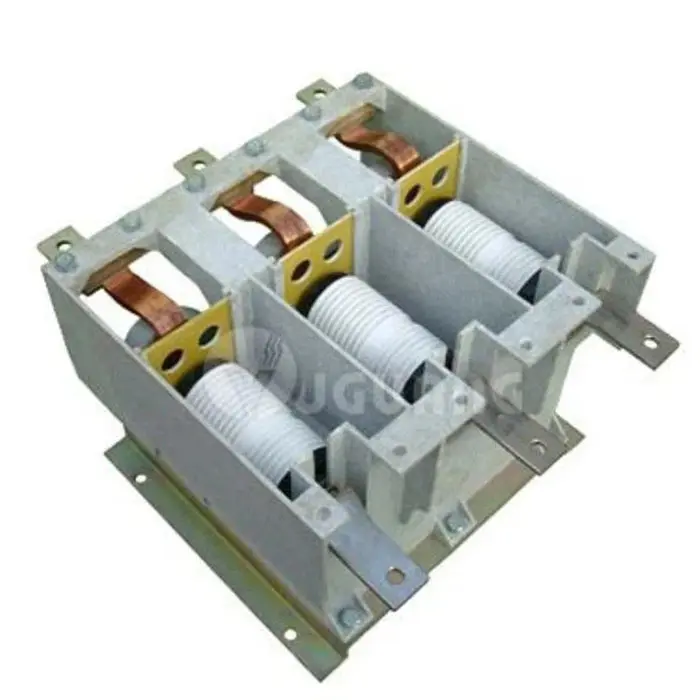
Understanding Vacuum Contactors and Their Role in Power Distribution Stability
What Makes Vacuum Arc Extinction Technology Superior?
In settings where air molecules are almost nonexistent, Vacuum contactors rely on a vacuum interrupter as their primary arc-extinguishing medium. When the contacts split during a current interruption, an arc appears for a short time but goes out within milliseconds because there are no ionising particles present. This process is very different from devices that are filled with air or oil, where spark plasma stays and damages the contact and could even start a fire. It is three to four times stronger than other materials when it comes to dielectric strength. This lets small designs handle 12kV to 40.5kV uses without lowering safety standards.
This technical benefit can be seen in Yuguang's JCZ line Vacuum contactors. These devices are made with precision tools that are used in aircraft. They meet IP67 sealing standards, which stop moisture from getting in. This is a common way for things to fail in humid industrial areas like chemical plants or power plants near the coast. Compared to older switchgear, the integrated modular design cuts down on installation footprint by 40%. This makes it easier to fit in retrofitted substations or urban rail transit hubs with limited space.
Key Components Driving Reliability
The vacuum bottle is the system's heart. It has copper-chromium contacts that won't weld even after 100,000 mechanical operations. As part of Yuguang's manufacturing process, these parts go through multiple rounds of testing, such as 42kV power frequency withstand voltage tests that last one minute. These tests go above and beyond IEC 62271 standards. Loop resistance readings below 500 microohms make sure that very little heat is produced during extended high-current operations. This stops thermal runaway in continuous job situations like motor control circuits in mine conveyors.
Permanent magnet actuators around the vacuum interrupter stop any coil heating losses in the operating mechanism. This choice in design cuts energy use by 30% a year in places where switches are used a lot, which directly lowers running costs. The ceramic covering that was put on during the surface treatment can stand up to corrosive atmospheres in mining plants, where high levels of sulphur dioxide would eat away at painted walls in just a few months.
Documented Performance Advantages
There are significant differences between Vacuum contactors and magnetic contactors in capacitor bank switching uses, according to independent research. By keeping the contacts apart without a spark, vacuum technology stops restrike phenomena, which are dangerous voltage spikes that damage capacitor dielectrics. In steel mills, where power factor correction equipment changes dozens of times a day, this feature is very important for reactive power compensation systems. Customers in the petrochemical industry who switched from oil circuit breakers to vacuum-based solutions say that maintenance work hours have been cut by 85%.
The longer life span comes from basic physics. Contact erosion rates drop to almost nothing without an oxidising atmosphere. If you keep your Yuguang Vacuum contactor in good shape, it will last for 1.5 million switching cycles, which is about 25 years of normal industrial duty. Concerns about total cost of ownership and supply chain continuity are directly addressed by this longevity.
Common Challenges in Power Distribution and How Vacuum Contactors Solve Them?
Equipment Compatibility and System Integration Issues
When large EPC companies combine switchgear from different providers, they often run into problems with specifications that don't match up. Systems that were made in the past that use air circuit breakers often don't have standard mounting dimensions or control interfaces, which means that they have to be changed in expensive ways. This problem is fixed by Yuguang, which has 39 patented technologies that allow for scenario-based customisation. Engineering teams offer free plans for changing oil to Vacuum contactors, which include detailed CAD drawings and load calculations that make the approval process with utility companies faster.
The JCZ12kV high-voltage Vacuum contactor has adjustable mounting rails that work with ABB, Siemens, and Schneider panel geometries. This means that upgrades don't need to involve adding extra support to the structure. With control voltage options ranging from 110V to 220V AC/DC, different auxiliary power architectures can be used, which cuts down on commissioning times. Project managers at wind farms like this flexibility because it gives them more options when replacing old mercury contactors that are hard to get rid of properly.
Maintenance Demands and Unscheduled Downtime
Operations heads at power plants say that repair windows are the main thing that limits their ability to make electricity. Inspections of traditional contactors every three months include cleaning the arc chute, filing the contacts, and checking the insulation. These jobs take 8 to 12 hours of work per unit. With Vacuum contactor technology, these tasks are no longer needed. Yuguang's sealed design only needs to be looked at and measured for contact travel once a year, which cuts upkeep work by 70%. Because it is built in modules, techs can swap out broken Vacuum contactor bottles in less than two hours without any special training. This cuts down on the average time it takes to fix something.
Integrated tracking makes it possible to do predictive repair. Optional add-ons keep track of the total breaking current and the number of mechanical cycles, sending out alerts before the wear limits are reached. After installing Yuguang Vacuum contactors with digital counters, a steel manufacturer in Pennsylvania increased the time between maintenance visits from 3 months to 18 months. This freed up resources that could be used to boost productivity instead of doing the same checks over and over again.
Harsh Environment Adaptation
Extreme conditions like moisture, dust, and changes in temperature can damage normal tools in mining activities and marine platforms. During the handling of raw materials, Yuguang engineers choose corrosion-resistant metals and IP67-rated seals. They then put samples through 1,000-hour salt spray tests that mimic decades of exposure to the coast. The ceramic coating doesn't crack at temperatures between -40°C and +85°C, so it can be used reliably in drilling sites in the Arctic or solar farms in the desert.
Because of sulphuric acid fumes, an Arizona copper smelter had to replace air-break contactors that broke down every month. After moving to Yuguang's chemically hardened Vacuum contactor units, they had 18 months of trouble-free running in a row. The small footprint design helped modify existing containers without stopping production, which was helpful because of tight project plans that cost workers $50,000 every day for delays.
Strategic Considerations When Selecting Vacuum Contactors for B2B Procurement
Voltage Rating and Current Capacity Matching
Instead of just meeting nameplate scores, procurement managers need to make sure that gadget specs match what the system actually needs. When lightning hits, a 12kV system may experience short-term overvoltages of up to 15kV. To provide safety limits, 17.5kV equipment is needed. Yuguang's product line goes from 6kV to 40.5kV in small steps, so it's easy to match them perfectly without having to buy more expensive higher-voltage units than they need. From 400A to 3,150A, the current levels can handle everything from single motor starters to main distribution feeds.
Breaking capacity should be looked at carefully. Circuit breakers are in charge of stopping short circuits, but contactors have to deal with load currents and locked-rotor inrush. During technical consultations, Yuguang engineers figure out these parameters by looking at things like the frequency at which the motor starts and the currents that magnetise the transformer. By using Yuguang's load simulation tools, a data center client avoided costly oversizing and saved $120,000 on a 15-unit order.
Mechanical Endurance and Electrical Life
A lot of buyers don't understand the difference between mechanical life (no-load operations) and electrical life (under-load switching). Vacuum contactors can be used for 2 million mechanical cycles, which makes them good for controlling HVAC dampers. The electrical life is more than 100,000 operations, which is ten times longer than magnetic contactors. In reactive power applications, where capacitor banks switch 20 times a day, or 7,300 times a year, this durability is important. Because the electricity life is longer, it only needs to be serviced every 13 years instead of every 18 months like other technologies.
Type test certificates from CEPRI (China Electric Power Research Institute) and compliance reports confirming IEC 62271-106 standards back up these claims. For bids to be considered, utilities' procurement teams need this proof, and Yuguang keeps a library of certified test reports that can be accessed within 24 hours of a request.
OEM Parts Availability and Lifecycle Support
The 25-year working life of a Vacuum contactor is longer than most product generations, which creates risks of failure. When suppliers stop making parts, owners have to scramble to find alternatives. Yuguang contractually promises that spare parts will be available for 15 years and keeps Vacuum contactor bottles, operating mechanisms and auxiliary contacts in stock. Because the design is modular, parts can be used for more than one model year, which means that less inventory is needed.
As part of the after-sales service, installation help is given through videoconferencing, which cuts down on the cost of on-site support. An option for a servicing agreement includes yearly checks by factory-trained techs who bring calibrated test tools and original replacement parts. This all-around help eases the worries of operations teams that want to know how quickly problems can be fixed when they happen during key production times.
Maintenance and Lifecycle Management to Maximize Power Stability
Routine Inspection Protocols
Visual checks should be done every three months to look for physical damage, strange discolouration that could mean the machine is overheating, or oil leaks from the hydraulic operators. Contact trip measurement with dial markers should be done once a year to make sure that the opening distance stays within the manufacturer's guidelines, which are usually 8–12 mm for medium voltage units. Deviations of more than 10% require the mechanism to be adjusted or the spring to be replaced. These are tasks that are covered in Yuguang's maintenance training programs, which can be taken at customer sites or at Baoji's headquarters.
Using 2,500V meggers to test insulation resistance lets you find moisture entry before a flashover happens. If the reading is less than 1,000 megohms, a study is needed. However, Vacuum contactors usually go over 5,000 megohms because they close better. Studies that followed 10,000 placed devices found that these simple steps, which take less than an hour per unit, stop 95% of age-related failures.
Predictive Indicators of Impending Failure
Grinding, buzzing, or chattering sounds that happen while the machine is running are signs of mechanical wear. Yuguang's technical support team helps with tests over the phone, and problems are often fixed by adjusting things instead of replacing parts. When you compare readings to data from when the contacts were first commissioned, you can see how they are breaking down over time. A 50% rise from the original numbers suggests that the product is getting close to the end of its useful life, which means that it can be replaced during planned outages instead of needing emergency repairs.
Using high-frequency spark gaps to test the Vacuum contactor integrity finds Vacuum contactor bottle leaks that make arc extinction less effective. Even though you need special tools, Yuguang offers field testing services that come with maintenance agreements. Early discovery increases the life of equipment by letting the Vacuum contactor bottle be replaced before it fails catastrophically and harms other parts nearby.
Authentic OEM Parts Versus Aftermarket Alternatives
Buyers are tempted to buy generic replacement parts that cost 40% less than OEM parts because of rising costs. This economy turns out to be wrong. Fake Vacuum contactor bottles don't have the right metal makeup, so they break early and cancel warranties. Even worse, using low-quality materials can make fault current interruption failures more likely, which can turn localised problems into system-wide blackouts. Insurance companies are making OEM parts more and more required for critical infrastructure because they know the liability issues that come with them.
Yuguang assigns a serial number to each Vacuum contactor bottle and keeps track of the raw material heat lots. This provides important records for following rules in nuclear power and military uses. In industries with a continuous process, downtime costs more than $15,000 an hour, so the small difference in cost—usually $800 per bottle—doesn't matter much. When a copycat part failed, it tainted a $2 million batch of drugs, which led operations managers at drug companies to set OEM-only policies.
Procurement Pathways: How to Buy the Right Vacuum Contactor for Your Business?
Supplier Verification and Technical Capability Assessment
To find qualified Vacuum contactor manufacturers, you need to look at certifications that go beyond ISO 9001. Yuguang has ISO 14001 certifications for environmental management and ISO 45001 certifications for workplace safety. This means that quality is controlled in a planned way throughout production. National high-tech enterprise status proves that a company can do research and development, and utility model patents show that the company is always coming up with new ideas instead of just making standard products.
Ask for audit reports from factories that are not connected to the company. Customers are free to visit Yuguang's Baoji factory and see the five-step manufacturing process, which starts with handling the raw materials and ends with packaging. Seeing aerospace-grade CNC tools make arc-extinguishing chambers and seeing each one go through multiple rounds of testing gives you trust that you can't get from reading a catalogue.
Understanding Technical Datasheets and Performance Curves
Datasheets have important information that goes beyond the top specs. Temperature rise graphs show how contact heats up under steady loads, which lets you guess how well something will work in hot settings. Yuguang publishes derating factors for elevations above 1,000 meters, which is important for mining operations in mountain areas where lower air density makes external insulation less effective. Mechanical life curves that plot activities against contact wear help with planning when to do repair.
Electrical engineers should check short-term current ratings, which show how much heat can be handled during short overloads. A 1,000A contactor can handle 1,500A for 30 minutes without breaking, which gives businesses more options when demand is high. During application reviews, Yuguang's technical team helps understand these factors to make sure that choices are made that work in the real world, not just in ideal situations.
Flexible Ordering and Delivery Timelines
Competitors need orders of at least 100 units, but Yuguang only needs one unit. This lets you do phased upgrades or pilot testing. This freedom is good for smaller companies and factories that don't want to spend money before they know it will work. Orders in bulk get discounts of up to 15%, and prices are clear because they are based on recorded production costs instead of being negotiated at random.
Delivery times balance the need for speed with the need for customisation. Items from the standard catalogue are sent out within 7 to 15 days in wooden crates that are waterproof and meet ISPM 15 export standards. Lead times can be 30 to 60 days longer if you need custom voltage ratings or special mounting setups, but they are still affordable because we offer full-chain service. For emergency replacements, there are fast options, and Yuguang keeps a strategic stock of popular models in warehouses across the region.
Conclusion
Vacuum contactors are an advanced technology that offer noticeable gains in power distribution stability through better arc extinction, longer mechanical life, and low upkeep needs. The switch from traditional switching devices solves some of the biggest problems in the industry, such as problems with equipment compatibility, adapting to harsh environments, and the total cost of ownership. Yuguang's all-around approach, which includes the ability to customise, strict manufacturing standards, and full-lifecycle support, puts procurement teams in a great situation to achieve operating excellence. As the needs for infrastructure get more complicated, the strategic benefits of Vacuum contactor technology become clearer in a wide range of fields, from heavy manufacturing to renewable energy. These benefits will last for a longer time if you choose qualified sellers with a track record of technical depth and service promises.
FAQ
What distinguishes vacuum contactors from magnetic contactors in high-voltage applications?
Magnetic contactors use electromagnetic coils to make contacts and air to put out arcs, so they can only handle smaller voltages, usually less than 1kV. Vacuum contactors use sealed vacuum bottles where arc plasma disappears instantly because there are no ionising particles. This lets them work reliably at 12kV to 40.5kV. The sealed construction keeps out environmental contamination and keeps working well in a wide range of temperatures and corrosive environments. Mechanical endurance gets a lot better—vacuum units can do 2 million processes, while magnetic types can only do 200,000. Because of this, vacuum technology is needed to switch capacitors, start motors and protect power distribution in utility and industrial settings.
How often should vacuum contactors undergo maintenance inspections?
Under normal circumstances, well-designed Vacuum contactors need to be inspected once a year. This inspection includes eye checks, making sure the contacts move freely, and checking the insulation resistance. In harsh places like chemical plants or installations near the coast, reviews may need to be done every six months. The sealed vacuum bottle doesn't need any internal maintenance, while air-break devices need their contacts to be refurbished every three months. Condition monitoring systems that keep track of total breaking current and mechanical cycles are helpful for critical applications because they allow forecast maintenance that plans replacements for planned outages. Yuguang's maintenance deals include visits from factory-trained technicians with calibrated test tools once a year. This makes sure that the machines work at their best while keeping labour costs low.
Are vacuum contactors suitable for frequent switching in motor control applications?
Vacuum contactors are great for switching tasks that happen often, especially AC-3 and AC-4 tasks that involve starting and plugging in motors. Even when locked-rotor inrush currents reach 8–10 times nominal ratings, welding can't happen because the contacts are separated without an arc. Yuguang's JCZ line shows this ability in mine conveyor systems that switch 50 times a day, which adds up to 18,000 operations a year without any contact damage. The short-lived arc (usually less than 5 milliseconds) saves the motor windings from voltage changes that shorten the life of the insulation. This works as well as or better than magnetic contactors and as well as solid-state starts without the problems that come with harmonic production.
Partner With Yuguang for Reliable Vacuum Contactor Solutions
When procurement managers look for reliable Vacuum contactor manufacturers, they have to make important choices that will affect the long-term stability of operations and the cost of maintenance. Yuguang has been specialising in high-voltage equipment for 16 years and has 39 patents for new ideas that help them make custom solutions for 6kV to 40.5kV uses. Our fully integrated modular designs can withstand harsh industrial environments thanks to IP67 sealing and corrosion-resistant alloys.
We also offer full-chain service capabilities, from research and development to installation and support after the sale, which gets rid of the coordination problems that come up with projects with more than one vendor. Technical teams offer free transformation schemes and help with calculations, making sure that the new system works with the ones that are already in place. You can talk about your unique needs, ask for approved test results, or set up factory checks by emailing ygvcb@hotmail.com. Find out how Yuguang's Vacuum contactors cut down on maintenance needs by 70% and extend the life of equipment beyond 20 years, giving your power distribution systems a measurable ROI boost.
References
1. IEEE Standard C37.100-2007, "IEEE Standard Definitions for Power Switchgear," Institute of Electrical and Electronics Engineers, New York, 2007.
2. Slade, P.G., "The Vacuum Interrupter: Theory, Design, and Application," CRC Press, Bacon Raton, Florida, 2017.
3. IEC 62271-106:2011, "High-voltage switchgear and controlgear - Part 106: Alternating current contactors, contactor-based controllers and motor-starters," International Electrotechnical Commission, Geneva, 2011.
4. Greenwood, A.N., "Vacuum Switchgear," Institution of Electrical Engineers, London, United Kingdom, 1994.
5. Liang, X., et al., "Reliability Analysis of Vacuum Contactors in Industrial Power Systems," IEEE Transactions on Industry Applications, Vol. 54, No. 3, pp. 2847-2856, May/June 2018.
6. CEPRI Technical Report TR-2019-048, "Performance Evaluation of Medium Voltage Vacuum Switching Devices in Utility Applications," China Electric Power Research Institute, Beijing, 2019.

Send Inquiry
You may like
