
How Vacuum Contactors Prevent Electrical Arc Damage
By using vacuum interrupters that put out electrical arcs in a vacuum environment, vacuum contactors prevent electrical arc damage. When the contactor opens, the vacuum quickly stops the formation of an arc, which stops the destructive plasma from hurting the contact surfaces. Compared to traditional switching devices, this technology greatly lowers equipment wear, prevents carbon buildup, and increases operational lifespan. This makes it essential for industrial settings that need reliable electrical switching performance.
Introduction
Electrical arc damage is a constant threat to industrial electrical switching systems. This is a problem that can make equipment less reliable and create major safety risks. Vacuum contactors are a revolutionary way to solve this problem because they stop arcs better than any other device and protect important infrastructure investments. These high-tech gadgets are now necessary in many modern industrial settings where smooth operations can't be interrupted.
For procurement professionals, engineers, and project managers who work with high-voltage electrical systems, knowing about vacuum contactors is important for making smart buying decisions. Concerns about equipment longevity, maintenance costs, and system reliability that have a direct effect on operational efficiency are addressed by the technology. These devices are used in many fields, from manufacturing to power generation, to keep operations safe and cut down on costly downtime.
There is more to vacuum contactors than just their ability to switch functions. They are an important long-term investment in operational stability that pays off in measurable ways, like fewer repairs and longer equipment lifecycles. This detailed guide looks at how vacuum contactors stop electrical arc damage and gives useful information for people who make purchasing decisions and need reliable electrical switching solutions.
Understanding Electrical Arc Damage in Industrial Switching
When electrical current jumps across air gaps between contacts during switching operations, it can cause electrical arc damage. This creates intense heat and plasma that can seriously damage equipment parts. This effect causes a lot of problems in places like factories where switching high-voltage power is common. Because they are so destructive, electrical arcs are one of the main reasons why equipment in electrical systems breaks down too soon.
Common Causes of Arc Formation
Arcs form in industrial switching applications for a number of reasons. When contacts separate under high voltage stress, electrical current looks for other ways to flow, which can cause an arc to form across air gaps. Wear and tear on mechanical contacts raises resistance over time, which creates heat and helps start an arc during switching operations. Things in the environment, like humidity, dust, and chemical vapors, can also make conductive paths that make it easier for an arc to form.
Another important thing that affects how arcs form is contact erosion. As switching devices are used over and over, the contact surfaces wear down over time, leaving behind rough surfaces that make it easier for arcs to form. Over time, this wear and tear speeds up, which causes arc events that get worse over time and damage more equipment parts.
Consequences for Industrial Operations
Electrical arc damage has effects that go far beyond the failure of the immediate equipment. Arc-damaged equipment that has to be shut down for a long time can cost businesses thousands of dollars an hour in lost production. Repair costs often go over the cost of buying the equipment in the first place, especially when arc damage affects multiple system parts at the same time.
Potential fire risks, toxic gas emissions, and explosive conditions in some industrial settings are all safety risks that come with electrical arcs. These risks can lead to worries about liability and problems with following the rules, which can have long-lasting effects on operations and finances. Also, fixing arc damage often requires specialized knowledge that isn't always easy to find. This can make downtimes longer and cause more problems with operations.
The Working Principle of Vacuum Contactors in Arc Suppression
Vacuum contactors use advanced vacuum interrupter technology to get rid of the conditions that are needed for an arc to stay in place. The main idea is to separate the electrical contacts inside a vacuum chamber that is sealed off so that there aren't enough gas molecules to support the formation of an arc plasma. Because of this fundamental difference from regular contactors, vacuum technology is very good at stopping arc damage.
Internal Components and Design
The vacuum interrupter is the most important part of vacuum contactor technology. It is made up of precisely engineered contacts that are sealed inside a vacuum bottle. These contacts are made from special copper-chromium alloys that don't wear down easily and still conduct electricity very well. With the vacuum bottle, the pressure stays below 10^-4 torr, which makes it almost impossible for an arc to form.
Supporting parts include electromagnetic coils that precisely move the contacts, spring-loaded mechanisms that keep the contact pressure constant, and ceramic insulators that keep the electricity from flowing. The integrated design makes sure that the device works reliably for millions of switching cycles and keeps the vacuum integrity throughout its life.
Vacuum Arc Extinction Process
When vacuum contactor contacts separate during switching operations, any initial arc formation goes out right away because there are no gas molecules left to keep the plasma going. The vacuum environment stops the spread of an arc by taking away the path that electricity could take between two contacts that are far apart. This process happens in microseconds, so there is no heat buildup or contact erosion like there is with regular switching devices.
Because the extinction process happens so quickly, the contact surfaces don't have to deal with much thermal stress. This keeps them intact and makes sure that they keep working properly electrically for long periods of time. Because of this, vacuum contactors are very useful in situations where switching needs to happen a lot without affecting reliability.
Comparative Analysis with Conventional Technologies
Vacuum contactors outperform switching devices filled with air and oil in a variety of operational parameters. Mechanical arc chutes and magnetic blowout coils are used by traditional air contactors to put out arcs, but these methods work less well as voltage levels rise. Liquid dielectrics are used to stop arcs in oil-filled contactors, but they need to be maintained regularly and are bad for the environment.
These problems are solved by vacuum technology, which stops arcs consistently no matter what the voltage level is as long as it stays within the rated limits. Maintenance needs are greatly reduced because there is no arc-quenching media that needs to be replaced or watched over. Some environmental benefits of new technologies are that they get rid of toxic gases and oil disposal problems that come with older technologies.
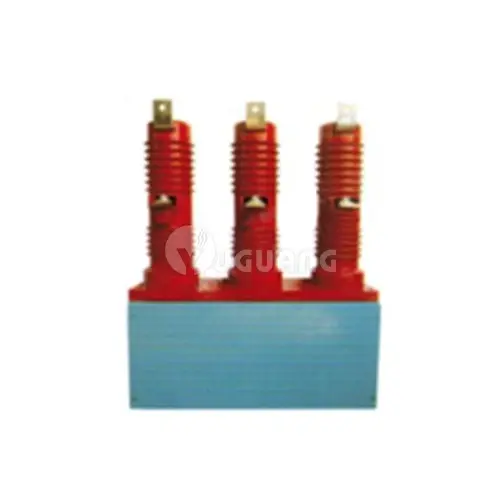
Key Advantages of Vacuum Contactors in Industrial Applications
Vacuum contactors offer great performance benefits that solve important operational problems in industrial settings. These benefits directly lead to lower costs, higher reliability, and better operational efficiency in a wide range of settings.
Enhanced Durability and Extended Lifespan
The vacuum environment keeps the contact surfaces from rusting and wearing away, so they can work for much longer than normal switching devices. Most vacuum contactors can handle five to ten million switching operations without losing much performance. Air contactors, on the other hand, can handle hundreds of thousands of operations without losing much performance. This longer lifespan lowers the cost of replacement and limits the downtime that comes with switching out equipment.
Contact resistance stays the same over the life of the device, which ensures consistent electrical performance and cuts down on energy loss. Without arc-induced contact damage, switching devices don't lose performance over time like most do. Instead, they keep their rated performance until they need to be replaced at the end of their useful life.
Operational Efficiency Improvements
Less maintenance means lower operational costs because technicians don't have to work as hard, spare parts don't have to be kept in stock, and scheduled maintenance procedures don't have to be done. The sealed vacuum environment gets rid of the problems with contamination that come up with regular contactors in dusty or chemically harsh workplaces.
Because contact resistance is always low and switching losses are very low, energy efficiency benefits. Having these traits is especially helpful in high-frequency switching situations, where energy loss can add up to big amounts over time. The reliable operation also cuts down on unplanned downtimes that mess up production schedules and lower the overall productivity of the facility.
Versatile Application Range
Vacuum contactors can handle voltages between 6KV and 40.5KV, which means they can be used in a wide range of industrial settings for things like controlling motors, switching capacitors, and general switching tasks. Because they are small, they can be installed in places with limited space while still being fully functional. When it comes to extreme temperatures, high humidity, and corrosive atmospheres, the technology works well in places where other devices have a hard time staying reliable.
There have been case studies from power plants that show that installing vacuum contactors made the systems much more reliable. After switching from air contactors to vacuum technology, one metallurgical facility saw a 75% drop in maintenance events related to switching. They also had more operational flexibility because the switching was more reliable.
Procurement Considerations for Vacuum Contactors
When procurement professionals look at vacuum contactor solutions, they need to think about a lot of technical and business factors to make sure they make the best choice for each application. These things have a direct effect on the system's reliability and long-term operational costs.
Technical Specifications Analysis
When choosing a device, voltage ratings are the most important thing to think about. Devices are available across the full 6KV to 40.5KV range needed for industrial applications. The current ratings have to meet the needs of the application while still leaving enough room for operational flexibility. Long-term value propositions and replacement planning needs can be measured with operational lifespan specifications.
Some signs of a good build are the materials used to make the vacuum bottle, the types of alloys used in the contacts, and the sealing technologies that make sure the vacuum stays intact over time. Ratings for the environment, like IP67 protection levels, are very important in harsh industrial settings where contamination is a constant problem.
Leading Market Solutions
Several well-known companies, such as Schneider Electric, Siemens, ABB, Mitsubishi, and Eaton, make a wide range of vacuum contactors with different performance and feature sets. Schneider Electric focuses on modular designs that make customization and maintenance easier, while Siemens focuses on monitoring features that are built in and help with predictive maintenance programs.
ABB vacuum contactors use advanced metallurgy in the construction of their contacts, which makes them last longer in tough environments. Mitsubishi's solutions work best in small spaces where equipment options are limited, while Eaton's designs are strong and work best in harsh industrial settings.
Global Procurement and Logistics
When buying things internationally, you need to make sure that they meet regional electrical standards like IEC, ANSI, and GB, which are different for each market. Logistics for delivery must take into account the right packaging needs to protect the vacuum's integrity during shipping, especially for international orders that need to take longer to get to their destination.
Wholesale availability varies by manufacturer and region. Some suppliers offer volume discounts that are helpful for big purchases. Lead times for standard configurations are usually 7–15 days, while lead times for customized solutions are usually 30–60 days. To avoid schedule conflicts, projects need to be carefully planned.
Yuguang Electric Vacuum Contactor Solutions
Shaanxi Yuguang Electric Co., Ltd. offers its vacuum contactor design and production expertise to business-to-business markets around the world. It does this by combining advanced production capabilities with a wide range of support services. Yuguang was founded in 2008 in Baoji, Shaanxi, and has grown into a major provider of high-voltage transmission and distribution equipment. They are especially good at vacuum switching technologies.
Comprehensive Product Portfolio
Yuguang's line of vacuum contactors works with voltages from 6KV to 40.5KV and has 39 patented innovations that solve problems in specific industrial settings. Because the company can customize based on different scenarios, it can adapt to harsh environments and industry-specific needs that standard products can't meet. The total cost of ownership is lower for integrated modular designs because they have small footprints, better sealing protection, and longer operational lifespans.
The first step in making something is choosing high-quality raw materials, such as alloys that don't rust and IP67-rated seals that go through strict inspection protocols. Core parts like solid-sealed poles and arc-extinguishing chambers use aerospace-grade precision technology and special tools to make sure they are accurate and keep the vacuum. Modular assembly techniques allow precise pre-assembly of important parts before they are put together into frame and shell assemblies that can be changed to meet different needs.
Quality Assurance and Certifications
Ceramic coating and powder coating are two surface treatment methods that are followed by curing at a constant temperature to improve corrosion resistance and performance over time. Multiple rounds of testing make sure that the device works properly and meets national high-voltage electrical appliance standards as well as ISO system requirements. The tests check for things like the ability to put out arcs, the integrity of the insulation, and the ability to adapt to different loads.
Yuguang has been recognized as a "High and New Technology Enterprise" and has won several awards as a "Quality and Trustworthy Unit." It also has ISO 9001:2015 certification. These certifications show dedication to quality management systems that make sure products are reliable and customers are happy in all markets around the world.
Full-Chain Service Capabilities
The company's service approach goes beyond making products and includes full support for the whole lifecycle of equipment. Installation instructions make sure that
the system is properly set up, and maintenance agreements offer ongoing support that improves the reliability of operations. Spare parts supply programs make sure that equipment is always available, and free modification plans let businesses adapt to changing operational needs.
Cross-border technical support and custom solutions for customers in other countries are examples of international service capabilities. International shipping standards are met by wooden packaging that is resistant to moisture and shock, and the minimum order quantity starts at just one unit, so it can be used for both small purchases and bulk customization needs.
Conclusion
Vacuum contactors are the best technology for keeping electrical arcs from damaging equipment used in industrial switching. They have better arc suppression, longer operational lifespans, and less maintenance needs, which all add up to measurable benefits that help with cost management and operational efficiency. Because the technology has been used successfully in many different industries, procurement professionals looking for reliable electrical switching solutions should definitely think about it.
Vacuum contactor technology has many benefits, some of which are short-term operational improvements, but it also has long-term strategic benefits like lower lifecycle costs, higher system reliability, and better safety performance. All of these things make strong business cases for using vacuum contactors in infrastructure, manufacturing, and power generation, where the reliability of electrical switching has a direct effect on how well the business does.
FAQ
How does vacuum contactor lifespan compare to air contactors?
Vacuum contactors typically achieve five to ten million switching operations compared to hundreds of thousands for air contactors. The vacuum environment eliminates contact erosion from arc damage, enabling extended operational life with consistent performance throughout service periods.
What voltage ratings are available for industrial motor control applications?
Industrial vacuum contactors are available across voltage ratings from 6KV to 40.5KV, covering the complete range required for motor control applications. Current ratings can be customized to match specific application requirements while maintaining optimal performance characteristics.
How do vacuum contactors reduce operational maintenance costs?
The sealed vacuum environment eliminates arc-induced contact wear, reducing replacement part requirements and scheduled maintenance procedures. Energy efficiency improvements from stable contact resistance also contribute to operational cost reductions over equipment lifecycles.
Partner with Yuguang for Advanced Vacuum Contactor Solutions
Yuguang Electric combines innovative vacuum contactor technology with comprehensive support services to address complex industrial switching challenges. Our 39 patented innovations and complete 6KV to 40.5KV product range enable customized solutions for diverse applications while our full-chain service capabilities ensure seamless implementation and ongoing support. Contact our technical team at ygvcb@hotmail.com to discuss your specific requirements and discover how our vacuum contactor manufacturer expertise can enhance your operational reliability.
References
1. IEEE Standards Association. "IEEE Standard for AC High-Voltage Circuit Breakers Rated on a Symmetrical Current Basis." Institute of Electrical and Electronics Engineers, 2018.
2. International Electrotechnical Commission. "High-Voltage Switchgear and Controlgear - Part 100: Alternating Current Circuit-Breakers." IEC Publications, 2019.
3. National Institute of Standards and Technology. "Electrical Contact Materials for High-Voltage Applications: Performance and Reliability Analysis." NIST Technical Publication Series, 2020.
4. Electric Power Research Institute. "Vacuum Circuit Breaker Technology Assessment for Distribution Applications." EPRI Technical Report, 2021.
5. International Council on Large Electric Systems. "Switching Equipment for High Voltage Applications: Operational Experience and Maintenance Practices." CIGRE Working Group Report, 2019.
6. American National Standards Institute. "Standard for High-Voltage Circuit Breakers: Design, Testing, and Performance Requirements." ANSI Standards Publication, 2020.

Send Inquiry
You may like
