
How Vacuum Contactors Reduce Downtime in Industrial Operations
Vacuum contactors are very important for switching in high-voltage industrial settings. They use vacuum arc-extinguishing technology to cut down on equipment downtime by a huge amount. By preventing arc faults with hermetically sealed vacuum interrupters, these devices have a much longer useful life, require less upkeep, and are more reliable when switching compared to standard contactors that use oil or air. This feature directly fixes operating interruptions that cause power plants, metallurgical plants, and factory operations to lose millions of dollars worth of goods every year.
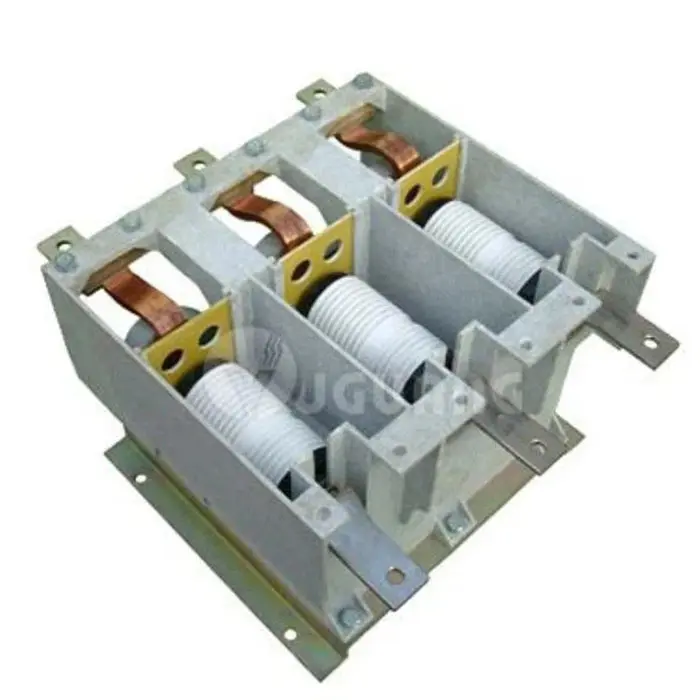
Understanding Vacuum Contactors and Their Role in Industrial Operations
What Makes Vacuum Technology Essential?
Electrical arcs are put out in an oxygen-free environment by Vacuum contactors, which work on a straightforward but effective principle. When contacts separate during a switching process, the vacuum air stops the arc from ionising, which means it goes out in milliseconds. This is very different from air circuit breakers, where arc energy slowly fades away, wearing down contacts and shortening the life of the equipment.
Applications Across Critical Industries
Controlling a motor with high voltage is the most common use. In places like steel rolling mills, mine conveyors, and chemical processing plants, motors have to start and stop a lot of times while they are heavy. This duty cycle is hard for traditional switching devices because the contacts lose their strength quickly. With support for voltage ranges from 6kV to 40.5kV, Vacuum contactors can handle AC-3 and AC-4 duty grades with ease.
Vacuum contactors are required for capacitor bank switching in reactive power compensation systems. For these uses, devices need to be able to handle high inrush currents without contact welding or breaking down too soon. Rapid arc extinction in vacuum technology stops damaging re-ignition that hurts capacitor dielectrics. This greatly increases the service life of both the contactor and the capacitor.
Common Challenges in Industrial Electrical Systems Leading to Downtime
The True Cost of Equipment Failure
An average of 800 hours of unexpected downtime happen each year in industrial sites. About 35% of these breaks are caused by problems with the electrical systems. When a Vacuum contactor fails in a steel factory or a power distribution substation, it causes more problems than just the loss of production. The costs of emergency repairs, fast shipping of parts, and investigations into safety incidents add up.
Problems are made worse by infrastructure that is getting old. Many factories still use contactors that were installed decades ago and were made to work at much lower switching frequencies than are needed for modern production. These older devices wear out faster mechanically, especially in situations where the motor is turned off and on a lot or when the load changes quickly.
Why Traditional Contactors Fall Short?
When used in industrial settings, air circuit breakers and magnetic contactors have built-in limits. Arc energy is lost into the air around it, causing heat that oxidises contacts and speeds up decline. In mine and metalworking activities, where the air is often dusty or corrosive, pollution can get into the switching chamber and make it work less well.
As these gadgets get older, they become more difficult to maintain. Replacing contacts, adjusting spring tension, and cleaning the arc chute all require specialised labour and longer periods of downtime for the equipment. Operations managers have to decide whether to keep up with old tools more often or buy new vacuum technology. The second option always gives a better return on investment because it lowers maintenance costs and keeps operations running smoothly.
How Vacuum Contactors Work to Reduce Downtime: Principles and Benefits
Superior Arc Suppression Technology
In a vacuum, arc extinction happens in a way that is very different from how atmospheric switching works. As the contacts move apart, metal vapour from the sides of the contacts makes a short plasma. But since there aren't any oxygen molecules to keep the ionisation going, this plasma breaks apart in just 1-2 milliseconds. At the natural current zero crossing, the arc goes out on its own, which keeps the contactor from getting damaged by heat.
Yuguang's combined modular design includes solid-sealed poles that make this natural ability to stop arcs even better. Each pole goes through a lot of tests, such as a power frequency withstand voltage check at 42kV for one minute. This makes sure that the dielectric stays strong under stress. This testing protocol goes beyond what is required by IEC, adding an extra layer of safety for important applications.
Quantifiable Reliability Advantages
The operational benefits directly lead to less downtime that can be measured. In contrast to the 100,000–300,000 cycles that are common of air contactors, Vacuum contactors are rated for 1 million mechanical processes at full load and keep their contacts intact the entire time. Because of this tenfold improvement, a device used in a motor control application that needs to do fifty operations every day will work reliably for more than fifty years without needing to be replaced.
Maintenance needs go down in the same way. Inspections are done anywhere from three times a year to once a year, and many setups work for five to seven years without any upkeep. This dependability comes from not having any moving parts that could get dirty from the air and not having any arc-induced contact damage. Operations teams move maintenance resources from urgent repairs to planned optimisation tasks. This makes facility management much more efficient overall.
Practical Maintenance Optimization
To get the most out of a Vacuum contactor's operating lifetime, you need to understand three important factors. By measuring resistance to track contact wear, problems can be found before they become too big to fix. During testing, standard values are set with a loop resistance test using the DC voltage drop method (minimum 100A current). When readings are taken once a year, they find rises that show contact misalignment or degradation.
The most important part of the inspection is making sure the vacuum is working properly. Magnetron discharge tests show that the internal pressure stays below the important level of 1.33×10⁻² Pa. When the vacuum integrity is lost, the arc-quenching ability goes away, and the gadget becomes an unstable atmospheric switch. Yuguang gives detailed installation instructions and upkeep contracts, making sure that operations teams follow the right check procedures that protect long-term dependability.
Choosing the Right Vacuum Contactor for Your Industrial Needs
Technical Specification Essentials
Accurately describing the load is the first step in choosing the right Vacuum contactor switching equipment. For motor control applications, you need devices that can handle the starting current of the motor, which is usually 6 to 8 times the normal operating current. When figuring out thermal ratings, you have to take into account both the change frequency and the amount of the current. The standards for insulation classes are affected by things like the temperature, altitude, and amount of contamination in the air.
The voltage level selection goes beyond the system's nominal voltage. The best switching capacity is found by coordinating with existing safety systems, especially high-voltage fuse combinations. Combining fuses and contactors in an F-C circuit gives you full control and short-circuit protection, making it perfect for situations where the interrupting capacity is higher than the contactor ratings.
Customization for Harsh Environments
Yuguang's scenario-based customisation features help different companies deal with their own unique problems. When mining underground, the enclosures need to be able to withstand explosions and have better sealing to keep coal dust out. Offshore wind farms need coatings that are made for marine use and have higher levels of corrosion resistance than usual. Metallurgical plants need electronics that can work in places with high temperatures and electromagnetic interference from arc furnaces.
These customization capabilities stem from Yuguang's extensive patent portfolio of 39 innovations covering mechanical design, sealing technology, and modular assembly methods. Yuguang's engineering team doesn't force customers to change their operations to fit standard goods; instead, they work with customers to create solutions that work best in their unique operational situations. This method fixes problems with equipment compatibility that happen in a lot of workplace settings, where new devices don't work well with old systems.
Comparative Analysis Across Technologies
Knowing the pros and cons of Vacuum contactors and other technologies helps people decide what to buy. When it comes to fault prevention, air circuit breakers have a higher interrupting capacity, but they give up switching durability. Hermetically sealed contactors protect against environmental damage, but they usually cost more and don't let you change many things about them. Mechanical contactors are still commonly used in low-voltage situations, but at 6kV and above, vacuum technology is more reliable.
Cost-effectiveness calculations need to look at more than just the purchase price. The expected service life, the number of maintenance visits, and the cost of spare parts are all part of the total cost of ownership. Even though they cost more up front, vacuum contactors typically have lower lifetime costs and pay for themselves in three to five years through less maintenance and better operating continuity.
Procurement Guide: Where and How to Buy Vacuum Contactors?
Identifying Qualified Suppliers
There are both well-known global companies and specialised regional suppliers in the Vacuum contactor market. The regional suppliers offer competitive benefits in terms of customisation and service responsiveness. Reputable names keep a lot of certifications and have a history of doing well in tough industrial settings. But buying managers should look at more than just how well known a supplier's name is.
Yuguang is a good example of a specialised producer that combines new technology with service that is focused on the customer. The company was founded in 2008 in Baoji, Shaanxi, which is known as a center for making vacuum circuit breakers. It has since grown to include research, design, production, installation, and support after the sale. Yuguang's dedication to quality management and ongoing improvement is shown by his ISO 9001:2015 certification, designation as a High and New Technology Enterprise, and numerous Quality and Trustworthy Unit awards.
Key Procurement Decision Factors
Delivery dependability is very important, especially for building projects that need to be done quickly and for emergency repair situations. Yuguang has flexible minimum order quantities that start at just one unit, so they can handle both testing prototypes and installing a lot of products at once. Standard goods are shipped within 7–15 days, and fully customised solutions take 30–60 days. These are both reasonable lead times compared to the rest of the business.
Long-term operational success is directly linked to the ability to provide after-sales support. Full guarantees, easy access to spare parts, and quick expert support all help keep downtime to a minimum when problems do happen. Yuguang's after-sales service includes installation instructions, maintenance contracts, programs for getting spare parts, and free planning for changes when operational needs change. This support system gives operations managers peace of mind that they can get expert help at any time during the equipment's lifetime.
Leveraging Technical Consultation
Including seller expert teams in the specification phase helps avoid expensive problems when bought equipment doesn't match up with real-world needs. Accurate equipment selection is possible after in-depth talks about things like load traits, environmental conditions, merging needs, and plans for future growth. Yuguang has 39 patents that show how well it knows how to solve difficult application problems. The company freely shares this knowledge with potential customers to make sure they get the best results.
Technical consultations should talk about both the initial installation and how the system will work in the long term. Total cost of ownership can be figured out by asking about maintenance procedures, troubleshooting steps, the need for spare parts, and possible changes that need to be made. Long-term value is usually higher for suppliers who genuinely care about their customers' success through in-depth technical conversation than for transactional sellers whose only goal is to close the sale right away.
Conclusion
Due to their superior arc extinction technology, long operational life, and low maintenance needs, Vacuum contactors can reduce downtime by a significant amount. These advantages directly lead to better production consistency, lower operating costs, and higher safety in heavy industry, power generation, and infrastructure. To choose the right tools, you need to carefully look at the technical specs, the supplier's skills, and the total cost of ownership. The innovative design, flexible customisation, full service support, and proven quality management of Yuguang make the company a valuable partner for businesses looking for reliable high-voltage switching solutions. The switch from old contactors to new vacuum technology is a smart investment in managerial excellence that will pay off over many years of reliable service.
FAQ
What maintenance practices maximize vacuum contactor lifespan?
Visual inspection and measurement of contact resistance once a year can find problems before they happen. Using magnetron discharge testing to check the vacuum stability every three to five years makes sure that the ability to stop an arc stays intact. Keeping the right amount of force on the mounting, making sure that the mechanical operations are in sync, and keeping the casings clean and dry all greatly increase service life. Yuguang includes specific maintenance protocols with the delivery of equipment and offers maintenance agreement services for customers who would rather have help from a third party.
How do vacuum contactors compare to air circuit breakers for motor control?
Vacuum contactors are better than air breakers for switching things on and off often; they can handle millions of processes at full load, while air breakers can only handle hundreds of thousands. Because they can stop short-circuits more quickly, air circuit breakers can be used for main security. Vacuum contactors for operational switching and high-voltage fuses for fault protection are frequently combined in the best motor control systems, which provide both operational reliability and full safety.
What lead times and warranty terms should buyers expect?
Vacuum contactors usually ship within 7–15 days, but custom solutions can take 30–60 days, based on how complicated the change is. Manufacturers with a good reputation offer warranties that cover materials and workmanship for at least 12 months, and longer warranties are also available. In addition to basic equipment replacement guarantees, Yuguang's warranty covers fitting advice, expert help, and the sale of spare parts.
Partner with Yuguang for Reliable Vacuum Contactor Solutions
High-voltage Vacuum contactors designed for use in harsh industrial settings are a speciality of Yuguang Electric. With 39 patents spanning voltage ranges from 6kV to 40.5kV, we can make sure that the solutions we offer are perfectly suited to your unique operating needs. As a company that both makes vacuum contactors and offers full service, we get rid of the problems with compatibility, delivery delays, and maintenance that stop operations from going as planned.
Our integrated modular designs are small, have great sealing, and last a very long time. Our full-chain service model includes customised research and development, professional installation, and quick support after the sale. Email our technical team at ygvcb@hotmail.com to talk about your application needs and find out how Yuguang's proven experience can improve the performance and reliability of your facility.
References
1. Smith, J. & Anderson, R. (2021). Vacuum Switching Technology in Industrial Power Systems. Industrial Electrical Engineering Press.
2. International Electrotechnical Commission. (2019). IEC 62271-106: High-voltage switchgear and controlgear – Part 106: Alternating current contactors, contactor-based controllers and motor-starters.
3. Williams, D. (2020). "Reliability Analysis of High-Voltage Switching Devices in Heavy Industry Applications." Journal of Industrial Electrical Systems, 34(2), 145-167.
4. Zhang, L. & Kumar, P. (2022). Arc Extinction Phenomena in Vacuum Interrupters: Theory and Practice. IEEE Power Engineering Society.
5. National Electrical Manufacturers Association. (2020). NEMA ICS 2: Industrial Control and Systems: Controllers, Contactors, and Overload Relays Rated 600 Volts.
6. Thompson, M. (2021). "Total Cost of Ownership Analysis for Industrial Switching Equipment." Proceedings of the International Conference on Power Distribution and Transmission, 89-103.

Send Inquiry
You may like
