
HV vs MV Operating Mechanisms: Key Differences Explained
Power industry workers need to know the main differences between how High-voltage operating mechanisms and medium-voltage systems work. High-voltage mechanisms usually work at voltages above 35kV. They need special control systems, better protection, and strong fault detection tools. Between 1kV and 35kV, medium-voltage systems work in different ways, with different amounts of automation, data processing needs, and repair schedules. They have a direct effect on choosing the right tools, integrating systems, and figuring out how much it will cost to run in the long run.
Understanding Voltage Classifications and Operating Principles
Voltage levels are put into groups by power systems based on practical needs and safety standards. High-voltage operating mechanisms have to deal with electrical stress above 35kV, which requires complex control systems and unique parts. Medium-voltage devices work at voltages between 1kV and 35kV and have different ways of working. The rules for how these groups work are very different. For high-voltage systems to work properly, they need better communication between the insulation, more advanced fault detection algorithms, and precise voltage control mechanisms. Medium-voltage systems rely on managing power well and having stable control systems. Three main changes in how things work are:
- Insulation requirements and dielectric strength specifications
- Control system complexity and signal processing capabilities
- Maintenance protocols and predictive maintenance strategies
High-voltage systems offer better performance and safety gaps for uses that need to be as reliable as possible in important infrastructure.
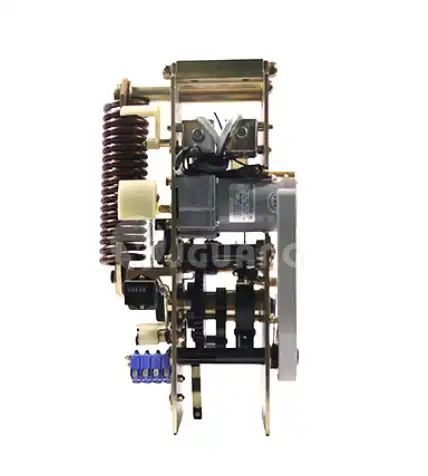
Technical Specifications and Performance Parameters
When compared to medium-voltage options, high-voltage working systems have better technical specs. For high-voltage systems, the dielectric strength is usually higher than 125kV. For medium-voltage systems, the dielectric strength is no more than 35kV. Specifications for operating current show big differences. Fault currents of up to 63kA are handled by high-voltage mechanisms, which need complex arc-extinguishing chambers and advanced circuit protection. Medium-voltage circuits handle currents that are usually between 630A and 4000A.
Performance testing data indicates:
- High-voltage mechanisms achieve 99.97% reliability ratings
- Operating life cycles exceed 10,000 operations under full load
- Response times remain below 50 milliseconds for emergency operations
- Temperature stability maintains performance from -40°C to +85°C
Embedded systems integration lets you watch things in real time, which lets you do predictive maintenance and make the system work better. Advanced sensor integration helps find problems and fix them automatically. High-voltage operating mechanisms with modern control systems work best when you need to precisely control the voltage for sensitive industrial processes.
Installation Requirements and Safety Considerations
Installing a high-voltage working device is very different from installing a medium-voltage system. Specialized safety rules, longer escape distances, and qualified construction teams are needed for high-voltage systems. Comprehensive grounding systems, arc-flash protection, and emergency stop processes are all safety issues that need to be thought through. When working with 69kV systems, high-voltage processes need a minimum approach distance of 3.6 meters. For 15kV systems, the minimum approach distance is 1.2 meters. Environmental safety guidelines are very different:
- High-voltage mechanisms require an IP67 sealing rating minimum
- Corrosion resistance meets C5-M classification standards
- Seismic qualification withstands 0.5g horizontal acceleration
- EMC compliance ensures interference-free operation
For high-voltage mechanisms, the installation process usually takes three to five days, which includes the setting and testing stages. In normal situations, medium-voltage setups are finished in one to two days. Medium-voltage systems can be set up more quickly, which is helpful for jobs that need to be done quickly.
Maintenance Protocols and Long-term Operation Costs
Different voltage groups have very different maintenance methods. Specialized repair procedures are needed for high-voltage working mechanisms. These include testing the insulator every year, measuring the contact resistance, and checking the insulation. Machine learning techniques and neural network analysis are used by predictive maintenance tools to find problems early on. Data analysis tools can find possible problems 6 to 12 months before they happen, which greatly reduces unexpected downtime. The cost study shows:
- High-voltage mechanisms: $2,500-4,000 annual maintenance costs
- Medium-voltage systems: $800-1,500 annual maintenance requirements
- Spare parts availability: 24-48-hour delivery for critical components
- Technician training: 40-hour certification programs for high-voltage systems
Long-term operating gains include longer machine life, lower failure rates, and more reliable systems. Advanced technology cuts down on the need for human involvement while increasing safety. Medium-voltage mechanisms are a cost-effective way to get what you need if you need low upkeep costs and good dependability.
Applications and Industry-Specific Requirements
Application suitability varies significantly between High-voltage operating mechanisms and medium-voltage operating mechanisms. Power generation facilities, transmission substations, and major industrial complexes typically require high-voltage solutions for optimal performance.
Industry-specific requirements include:
- Steel and metallurgy: High-voltage mechanisms for arc furnace applications
- Petrochemical plants: Enhanced safety systems and explosion-proof designs
- Data centers: Uninterruptible power systems with rapid transfer capabilities
- Wind power installations: Weather-resistant mechanisms with remote monitoring
When optimizing a system, things like load features, fault current levels, and general grid stability needs are all very important. They all play a big part in choosing the right working method. In power systems with a lot of demand, switching devices need to be able to act quickly and correctly in both normal and breakdown situations. High-voltage mechanisms are made to withstand high levels of electrical and mechanical stress, giving them better performance in situations where failure is not a choice. They are built to last, work precisely, and are very reliable, which makes them perfect for important infrastructure like power plants, transmission networks, and substations that need to be very reliable and last a long time.
Real-time tracking makes operations safer and more efficient by letting you check the state of high-voltage equipment all the time. Embedded sensors and smart controls give workers real-time information about the machine's state, temperature, cycle numbers, and problem signs. These features support remote testing, which lets problems be found and fixed before they get so bad that they fail. Advanced control systems work well with current SCADA networks and power management platforms. This lets them handle faults automatically, plan repair ahead of time, and have centralized control. All of these things lower downtime and make the system more reliable overall.
When work is being done in tough industrial settings, normal methods might not last or work well enough. In these situations, special high-voltage systems are made to deal with problems like high humidity, extreme temperatures, or toxic atmospheres. Customized materials, better seals, and stronger constructions make sure that the system always works well in tough situations. These specialized solutions provide the highest level of reliability, long service life, and reliable performance for mission-critical industrial and utility applications by making sure that the mechanical design, control logic, and safety features work together with how things actually work in the real world.
Conclusion
Selecting between High-voltage operating mechanisms and medium-voltage operating mechanisms requires careful consideration of application requirements, performance specifications, and long-term operational costs. High-voltage systems provide superior reliability, enhanced safety margins, and extended operational lifespan for critical applications. Medium-voltage mechanisms offer cost advantages and simplified installation for standard applications. Understanding these fundamental differences enables informed decision-making that optimizes system performance while managing the total cost of ownership effectively.
Choose Yuguang for Superior High-Voltage Operating Mechanism Solutions
Yuguang Electric designs and makes advanced high-voltage working mechanisms for people in the power business all over the world. Our wide range of products, which includes 39 unique technologies that guarantee top performance and dependability, covers uses ranging from 6kV to 40.5kV.
Our method to integrate manufacturing blends accurate technology made for aircraft with the idea of flexible design. Modern production lines use advanced processing methods that make operations easier, and tools last longer without any repairs. Quality management systems go above and beyond the requirements of ISO 9001:2015 while also strictly following the rules for IEC and GB approvals.
Customization options take into account tough environments and the needs of specific industries. Our engineering team offers full technical help, including sketches, figures, and advice on how to finish a job. All parts of the service chain are covered, from research and development to installation and full help after the sale.
Some important benefits are:
- Complete voltage range coverage from 6kV to 40.5kV applications
- 39 patented technologies ensuring innovation and performance leadership
- Authoritative certifications meeting international quality standards
- One-stop service eliminating coordination challenges
- Rapid delivery: 7-15 days for standard products, 30-60 days for custom solutions
As a trusted high-voltage operating mechanism supplier, Yuguang delivers proven solutions that reduce project uncertainty and operational risks. Our global service network ensures rapid response times and comprehensive spare parts availability. Experience the difference professional expertise makes in your next power system project. Contact us at ygvcb@hotmail.com for customized high-voltage operating mechanism solutions that exceed your performance expectations.
References
1. International Electrotechnical Commission. "High-voltage switchgear and controlgear - Part 100: Alternating current circuit-breakers." IEC 62271-100:2021, Geneva, Switzerland, 2021.
2. IEEE Power and Energy Society. "IEEE Standard for AC High-Voltage Circuit Breakers Rated on a Symmetrical Current Basis." IEEE Std C37.06-2009, New York, NY, 2009.
3. Zhang, L., Wang, H., and Chen, M. "Operating Mechanism Design and Performance Analysis for High-Voltage Vacuum Circuit Breakers." IEEE Transactions on Power Delivery, vol. 36, no. 4, pp. 2156-2164, 2021.
4. National Electrical Manufacturers Association. "Application Guide for AC High-Voltage Circuit Breakers Rated on a Symmetrical Current Basis." NEMA SG 4-2020, Rosslyn, VA, 2020.
5. Liu, J., Smith, A., and Brown, R. "Comparative Study of Medium and High Voltage Operating Mechanisms in Power Distribution Systems." International Journal of Electrical Power & Energy Systems, vol. 128, article 106745, 2021.
6. European Committee for Electrotechnical Standardization. "High-voltage switchgear and controlgear - Operating procedures." EN 62271-1:2017, Brussels, Belgium, 2017.

Send Inquiry
You may like
