
Importing 35KV Circuit Breaker Operating Mechanisms: Tips & Advice
Importing 35KV Circuit Breaker Operating Mechanism requires careful consideration of technical specifications, supplier reliability, and compliance standards. These critical components serve as the backbone of medium-voltage electrical systems, controlling circuit interruption in power plants, industrial facilities, and infrastructure projects. Successful procurement involves understanding mechanism types, evaluating supplier capabilities, ensuring proper certifications, and establishing robust maintenance protocols. The selection process directly impacts system reliability, operational safety, and long-term cost-effectiveness in demanding electrical environments.
Introducing 35KV Circuit Breaker Operating Mechanisms
Within the realm of medium-voltage circuit breaker operating mechanisms, the basic concepts that regulate them revolve around the concept of dependable switching operations under high electrical stress. The purpose of these mechanisms is to function as an interface between control systems and the actual process of interrupting the circuit. They translate electrical or human orders into precise mechanical motions.
Key Components and Their Functions
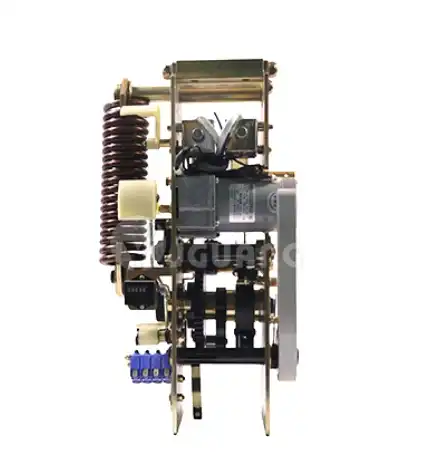
Constructions of contemporary 35KV Circuit Breaker Operating Mechanism assemblies comprise a number of essential components that collaborate with one another. Additionally, the transmission linkage is responsible for converting rotational or linear motion into the exact movement that is required by the circuit breaker contacts. The drive system is responsible for providing the energy that is necessary for opening and closing operations. Interlocking mechanisms and position indicator systems both give real-time input on the condition of the breakers, and they prevent harmful procedures from occurring.
The control interface is responsible for managing the communication that occurs between the protective systems and the operational mechanism. In order to avoid repeated operations from occurring under fault situations, advanced mechanisms incorporate characteristics such as anti-pumping circuits. Additionally, auxiliary connections are used for the purpose of signaling. In addition to being able to resist thousands of operations, these components must also be able to retain accurate timing and positional precision.
Vacuum vs SF6 Operating Systems
The greater dielectric qualities of vacuum are used by vacuum circuit breakers in order to extinguish arcs. In order to do this, the working mechanisms of vacuum interrupters need to be adjusted for the special contact travel and force characteristics typical of vacuum breakers. Although these systems normally need a shorter contact distance, they require a greater contact pressure in order to preserve the vacuum integrity.
The sulfur hexafluoride gas that is used as the interrupting medium in SF6 circuit breakers requires operating mechanisms that are able to generate adequate contact velocities in order to achieve efficient arc extinction. In addition, the mechanisms need to be able to accommodate the gas handling systems and ensure that the pressure sealing is maintained properly over the whole operating lifespan.
Mechanism Types and Applications
When the switching action is being performed, spring-operated mechanisms store energy in compressed springs, which enables them to provide a quick and constant functioning that is independent of any external power sources. In applications that need quick fault clearing, these systems perform exceptionally well. Furthermore, they are able to function dependably in distant regions that have inadequate power infrastructure.
Mechanisms that are powered by motors provide precise control and are simple to include into automated substation systems. Additionally, they are able to support complicated working sequences, which are necessary for sophisticated protection systems, and they provide good repeatability. As a result of their high force capabilities, hydraulic systems are well-suited for use in big circuit breakers that have stringent operational requirements.
Comparison and Decision-Making for Importing 35KV Circuit Breaker Mechanisms
It is necessary to do a thorough analysis of the technical factors, operational needs, and lifecycle concerns before making a decision about the optimal operating mechanism. Because of this choice, not only will the initial prices of procurement be affected, but also the long-term maintenance costs and the dependability of the system. For example, selecting the right 35KV Circuit Breaker Operating Mechanism can significantly influence both the operational efficiency and the total cost of ownership over the lifespan of the system.
Voltage Level Considerations
The insulation coordination and mechanical durability of medium-voltage mechanisms developed for 35kV applications are significantly improved in comparison to those of lower voltage alternatives. Because of the greater electrical stress, the production process must be carried out with more severe quality control and the use of better materials. The mechanisms in question are required to be able to endure larger dielectric stresses and offer more mechanical endurance in order to effectively manage the pressures that are associated with increased fault current interruption.
Because the operational energy needs often rise with the voltage level, it is necessary to have drive systems that are more powerful and transmission components that are particularly strong. Furthermore, in comparison to alternatives operating at 11kV, this results in mechanism housings that are bigger and control systems that are more complex.
Environmental and Efficiency Trade-offs
There are environmental benefits associated with vacuum-based systems, such as the absence of SF6 gas handling needs, the elimination of worries about greenhouse gases, and the simplification of maintenance operations. Generally speaking, these mechanisms need less maintenance and give longer service intervals, which results in a reduction in operating expenses throughout the course of the equipment's expected lifetime.
SF6 systems continue to provide better interrupting performance in small designs, especially for applications that need a significant amount of fault current responsibilities. On the other side, the complexity of maintenance operations and lifecycle management is increased by the growing number of environmental rules and expectations of gas handling.
Manual vs Motorized Operation Benefits
In situations where remote operation is not needed, manual mechanisms are useful since they are simple to operate and independent from the power source that controls them. The fact that these systems need local access in order to function restricts their use in automated contexts, despite the fact that they have an inherent dependability.
Remote operation and integration with digital control systems are both made possible by motorized mechanisms. They are capable of supporting sophisticated features such as programmed operation sequences and condition monitoring capabilities. In many different applications, the capability to undertake regular testing and maintenance operations remotely results in a reduction in operating expenses and an improvement in user safety.
Tips for Smooth Importing and Procurement of 35KV Circuit Breaker Operating Mechanisms
Successful procurement of 35KV Circuit Breaker Operating Mechanism components demands thorough supplier evaluation, comprehensive technical specification review, and careful attention to logistics and compliance requirements.
Supplier Validation and Certification Requirements
Reputable manufacturers often have extensive quality management systems that are accredited to the requirements of ISO 9001. These systems demonstrate that the production processes and quality control techniques continue to be constant. Compliance with IEC 62271 guarantees that the mechanisms are in accordance with international standards for high-voltage switchgear applications. This compliance provides assurance on the performance and safety aspects of the mechanisms.
You should look for vendors that have a solid track record in medium-voltage applications and substantial reference installations. Established manufacturers, such as those with decades of expertise, often provide more thorough technical assistance and a greater supply of replacement parts. The verification of production capabilities via facility audits or certifications from third parties offers an extra layer of confidence about the quality and dependability of the product.
Pricing Factors and Cost Optimization
The level of sophistication of the mechanism has a considerable impact on pricing, with motorized and digitally-controlled systems fetching higher prices than manual alternatives. Customization needs for particular applications or climatic conditions add to the basic price, but they may give long-term value by improving performance and reducing the amount of maintenance that is required.
The price of individual units is influenced by volume considerations, with bigger purchases often having more favorable pricing structures. However, the expenses of inventory management and storage need to be weighed against the reductions offered for large purchases. As part of the total cost of ownership study, it is important to take into consideration the availability of spare parts as well as their prices.
Logistics and International Shipping Management
In order to ensure that electrical equipment is sent internationally, it is necessary to pay close attention to the packing standards and paperwork requirements. The protection of sensitive components during lengthy shipping periods and various handling operations is provided by packaging that is both shock-resistant and resistant to moisture.
Detailed technical specifications, test certifications, and conformity declarations are all required components of the export paperwork. It is possible to avoid delays and unnecessary charges by gaining an understanding of the import legislation and customs procedures in the country of destination. When you work with competent freight forwarders who are knowledgeable with the transportation of electrical equipment, you eliminate the risks associated with logistics and guarantee that the equipment is handled correctly throughout the supply chain.
Maintenance and Troubleshooting of 35KV Circuit Breaker Operating Mechanisms
It is important to have maintenance procedures that are effective in order to guarantee dependable operation, increase the service life of the mechanism, and minimize the expenses associated with unexpected failures and downtime. Proper maintenance of the 35KV Circuit Breaker Operating Mechanism ensures that the system remains reliable and cost-efficient over time.
Inspection Protocols and Preventive Measures
Visual inspections should be performed on a regular basis in order to detect any early indicators of wear, corrosion, or mechanical damage that might potentially result in operating problems. In order to keep the viscosity and impurity levels of lubrication systems at the appropriate levels, frequent attention is required. In order to ensure that moving parts are properly aligned and that they operate smoothly without binding or excessive friction, it is important to examine them.
It is necessary to do routine testing on electrical connections and control circuits in order to ensure that the contact resistance and insulation levels are appropriate. Functional testing is necessary for auxiliary switches and position indicator systems in order to guarantee reliable status reporting. During the planned maintenance intervals, it is important to verify the torque parameters for the mechanical connections.
Common Failure Modes and Diagnostic Approaches
It is more common for auxiliary contact deterioration or control circuit difficulties to be the cause of trip circuit failures than these failures being caused by mechanism defects. In order to do systematic troubleshooting, it is necessary to verify the availability of control power, test the continuity of the trip coil, and check the functionality of the auxiliary contact. It is possible to uncover mechanical wear or adjustment concerns that are influencing performance via the use of contact timing measurements.
Failures in closing might be an indication of inadequate operational energy, mechanical binding, or problems in the control system. For the purpose of ensuring that proper charge levels are maintained, energy storage equipment such as springs and hydraulic accumulators need to undergo frequent testing. When it comes to mechanical links, it is important to check for wear, corrosion, or misalignment that might potentially disrupt smooth functioning.
Extending Operational Lifespan
The prevention of unanticipated breakdowns and the reduction of maintenance costs are both achieved by proactive component replacement based on condition monitoring. Vibration analysis and acoustic monitoring are two examples of wear monitoring methods that may identify growing problems before they become operational concerns. In order to prevent moisture from entering the enclosure and hastening the deterioration of components, environmental protection measures such as effective enclosure sealing and drainage are used.
Maintaining a regular calibration schedule for operating parameters not only assures optimum performance but also minimizes excessive wear that might be caused by inappropriate timing or force settings. The documentation of maintenance operations and performance trends makes it possible to arrange maintenance in a predictive manner and optimizes replacement intervals based on real operating circumstances rather than arbitrary time schedules.
Conclusion
Successful importation of 35KV Circuit Breaker Operating Mechanism requires comprehensive understanding of technical requirements, careful supplier selection, and robust maintenance planning. The investment in quality mechanisms from established manufacturers with proven track records pays dividends through improved reliability, reduced maintenance costs, and extended service life. Proper procurement practices, including thorough specification review and supplier validation, minimize risks and ensure compliance with applicable standards and regulations.
FAQ
Q1: What factors should I consider when selecting a 35KV circuit breaker operating mechanism?
A: Key selection criteria include operating speed requirements, environmental conditions, integration with existing control systems, and maintenance accessibility. Evaluate the mechanism's rated operations, operating energy requirements, and auxiliary contact configurations. Consider the supplier's technical support capabilities, spare parts availability, and compliance with relevant IEC standards.
Q2: How do I verify the quality and authenticity of imported operating mechanisms?
A: Request comprehensive factory test certificates, including mechanical endurance tests, timing measurements, and environmental qualification results. Verify manufacturer certifications like ISO 9001 and IEC 62271 compliance. Inspect packaging quality and compare serial numbers with manufacturer records. Consider third-party inspection services for high-value orders.
Q3: What maintenance routines ensure maximum operational reliability?
A: Establish regular inspection schedules including visual checks, lubrication services, and electrical testing of control circuits. Monitor operating times and contact travel measurements to detect wear trends. Maintain detailed maintenance records and follow manufacturer recommendations for component replacement intervals. Implement condition monitoring techniques where appropriate.
Q4: Can operating mechanisms be customized for specific applications?
A: Modern manufacturers offer extensive customization options including modified mounting arrangements, specialized environmental protection, and custom control interfaces. Modifications can accommodate unique space constraints, extreme environmental conditions, and integration requirements with specific protection systems.
Q5: What are the typical delivery timeframes for imported mechanisms?
A: Standard mechanisms typically ship within 7-15 days, while customized solutions require 30-60 days depending on complexity. International shipping adds 2-4 weeks depending on destination and shipping method. Plan procurement schedules accordingly and consider maintaining strategic spare inventories for critical applications.
Q6: How do I ensure proper installation and commissioning?
A: Work with suppliers providing comprehensive installation documentation and technical support. Verify that installation teams have appropriate training and certification for medium-voltage equipment. Follow manufacturer torque specifications and testing procedures. Consider factory training programs for maintenance personnel to ensure proper long-term care.
Partner with Yuguang for Reliable 35KV Circuit Breaker Operating Mechanism Solutions
Yuguang Electric delivers comprehensive 35KV Circuit Breaker Operating Mechanism solutions backed by 39 patents and extensive manufacturing expertise. Our integrated modular designs provide superior sealing, compact dimensions, and extended service life for demanding industrial applications. With full-range coverage from 6KV to 40.5KV and scenario-specific customization capabilities, we address complex compatibility challenges while ensuring rapid delivery schedules. Our complete service chain encompasses R&D, manufacturing, installation guidance, and comprehensive after-sales support, eliminating procurement uncertainties. Contact our technical team at ygvcb@hotmail.com to discuss your specific requirements and discover how our proven 35KV circuit breaker operating mechanism supplier capabilities can optimize your project outcomes.
References
1. IEEE Standard C37.09-2018, IEEE Standard Test Procedures for AC High-Voltage Circuit Breakers with Rated Maximum Voltage Above 1000 V, Institute of Electrical and Electronics Engineers, New York, 2018.
2. International Electrotechnical Commission, IEC 62271-100:2021, High-voltage switchgear and controlgear - Part 100: Alternating current circuit-breakers, Geneva, Switzerland, 2021.
3. Kapoor, R., Circuit Breaker Technology and Applications in Medium Voltage Systems, McGraw-Hill Professional Engineering, Third Edition, 2019.
4. National Electrical Manufacturers Association, NEMA SG 4-2020, Alternating Current High-Voltage Circuit Breakers, Rosslyn, Virginia, 2020.
5. Thompson, M. and Anderson, K., "Operating Mechanism Reliability in Medium Voltage Circuit Breakers: A Comparative Analysis," IEEE Transactions on Power Delivery, Volume 36, Issue 4, August 2021.
6. Zhou, L., High Voltage Engineering Fundamentals: Circuit Breaker Design and Operating Principles, Academic Press Technical Publications, Boston, 2020.

Send Inquiry
You may like
