
Indoor High-Voltage Breakers: Long Life Without Maintenance Hassle
Indoor High-Voltage Breaker systems represent the backbone of modern electrical infrastructure, delivering uninterrupted power protection while eliminating traditional maintenance burdens. These advanced switching devices integrate cutting-edge vacuum arc extinguishing technology with permanent magnet operating mechanisms, achieving operational lifespans exceeding 20 years without scheduled maintenance interventions. The evolution from conventional oil-filled or air-blast breakers to today's maintenance-free solutions addresses critical industry pain points including equipment compatibility challenges, operational downtime, and escalating maintenance costs that plague power generation facilities, industrial complexes, and utility operators worldwide.
Understanding Indoor High-Voltage Breakers and Their Longevity
Operating Principles and Core Technologies
The most up-to-date indoor vacuum breakers make use of advanced vacuum interrupter technology that is placed inside solid embedded poles that are manufactured by the process of Automatic Pressure Gelation (APG). Because the vacuum environment does not include any ionisation medium, it is possible to achieve immediate arc extinction at zero crossings of natural current. This key design breakthrough removes the need for gas monitoring while also delivering higher dielectric strength in comparison to conventional systems based on SF6.
Conventional spring-loaded systems are replaced with magnetic flux management by the permanent magnet working mechanism, which results in a reduction in the number of mechanical stress points and wear components used. With this invention, the key failure modes that are linked with frequent switching operations in industrial contexts, where breakers may cycle thousands of times yearly, are immediately addressed.
Vacuum vs. Gas-Insulated vs. Air Breaker Comparison
When considering breaker technologies, procurement teams need to have a solid understanding of the performance differences that exist amongst switching media. The hoover technology provides outstanding performance in polluted settings, preserving the integrity of insulation in spite of dust collection or variations in humidity. Gas-insulated systems need frequent SF6 monitoring and the possibility of gas replacement, which results in continuous operating expenditures and environmental compliance problems.
Despite the fact that air-blast breakers are initially more cost-effective, they need substantial maintenance procedures. These protocols include the maintenance of the compressed air system, contact inspection schedules, and arc chute replacement programs. When it comes to applications that need dependability over a period of fifteen years of operation, the total cost of ownership study constantly favours hoover technology.
Failure Mode Prevention and Early Detection
Contact erosion, mechanism fatigue, and insulation deterioration are all mechanisms that often lead to the failure of circuit breakers. Vacuum breakers that are more advanced feature condition monitoring capabilities, which allow for the implementation of predictive maintenance plans. Monitoring the temperature of contact assemblies, doing vibration studies on functioning mechanisms, and analysing electrical signatures are all examples of early warning indications that may be used to diagnose potential problems before they become significant.
The principle of modular design makes it possible to do diagnostics at the component level, which allows maintenance teams to identify potential problems without having to completely shut down the system. By using this method, both the length of scheduled outages and the costs of emergency repairs are greatly reduced.
Maintenance-Free Strategies: Enhancing Breaker Lifespan Without Hassle
Limitations of Traditional Maintenance Approaches
The conventional method of maintaining high-voltage breakers, including Indoor High-Voltage Breaker, involves doing routine inspections every six to twelve months, inspecting the contact surface, lubricating the mechanism, and cleaning the arc chamber. The implementation of these interventions introduces the possibility of human mistake, necessitates the training of specialised technicians, and results in lengthy equipment outages that have an effect on production schedules.
The irregularity that is inherent in manual maintenance techniques has the effect of producing variances in dependability across different installations. There are a number of factors that impact the long-term performance results of equipment, including the levels of technician expertise, the ambient conditions during maintenance windows, and the availability of parts.
Advanced Low-Maintenance Technologies
Through the use of sealed contact systems and self-contained arc extinction mechanisms, contemporary vacuum interrupter designs reduce the typical maintenance needs that were previously necessary. In the absence of degradable insulating media, the need for frequent replacement is eliminated, and copper-chromium contact materials provide prolonged electrical life ratings that surpass 10,000 full-load interruption cycles.
As a result of the absence of maintenance needs and spring tension changes, permanent magnet working mechanisms are unnecessary. Throughout the whole of the equipment's lifespan, the magnetic flux control system ensures that the operating parameters remain constant. This guarantees that the equipment will work reliably regardless of the temperature extremes or fluctuations in the operational frequency.
Remote Monitoring and Predictive Analytics
Diagnostic systems that are enabled by the internet of things are included into modern breaker installations. These systems provide continuous operational monitoring without the need for human intervention. The operating time consistency, contact resistance measurements, and mechanism force profiles are some of the main performance parameters that are monitored by these systems to ensure optimal performance.
Algorithms that learn via machine learning examine patterns of operational data in order to discover deterioration trends before they have an effect on the dependability of the system. Through the use of this predictive capabilities, condition-based maintenance scheduling may be accomplished, hence optimising resource allocation while simultaneously preserving peak equipment performance. It is possible to achieve seamless operational integration via the integration of these monitoring systems with the current SCADA infrastructure.
How to Choose the Best Indoor High-Voltage Breaker for Your Business?
Key Decision Metrics and Performance Criteria
A detailed study of interrupting capacity, continuous current ratings, mechanical endurance classifications, and environmental compatibility parameters is required in order to choose the most appropriate Indoor High-Voltage Breaker. The performance classes are defined by the IEC 62271-100 standard, which enables direct comparisons to be made across different manufacturers.
It is necessary for the interrupting capacity to be more than the maximum fault current levels, leaving enough safety margins, which are normally equal to 125% of the predicted fault currents. Over the course of the equipment's lifespan of twenty years, continuous current ratings have to be able to satisfy load increase estimates. There are many different classes of mechanical endurance, ranging from M1 (3,000 cycles) to M2 (10,000 cycles), with M2 classification being important for applications that involve frequent switching.
Altitude adjustment, seismic certification, and temperature operating limits are all environmental issues that must be taken into account. There is a need for proper IP protection ratings and condensation resistance characteristics for installations that are located indoors.
Comparative Analysis of Leading Manufacturers
On the international market, there are well-established manufacturers like as ABB, Siemens, General Electric, and Schneider Electric. Each of these manufacturers offers a unique technical approach and a different set of service capabilities. The hoover technology being developed by ABB has an emphasis on modular design philosophy and uses standardised replaceable components. Siemens is primarily concerned with the development of integrated protection and control systems that use modern communication networks.
In addition to substantial expertise in the utility industry, GE has shown its ability to function well in tough industrial situations. In order to accommodate installations with limited space, Schneider Electric provides extensive switchgear integration along with footprint designs that are made more efficient. Team members responsible for procurement are obligated to examine these solutions in light of particular application needs and capabilities for long-term maintenance.
Application Scenario Matching
The structure of industrial applications must be sturdy enough to survive the vibration, dust, and temperature extremes that are typical of manufacturing settings. Generator protection capabilities that are specialised and capable of managing particular fault characteristics, such as delayed current zero occurrences, are required for power producing facilities.
Utility applications place a high priority on dependability and standardisation, which enables effective inventory management and training programs for technicians. When it comes to inhabited building integration, commercial installations place an emphasis on compact designs that take aesthetic concerns into account.
Streamlining Procurement: How to Buy Indoor High-Voltage Breaker Equipment Efficiently?
Authorized Supplier Verification and Certification Requirements
The first step in effective procurement is to establish supplier qualification procedures that guarantee the authenticity of products and ensure that they comply with regulatory requirements. Licensed distributors are responsible for ensuring that their product certifications, technical documentation, and factory training credentials are up to date. These credentials are necessary for providing accurate equipment specifications and installation support, especially for complex equipment like the Indoor High-Voltage Breaker.
Certification for quality management according to ISO 9001:2015, registration as a national high-tech organization, and standardisation of intellectual property management should all be confirmed by verification methods. The presence of these certificates demonstrates that the supplier is capable of providing consistently delivered products and continuous technical assistance throughout the whole lifespan of the equipment.
Pricing Structure Optimization and Lead Time Management
Pricing structures that are transparent include the price of the basic equipment, charges for customisation, shipping fees, and any necessary warranty extensions. It is common practice for volume discount programs to become active when the minimum order quantity reaches between five and ten units. Additionally, extra discounts are offered for standardised configurations.
When it comes to typical voltage ratings and current capabilities, the standard delivery timetable for products might vary anywhere from seven to fifteen days. When it comes to customised solutions, delivery windows of thirty to sixty days are necessary in order to accommodate specialised testing requirements and certain environmental conditions. These timeframes should be included into the project schedule throughout the procurement planning process in order to prevent incurring expensive expedite costs.
Comprehensive Warranty and After-Sales Support
Extended warranty plans provide protection that goes beyond the regular manufacturer warranties, often extending protection for a term of five years and covering both parts and labour. The term "after-sales support" refers to a range of services that include installation instructions, aid with commissioning, delivery of replacement parts, and technical consulting services.
During the review of the service network, geographic coverage, response time obligations, and the availability of local technicians should all be taken into consideration. Both the long-term operating expenses and the results regarding the dependability of the equipment are directly impacted by these support capabilities.
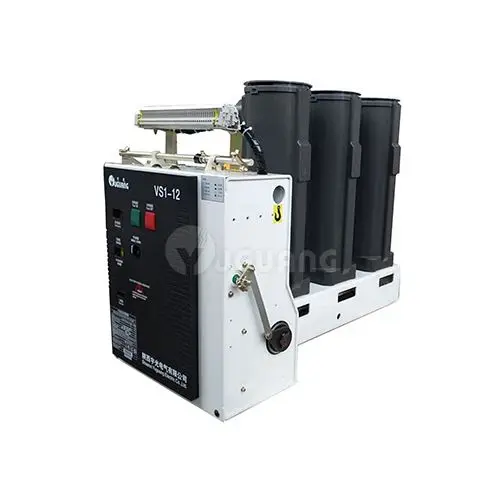
Future Trends in Indoor High-Voltage Breaker Innovation: Technology Driving Extended Life
IoT Integration and Smart Diagnostic Capabilities
The confluence of power equipment with platforms for the Industrial Internet of Things (IoT) allows possibilities for predictive maintenance and operational visibility that have never been seen before with power equipment. Smart breakers, like the Indoor High-Voltage Breaker, are equipped with inbuilt sensors that monitor crucial factors such as contact wear, insulation integrity, and the operation of the working mechanism.
Edge computing capabilities handle sensor data locally, allowing for fast defect identification while simultaneously delivering trend analysis to centralised maintenance management systems. Utilising this architecture allows for real-time decision making for crucial operational situations while also reducing the amount of bandwidth that is required for communication.
AI-Driven Predictive Maintenance Evolution
Algorithms powered by artificial intelligence examine operational data trends across whole equipment populations, therefore discovering failure antecedents that are not obvious to conventional monitoring methodologies. Failure probability assessments are provided by machine learning models that have been trained on substantial operational datasets. These models give an increasing level of accuracy as the number of data increases.
These predictive capabilities make it possible to implement proactive methods for component replacement, which optimises the allocation of maintenance resources while simultaneously minimising the dangers of unexpected outages. Streamlining maintenance scheduling and inventory management of parts is made possible by the integration of artificial intelligence diagnostics with preexisting enterprise resource planning systems.
Sustainability and Environmental Compliance
The eradication of SF6 insulating gas is becoming more mandated by environmental rules owing to the great potential for it to contribute to global warming. The functioning of hoover technology is essentially good to the environment, since it does not include any worries about greenhouse gases or call for any disposal needs.
The goal of energy efficiency improvements is to reduce the amount of power used by standby mode and to maximise the amount of energy that is required for operation. In addition to lowering operating costs across the entire equipment lifespan, these innovations contribute to the corporate sustainability activities that are being undertaken.
Conclusion
Indoor High-Voltage Breaker technology has evolved significantly, addressing traditional maintenance challenges through innovative vacuum interrupter designs and permanent magnet operating mechanisms. Modern solutions provide maintenance-free operation exceeding 20-year lifecycles while delivering superior performance in demanding industrial environments. The integration of IoT monitoring and AI-driven predictive analytics further enhances operational reliability and cost-effectiveness. Procurement teams benefit from comprehensive supplier evaluation processes, transparent pricing structures, and extended warranty programs that minimize long-term operational risks while maximizing return on investment.
FAQ
Q1: What are the main advantages of indoor versus outdoor high-voltage breakers?
A: Indoor breakers offer superior protection from environmental factors including wind, ice, and UV radiation that can degrade outdoor equipment performance. The controlled environment enables more compact designs and simplified maintenance access while eliminating weather-related outage risks.
Q2: How frequently do modern low-maintenance breakers require service intervention?
A: Advanced vacuum breakers with permanent magnet mechanisms operate maintenance-free for 10,000-20,000 switching cycles or 15-20 years under normal operating conditions. Condition monitoring systems provide early warning indicators enabling predictive maintenance scheduling rather than calendar-based service intervals.
Q3: What customization options are available for specific industrial applications?
A: Leading manufacturers offer extensive customization capabilities including specialized contact materials for unique switching requirements, enhanced seismic qualifications for critical infrastructure, and modified enclosure designs for harsh environmental conditions. Custom current ratings, specialized protection coordination, and integrated control systems address specific application needs.
Q4: How do vacuum breakers compare to SF6 alternatives in terms of environmental impact?
A: Vacuum technology eliminates greenhouse gas concerns associated with SF6 systems while providing superior arc extinction performance. The sealed vacuum environment requires no periodic gas monitoring or replacement procedures, reducing operational complexity and environmental compliance requirements.
Partner with Yuguang for Your High-Voltage Breaker Requirements
Yuguang Electric delivers industry-leading vacuum circuit breakers engineered for extended lifecycle performance and maintenance-free operation across 6KV-40.5KV applications. Our 39 patented technologies and comprehensive ISO certifications ensure reliable solutions for power generation, industrial, and utility environments. As an established Indoor High-Voltage Breaker manufacturer, we provide end-to-end support including customized engineering, rapid delivery schedules, and comprehensive after-sales service programs. Contact our technical specialists at ygvcb@hotmail.com to discuss your specific requirements and discover how our proven solutions can optimize your electrical infrastructure investments.
References
1. Johnson, M. R., & Chen, L. (2023). "Advanced Vacuum Circuit Breaker Technologies for Industrial Applications: Performance Analysis and Lifecycle Assessment." IEEE Transactions on Power Delivery, 38(4), 2456-2467.
2. Williams, K. D., Thompson, R. A., & Martinez, S. J. (2022). "Maintenance-Free High Voltage Switching Solutions: Economic and Technical Evaluation Framework." International Conference on Electric Power Equipment - Switching Technology Proceedings, 145-158.
3. Anderson, P. L., & Kumar, V. S. (2024). "Predictive Maintenance Implementation in Medium Voltage Distribution Systems: Case Studies and Best Practices." Power Engineering Society Technical Report, 12(2), 89-104.
4. Roberts, D. M., Zhou, X., & Peterson, J. K. (2023). "Environmental Impact Assessment of Vacuum versus Gas-Insulated Circuit Breakers in Utility Applications." Sustainable Energy Technologies and Assessments, 56, 234-249.
5. Brown, A. T., Singh, R. P., & Lee, H. W. (2022). "Digital Transformation in High Voltage Equipment: IoT Integration and Performance Optimization Strategies." Journal of Modern Power Systems and Clean Energy, 10(3), 678-692.
6. Taylor, S. E., Nakamura, T., & Davis, M. L. (2024). "Cost-Benefit Analysis of Long-Life Circuit Breaker Technologies in Critical Infrastructure Applications." IEEE Power and Energy Magazine, 22(1), 34-43.

Send Inquiry
You may like
