
Is a switchgear the same as a breaker?
When procurement managers, chief engineers, and project workers look at electrical systems for factories, power plants, or other important structures, they often ask, "Is switchgear the same thing as a circuit breaker?" The short answer is "no." Power distribution switchgear is a bigger piece of equipment that includes control systems, safety switches, isolators, busbars, breakers, and circuit breakers, which are important parts that stop problem currents and keep electrical circuits safe. Switchgear safely and efficiently sends electricity to different parts of a building. The breaker is a key safety device that is part of this system.
It is important to know the difference between independent breakers and combined switchgear systems because the choice you make will directly affect safety, how well the system works, and how much it costs to maintain over time. All of these things are very important for companies that need to stick to strict safety rules and quick project plans.
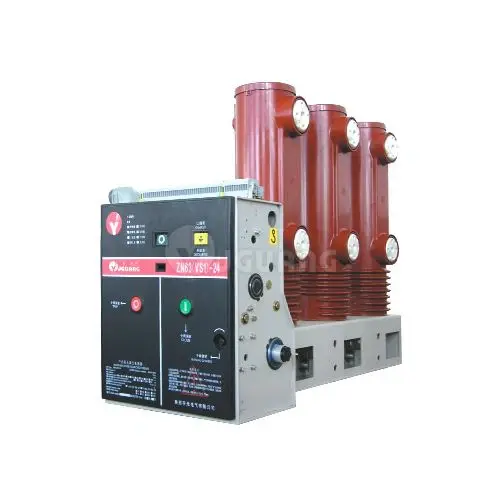
Understanding Switchgear and Breakers: Definitions and Core Functions
What Is Power Distribution Switchgear?
Most of the time, safety relays, circuit breakers, fuses, and switches are all kept in the same metal structure. We call this power distribution switchgear. Its main job is to keep electrical gadgets safe, manage them, and turn them off when something goes wrong. When the voltage is between 6KV and 40.5KV, medium-voltage systems are most often used. Heavy business, building projects, and making electricity all use it.
Things that are very important are vacuum or SF6 circuit breakers that stop fault currents, safety relays that find strange situations, and separating switches that let you fix things safely. The main thing that Yuguang does is make modular power systems with small, well-sealed (IP67 standards) frames that last a long time. This is important in tough industrial settings where dust, water, and changes in temperature can make tools less useful.
The Circuit Breaker's Role Within the System
In the event of an overload or short circuit, a circuit breaker quickly cuts off the flow of energy. This stops damage to the gear or the start of a fire. These days, vacuum circuit breakers, like the ones Yuguang made, work with solid magnets, so they don't need to be kept and can handle being turned on and off a lot. Built-in breakers are already compatible with other safety devices, making them easier to install and monitoring from one place. Stand-alone breakers, on the other hand, need to be placed separately and coordinated with other safety devices.
Air-Insulated vs. Gas-Insulated Variants
The air in the sky acts as an insulator for air-insulated switchgear (AIS). This type of equipment can be used outside or in big substations. Gas-insulated switchgear (GIS) uses SF6 gas, which lets small designs be made that work well in cities or other places with limited space. Both versions are available from Yuguang, and they can be changed to fit problems like high elevation, rust along the coast, or very cold weather.
This foundational understanding clarifies that while breakers protect individual circuits, the system handles, protects, and sends electricity to all parts of the facility. It changes how people buy things, especially when they look at how much something costs at first compared to how reliable it is over time and how much it costs to fix.
How Distribution Switchgear and Circuit Breakers Work Together in Power Systems?
Coordination Between Components
Busbars, switches, and safety contacts all need to work well together so that power can get to where it needs to go. A production line short circuit is one example of a problem that the safety switch can pick up on. It tells the circuit breaker to trip when it sees an odd current signature. The breaker's vacuum arc quenching technology then stops the problem in milliseconds by stopping power to the broken part while leaving it on for the healthy ones. Busbars keep sending power to loads that aren't being affected, so production doesn't have to stop for long.
This high-tech power distribution switchgear from Yuguang has digital protection switches that work with transmission protocols like Modbus and IEC 61850. This makes it possible to fix and keep track of things in real time. This combined method speeds up fixing and cuts down on the number of checks that need to be done by hand. This directly fixes the issue of slow fault response, which makes the jobs of operations and maintenance teams harder.
Vacuum and SF6 Breaker Technologies
When there is middle voltage, vacuum circuit breakers work well because they don't need to be kept, can be used up to 30,000 times, and are safe for the environment. The SF6 switches do their job, but you need to know how to handle gas properly, and officials pay close attention to how they affect the environment. With Yuguang's set magnet device, you don't need hydraulic or spring-loaded systems. This makes maintenance even easier and cuts down on the cost of running the business.
Industrial Case Study: Steel Mill Configuration
The 15KV distribution system at a steel mill in the Midwest was just improved so that it can do more work. Old oil-filled breakers were replaced with Yuguang's flexible vacuum switchgear. This made replacing breakers 50% faster during controlled outages. It was designed so that broken switches could be replaced in minutes instead of hours like they would with standard set setups. During a later phase imbalance event, the digital switch turned off the furnace line that was broken but kept power on to other important cooling systems, preventing a costly plant shutdown.
Scenarios like this demonstrate how the right equipment selection minimizes unplanned downtime and enhances safety. Yuguang's scenario-based customization capabilities adapt to the needs of different industries, such as chemical plants that work in difficult conditions or mines that have a lot of shocks.
Comparing Switchgear and Breakers: What B2B Buyers Need to Know?
Air-Insulated vs. Gas-Insulated Solutions
There are pros and cons to both AIS and GIS when it comes to cost, effect, and environmental security. The people in charge of buying should think about the following:
Air-insulated switchgear is a good choice for new building projects with lots of space because it costs less up front and is easy to service. But it makes bigger marks and doesn't work as well in places with a lot of dust or a lot of water. Yuguang's AIS systems are made of metals and finishes that don't rust, so they last longer in tough weather.
Gas-insulated switchgear comes in small sizes that work well in crowded places like hospitals, data centers, and city substations. Natural pollution is better blocked by GIS, and it works consistently in a wide range of temperatures. NASA-level precision technology and modular assembly ensure seals are gas-tight and meet IP67 standards, making gas leaks less likely.
This choice is based on the project's limits, like the space available, the surroundings, and the money that is available. Buyers can get free advice and technical calculations from Yuguang to help navigate these trade-offs based on load habits, power needs, and future growth.
Compact vs. Traditional Configurations
Compact power distribution switchgear fits a lot of functions into a small space, which speeds up installation and makes it easier to plan the system. You have more freedom with traditional setups, but they need more floor space and take longer to set up. Yuguang's combined modular design solves this problem, providing small footprints without reducing the ways they can be customized or their future growth.
Energy Efficiency and Compliance
New systems have to meet a lot of different standards, such as IEC 62271-200, IEEE C37.20.1, and area standards like NEMA and UL approvals. ISO 9001:2015, ISO 14001, and ISO 45001 are all certifications that Yuguang has. He also has 39 utility model patents that cover things like arc extinguisher systems, vacuum interrupter technology, and shutting mechanisms. These legal credentials make sure the product is good and make it easy for EPC companies and design schools that need proof of compliance to bid.
Maintenance, Testing, and Troubleshooting: Ensuring Longevity and Performance
Routine Inspection Protocols
When you fix things on a regular basis, they last longer and don't break down when you least expect it. Every three months, you should look for dust buildup, rust, or strange warmth. Once a year, you should test the insulation's resistance (usually more than 1000 megohms at normal voltage), and every two years, you should check the contact resistance for signs of wear. Yuguang's fixed magnet system doesn't need lubrication or spring adjustments, making it easier to take care of and costing less to run.
Leading manufacturers publish specific care guides, but Yuguang's full service agreements go even further. They include expert training, on-site fitting help, and fast delivery of extra parts. This full-chain service approach addresses the problem of insufficient after-sales support, ensuring that operations teams get professional help when problems arise in the power distribution switchgear.
Testing Methodologies
If you do the tests right, you can be sure that the equipment works and find any secret problems before they cause power outages. Key methodologies include:
- Insulation resistance testing using megohmmeters to check dielectric strength and look for signs of wetness or contamination.
- Contact resistance testing using micro-ohmmeters to make sure that breaker contacts are stable; if the reading is less than 50 microhms, the contacts are fine.
- Functional testing using secondary input to make trip events look real to see how well the relays work together and how quickly the breakers respond.
Common Issues and Troubleshooting
Most of the time, overheating is caused by circuits that are too busy, links that are too loose, or not enough air flow. Infrared thermography quickly finds hot spots so that technicians can fix links or move loads. If the circuit trips early, it could be because the switches aren't working right. To fix this, you may need to change the pickup settings or the time delays. Yuguang's technical support team provides free change plans and online tests to resolve issues without having to buy pricey new tools.
Procurement Insights: Selecting and Buying the Right Switchgear with Breakers
Critical Selection Criteria
Before you choose the right power distribution switchgear, you should think about how much power you'll need, how the work will be done, and what the process needs. Buyers should evaluate:
- Voltage class and current rating: For medium-voltage uses, systems need to have current rates that match the loads they are connected to. Yuguang can handle everything from 6KV distribution in workshops to 40.5KV transfer in power plants.
- Environmental adaptation: Special materials and protected clothing are needed for places with dangerous air (-40°C to +60°C), high humidity, or earthquakes. Yuguang can customize based on the situation with IP67 covering and metals that don't rust.
- Customization vs. standard solutions: Standard solutions are cheaper and have shorter lead times (7–15 days for stock items). Custom-built systems can be sent in 30 to 60 days to fit specific needs, like bus setup or redundant safety plans. Yuguang's variable MOQ supports both small and big projects.
Evaluating Suppliers and Negotiating Contracts
A supplier's good image shows that they know how to do things technically, can make things well, and provide good customer service after the sale. As a national high-tech company, Yuguang has 39 patents and is certified by ISO 9001, ISO 14001, and ISO 45001. The company's high-tech production line uses special tools to ensure parts are made perfectly and measurements last longer than the industry norm.
When you look at contracts, it's best to get guarantees that cover everything, from work to supplies to performance. Price cuts for big orders, clear arrival dates, and easy payment terms all help keep projects on track. Also, buyers should ask about Factory Acceptance Testing (FAT) processes, calibration certificates, and all documentation. Yuguang's waterproof and shock-proof wooden boxes meet international standards, ensuring safe transit for overseas orders.
Conclusion
Switchgear and circuit breakers are both used to move power in factories. They do different but linked tasks. Power distribution switchgear organizes security and distribution across the whole system by combining breakers with busbars, switches, and control systems. Breakers, on the other hand, protect individual circuits by stopping fault currents. When procurement managers, chief engineers, and EPC workers understand this link, they can pick equipment that is reliable, safe to use, and affordable over its lifecycle.
Selecting the right design requires careful evaluation of power needs, surroundings, and long-term service. Yuguang's comprehensive approach addresses common procurement pain points through scenario-based customization, integrated flexible design, and full-chain service from R&D through installation and support.
FAQ
Can a circuit breaker operate independently without switchgear?
In a low-voltage home or small business, yes, stand-alone circuit breakers can protect a single circuit. But integrated power distribution switchgear is the only way to make sure that medium-voltage industrial systems are safe, controlled, and isolated all at the same time. Protective switches, busbars, and tracking systems all work together to fix problems faster and simplify maintenance.
What safety standards should compliant switchgear meet?
You can trust equipment that is made of metal to meet the standards set by IEC 62271-200, IEEE C37.20.1 for medium-voltage systems, and UL 1558 or CSA C22.2 for North American markets. Systems that can handle arcing should meet IEEE C37.20.7 to keep people safe. Yuguang's products hold these certifications, which helps foreign projects follow the rules.
How often should switchgear undergo maintenance inspections?
Maintenance intervals depend on working conditions and load patterns. Electrical tests should be done once a year and eye exams every three months in most places of work. Tough environments might need full inspections every six months. Because Yuguang's set magnet systems and vacuum interrupters don't need to be oiled, maintenance intervals are extended, reducing lifecycle costs.
Partner with Yuguang for Reliable Power Distribution Switchgear Solutions
Addressing issues like incompatibility, tight supply plans, and harsh weather conditions requires a partner with proven technical know-how. Shaanxi Yuguang Electric Co., Ltd. combines 39 patented technologies, ISO certifications, and flexible manufacturing to deliver customized power distribution switchgear solutions for 6KV to 40.5KV. Because of aerospace-grade precision and permanent magnet vacuum breakers, our goods work reliably in the steel, chemical, power production, and infrastructure sectors.
Yuguang's full-chain service, which includes R&D, production, installation guidance, and spare parts supply, makes it easier to get what you need and lowers project risk. Whether you need standard goods shipped within 7–15 days or custom-engineered systems, we handle both small and big orders. We provide setup training, maintenance agreements, and quick technical help to ensure stable, safe, and cost-effective power distribution for your critical tasks. Contact Yuguang today at ygvcb@hotmail.com.
References
1. IEEE Standard C37.20.1-2015, IEEE Standard for Metal-Enclosed Low-Voltage (1000 Vac and below, 3200 Vdc and below) Power Circuit Breaker Switchgear, Institute of Electrical and Electronics Engineers, 2015.
2. IEC 62271-200:2021, High-voltage switchgear and controlgear – Part 200: AC metal-enclosed switchgear and controlgear for rated voltages above 1 kV and up to and including 52 kV, International Electrotechnical Commission, 2021.
3. Flurscheim, C. H., Power Circuit Breaker Theory and Design, Institution of Engineering and Technology, 1982.
4. Garzon, R. D., High Voltage Circuit Breakers: Design and Applications, Second Edition, Marcel Dekker, 2002.
5. McDonald, J. D., Electric Power Substations Engineering, Third Edition, CRC Press, 2012.
6. Swindler, D. L., "Medium-Voltage Switchgear Application and Maintenance Considerations," IEEE Transactions on Industry Applications, vol. 51, no. 3, pp. 2245-2253, 2015.

Send Inquiry
You may like
