
OEM High Voltage Circuit Breaker Mechanism for Industrial Applications
When power reliability determines production continuity, selecting the right circuit breaker mechanism becomes a mission-critical decision. An OEM high voltage circuit breaker mechanism serves as the heart of switchgear systems, controlling electrical circuits through precise mechanical actions that enable safe interruption of fault currents.
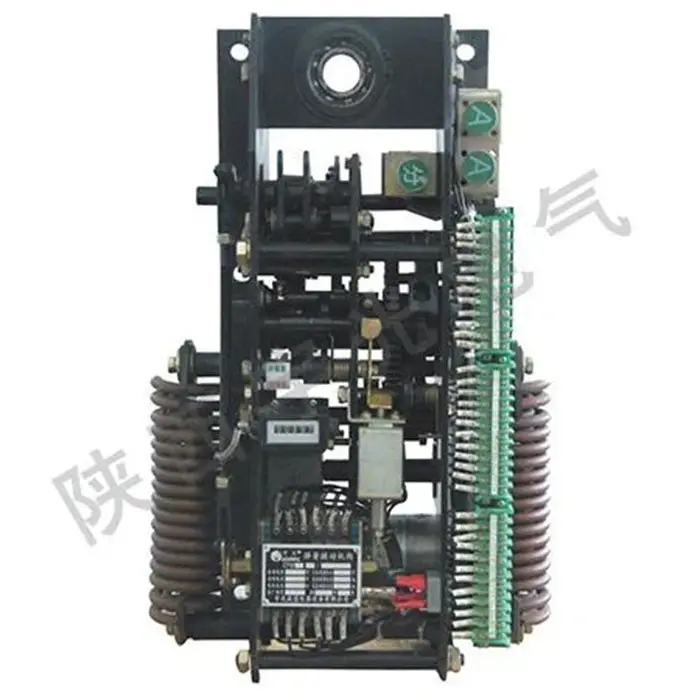
These mechanisms—whether electromagnetic, spring-operated, or permanent magnet types—translate electrical signals into physical motion, ensuring circuit breakers respond accurately during overload or short-circuit conditions. In industrial environments spanning steel mills, power plants, and data centers, the performance of these mechanisms directly impacts equipment longevity, operational safety, and maintenance costs, making informed procurement essential for project success.
Understanding High Voltage Circuit Breaker Mechanisms
Core Components and Operating Principles
In order to achieve reliable switching, a high voltage Circuit breaker mechanism coordinates several parts that are all linked. When there is an abnormal current, the trip unit sends signals to the latch assembly to open it. This frees up energy stored in spring systems or magnetic actuators.
This energy makes the contact system quickly separate, which ends electrical sparks in microseconds. Modern vacuum and SF6 breakers use precise mechanical timing to make sure that the movement of the contacts is in sync with arc suppression technology. This keeps the contacts from wearing out and increases their service life beyond 10,000 operations.
The latch mechanism is very important because it keeps the contacts closed under normal loads while still being ready to release instantly. To avoid mechanical shock, hydraulic dampers control how fast the doors close, and permanent magnet actuators provide holding force without using power all the time. This makes the new designs up to 40% more energy efficient than older solenoid designs.
Mechanism Type Comparison
Because they are so simple, electromagnetic devices are used in most older setups, but they use a lot of holding current. When the grid is unstable, spring-operated systems are very helpful because they store mechanical energy during charging cycles and provide constant closing forces even when the source voltage changes. Permanent magnet mechanisms are the newest development. They combine two-stable magnetic circuits with electronic control to make them work very quickly and need very little maintenance.
Vacuum circuit breakers with spring mechanisms have small footprints that work with metal-clad switchgear. SF6 breakers with hydraulic actuators, on the other hand, can handle higher voltage classes up to 40.5kV. Whether you choose air, oil, vacuum, or gas insulation depends on things like the altitude, temperature extremes, and the risk of contamination. Engineers looking at OEM solutions from well-known companies should check to see if the mechanisms work with current cabinet designs and protection relay interfaces. This will help them avoid expensive system integration problems.
How to Choose the Right Circuit Breaker Mechanism for Industrial Applications
Matching Mechanisms to Operating Conditions
Industrial procurement teams have to deal with a wide range of tasks. Steel companies need machines that can handle a lot of change cycles—up to 1,000 per month—without losing performance. Chemical plants put a high value on sealed enclosures with an IP67 rating that can handle process gas exposure and resistance to corrosion. Wind farms need parts that can safely work in temperatures as low as -40°C and with constant shaking.
Specifications for the device are based on the electrical load factors. For high-capacitance switching tasks like controlling a capacitor bank, you need low-rebound contacts to keep the voltage from getting too high. Motor starting circuits work better with mechanisms that can be set to close at different speeds to reduce the stress of the inrush current.
Circuit breaker mechanism must also coordinate with these operational requirements, ensuring that the closing and opening dynamics do not introduce additional transient overvoltages. For medium voltage industrial feeders, the short-circuit interruption values must be higher than the highest fault currents that have been estimated for each installation point. This is usually between 25kA and 31.5kA.
Selection Criteria Beyond Technical Specs
Metrics for reliability go beyond nameplate ratings. Mean time between failures (MTBF) data from field sites tells us what to expect from the performance. Mechanisms that are built in modules make it easier to keep track of spare parts because individual parts can be replaced without taking the whole unit apart. Integration difficulty and commissioning times depend on how well they work with existing secondary control systems, whether they are hardwired or use IEC 61850 digital protocols.
The total costs of ownership should be taken into account in the cost-effectiveness analysis. Even though premium systems may cost 20–30% more at first, they usually pay for themselves in three years or less thanks to less frequent upkeep and fewer failures. Warranty terms that show the manufacturer believes the product will last, like Yuguang's full coverage on mechanisms backed by 39 patents, show that the product is mature and the supplier is committed.
Evaluating OEM Suppliers
When looking at Circuit breaker mechanism providers, the level of certification shows how strict the quality management is. ISO 9001:2015 compliance means that manufacturing controls are in place, and high-tech business labels mean that a company has the research and development (R&D) skills it needs to keep up with changing industry needs. Delivery guaranties are important for both standard goods that can be shipped within 7–15 days and customization options for specific voltage levels or mounting setups that allow for the best system design.
Long-term relationship worth is based on infrastructure for after-sales service. Unplanned downtime risks are lower when suppliers offer installation help, on-site commissioning support, and quick delivery of spare parts. Yuguang is a great example of this full-chain service method because they offer not only mechanisms but also full lifecycle support, from expert advice to troubleshooting in the field. This makes sure that their products work well with power delivery networks that serve the mining, metallurgy, and green energy sectors.
Performance Optimization and Maintenance of High Voltage Circuit Breaker Mechanisms
Monitoring Key Performance Indicators
Tracking practical data is the first step to good mechanism management. Verifying the contact travel distance makes sure that the arc interruption capability is good enough, since deviations of more than ±5% from the design specifications show mechanical wear or misalignment. Measuring the closing and opening times can show when spring charging systems or hydraulic actuator responses are getting worse. Monitoring the temperature at the connection places finds high-resistance contacts that need to be fixed before they break.
Vibration analysis shows how bearings wear in systems that are rotating. Trending data gathered during regular checks lets predictive maintenance schedules replace parts that are getting close to the end of their useful life before they fail catastrophically and stop production. Circuit breaker mechanism performance is also monitored through vibration signatures, as contact wear and mechanical fatigue appear in high-frequency spectra. Testing for partial discharge on insulation systems inside mechanisms finds dielectric materials that are getting old, so they can be replaced before they cause internal flashovers.
Preventive Maintenance Best Practices
Setting inspection times based on change regularity is the best way to make the best use of resources. Mechanisms that do 200 or more operations a month should be checked every three months, while backup units that are always ready to go may need to be checked once a year. Lubricating pivot points with compounds recommended by the maker keeps the mechanical action smooth and stops binding that extends the time of operation and contact wear.
Instead of set plans, predictive limits are used to decide when to replace worn-out parts. Measurements of the depth of contact erosion help determine when to replace something, and tests of the spring force make sure that there is enough stored energy for effective close operations. Checking the integrity of the seals on enclosed mechanisms keeps water out, which speeds up corrosion. This is especially important for installations that will be left outside.
A case study of a petrochemical plant showed that after installing Yuguang's modular circuit breakers with advanced spring mechanisms, breakdowns caused by mechanisms went down by 60%. The integrated design made it easier to get to parts, which cut the average time to fix from 4 hours to 45 minutes. Additionally, IP67-rated sealing got rid of contamination failures that were causing three yearly interruptions per breaker.
Procurement Guide for OEM High Voltage Circuit Breaker Mechanisms
Navigating Purchasing Channels
There are several ways for industrial users to get to OEM parts. Direct engagement with the manufacturer, like emailing Yuguang at ygvcb@hotmail.com, provides technical advice during specification development, making sure that the chosen mechanisms perfectly match the needs of the application. Authorized distributors keep stock in their own regions so that standard configurations can be delivered quickly. This is helpful for replacing parts in an emergency and keeping production losses to a minimum.
Online sites for buying things make it easier to compare prices and look over specifications, but expert validation is still needed. OEM Circuit breaker mechanism suppliers are becoming more common in B2B markets. This makes it possible for RFQ processes that ask for competitive bids while reviewing supplier standards, lead times, and after-sales capabilities through centralized interfaces.
Customization and Bulk Ordering Strategies
Price advantages and guarantyd production ability are unlocked by volume agreements. Orders of 50 or more units usually get a 10–15 percent discount, and multi-year supply agreements help you plan your budget and decide what to do first when supplies are low. Customization options help with specific installation issues by allowing changes to the mounting bracket, different control voltages, or special environmental protection ratings for harsh chemical or marine environments.
Yuguang's MOQ policy is open, and they accept orders from as little as one unit up to many units. This means that they can handle both big EPC projects and buying maintenance spare parts, including critical components like the circuit breaker mechanism. This ability to grow and the 30- to 60-day customization lead times for non-standard specs make it possible for a wide range of industrial buying strategies, from quick repairs to long-term building projects with multiple phases.
Cost Factors and Lead Time Management
The price of a mechanism shows how advanced the technology is. For example, permanent magnet motors cost more than regular spring systems because they work better. Costs are affected by the reputation of a brand. Well-known manufacturers with lots of certifications can charge more because they have a track record of reliability and a large support network. Application-specific changes, like being qualified for seismic activity or working in extreme temperatures, add engineering costs that are covered by higher prices.
Logistics and production cycles should be taken into account when planning lead times. Standard vacuum breaker mechanisms usually ship within two weeks from reputable suppliers who keep stock on hand. However, custom high-voltage SF6 units may take 60 to 90 days, which includes design validation and factory testing. For international shipments, export paperwork and freight transport take longer. To keep building schedules, it's important to work with suppliers like Yuguang early on who have experience with cross-border project support.
The supply of spare parts should also be taken into account when choosing a source. Mechanisms that are made with secret parts become reliant on the original makers over time. Yuguang's dedication to keeping extra parts on hand and offering free modification plans when equipment needs to be updated shows a customer-focused approach that lowers total ownership costs over the normal 25-year lifecycle of a breaker.
Conclusion
Technical specifications must be balanced with operational realities and total lifecycle costs when choosing the right OEM high voltage circuit breaker mechanisms. Electromagnetic, spring, and permanent magnet mechanisms all have their own benefits that make them better for different industrial settings, such as high-frequency switching in manufacturing or harsh conditions in mining, and each circuit breaker mechanism type requires specific maintenance and monitoring approaches.
Supplier certifications, customization, delivery reliability, and after-sales support should be considered for efficient purchase. Systematic performance maintenance extends asset life and reduces unexpected downtime. Yuguang's 39 unique technologies, modular designs, and full-chain services tackle industry issues including compatibility, maintenance complexity, and delivery limits for voltage classes from 6kV to 40.5kV. These technologies provide industrial operators dependable, cost-effective power distribution that adapts to changing demands.
FAQ
What distinguishes electromagnetic from spring-operated circuit breaker mechanisms?
Electromagnetic mechanisms use solenoid coils to make magnetic force, which moves contacts that need a steady current to hold. During charging cycles, spring mechanisms store mechanical energy. They then release it for touch activation without using power continuously. This saves energy and lowers the load on the control circuit.
How often should high voltage circuit breaker mechanisms undergo maintenance?
How often you inspect depends on how busy your operations are. Breakers that are repaired once a year are enough for standby uses, but units that do more than 200 switching operations a month need to be checked every three months. Using performance measures for condition-based maintenance is a better way to make the best use of resources than sticking to set plans.
Can modern mechanisms integrate with legacy switchgear installations?
Many OEM mechanisms have mounting dimensions and control interfaces that work with older systems, so upgrades can be made without having to replace the cabinets. Checking the physical footprints, working voltages, and auxiliary contact setups makes sure that retrofits go smoothly. Suppliers like Yuguang offer free adaptation tests to make sure that the products will work together before they are bought.
Partner with a Trusted Circuit Breaker Mechanism Supplier
To get reliable power distribution, you must first choose mechanisms that are designed to handle the problems you face in your operations. The vacuum breaker manufacturing hub of Baoji is home to the national high-tech company Shaanxi Yuguang Electric Co., Ltd., which provides OEM Circuit breaker mechanisms for 6kV to 40.5kV uses. Our 39 patents and ISO-certified production processes make sure that gears can work in harsh settings thanks to alloys that don't rust and IP67 sealing.
If you need electromagnetic actuators for retrofit projects or advanced permanent magnet systems for new installations, Yuguang's technical team can help. They can also customize solutions, deliver standard units quickly (within 7–15 days), and provide full after-sales support, including help with installation and spare parts. You can email us at ygvcb@hotmail.com or visit ygvcb.com to talk about your project needs with experts who want to help you lower your business and buying risks.
References
1. IEEE Standards Association. (2021). IEEE Std C37.04-2018: IEEE Standard for Ratings and Requirements for AC High-Voltage Circuit Breakers with Rated Maximum Voltage Above 1000V. IEEE Press.
2. International Electrotechnical Commission. (2020). IEC 62271-100:2021 High-voltage switchgear and controlgear - Part 100: Alternating current circuit-breakers. IEC Publications.
3. Zhang, Y., & Liu, H. (2019). Modern High Voltage Circuit Breaker Technology: Design, Testing and Applications. China Electric Power Press.
4. National Electrical Manufacturers Association. (2022). NEMA SG 4-2020: Alternating-Current High-Voltage Circuit Breakers. NEMA Standards Publication.
5. Kapoor, R. (2020). "Comparative Analysis of Operating Mechanisms in Medium Voltage Switchgear." Electric Power Systems Research, Vol. 189, pp. 106-118.
6. Wang, J., Chen, X., & Li, M. (2021). "Reliability Assessment of Spring Operating Mechanisms in Vacuum Circuit Breakers Based on Field Performance Data." IEEE Transactions on Power Delivery, Vol. 36, No. 4, pp. 2245-2254.

Send Inquiry
You may like
