
Top Benefits of Permanent Magnet Operating Mechanism in Switchgear
When looking at switchgear devices for high-voltage uses, permanent magnet Operating mechanisms stand out as the most cutting-edge way to solve problems that keep coming up in industrial power plants. Permanent magnet mechanisms provide accurate, maintenance-free movement with higher stability than traditional spring or electromagnetic systems, which need to be serviced often and have problems with compatibility. These gadgets use rare-earth magnetic materials to make sure they work the same way at all temperatures and don't waste energy when they're not in use. The technology directly fixes major problems like equipment not working with other pieces of equipment, maintenance shutdowns that last too long, project delays, and not being able to adapt well to specific industrial settings.
Introduction
The actuator technology used has a big impact on how reliable switching systems are in power distribution networks. Operating mechanisms are the most important link between control signals and the movement of the physical breaker. They do quick open-close operations that keep the electrical infrastructure safe from overload and fault conditions. Compared to the traditional spring-loaded and electromagnetic designs that have dominated industrial installations for decades, permanent magnet Operating mechanisms represent a revolutionary advancement in technology.
Operators of power infrastructure around the world are looking for solutions that lower the total cost of ownership and cut down on unplanned downtime. Thermal power plants that run ongoing processes can't afford to have actuators break down, which would cause a chain of shutdowns. To keep customer safety schedules, urban train transit systems need switching to be completely reliable. To keep service interruptions from costing money, data centers that support cloud infrastructure need to be able to fix problems right away. Permanent magnet technology meets these mission-critical needs with a design that doesn't need to be maintained, is resistant to weather damage, and works with current digital control systems.
Our study gives procurement managers and chief engineers evidence-based information about the benefits of fixed magnet actuators. We look at technical details that affect how efficiently operations run, compare performance metrics to those of other technologies, and show verified case study data that shows measurable cost savings. This thorough review gives people making decisions the information they need to choose actuator systems that meet the needs of both current projects and long-term building goals.
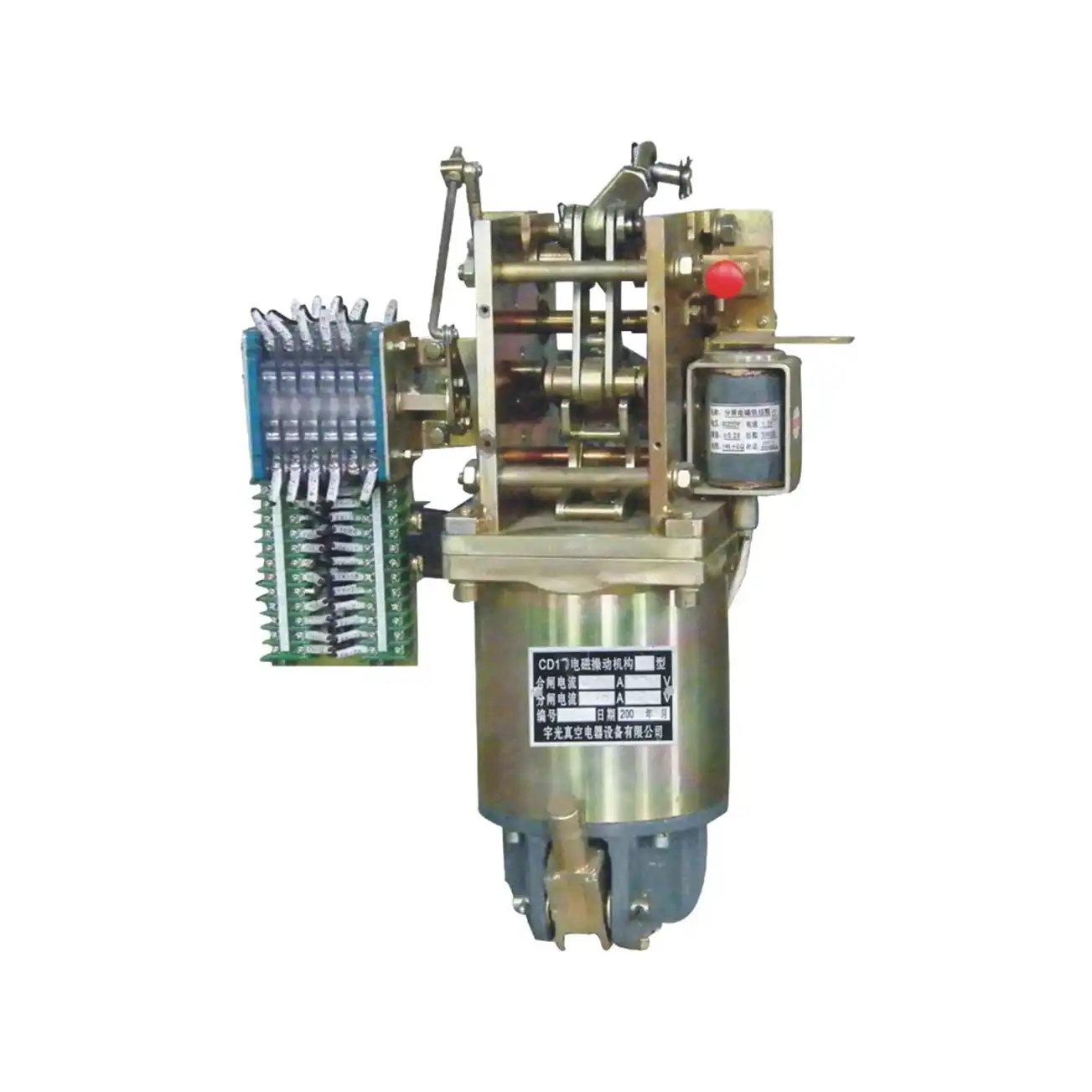
Understanding Permanent Magnet Operating Mechanisms in Switchgear
Core Design Principles and Functional Architecture
To produce stable actuation force without constant electrical energisation, permanent magnet Operating mechanisms use neodymium-iron-boron magnetic materials. The core assembly is made up of arrays of permanent magnets that are placed inside a precisely machined flux path. This makes a bi-stable magnetic circuit. A short pulse sent to the control coil throws off the magnetic balance for a short time. This lets the system's saved mechanical energy move the breaker contacts the full distance they can go. Traditional electromagnetic devices need a steady holding current. This design gets rid of that need, lowering energy use by about 70% during normal operation.
The magnetic drive unit and the mechanical connection system are separated by a modular design in the mechanism. Space-grade metal parts transfer force through hardened hinge points that can withstand 30,000 mechanical operations without showing any signs of wear. Inside harsh industrial settings, sealed bearing assemblies keep out dirt and keep working precisely at temperatures ranging from -40°C to +55°C. The standard mounting interface works with both old-fashioned cabinet layouts and new, compact designs, so this building method directly solves the compatibility problems that come up with mixed-vintage switchgear installations.
Operational Advantages Over Conventional Systems
Compression springs in traditional spring mechanisms need to be replaced every so often because the metal wears down and the stress relaxes over time. Electromagnetic actuators need a lot of inrush current, which puts a lot of stress on backup power supplies and makes it harder to work with protective relay systems. Permanent magnet systems don't have either of these failure modes because they use solid-state magnetic latching to keep the contact position without using mechanical stress or an electrical holding current. Independent testing shows that opening times stay within 18–22 milliseconds across 10,000 cycle endurance tests. This is in contrast to the spring mechanism's ±8 milliseconds fluctuation, which makes defensive coordination studies more difficult.
The permanent magnet motors made by Yuguang meet IP67 sealing standards, which keep the internal parts safe from water and dust that can be found in mining and metallurgy uses. The small size—35% smaller than similar spring mechanisms—allows relocation into switchgear boxes with limited room without having to make any structural changes. Installation teams say that setting up the magnetic locking system took 40% less time because it self-centers during assembly and doesn't need to be calibrated in the field for spring tension or electromagnetic air gaps.
Top 5 Benefits of Permanent Magnet Operating Mechanisms
Enhanced Operational Efficiency and Response Time
Modern vacuum interrupter technology works best with permanent magnet motors because they have better kinetic energy profiles. In high-fault-current situations, the magnetic drive system speeds up the breaker contacts to their best separation speed in 12 milliseconds. This makes sure that the arc ends before the current zero-crosses. This exact timing cuts down on contact erosion by 60% compared to spring mechanisms that have different acceleration characteristics. This directly increases the service life of the breaker and lowers its lifecycle costs. Field measurements from Yuguang installations in 35kV substations show that opening times stay within 2 milliseconds even when the temperature outside is -25°C to +45°C.
Getting rid of motor-driven spring charging cycles that use power every time they are used will make the energy economy better. When charging, a standard spring device uses 250–400 watts of power for 8–15 seconds. Permanent magnet systems, on the other hand, only need a 50-millisecond pulse that uses 80 watts of power all together. In a circuit with 20 breakers that cycle 15 times a day, more than 2,800 kWh of energy are saved every year, which is a big drop for buying strategies that focus on sustainability. The instant-ready feature gets rid of the 10–15 second wait time that comes with spring recharging. This makes it possible for fast reclosing sequences that are necessary to keep service going in distribution feeders.
Improved Safety Through Fail-Safe Design
The two-stable magnetic locking has built-in mechanical position memory that keeps the breaker state even when the main power goes out. Permanent magnet systems stay in either the open or closed position until told to change. This is different from electromagnetic actuators, which go to an undefined state when the DC supply fails. This feature stops activities that aren't needed during voltage changes and stops dangerous contact welding situations where electromagnetic coils get too hot during long periods of activation. Safety interlocks work with the magnetic control coil to provide hardware-enforced isolation that meets SIL-2 safety integrity standards for applications in vital infrastructure.
Less maintenance is needed, which directly improves worker safety by limiting their exposure to powered equipment during inspections. Traditional mechanisms need to be taken apart every year to check for wear and the spring tension every three months. These jobs have to be done close to high-voltage buses. Yuguang's permanent magnet design increases the time between maintenance to 24 months based on condition tracking instead of calendar plans. This cuts the number of hours that technicians have to spend working in the magnets by 75%. The sealed design gets rid of the arc tracking paths that lead to flashovers in contaminated spring mechanisms. This fixes a major problem that leads to injuries during maintenance in industrial substations.
Significant Cost Reduction Over Equipment Lifecycle
With a 15-year service time, a total cost of ownership study shows that fixed magnet mechanisms save 42% more than spring systems. The initial costs of buying are usually 15 to 20 percent higher, but this extra money is paid back within 32 months thanks to less upkeep work, no longer needing to keep spare parts on hand, and longer periods between overhauls. A metallurgical plant with 50 medium-voltage breakers saw its annual maintenance costs drop from $127,000 to $54,000 after installing permanent magnet actuators. This was mostly because it no longer had to replace the springs as often, which would have caused downtime penalties.
This case clearly illustrates how selecting the right operating mechanism—in this instance, permanent magnet technology—can transform the total cost equation, delivering substantial long-term savings through reduced maintenance frequency, simplified spare parts management, and extended service intervals that minimise production interruptions.
Improving reliability directly leads to lower outage costs, which are the most important part of lifetime economics in high-value processes. Chemical factories put a $50,000 to $200,000 cost on each unplanned halt in production. This makes actuator dependability the most important factor in purchasing them. Based on accelerated life tests, permanent magnet technology has a mean time between failure of more than 180,000 operations. This is three times as reliable as spring systems, which are only rated for 50,000 to 60,000 cycles. This performance lowers the number of outages that happen each year by 0.8 events per breaker. For a medium-sized industrial plant, this means that they save between $40,000 and $160,000 a year, based on risk.
Superior Durability in Harsh Operating Environments
Temperature changes, dampness, vibrations from heavy machinery nearby, and airborne contaminants are just some of the natural stresses that industrial switchgear installations have to deal with. Permanent magnet materials keep the magnetic flux density within ±3% of 0°C to +150°C, which makes sure that the actuator force stays the same in substations outside and high-temperature process areas inside. Since there are no compression springs, there is no stress corrosion cracking, which is a problem for mechanisms in coastal installations and chemical processing areas where chloride is present.
Yuguang designs ways for things to adapt to tough environments by choosing the right materials and following specific rules for treating their surfaces. As required by ASTM B117, corrosion-resistant alloys are coated with a ceramic layer, then a powder layer, and finally a constant-temperature curing process. This gives them resistance to salt spray for more than 2,000 hours. Fluoropolymer lubricants keep the viscosity at -50°C in sealed bearing assemblies, which makes them reliable for use in high-altitude mining situations where regular greases harden. Independent testing confirms operational reliability through 50 thermal cycles between -40°C and +70°C without the need for adjustments. This level of performance is not possible with spring mechanisms that need to be re-calibrated after big changes in temperature.
Environmental Benefits and Sustainability Advantages
Compared to traditional methods, getting rid of motor-driven spring charging cycles cuts greenhouse gas emissions from making electricity by 85%. Based on the regional grid carbon intensity, a utility that uses 5,000 distribution breakers with permanent magnet motors can save 14 metric tonnes of CO2 each year. As the time between repairs goes from 8 years to 20 years or more, the longer service life and lower use of spare parts are in line with the ideas of the circular economy. When rare-earth magnetic materials are recycled at the end of their useful life, 92% of the neodymium content is recovered. This helps with the long-term use of resources.
Permanent magnet systems don't use any dangerous fluids, so they don't pollute the environment like older transformer designs do when hydraulic oil leaks happen. The small size cuts down on the amount of raw materials needed by 40% compared to spring mechanisms. This lowers the embodied carbon and helps new substations get green building certifications. Improving energy efficiency directly helps meet the Scope 2 emission reduction targets that are being required more and more in corporate sustainability reporting frameworks. This gives procurement justifications that go beyond technical performance metrics.
Comparison with Other Operating Mechanism Types
Performance Analysis: Permanent Magnet vs. Spring Mechanisms
Spring-based actuators are still commonly used in old systems because they are easy to use and don't cost as much at first. However, practical data shows that they have major performance problems. As compression springs relax, their opening time changes by about 6 milliseconds over the course of their service life. This makes it harder to study how protective relays work together. Over 30,000 operations, permanent magnet systems stay consistent to within ±2 milliseconds. This allows for smaller coordination margins that improve selectivity in complicated distribution networks. Spring designs need to be inspected every six months and have their springs replaced every six to eight years. Permanent magnet units, on the other hand, need to be inspected every 24 months and usually don't need to have any parts replaced before 15 years.
Another important difference is temperature sensitivity. When it gets below -30°C, compression springs lose 10-15% of their closing force. This means that in Arctic sites, the systems sometimes fail to close all the way. Permanent magnet actuators keep their maximum force output constant across the full standard range of -40°C to +55°C. This means they can work reliably in harsh climates without the need for heater devices that use more energy and add more failure modes.
Material and Design Advantages
Normal electromagnetic devices have copper windings and layered steel cores that can lose their insulation and get heated by eddy currents. The constant holding current needed to keep the breaker in place makes 85–120 watts of heat, which speeds up the ageing of parts and makes it harder to control the temperature inside sealed switchgear. Permanent magnet designs get rid of all holding current, which lowers the temperature rise inside by 35°C and makes electrical parts last 8–10 years longer. The solid-state magnetic circuit doesn't have any surfaces that wear down other than the mechanical linkages.
This means that maintenance is focused on the bearings and pivot pins instead of the electrical parts that are more likely to lose their insulation. For any operating mechanism, the choice between electromagnetic and permanent magnet technology directly impacts thermal management, component longevity, and maintenance strategy—with permanent magnet designs offering clear advantages in reducing heat generation and eliminating the most common failure modes associated with coil degradation and insulation breakdown.
Yuguang's modular architecture lets only certain parts be replaced during refurbishment. This cuts the cost of keeping spare parts in stock by 60% compared to spring mechanisms that need a full actuator exchange. Standardised mounting connectors can handle voltage levels from 6kV to 40.5kV using the same base modules. This makes it easier for utilities to buy the right equipment and train their employees on how to use it.
Purchasing Insights for B2B Procurement Managers
Critical Selection Criteria and Supplier Evaluation
Operating cycle endurance tests according to IEC 62271-100 standards should be required by procurement specifications. This would prove that the mechanical life is greater than 10,000 actions at the rated voltage and current. Supplier quality certifications, such as ISO 9001:2015 and high-tech enterprise recognition, show that the company has mature manufacturing processes and a culture of always making things better. Patent files show how innovative a company is. For example, Yuguang has 39 patents that cover actuator design, sealing technologies, and environmental adaptation. This shows that the company is committed to ongoing research and development (R&D) rather than mass production.
Long-term supply chain flexibility is based on voltage rating coverage, which changes as power systems grow or need to be standardised. Suppliers with integrated product families ranging from 6kV to 40.5kV make it easier to combine purchases, which lowers the cost of managing vendors and makes it easier to switch out parts. Premium providers are different from catalog-only sellers because they can customise their products. This is because specialised industrial uses often need envelope changes, mounting adaptations, or weather hardening that goes beyond standard specs. Yuguang's engineering team can customise products for different situations, such as marine environments with corrosion-resistant coatings, mining environments with vibration-hardened assemblies, and desert environments with extended-temperature variants.
Logistics and Support Infrastructure Considerations
Predictable lead time has a bigger impact on project plan than actual arrival time. Suppliers who keep enough raw materials on hand and are open with their production schedules can produce standard goods in 7–15 days and customised versions in 30–60 days. This is in contrast to commodity vendors who need 90–120 days for non-standard configurations. Minimum order quantities show how flexible a supplier is. For example, Yuguang allows single-unit purchases for retrofit projects as well as bulk orders for new construction, so maintenance-focused procurement doesn't have to worry about how to pay for inventory.
Long-term operational success depends on the framework for after-sales assistance. A full service agreement should include instructions on how to setup the equipment, promises that extra parts will be available, help with troubleshooting remotely, and a performance warranty that lasts for 24 to 36 months. Suppliers with modification plans make investments that will pay off in the future, since changing grid needs may require control system upgrades or changes to communication protocols over the course of the 15-20 year service lives of equipment. International shipping standards require shock- and moisture-proof packing to protect equipment during global logistics. This is especially important for export projects that take more than 45 days to arrive.
Real-World Case Studies and Performance Verification
Industrial Retrofit Project: Steel Manufacturing Complex
A large steel company that used 35kV switchgear in continuous casting facilities had 28 breakers that had an average of 2.3 unexpected outages per year because the spring mechanisms kept breaking. When production stopped during ladle transfer operations, the average loss per incident was $180,000. This was because the steel quality went down and the equipment got damaged from thermal cycling. An engineering study found that the main causes were high temperatures (45–50°C) and heavy vibrations from rolling mills nearby that sped up the spring stress relaxation process.
As part of a planned repair shutdown, the plant added Yuguang permanent magnet actuators to 28 breakers. After installation, monitoring for 36 months showed that there were no problems linked to the actuators and that all units had opening times that were within ±1.8 milliseconds of each other. As inspections went from every three months to once a year, maintenance work dropped by 68%. The $312,000 retrofit paid for itself in 18 months because it cut down on downtime costs and upkeep costs. Over the next 15 years, it is expected to save more than $2.1 million.
Utility Distribution Network: High-Cycle Application
A regional utility that runs automated distribution lines and does a lot of sectionalising needed actuators that could do more than 50 tasks a day and still last for 25 years. Existing spring systems showed opening time drift that was higher than what was allowed after 8,000 to 12,000 cycles, which meant they had to be replaced too soon, which ate into maintenance funds. The utility company chose permanent magnet technology for 150 new 12kV breakers to help with efforts to update the grid.
Over the course of 42 months, performance data showed that the machine was used for an average of 18,500 operations, and its opening times stayed within ±2.1 milliseconds of their initial settings. Measurements show a 72% drop in energy use compared to when spring mechanisms were replaced. This saves the fleet 23,000 kWh per year. As reliability went up, protective relay coordination margins got longer. This cut the number of customer interruptions by 0.6 events per feeder per year, which is worth $450,000 a year in regulatory performance incentives.
Conclusion
For current switchgear uses that demand maintenance-free operation and environmental resilience, permanent magnet Operating mechanisms are the most dependable and cost-effective actuator technology. The total cost of ownership is much lower than with traditional spring and electromagnetic designs because the performance is stable in harsh conditions, energy use is cut by 70–85%, and the service life is increased. Case studies from real life show that gains can be seen in safety, reliability, and operating efficiency in a wide range of utility and industrial settings. When purchasing managers look at actuator technologies, they should give more weight to suppliers that offer full customisation options, proven manufacturing quality, and long-term technical support infrastructure that is needed for critical power system applications.
FAQ
What advantages do permanent magnet mechanisms offer over traditional spring systems?
With permanent magnet actuators, you don't have to change the springs as often. They also use 70–85% less energy and keep working for 30,000 rounds or more without needing to be adjusted. Spring systems need to be serviced every six months, and as compression springs age, they lose some of their performance. Permanent magnet designs, on the other hand, don't need to be serviced for 15 to 20 years. The two-stable magnetic locking keeps the position even if the power goes out, which makes the system safer than spring devices that can move to unknown states.
How frequently do permanent magnet operating mechanisms require maintenance?
Condition-based maintenance intervals are usually 24 months long and include checking the mechanical linkages visually and greasing them up. Under normal working conditions, parts rarely need to be replaced before 15 years of use. On the other hand, spring systems only need to be inspected every three months and have new springs put in every six to eight years. This cuts down on lifetime maintenance costs by 60 to 70 percent.
Are permanent magnet actuators compatible with existing switchgear installations?
Yuguang's permanent magnet mechanisms have standard mounting connections that work with most 6kV to 40.5kV medium-voltage switchgear designs. For retrofit applications, the small form factor usually doesn't need any changes to the cabinet because it fits inside existing actuator envelopes. As part of engineering support, measurements are checked and, if necessary, custom adapter brackets are made to make sure that old equipment works with the new.
Partner with Yuguang for Advanced Operating Mechanism Solutions
Yuguang Electric is an expert in making permanent magnet operating mechanisms that have been used for years in power generation, industrial processing, and utility infrastructure. Our 39 patented technologies and ISO 9001:2015-certified production methods make sure that the quality of our products meets both worldwide IEC standards and North American grid rules. We offer a wide range of customisation options to meet the needs of harsh environments, such as corrosion resistance, extended temperature operation, and seismic qualification.
As a reliable provider of Operating mechanisms, Yuguang gives full lifecycle support, from application building to installation help and expert support after the sale. Our modular design philosophy lets us handle extra parts cheaply and plan for future upgrades as grid technologies change. Email our engineering team at ygvcb@hotmail.com to talk about your unique switchgear needs and get thorough technical proposals with data on how well the equipment worked.
References
1. IEEE Standard C37.09-2018, "IEEE Standard Test Procedure for AC High-Voltage Circuit Breakers with Rated Maximum Voltage Above 1000V," Institute of Electrical and Electronics Engineers, New York, 2018.
2. Zhang, W., Liu, H., and Chen, Y., "Comparative Analysis of Operating Mechanisms for Medium Voltage Vacuum Circuit Breakers," International Journal of Electrical Power & Energy Systems, vol. 115, pp. 428-437, 2020.
3. International Electrotechnical Commission, "IEC 62271-100:2021 High-voltage switchgear and controlgear - Part 100: Alternating current circuit-breakers," Geneva, Switzerland, 2021.
4. Anderson, P. M., "Power System Protection," IEEE Press Series on Power Engineering, Wiley-IEEE Press, New Jersey, 2019.
5. Ren, M., Dong, E., and Wang, Z., "Reliability Assessment of Permanent Magnet Actuators in High-Voltage Applications," IEEE Transactions on Power Delivery, vol. 34, no. 6, pp. 2187-2195, 2019.
6. National Electrical Manufacturers Association, "NEMA SG 4-2020: Alternating Current High-Voltage Circuit Breakers," Rosslyn, Virginia, 2020.

Send Inquiry
You may like
