
Top Factors When Choosing a 35kV Operating Mechanism
Understanding the crucial performance aspects will help you choose a 35kV operating mechanism for your electrical infrastructure and prevent expensive system breakdowns. In power plants, substations, and industrial facilities, these high-voltage parts form the foundation of switchgear systems, precisely and dependably managing circuit breakers. Long-term operational stability, reduced maintenance needs, and excellent switching performance are all guaranteed by the appropriate 35kV operating mechanism. Procurement professionals must assess technical specifications, compatibility requirements, and supplier capabilities in order to make well-informed decisions that safeguard their infrastructure investments, given the variety of mechanism types available, such as spring-operated, electromagnetic, and permanent magnet designs.
Understanding the Fundamentals of 35kV Operating Mechanisms
A 35kV operating mechanism represents a sophisticated electromechanical device designed to control high-voltage circuit breakers within power distribution systems. Unlike lower voltage alternatives, these mechanisms must withstand substantial electrical stress while maintaining precise mechanical operation over thousands of switching cycles.
Core Functions and Technical Specifications
These mechanisms' main function is to translate control signals into mechanical force so that circuit breakers may open and shut under different load scenarios. The voltage ratings of contemporary 35kV systems usually range from 6kV to 40.5kV, and their mechanical durability parameters surpass 10,000 operations without the need for significant maintenance.
Important technical factors include force characteristics that guarantee consistent contact engagement and switching speed, which directly affects arc extinction efficiency. Intelligent monitoring systems that detect operating data and forecast maintenance needs are incorporated into advanced designs to minimize unplanned downtime.
Mechanism Types and Operating Principles
The market is dominated by spring-operated mechanisms because of their dependability and capacity to store energy. Regardless of the availability of control power, these systems use charged springs to provide a constant closing force. Even in the event of power supply disruptions, the stored energy technique guarantees dependable functioning.
Applications needing frequent switching operations may benefit from the fine control and quick reaction times provided by electromagnetic systems. However, while choosing them, their increased energy consumption and reliance on a steady power source must be taken into account.
The advantages of both strategies are combined in permanent magnet mechanisms, which use magnetic latching to hold positions without constant power while offering superior reaction qualities. In smart grid applications where energy efficiency is crucial, these cutting-edge designs are becoming more and more popular.
Critical Factors to Consider When Choosing a 35kV Operating Mechanism?
A thorough assessment of many performance factors that directly affect system dependability and running expenses is necessary when choosing the best operating mechanism. Procurement teams may make choices that are in line with both technical specifications and financial restrictions by having a thorough understanding of both aspects.
Performance Metrics and Operational Requirements
When choosing a mechanism, operational precision is perhaps the most important consideration. In order to guarantee appropriate arc extinction and contact wear reduction, modern high-voltage systems need exact timing and constant force delivery. For the duration of their operational life, mechanisms must exhibit repeatability within millisecond tolerances.
Depending on the application, switching speed requirements might vary greatly. While distribution applications may place more emphasis on controlled switching to reduce system disruptions, transmission systems often place a higher priority on quick fault clearing capabilities. The mechanism offers significant versatility by adjusting its settings to suit various operating characteristics.
Electrical and mechanical endurance ratings are also included in mechanical durability. Quality mechanisms are put through a rigorous testing process to ensure that they can function flawlessly through thousands of operations under rated circumstances. Both full-load switching scenarios and no-load procedures are included in this testing to mimic real-world circumstances.
System compatibility includes mounting configurations, auxiliary contact arrangements, and control interface requirements in addition to basic electrical ratings. Integrated automation systems that need certain communication protocols and diagnostic capabilities are often found in modern substations.
The mechanism must be flexible enough to accommodate future updates while integrating smoothly with current control systems. This includes taking into account features for remote monitoring, digital communication, and interoperability with different protective relay systems.
The choice of mechanism is greatly influenced by environmental considerations, especially when it comes to outdoor installations. Material selection and mechanism design are influenced by seismic requirements, temperature cycling, and humidity exposure. Increased working temperature ranges, corrosion-resistant materials, and improved sealing are common characteristics of mechanisms made for severe environments.
Safety Features and Maintenance Protocols
Modern 35kV operating mechanisms incorporate multiple safety features to protect both equipment and personnel. These include mechanical position indicators, electrical interlocks, and fail-safe designs that default to safe positions during fault conditions.
Effective mechanisms reduce the need for specialized equipment or lengthy disassembly while facilitating simple access to essential components. Unplanned outages may be greatly decreased with predictive maintenance capabilities provided by integrated monitoring systems.
Long-term operating success is guaranteed by the availability of thorough maintenance manuals, replacement parts, and expert assistance. Suppliers must to provide comprehensive maintenance plans, troubleshooting manuals, and easily accessible replacement parts.
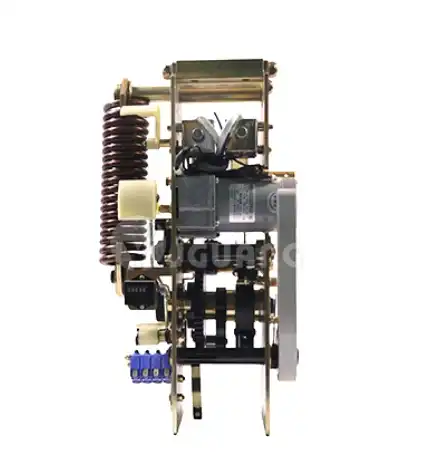
Comparing 35kV Operating Mechanisms – Making an Informed Decision
High-voltage operating mechanism assessment necessitates a methodical comparison of several aspects, weighing short-term expenses against long-term operational advantages. Leading manufacturers in the industry have clear advantages in several application areas, so careful consideration is necessary for the best choice.
Performance Attributes and Brand Evaluation
Prominent producers have acquired specialized knowledge in a variety of mechanism kinds and applications. While some specialize in electromagnetic systems with improved reaction qualities, others thrive in spring-operated devices with increased mechanical durability. It is easier to match supplier capabilities with particular project needs when one is aware of their expertise.
Data from performance tests provide unbiased comparison measurements between various models and brands. Electrical consumption patterns, force variance across temperature ranges, and operating time consistency are important factors. Comparative studies that remove manufacturer bias from performance claims are often offered by independent testing labs.
Suppliers' trust in the dependability of their products is reflected in the wide variations in warranty lengths. Superior design and manufacturing quality are shown by extensive warranties that cover both components and labor for lengthy periods of time. Geographic coverage and warranty response times can have an impact on total cost of ownership estimates.
Total Cost of Ownership Analysis
For high-voltage working mechanisms, initial purchase prices only make up a percentage of lifetime expenses. Long-term economics is greatly impacted by maintenance needs, spare part availability, and energy usage trends. Because they need less maintenance and have a longer operating life, mechanisms with greater initial costs often provide better value.
In the current supply chain context, delivery issues have grown in significance. Customized solutions could take 30–60 days to complete, whereas standard items usually ship in 7–15 days. These lead times must be included into project timetables, especially for critical infrastructure applications where delays result in severe consequences.
Total project costs are also influenced by commissioning needs and installation complexity. While some mechanisms provide plug-and-play connection and easier mounting solutions, others need specialist installation techniques or rigorous testing standards. Having factory installation help available may speed up commissioning timelines and lower project risk.
Real-World Case Studies and Applications
Effective implementations across a range of sectors provide important information about how well a mechanism performs in diverse operational environments. Strong spring-operated systems with a track record of success are preferred in power production facilities because they often emphasize maximum dependability and low maintenance needs.
Rapid switching capabilities and frequent operation durability are often emphasized in industrial applications. Every day, hundreds of switching operations may be carried out in steel mills, chemical plants, and industrial facilities, necessitating the use of mechanisms made especially for high-duty-cycle applications.
Wide temperature fluctuations and distant site restrictions are two of the particular difficulties faced by renewable energy installations. In order to reduce maintenance interventions, wind farms and solar installations often use systems with improved environmental protection and remote monitoring capabilities.
Procurement and Supply Chain Considerations for 35kV Operating Mechanisms
Many parties are involved in the procurement process for 35kV operating mechanisms, and the intricate technical specifications need close collaboration between the buying and engineering teams. In order to provide complete technical support and lifecycle services, modern procurement strategies place a strong emphasis on supplier agreements that go beyond mere product delivery.
OEM Customization and Collaborative Development
Prominent vendors provide a wide range of customisation options to satisfy particular application needs. For certain operating or environmental circumstances, these adjustments might vary from simple mounting configuration adjustments to comprehensive mechanism redesigns. Close coordination between supplier technical experts and client engineering teams is necessary for successful customisation.
A thorough application study that takes into account load characteristics, environmental factors, and integration needs usually precedes the customisation process. Suppliers with experience may suggest changes that increase efficiency while keeping costs down. When compared to conventional product choices, this cooperative method often yields better answers.
Dedicated engineering teams are maintained by advanced vendors to assist development initiatives tailored to individual customers. These connections may lead to cooperative research projects that enhance technology for the mutual benefit of both sides. These collaborations are especially beneficial for businesses with special operating needs or applications in developing markets.
Supplier Authentication and Quality Verification
As global supply chains grow, it has become more crucial than ever to confirm the validity of suppliers. Genuine items with manufacturer warranties and support services are guaranteed by authorized dealers and distributors. Collaborating with well-established supply chain partners lowers the chance of subpar technical assistance or fake goods.
Because suppliers' quality control procedures differ greatly, factory audits and certification evaluations are crucial for key applications. Prominent manufacturers often get extra industry-specific certifications in addition to maintaining ISO 9001 accreditation. These certificates provide assurance on manufacturing uniformity and product quality.
Improved delivery planning and risk management are made possible by supply chain transparency. Clear information about production timetables, component sourcing, and any delivery limitations should be made available by suppliers. Procurement teams may use this information to efficiently manage project timelines and create backup plans.
After-Sales Support and Service Partnerships
In the market for high-voltage equipment, comprehensive after-sales assistance sets quality vendors apart from commodity providers. Throughout the equipment lifespan, this support includes commissioning help, installation advice, and continuing technical consulting.
The availability of spare parts is a crucial factor in long-term operational planning. Reputable suppliers ensure availability intervals that correspond with equipment life expectations and keep an inventory of essential components. Comprehensive spare parts packages that streamline procurement and save inventory carrying costs are provided by some vendors.
Programs for technical training guarantee that staff members can use and maintain their equipment efficiently. These courses include everything from fundamental operating training to advanced certification in troubleshooting and repair. Having access to continuing technical advice reduces downtime and speeds up the resolution of operational problems.
Yuguang Electric: Advanced 35kV Operating Mechanism Solutions
Since 2008, Shaanxi Yuguang Electric Co., Ltd. has made a name for itself as a top producer of high-voltage operating mechanisms by fusing sophisticated production skills with extensive technical knowledge. The firm, which is based in Baoji, Shaanxi, China's leading vacuum circuit breaker manufacturing center, uses local industrial advantages to provide top-notch goods and services.
Comprehensive Product Portfolio and Technical Innovation
Yuguang's wide range of products addresses a variety of application needs across several sectors, spanning the whole spectrum from 6kV to 40.5kV working mechanisms. The company's 39 patents show ongoing innovation in manufacturing techniques, materials research, and mechanism design. Common industrial problems including equipment compatibility, maintenance, and adaptability to specific operating conditions are directly addressed by these inventions.
Compact installations with improved sealing performance and longer operating life are made possible by the company's integrated modular design concept. Extensive study into failure modes and consumer input led to the development of mechanisms that precisely handle operational issues in the actual world.
Aerospace-grade precision technology and specialized tooling systems that guarantee constant quality across all production volumes are the keys to manufacturing excellence. Comprehensive functional performance verification and compliance testing to satisfy both national high-voltage electrical appliance standards and international ISO system criteria are part of the multi-round testing procedure.
Scenario-Based Customization and Service Excellence
Standard product offerings are challenged by Yuguang's exceptional customisation capabilities, which allow adaption to hostile conditions and industry-specific needs. To provide solutions for high-vibration applications, corrosive environments, and severe temperature conditions, the company's technical staff collaborates closely with clients.
Research and development, manufacture, installation, and thorough after-sales support are all included in the full-chain service strategy. Throughout the course of the project, this integrated service model ensures continuous quality and accountability while removing coordination issues between various providers.
International service capabilities provide dependable product supply and prompt technical help to clients abroad by fusing home manufacturing experience with worldwide technical support. Because of its exporting expertise, the firm is able to retain affordable price structures while adhering to international packaging standards and delivery criteria.
Conclusion
Selecting the optimal 35kV operating mechanism requires careful balance between technical performance, operational requirements, and total lifecycle costs. The key factors discussed—including operational accuracy, environmental compatibility, supplier reliability, and service support—directly impact long-term system performance and operational economics. Modern procurement strategies emphasize supplier partnerships that provide comprehensive technical expertise alongside quality products. Success in this complex decision process depends on thorough evaluation of application requirements, systematic comparison of available options, and careful verification of supplier capabilities.
FAQ
Q1: What are the main advantages of 35kV operating mechanisms over lower voltage alternatives?
A: 35kV operating mechanisms offer superior electrical insulation properties and enhanced mechanical robustness compared to lower voltage systems. These mechanisms handle higher fault currents and provide greater operational margins for demanding applications. Additionally, they feature advanced diagnostic capabilities and improved environmental protection that extend operational life in challenging conditions.
Q2: How often should 35kV operating mechanisms undergo maintenance?
A: Maintenance intervals depend on operational frequency and environmental conditions, but typically range from annual inspections to comprehensive overhauls every 5-10 years. Modern mechanisms with integrated monitoring systems can optimize maintenance schedules based on actual usage patterns rather than fixed time intervals. Preventive maintenance programs significantly extend equipment life and reduce unexpected failures.
Q3: What safety precautions are essential during installation and operation?
A: Installation requires qualified personnel following manufacturer guidelines and applicable electrical codes. Key safety measures include proper grounding, verification of electrical isolation, and use of appropriate personal protective equipment. Operational safety depends on regular testing of safety interlocks, proper training of operating personnel, and adherence to established switching procedures.
Contact Yuguang for Professional 35kV Operating Mechanism Solutions
Yuguang Electric stands ready to support your high-voltage infrastructure projects with advanced 35kV operating mechanism technology and comprehensive technical expertise. Our experienced engineering team provides personalized consultation to match optimal solutions with your specific operational requirements. Whether you need standard products or customized designs, our 39 patents and proven manufacturing capabilities ensure reliable, efficient solutions. As a trusted 35kV operating mechanism supplier, we offer complete project support from initial design through installation and long-term maintenance. Contact our technical specialists at ygvcb@hotmail.com to discuss your requirements and receive detailed product information tailored to your applications.
References
1. IEEE Standard C37.06-2009, "AC High-Voltage Circuit Breakers Rated on a Symmetrical Current Basis—Preferred Ratings and Related Required Capabilities for Voltages Above 1000 V," Institute of Electrical and Electronics Engineers, 2009.
2. International Electrotechnical Commission, "High-voltage switchgear and controlgear - Part 100: Alternating current circuit-breakers," IEC 62271-100:2021, Geneva, Switzerland, 2021.
3. Anderson, P.M. and Fouad, A.A., "Power System Control and Stability," IEEE Press Power Engineering Series, Second Edition, Wiley-IEEE Press, 2003.
4. Kappenman, J.G., "High-Voltage Circuit Breaker Technology and Applications," Power Engineering Review, vol. 15, no. 8, pp. 23-31, 1995.
5. Smeets, R.P.P., "Current Interruption in High-Voltage Networks," Delft University of Technology Press, Netherlands, 2017.
6. Greenwood, A., "Vacuum Switchgear," Institution of Engineering and Technology Power and Energy Series 71, London, United Kingdom, 2007.

Send Inquiry
You may like
