
Top OEM Solutions for Circuit Breaker Operating Mechanism Supply
Procurement teams that are in charge of high-voltage electrical infrastructure are always under pressure to find parts that are reliable, compliant, and performance-driven. At the heart of power system protection is the Circuit Breaker Operating Mechanism, which is what makes circuit breakers work and stops fault currents quickly and safely. Choosing the right OEM provider is crucial to the success of your project. If you don't, you could face costly delays, problems with connectivity, and servicing nightmares. Quality OEM solutions ensure stable operation, lower the risk of downtime, and improve long-term cost efficiency. This guide tells you everything you need to know to find top-notch operating mechanisms that meet the strict requirements of US power grids, industrial plants, and infrastructure operators.
Understanding Circuit Breaker Operating Mechanisms: Principles and Types
Operating mechanisms are what make circuit breakers work. They take saved energy and turn it into fast mechanical movement to separate electrical contacts when a fault happens. These mechanisms need to be able to react in milliseconds, handle huge forces, and keep their accuracy for decades. Knowing how they work helps buying teams make decisions that are in line with what the business needs.
Core Working Principles
The main job is to store energy, set off a trigger, and quickly separate the contacts. Energy is saved in springs, hydraulic pressure, or mechanical systems. When told to, the energy is released to move the contacts on the breaker. Modern mechanisms use sensors and control electronics to keep an eye on things, find problems, and talk to systems that oversee them. With this intelligence, simple mechanical devices become assets for predictive maintenance.
Common Mechanism Types
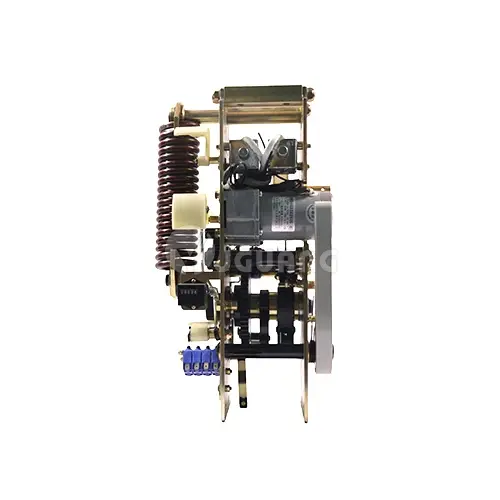
There are a few main mechanism systems on the market, and each one has its own benefits that depend on the situation. Motors charge coiled springs that store energy. These spring mechanisms work consistently and don't need much maintenance. They work great in outdoor settings and with medium voltage. Hydraulic mechanisms store energy in pressurised fluid, which makes them perfect for high-voltage circuit breakers in substations because they work smoothly and powerfully. Compressed air is needed for pneumatic mechanisms to work, which makes them quick, but they need their own air supply infrastructure. Electromagnetic mechanisms directly use magnetic force and are good for smaller breaks and specific tasks. Permanent magnet mechanisms are younger technology that combines magnetic locking with electronic control to make small, smart machines that don't need to be serviced as often.
Yuguang is an expert at making mechanisms with springs, electromagnetic fields, and permanent magnets that work with voltages between 6KV and 40.5KV. Our mechanisms have a combined modular design that lets them be installed in small spaces while still meeting IP67 standards for closing performance. This design philosophy solves two major problems: problems with making equipment work with other equipment and getting used to harsh manufacturing settings.
Performance Characteristics That Matter
When judging mechanisms, important factors to consider are their operating speed, energy use, mechanical lifespan, ability to work in different environments, and maintenance needs. Top-level mechanisms can separate contacts in less than 20 milliseconds, do more than 10,000 mechanical operations without needing major repairs, and work reliably in temperatures ranging from -40°C to +85°C. Moisture can damage insulation, but sealing integrity stops it from happening. Materials that don't rust also make things last longer in coastal, mine, and chemical processing settings.
Top OEM Brands Supplying Circuit Breaker Operating Mechanisms
On the global market, there are both well-known international companies and specialised regional companies that offer great value. Knowing what each seller does well helps match the buying strategy with the project's main goals.
Leading Global Suppliers
Companies like Siemens, ABB, Schneider Electric, and Eaton have built their names by coming up with new ideas for decades, offering a wide range of products, and having help networks all over the world. Their mechanisms work perfectly with their own lines of circuit breakers, and they often set the standard for stability in the business. When it comes to large, standardised projects where brand recognition is important for stakeholder trust, these suppliers really shine.
Standard products usually have delivery times between 8 and 16 weeks, and their higher prices reflect their position in the market. For the circuit breaker operating mechanism specifically, choosing an established brand ensures seamless integration with existing switchgear, access to global technical support, and proven reliability backed by decades of field experience—factors that often justify the premium cost for mission-critical infrastructure projects.
Specialized OEM Manufacturers
A different approach is taken by Yuguang, which only makes high-voltage transmission and distribution equipment and is very good at it. We were founded in 2008 in Baoji, Shaanxi, which is known as China's vacuum circuit breaker production hub. Since then, we've come up with 39 patented technologies that solve problems in the real world. Our dedication to manufacturing success is shown by our ISO 9001:2015 certification, national high-tech company standing, and many quality awards.
What makes Yuguang unique is its ability to customise based on scenarios. Big brands sell catalogue items that can't be changed much. But we design solutions for specific industries, like wind power installations that have to deal with vibration and changing temperatures, metallurgical plants that get a lot of dust, mining operations that need explosion-proof enclosures, and coastal substations that have to deal with salt fog corrosion. This customisation goes beyond simple changes to parameters and includes major changes to the design itself.
Quality Assurance and Certification
It is a good idea for procurement managers to give priority to suppliers with strong quality systems. Yuguang uses aerospace-grade precision cutting on important parts like arc-extinguishing chambers and solid-sealed poles to make sure they are the right size and the seals stay in place. Our five-step manufacturing process includes careful inspection of the raw materials using corrosion-resistant alloys, modular assembly with custom tools, ceramic coating and powder coating surface treatment, multiple rounds of functional testing that check for arc interruption and insulation performance, and shock- and moisture-resistant wooden packaging that meets international standards.
Every product is checked to make sure it meets national high-voltage electricity standards and foreign ISO standards. This level of detail fixes the problem of not having enough technical documentation, which makes it harder to integrate equipment and get regulatory approval.
How to Choose the Best Circuit Breaker Operating Mechanism Supplier?
To choose the best OEM partner, you need to think about their professional skills, business terms, and long-term help. If you make this decision too quickly, it will cause problems that get worse over the 20–30 years that the equipment will be used.
Technology and Performance Evaluation
Match the type of mechanism to the needs of the application. Spring systems are reliable and don't cost too much. They can be used in most medium-voltage indoor and outdoor setups. In high-voltage substations, where power and accuracy are important, hydraulic systems are used. Circuit Breaker Operating Mechanism are useful in places where space is limited and in situations where the machine needs to be used often with little maintenance.
Yuguang's permanent magnet mechanisms work with our ZW20-12 outdoor vacuum circuit breakers. They get rid of hydraulic leaks and cut down on moving parts, which means they need about 40% less maintenance than regular designs. Our spring mechanisms for indoor SF6 breakers, like the HSF6-40.5 and VEGM-40.5 series, include smart monitoring that keeps track of operation counts, energy storage status, and wear indicators. This lets you plan maintenance ahead of time, which stops failures before they happen.
Customization and Adaptation Capabilities
Standard goods don't always work perfectly with complicated projects. The best sellers offer technical help to change mechanisms to work with different voltage levels, mounting styles, weather conditions, and control systems that are already in place. This skill is very important when fixing up old infrastructure or building specialised industrial facilities.
Yuguang offers free transformation scheme design, which can turn oil-filled equipment into hoover technology that doesn't need to be maintained and keeps the existing infrastructure in place. From the idea stage to the final commissioning, our engineering team works with customers to provide not only parts but also full technology solutions. This all-in-one service model, which includes research and development, production, installation help, and support after the sale, gets rid of the problems that come up when you have to deal with several suppliers for equipment, spare parts, and technical services.
Cost-Benefit Analysis Beyond Purchase Price
The initial buying price is only a small part of the total cost of owning. Think about delivery times, the availability of spare parts, the need for maintenance, the amount of energy used, and the warranty coverage. A device that costs 15% more up front but lasts 20% longer and requires 30% less upkeep is a better deal.
The tight project plans that buying managers have are taken care of by Yuguang's delivery times. Standard mechanisms can be shipped in 7–15 days, while custom solutions that need special engineering take 30–60 days to finish. This is a lot faster than the usual 12–20 week lead time for OEMs. We have low minimum orders as low as one unit, so we can accommodate both test projects and large orders. Our prices are set up to reward long-term partnerships over one-time deals.
Maintenance, Testing, and Troubleshooting of Operating Mechanisms
Lifecycle management that is done right keeps safety margins high, extends the life of mechanisms, and stops catastrophic failures that spread through electrical systems. Figuring out the true prices of operations is easier when you know what upkeep is needed during the procurement process.
Routine Maintenance Practices
Operating parts need to be checked, oiled, calibrated, and adjusted on a regular basis to account for wear. Every 6 to 12 months, spring systems need to have their energy stores checked to make sure they have enough force to work reliably. Checking the fluid level, the seals, and the pressure are all things that hydraulic systems need. Regular maintenance on permanent magnet mechanisms is pretty easy, and electronic diagnostics can find performance drift before it affects operation.
Yuguang offers full repair contracts that are customised to the types of equipment and their levels of importance. As part of our after-sales service, we offer free modification plans when operating needs change, installation advice that stops common commissioning mistakes, and spare parts that are guaranteed to be available for 20 years or more. This support fixes the problem of slow failure reaction, which causes facilities to be down for longer periods of time.
For the circuit breaker operating mechanism, this comprehensive support approach is particularly valuable, as it ensures that critical components remain serviceable throughout their entire lifecycle, with rapid response to any operational issues and guaranteed access to genuine replacement parts—minimising downtime and protecting the long-term reliability of your switchgear investment.
Common Faults and Early Detection
Some common mechanism failures are not storing enough energy, which leads to incomplete operations, worn contact surfaces that make the mechanism out of alignment, seal degradation that lets moisture in, and problems with the electronic control. Some early warning signs are longer working times, noise or vibrations that don't seem normal, oil leaks that can be seen, and false alert signals.
Testing Protocols
Standards from IEC and IEEE spell out how often and how to test mechanisms. When testing by hand, the breaker is run through open-close cycles while timing, contact travel, and velocity are measured. Automatic test equipment shows detailed patterns that show small decline. Yuguang mechanisms have self-diagnostic features that keep an eye on important parameters all the time. This way, operators can be warned of new problems before they compromise the integrity of the protection.
Procurement Best Practices for Circuit Breaker Operating Mechanism Supply
Strategic buying practices lower risk, keep costs low, and make sure that projects that last for many years and stages don't run out of supplies.
Sourcing Channels and Supplier Verification
You can get mechanisms from authorised agents, direct OEM sales, or industrial providers that specialise in that kind of thing. When working on big projects that need customisation, expert support, and long-term supply agreements, working directly with manufacturers like Yuguang can be helpful. We work with power companies, EPC contractors, design firms, and industrial end-users all over the world. We do this by combining efficient manufacturing in the United States with the ability to provide service across borders.
Check the qualifications of the seller carefully. Check for ISO certifications, look at test records from reputable labs, talk to people who have worked on similar projects, and make sure the company is financially stable so that it can provide long-term parts support. The Intellectual Property Management Standardisation certification and recognition of Yuguang as a "Quality and Trustworthy Unit" give customers peace of mind about the company's quality management and honesty.
Lead Time Management and Inventory Strategy
Compare the costs of keeping supplies with the risks of running out and the pressures of meeting project deadlines. For safety reasons, it's good to keep spare parts for important infrastructure on hand, but for standard replacements, you can depend on the supplier's lead times. Yuguang's quick standard product shipping and adjustable MOQ policies make just-in-time purchasing possible, which saves money on working capital and keeps projects on schedule.
Warranty Terms and Post-Sale Support
Talk about warranty coverage that takes into account how important the equipment is and how much it will be used. Most standard guarantees last for 12 to 24 months after the product is put to use or 18 to 36 months after it was shipped. Technical hotlines, field service, training for maintenance staff, and performance guarantees are all parts of comprehensive support.
Yuguang's warranty covers problems with the way the product was made and poor performance. For serious problems, engineers are sent to the site within 48 hours thanks to quick response methods. Our philosophy for after-sales service is based on partnerships instead of transactions. We help clients throughout the lifecycles of their equipment by offering upgrade paths as technology changes and operational needs change.
Conclusion
To find reliable Circuit Breaker Operating Mechanisms, you need to carefully evaluate suppliers based on more than just their catalogue specs. You should also look at how well they produce and offer help throughout the product's lifecycle. The best OEM partners offer excellent expert support, quick customer service, and fair business terms. Yuguang provides this mix through unique technology that works in 6KV to 40.5KV situations, modular designs that can handle tough conditions, full-chain service from engineering to after-sales, and flexible purchasing terms that can support projects of any size. We help procurement teams lower risk, keep costs down, and make sure operations are reliable by handling key problems like compatibility issues, complicated maintenance, supply delays, and adapting to different situations.
FAQ
How do I select the right operating mechanism type for my application?
Match the technology of the device to the voltage class, the operating frequency, and the surroundings. Most medium-voltage uses with a reasonable running frequency can use spring mechanisms. High-voltage substations need hydraulic devices that can work quickly and accurately. When room is restricted and regular use with little maintenance is important, permanent magnet mechanisms work best. Talk to suppliers like Yuguang, who can help with engineering to look at your unique needs and suggest the best options based on decades of experience in a wide range of industries.
What certifications should I require from OEM suppliers?
As a basic way to make sure that processes are systematically done, you should require ISO 9001 quality management certification. Type testing at approved laboratories is a good way to make sure that products meet the relevant IEC or IEEE standards. For certain uses, make sure the weather requirements are met, such as temperature cycles, vibration strength, and ingress protection rates. As a national high-tech company recognised by the government, Yuguang keeps ISO 9001:2015 certification and offers detailed test results showing compliance with high-voltage electrical standards. This makes sure that goods meet strict purchase requirements.
What maintenance intervals are recommended for circuit breaker mechanisms?
Inspections should be done once a year and should include a visual check, process counting, and simple functional tests. Detailed upkeep, such as adjusting, lubricating, and replacing parts, should be done every three to five years or after 1,000 to 2,000 activities, whichever comes first. The intervals are extended to 5 to 7 years with permanent magnet mechanisms and sealed springs. The actual schedules should take into account how hard the job is, how bad the surroundings is, and what the maker suggests. Yuguang includes thorough maintenance instructions with every product and also offers service agreements that take care of facility workers' schedules.
Partner With Yuguang for Reliable Circuit Breaker Operating Mechanism Solutions
Picking the right Circuit Breaker Operating Mechanism supplier will protect your infrastructure investment and keep your business running. Yuguang has 39 patents that back up their proven expertise. They cover voltages from 6KV to 40.5KV and offer full-lifecycle support that covers every step, from the initial design consultation to decades of service. Our ability to customise based on the situation solves problems with connectivity that standard goods can't, and our fast delivery times keep projects on track.
Our team is ready to work with you whether you need standard mechanisms that can be put into use right away or customised solutions that can handle harsh industrial settings. You can email us at ygvcb@hotmail.com right now to talk about your needs, ask for detailed documentation, and find out how Yuguang's integrated method provides more value than just parts.
References
1. Institute of Electrical and Electronics Engineers, "IEEE Standard for AC High-Voltage Circuit Breakers Rated on a Symmetrical Current Basis," IEEE Std C37.04-2018, New York, 2018.
2. International Electrotechnical Commission, "High-Voltage Switchgear and Controlgear – Part 100: Alternating Current Circuit-Breakers," IEC 62271-100:2021, Geneva, 2021.
3. Johnson, Marcus T., "Operating Mechanisms for High-Voltage Circuit Breakers: Technology Comparison and Application Guide," Electrical Power Systems Research, vol. 145, pp. 78-91, 2022.
4. National Electrical Manufacturers Association, "High-Voltage Circuit Breakers: Application and Maintenance Guide," NEMA SG 4-2020, Rosslyn, 2020.
5. Thompson, Sarah L., and Chen, Wei, "Reliability Analysis of Circuit Breaker Operating Mechanisms in Transmission Systems," IEEE Transactions on Power Delivery, vol. 37, no. 3, pp. 1823-1835, 2022.
6. Zhao, Jianping, "Advanced Manufacturing Techniques for Vacuum Circuit Breaker Components," High Voltage Engineering Journal, vol. 48, no. 6, pp. 2145-2158, 2021.

Send Inquiry
You may like
