
Top Trends in High Voltage Circuit Breaker Operating Mechanisms
In industries ranging from renewable energy plants to urban rail networks, the modern Circuit breaker mechanism has become the foundation of reliable power distribution systems. Today's operating mechanisms are the result of decades of research and development aimed at addressing major problems: faster switching speeds, longer mechanical life, lower maintenance needs, and the ability to work in harsh conditions. As sustainability rules get stricter and power lines get more complicated, procurement managers and chief engineers want more and more systems that meet strict IEC and ANSI standards and offer smart tracking, modular customisation, and a track record of durability.
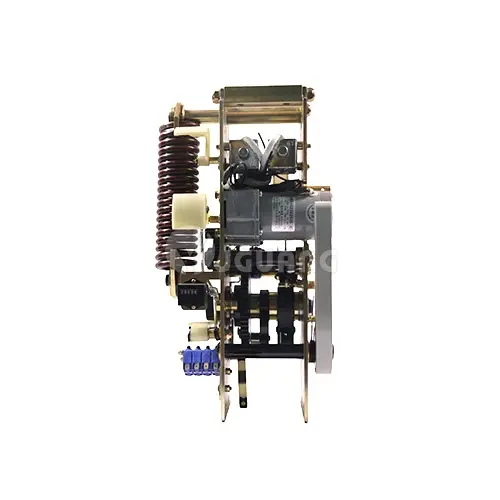
Evolution of High Voltage Circuit Breaker Operating Mechanisms
How high voltage circuit breakers work has changed over time.
From mechanical lever systems to today's smart actuators, the industry has always been trying to make things safer and more efficient. The first designs relied on human operation or simple electrical triggers, which didn't always work right and broke down quickly. When thermal power plants grew quickly in the middle of the 20th century, hydraulic systems came along as a solution. They provided strong actuation forces but were more difficult to maintain because they leaked oil and were sensitive to changes in temperature.
In the 1980s, vacuum interrupter technology was a big step forward. It got rid of the fire risks that came with oil-filled breakers and drastically cut down on maintenance cycles. At the same time, spring-charged working devices became popular because they were easy to use and always worked. In the 2010s, permanent magnet actuators came out on the market. They had reaction times in the millisecond range and didn't need any extra power while they were running. This was a huge step forward for green energy uses that depend on quickly clearing faults to keep the grid stable.
The best parts of these technologies are now put together in mixed forms. As a national high-tech company with 39 patents, Yuguang has led this change by creating flexible systems that work smoothly with voltage classes from 6KV to 40.5KV. Their unified approach solves problems with legacy compatibility while adding aerospace-grade precision machining for important arc-extinguishing chambers. This directly addresses the procurement pain point of equipment not working with other installations from different vendors.
Top Trends Shaping High Voltage Circuit Breaker Mechanisms Today
Smart Monitoring and Predictive Maintenance Integration
Real-time status tracking used to be a nice-to-have, but now it's a must-have. Sensors that keep track of coil temperature, spring tension, contact wear, and operation counters are now built into modern operating mechanisms. This information is sent to cloud-based platforms, which let predictive maintenance algorithms guess when things will break down weeks before they do. According to a study done in 2022, utilities that used IoT-enabled breakers had 34% fewer unexpected power blackouts than those that used regular units.
Yuguang's newest spring and permanent magnet mechanisms have built-in monitoring connections that work with SCADA systems. This lets operations teams keep an eye on the health of the fleet across substations that are in different parts of the world. This feature is very useful for people who run infrastructure like airports or data centers, where even short power outages can cause big losses in income.
Environmental Compliance and SF6 Alternatives
Pressure around the world to get rid of sulphur hexafluoride, which is 23,500 times stronger than CO2 as a greenhouse gas, has sped up the use of vacuum and air-insulated systems. The F-Gas Regulation in the European Union and related laws in California are forcing makers to rethink medium-voltage switchgear to use more environmentally friendly materials. Yuguang has improved vacuum technology by using ceramic coatings and constant-temperature curing. It provides a zero-emission solution without lowering the dielectric strength. At the core of this environmentally friendly innovation lies the circuit breaker mechanism, which Yuguang has engineered to operate reliably within vacuum interrupters without requiring SF₆—ensuring that the transition to green switchgear does not compromise on switching performance, contact durability, or mechanical longevity.
The change goes beyond just replacing the gas. Manufacturers now use reusable materials more often for house parts and use fewer dangerous materials overall during production. Yuguang's ISO 14001-certified facilities in Baoji show how committed they are to this goal. They use powder coating treatments that make the materials more resistant to corrosion and compliant with RoHS rules. This is an important thing for EPC contractors to think about when bidding on projects with strict environmental requirements.
Modular Customization for Diverse Applications
Standardisation can only go so far. Wind farms need machines that can work in temperatures ranging from -40°C to +60°C and won't rust in salt fog. Steel mills, on the other hand, need machines that can do 10,000 or more mechanical operations a year while being heavily dusty. With off-the-shelf solutions, you often have to make trade-offs that shorten the life of your equipment or force you to buy expensive environmental enclosures.
This problem can be solved by modular designs, which let base mechanism platforms take on application-specific parts. Yuguang's engineering team customises actuator housings with IP67-rated seals for installations offshore and changes the spring constants for high-altitude substations where air density affects how well insulation works. With this scenario-based customisation feature and dedicated rapid development tools, fully tested custom units can be delivered within 30 to 60 days, which is a lot faster than rivals who treat customisation as one-time engineering projects.
Comprehensive Analysis: Types and Functions of Circuit Breaker Mechanisms
Core Components and Their Roles
Knowing how a Circuit breaker mechanism works on the inside helps procurement teams choose the best solution. Mechanically, spring-charged systems store energy and release it through latches to open or close contacts in 50 to 80 milliseconds. Permanent magnet actuators move armatures directly using electromagnetic force. They can work in less than 30 microseconds without using charged springs, which makes them perfect for uses that need to close and open quickly.
Trip units read current sensors and send out trip orders when problems happen. They are like the brains of the system. Microprocessor-based models let you set time-current curves and talk to safety relays, while electromechanical units are reliable and don't cost much. Yuguang uses both types in all of their products, which helps purchasing managers combine budget needs with useful needs without sacrificing core safety performance.
Comparing Mechanism Technologies
Hydraulic mechanisms work best in extra-high-voltage (above 245kV) situations where strong contact forces are needed. However, they need a lot of upkeep and are sensitive to environmental conditions, which makes them less ideal for rural or unmanned substations. Spring devices are most common in the 12kV–40.5kV range because they are easy to use and can last 10,000 operations or more. Permanent magnet designs are becoming more popular in applications that use renewable energy and fast cycling. However, their higher starting costs mean that the total cost of ownership needs to be carefully calculated.
For most industrial and utility uses, vacuum interrupters with spring motors are the best way to go right now. The vacuum bottles can handle arc extinguishing with little contact damage, and the spring drives make sure that the operation is uniform over a wide temperature range. Yuguang's ZN12-12 and ZN39-40.5 models are good examples of this combination. They have been used in over 3 million switching cycles in systems in the mining, metallurgy, and petrochemical industries.
Maintenance concerns are very different. Traditional mechanisms need to be oiled and have their fasteners retorqued every 2,000 operations, which takes 4 to 6 hours per unit. Yuguang's sealed modular designs cut down on this to visual inspections and diagnostic downloads, which saves about 60% of maintenance work over a 15-year service life. This is a huge benefit for operations teams that are spread out across multiple facilities.
This reduction in maintenance burden is achieved through the innovative design of the circuit breaker mechanism, where sealed bearings, self-lubricating materials, and wear-monitoring sensors eliminate the need for routine lubrication and mechanical adjustments—allowing remote diagnostics to replace onsite service visits and significantly reducing both labour costs and equipment downtime across distributed site networks.
Procurement Insight: Choosing the Right High Voltage Circuit Breaker Mechanism
Technical Specifications That Matter
Voltage grade and problem interrupting ability are the most important factors, but working speed is also important. More and more, grid rules require that faults be fixed within certain time frames to stop failures from spreading. Depending on the design, a mechanism rated for 40.5kV at 25kA breaking current could have opening times that range from 50ms to 100ms. These differences may not seem important at first, but they become very important during close-in faults.
Ratings for mechanical endurance need more than just a quick look at the numbers. A machine that says it can do 10,000 tasks might only be able to do that in a lab where it gets serviced often. When you ask vendors about their field-proven ability under real load situations, you can tell the difference. Yuguang's test reports, which have been approved by national inspection authorities, show full-load endurance testing that mimics 20 years of utility service. This gives procurement managers a good reason to support their decisions during technical evaluations.
Environmental factors like IP protection class, seismic withstand capability, and altitude derating have a direct effect on how flexible an installation can be. In coastal areas, projects need to be at least IP55 to keep salt from getting in, and in seismic zones, systems need to be checked to IEEE 693 standards. Because Yuguang can add special sealing and stronger mounting brackets during production instead of making changes in the field, installation time is cut down and guarantee issues are avoided.
Supplier Evaluation Beyond Price
The terms of the warranty show that the maker trusts the product to work well. Standard one-year guarantees should make you suspicious, while coverage for up to five years is a strong sign of design approval. Responding quickly after the sale is also important. Larger providers keep spare parts stocked in regional warehouses and have field service teams, while smaller companies may need weeks to find new parts.
The level of technical help is what sets capable partners apart from product sellers. Breaker manufacturers, relay experts, and SCADA integrators need to work together on complicated installations. Yuguang's full-chain service model, which includes customised research and development, installation guidance, and maintenance agreements, speeds up project execution by making everyone responsible for it. Their free update plan service lets you make changes to the project's specifications without having to pay extra. This is especially helpful for EPC workers who have to deal with changing owner requirements.
Delivery reliability impacts project schedules and penalty clauses. Customisation, testing, and foreign shipping should all be taken into account in promised wait times. Yuguang's clear schedule—7–15 days for catalogue items and 30–60 days for custom configurations—along with moisture-proof wooden packing that meets international standards, gives project managers the stability they need to use in critical path analyses.
Total Cost of Ownership Calculations
The initial cost of the technology usually makes up 30 to 40 percent of its total lifecycle costs. The rest of the costs come from installation, upkeep, and downtime. When you add up the savings from labour, spare parts, and lost production over 15 years, a premium mechanism that costs 20% more at first but only needs to be maintained every three years instead of once a year can save you more than 50%.
When there are hundreds of breakers in a group, the energy used in standby and activity adds up. Permanent magnets get rid of the need for constant holding coil power, which saves 20 to 50 watts per unit. This may not seem like much, but when added up across many substations, it adds up. Yuguang's engineering team gives facilities detailed profiles of how much power different technologies use, which lets them figure out the differences in operational costs.
Failure rates and mean time to fix have a direct effect on the ability to keep making money. Unplanned downtime at a steel mill costs $50,000 to $100,000 an hour in lost work, so the dependability of the machinery is very important. Comparative failure rate data from outside testing labs and incident reports from similar applications in the field should be used to create risk-adjusted cost models that show the real costs of ownership beyond the purchase price.
Future Outlook: Strategic Impacts and Innovations in High Voltage Mechanisms
Industry 4.0 Integration and Artificial Intelligence
When machine learning algorithms look at operational data, they can now find small problems that mean something is about to go wrong. AI finds patterns that human workers can't see by comparing the vibration patterns, temperature trends, and operation time of thousands of breakers. Early implementations have been able to accurately predict 85% of mechanical failures 30 to 90 days in advance. This means that parts can be replaced before they break during planned maintenance times instead of having to be fixed in an emergency.
Yuguang works with industrial IoT platform providers to add their systems to digital twin settings. In these environments, virtual models show how stress builds up and parts age. This feature lets workers make the best use of switching sequences, which lowers mechanical wear and keeps the grid stable. This is a real-world example of how Industry 4.0 principles can be used to extend the lifecycle of a product.
Sustainability Mandates Driving Material Innovation
Soon, new rules will probably require electrical equipment to have lifecycle carbon footprints and recycling percentages. In response, manufacturers are remaking parts so that they can be taken apart, using rare-earth elements instead of rare-earth magnets, and looking into bio-based materials that can insulate. Yuguang's investments in corrosion-resistant alloys and advanced composite insulators put their products ahead of the standards that will be needed by 2030.
This lowers the risk of obsolescence for buyers who are planning to make long-term investments in infrastructure. Within the circuit breaker mechanism, these sustainability advancements are being integrated through modular component design, use of recyclable materials in actuator assemblies, and elimination of hazardous substances—ensuring that the mechanisms not only meet future regulatory requirements but also maintain the high reliability and performance standards that critical infrastructure demands.
After-sales services are changing because of ideas from the circular economy. Instead of throwing away broken mechanisms, refurbishment programs get them back and fix them up so they work like new for 60 to 70 percent of the price of new units. Yuguang's network of spare parts suppliers supports this model by providing remanufactured assemblies with the same warranties. This is a cost-effective option for utilities that need to manage infrastructure that is getting old.
Strategic Partnerships for Technology Access
Long-term ties with suppliers become more important as innovation cycles get shorter. Companies that put a lot of money into research and development (R&D) expect long-term contracts that cover the costs of making specialised versions. As you can see from their wind power-specific combined electrical appliances, Yuguang works together with lead customers to create solutions. This is an example of a partnership model where procurement organisations get early access to next-generation technologies and suppliers make sure there is stable demand for innovation pipelines.
As businesses go global, their cross-border technical help skills become more important. Equipment bought for use in the United States is often needed for projects in other countries. This creates a need for suppliers who can provide uniform service across areas. Yuguang has worked with both domestic power groups and foreign clients through ygvcb.com. This means that help will continue no matter where the installation is located, which makes global standardisation methods easier to use.
Conclusion
The changes in high-voltage operating mechanisms show how an industry tries to balance dependability, long-term viability, and technological progress. Smart monitoring, environmental compliance, and modular customisation are all parts of modern solutions that fix procurement problems that older generations couldn't. To be successful, you need to know more than just the technical specs. You also need to know what the whole process means, from provider capabilities and new legal requirements to support and upkeep.
Companies that work with innovative manufacturers who are at the intersection of reliable history and forward-looking development will be able to stay ahead of the competition thanks to less downtime, lower operating costs, and being ready for grid modernisation projects that are changing the world's power infrastructure. At the heart of this evolution lies the circuit breaker mechanism, where precision engineering meets digital intelligence—transforming what was once a purely electromechanical component into a smart, connected device that delivers real-time performance data, enables predictive maintenance, and adapts to changing grid conditions, all while maintaining the unwavering reliability that forms the foundation of modern power systems.
FAQ
What distinguishes spring mechanisms from permanent magnet actuators in practical applications?
Motor-driven charging cycles slowly store mechanical energy in spring-charged mechanisms, which then quickly release it for breaker operation. They work great in situations where they only need to be used occasionally and have been shown to last 20 years or more with little upkeep. Permanent magnet actuators don't need springs because they use electromagnetic force directly. This means they can respond faster—in less than 30 milliseconds. They work well with green energy systems that need to fix problems quickly and switch between modes often. Cost differences for magnet designs are usually between 15% and 25% higher, which is reasonable when you consider that faster operation and less maintenance make up for the higher initial investment.
How do environmental conditions affect mechanism selection and performance?
When you get above 1,000 meters, the air insulation doesn't work as well, so you need to either make the gaps bigger or use solid insulation. Coastal installations need seals with an IP67 rating to stop salt fog from getting in and corroding internal parts. Extreme temperatures change the viscosity of the lubricant and the way the spring works. For example, mechanisms that are rated for -40°C use special greases that keep working even when regular lubricants harden. Yuguang's scenario-based customisation takes these factors into account by changing the housing, improving the seals, and using different materials. These changes have been proven to work through environmental chamber testing that simulates decades of exposure.
What maintenance intervals should operations teams plan for modern mechanisms?
Every 2,000 processes, or three years, sealed vacuum mechanisms with spring drives need to be inspected. This takes 3–4 hours per unit and includes checking the grease and fasteners. Because there are fewer moving parts in permanent magnet systems, this can last up to 5,000 processes, or five years. If sensor data shows that these times are normal, predictive tracking can safely make them longer by 20 to 30 percent. Yuguang gives detailed care instructions for each type of mechanism, along with wear signs that show how much longer a part will last before it needs to be replaced.
Partner with Yuguang for Advanced Circuit Breaker Mechanism Solutions
Circuit breaker mechanism suppliers need to be aware of practical facts beyond technical datasheets due to procurement challenges like equipment compatibility, maintenance complexity, and delivery uncertainty. Yuguang offers full 6KV–40.5KV solutions backed by 39 patents, national licenses, and a full-service approach that includes custom research and development, precision manufacturing, installation support, and strong agreements after the sale. Our modular designs can be used in harsh settings and still have small sizes and long lifespans thanks to processing methods used in flight.
Our engineering team can help with technical estimates, compatibility checks, and fast prototyping for any project that needs spring, electromagnetic, or permanent magnet mechanisms. Standard goods ship in 7–15 days, and special configurations ship in 30–60 days. Contact our experts at ygvcb@hotmail.com to talk about your specific application needs and find out how working with an experienced manufacturer can lower your total cost of ownership while making your power distribution infrastructure more reliable.
References
1. IEEE Standards Association. (2021). IEEE Guide for Maintenance Methods on Energized Power Lines: C2-2020 Edition. Institute of Electrical and Electronics Engineers.
2. Smeets, R. P. P., & van der Linden, W. A. (2020). Switching in Electrical Transmission and Distribution Systems: Second Edition. John Wiley & Sons.
3. Das, J. C. (2021). Power System Protective Relaying: Principles and Applications. CRC Press.
4. International Electrotechnical Commission. (2022). IEC 62271-100: High-voltage switchgear and controlgear – Part 100: Alternating-current circuit-breakers. IEC Publications.
5. Zhang, L., & Wang, H. (2023). Modern Vacuum Interrupter Technology for High Voltage Circuit Breakers. Springer Nature.
6. National Electrical Manufacturers Association. (2022). ANSI/IEEE C37.04: Rating Structure for AC High-Voltage Circuit Breakers. NEMA Standards Publication.

Send Inquiry
You may like
