
Understanding the Role of a Load Switch in Modern Electrical Distribution Systems
A load switch serves as a critical control device in electrical distribution networks, enabling safe circuit opening and closing under normal load conditions without the fault-interrupting capabilities of circuit breakers. These devices manage power flow, facilitate scheduled maintenance, and prevent catastrophic failures in transmission systems ranging from 6kV to 40.5kV. In environments demanding high reliability—such as wind farms, substations, and heavy industrial facilities—selecting the right switching equipment directly impacts operational uptime, safety compliance, and long-term maintenance costs. Understanding their technical characteristics and application scenarios empowers procurement managers and chief engineers to make strategic decisions that minimize downtime risks while optimizing total cost of ownership.
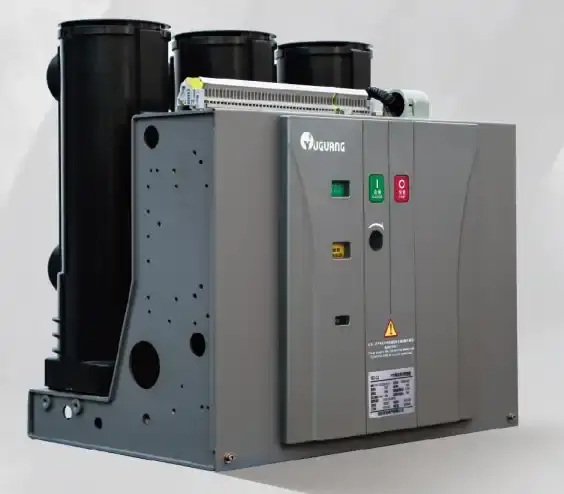
What Is a Load Switch and Why Is It Crucial in Electrical Distribution?
To handle power supply across complex networks, modern electricity distribution systems need precise control systems. A Load switch is an electrical device that makes and breaks circuits when it's working normally. It's different from circuit breakers, which mostly deal with problem currents, and contactors, which are better for low-voltage tasks that happen often.
Core Functions in Power Management
Switching equipment's main job is to separate parts of a distribution network so that they can be maintained or reconfigured without affecting other loads that are linked. Instead of responding to odd situations like safety devices do, these parts carry out planned tasks like moving loads between lines, removing transformers for inspection, or rearranging ring main units.
In substations run by utilities and industrial buildings, this feature makes sure that repair teams can work safely on equipment that has been turned off while keeping important processes running. The mechanical design of the device includes arc-extinguishing tanks and obvious break contacts that handle the energy released during switching operations. This keeps the contacts from breaking down, which could cause the device to fail.
Enhancing System Reliability and Safety
Power systems rely on equipment that works the same way over and over again, thousands of times. Load switches help make networks more reliable by having different ways of working. This is especially true for three-position setups that combine the closing, opening, and earthing functions into a single unit. This design gets rid of the chance of risky mistakes like shutting onto grounded circuits, which can damage equipment and put people in danger.
Steel mills, chemical plants, and data centers are all places that handle high-energy processes and need this level of dependability to avoid production loses that are many times the cost of the equipment. Using mechanical interlocks and protected construction keeps external pollution from affecting internal parts, which slows down wear and tear. This means that properly kept setups can last longer than 25 years.
Applications Across Industrial Sectors
Distribution networks that serve a wide range of businesses come with their own set of operating difficulties. Switching equipment in renewable energy systems has to be able to handle vibrations, high temperatures, and a lot of use as wind turbines and solar panels turn on and off. Devices that can handle electrical dust and toxic atmospheres are needed in mining.
Transit systems, airports, and other urban infrastructure need small, protected units that can work effectively in damp, cramped underground areas. When engineers understand these application-specific needs, they can come up with solutions that meet strict safety standards like IEC 62271 and IEEE C37 series while also meeting speed requirements and environmental resilience. These solutions must also be compatible with existing infrastructure.
Types of Load Switches and Their Applications
As switching technology has improved, different product designs have been made, each one best suited for a different range of voltages, frequencies, and weather conditions. To choose the right type, you have to match the technical specs to the needs of the system and your plans for future growth.
Mechanical vs. Solid-State Architectures
In traditional mechanical designs, physical contacts physically separate to stop the flow of electricity, and devices that are driven by springs allow them to open and close quickly. These strong devices can handle large amounts of current and offer obvious separation, which makes them ideal for situations where workers need to see the state of a circuit.
Depending on the voltage class, SF6 gas, vacuum bottles, or air-blast methods are used to put out the arc that forms during operation. Load switch devices, which are designed to make or break circuits under normal load conditions, complement these traditional mechanisms by providing controlled switching without relying on fault interruption.
Solid-state switches, on the other hand, use semiconductor devices like thyristors or IGBTs to control the flow of current without any moving parts. This lets them respond in microseconds and work with digital control systems. Solid-state versions are more reliable in high-frequency switching applications, but they can't handle overload situations well and need complex thermal management. This means they're best for specialized automation and soft-starting tasks rather than main distribution switching.
Voltage Classification and Environmental Adaptations
The main part of industry and power distribution is medium-voltage equipment that works with voltages between 6kV and 40.5kV. Devices with values of 12kV and 24kV act as major switching nodes in ring main units and secondary substation feeds. The 40.5kV class works with transmission systems, which means that insulation coordination and dielectric strength need to be improved. Environmental factors have a big impact on design decisions. For example, outdoor systems need housings that are resistant to UV light, sealed connections that keep wetness out, and finishes that don't rust.
Salt fog can get into substations near the coast, so they need clay or silicone protection on the outside. The FZN21-40.5 and YGFZN25B lines from Yuguang are great examples of scenario-specific engineering because they use aerospace-grade contact materials and IP67-rated casings that keep working even in harsh circumstances.These changes fix common problems like premature contact oxidation in damp places, insulation failure due to pollution buildup, and mechanical jamming from rust. These are problems that lead to sudden power outages and pricey emergency repairs.
Emerging Smart Technologies
As a result of digitalization, transport equipment is changing by adding sensors, communication links, and analytical tools. More and more modern switching circuits have current and voltage sensors built in. These sensors send real-time data to SCADA systems, which lets them plan repair based on how contacts wear and how often they are used. Internet of Things (IoT) communication lets you control and check on things from afar, so you don't have to go to places like wind farms and solar parks as often.
These smart features help modernize the power grid by making it easier to connect different energy sources and handle changing loads. When purchasing teams are thinking about long-term investments in infrastructure, they should look at the digital integration roadmaps that vendors offer to make sure that the platforms they choose will work with future automation strategies and won't need to be replaced too soon.
Key Selection Criteria When Choosing Load Switches for B2B Procurement
To match equipment specs to application needs, you have to look at a lot of technical and business factors that affect the total cost of ownership and the success of the operation.
Electrical Specifications and Performance Ratings
Electrical factors are the building blocks of any decision method. The rated voltage and the standard voltage of the system must match, with the highest voltage of the system during light-load situations taking into account. The current rate should be able to handle the highest steady load plus a buffer for brief conditions. The short-time withstand current (usually 20–25kA for 3 seconds) shows how well the device can stay closed during downstream problems until safety relays clear the situation. Breaking capacity, which is given in kiloamperes, tells us how much load current the gadget can safely stop. A lot of the time, procurement managers get Load switch units and circuit breakers mixed up.
A Load switch stops regular load currents (up to its rated value), while a circuit breaker stops problem currents that are many times higher. Setting the right breaking limit keeps equipment from breaking and makes sure it can be used safely. Changing the speed of the switch changes how much arc energy is lost; faster action lowers contact loss. Devices with spring-charged systems can close in less than 100 microseconds, which is very important for reducing the length of an arc and increasing the life of the contact.
Certifications and Compliance Standards
To work in a controlled industry, you have to follow known safety and efficiency standards. IEC 62271-103 covers switches with rated voltages above 1kV, and IEC 62271-102 covers disconnectors and earthing switches. These standards set the rules for measuring electrical strength, mechanical endurance, and temperature rise. In North America, markets use IEEE C37 series standards, which have similar needs but different ways of testing them. Products sold around the world must show that they follow both sets of rules.
UL listing for U.S. installations, CE marking for European markets, and GOST approval for Eurasian Economic Union countries are just a few of the industry-specific qualifications that are important. Yuguang keeps its ISO 9001:2015 quality management certification and standardizes its intellectual property management. This shows that it uses a methodical approach to design control and manufacturing consistency. These qualifications lower the risk of buying things by making sure that the equipment meets the requirements for bids on utility and building projects. Products that don't meet these requirements will be turned down, even if they are cheaper.
Total Cost Considerations and Vendor Capabilities
The buying price is only a small part of the total costs over the product's lifetime. Total ownership costs are affected by maintenance needs in a big way. Sealed, maintenance-free designs don't need to be inspected or oiled on a regular basis, which cuts down on both direct labor costs and system downtime. Devices that need specialized repair skills or unique extra parts make customers reliant on just a few providers, which can make the supply chain more vulnerable.
More than just looking at the specs of a vendor's products, you should also look at how well they handle technical help, how easy it is to make changes, and how quickly they respond to problems after the sale. Suppliers that offer full service packages that include installation advice, operational support, maintenance agreements, and a collection of extra parts can lower application risks and speed up project timelines. These problems can be solved by Yuguang's full-chain service model, which includes R&D advice, on-site installation help, and free equipment change plans for making old infrastructure work better.
This method works especially well for difficult projects that involve integrating many systems, as the knowledge of the provider has a direct effect on how well the project is commissioned and how reliable it is in operation. The company's 39 patents on high-voltage equipment show how technically sound it is, and its open MOQ policies—which let you buy anything from a single unit to a lot of them—allow for both small-scale test projects and large-scale rollouts.
Installation Best Practices and Common Challenges
The quality of the product and the way it is installed are both important for the successful usage of tools. It's important to follow organized installation methods because even high-end devices don't work well when they're not connected correctly.
Pre-Installation Planning and Compatibility Assessment
Before the actual installation starts, careful engineering studies keep mistakes that cost a lot of money from happening. Electrical compatibility includes more than just voltage and current rates. It also includes control voltage standards, secondary contact setups, and communication protocol compatibility with automation systems that are already in place. Mechanical compatibility includes mounting measurements, spacing needs, and the structure's load capacity.
This is especially important when replacing old equipment with new equipment that needs to fit within the current substation area. An environmental study shows that the site has unique problems, such as high atmospheric temperatures that need to be lowered, high elevations that lower dielectric strength, and earthquake activity that needs stronger structure support. When reviewing drawings, make sure that the busbar setups, wire entry points, and openings for repair workers are correct.
Working together with the settings for the safety circuit makes sure that swapping activities don't cause unnecessary trips. During this part, Yuguang's engineering team gives expert advice by going over customer requirements and suggesting changes to standard designs that will work with the specific conditions of the site. They can do this because they have a lot of experience in the power, metals, and mining industries.
Installation Execution and Testing Protocols
The physical installation follows the manufacturer's instructions for electrical gaps, busbar alignment standards, and torque specs for mechanical connections. High-resistance joints that cause warming can't happen if the contact areas are clean, flat, and handled with the right contact materials. For outdoor installs, make sure that the cable terminations are properly crimped and insulated, and pay extra attention to keeping out wetness. After mechanical assembly, thorough testing of each Load switch confirms the quality of the installation.
Insulation resistance tests, which usually give results higher than 1000 megohms at full voltage, show that the insulation is intact. Measurements of contact resistance (in the micro-ohm range) find bad links before they are powered on. Tests of the mechanical operation make sure that the movement is smooth in all places, that the switch works properly, and that the extra contacts are arranged correctly. Final insulation proof is done with high-potential testing at 80% of the factory test voltage. Functional testing, done with the help of commissioning engineers, makes sure that the control systems are working properly together.
These regular checks, which are written down in commissioning reports, set a standard for performance that can be used to plan future maintenance. Yuguang products have an integrated modular design that makes installation easier. Pre-assembled contact kits and factory-tested sections cut down on field assembly time and possible mistake sources, which is a big plus for projects with tight deadlines.
Addressing Common Operational Issues
Even when installation is done carefully, weather factors and usage trends can cause operating problems. Contact decline shows up as more working force, arcing when moving, or contacts that don't close all the way. Some of the root reasons are not doing enough upkeep, being exposed to contaminants, or using it beyond its rated limits. Setting up condition-based maintenance tools that keep an eye on things like working cycles, contact resistance trends, and mechanical force measures lets you fix problems before they happen.
Moisture getting into outdoor systems is still a problem because it causes condensation inside, which leads to rust and tracks across insulators. This risk is lowerened by sealed designs with IP67 casings and desiccant breathers. When working parts rust or dirt builds up in links, mechanical binding happens. These weaknesses can be fixed with corrosion-resistant metals and fully sealed systems.
When problems happen, quick expert support keeps downtime to a minimum. Yuguang's after-sales service includes installation help, maintenance agreements, extra parts supply, and free change plans. This lets customers fix problems fast, without having to wait for equipment to be down for long periods of time, which would mess up operations and production schedules.
Future Trends Impacting Load Switch Usage in Electrical Distribution
Digitalization, reducing carbon emissions, and old infrastructure are all putting pressure on the electricity distribution environment to change. Switching equipment has to change to meet these new needs while still being reliable in general.
Smart Grid Integration and Automation
Distributed production sources, like solar panels, battery storage, and combined heat and power units, add power at distribution levels, so modern grids need to be able to control power flow in both directions. For this change to happen, moving equipment that can work automatically and be organized by centralized control systems is needed, and a Load switch plays a key role in enabling automated bidirectional switching. Microprocessor-based controls let devices that use them carry out remote switching orders, send status and troubleshooting data, and work with equipment that regulates voltage to keep the power quality high.
Predictive maintenance methods can be used with condition tracking to plan repairs based on the real state of the equipment instead of set dates. These smart features lower running costs by making the most of repair schedules and increase equipment life by keeping it from being used in bad circumstances.
As connection grows, cybersecurity issues become more important—equipment must use safe communication methods that can't be accessed by people who aren't supposed to. When vendors add these features to their products, they market them as valuable assets in grid upgrade projects. This makes them appealing to utilities and big businesses that want to make their infrastructure more reliable.
Renewable Energy and Sustainability Requirements
As the world moves toward green energy sources, distribution equipment has to work in tough conditions. Wind and solar systems are often put in remote areas with difficult weather, such as places with high UV exposure, extreme temperatures, salty marine air, and dusty deserts. Even with these stresses, equipment has to work effectively while leaving as little of an impact on the world as possible.
As a result of worries about greenhouse gas emissions, vacuum and clean-air shielding are becoming more popular in design over SF6 gas. Compact forms use less material and have less of an effect on shipping. Longer service life, which is possible with strong materials and protected construction, cuts down on the number of replacements and the trash that comes with them. Yuguang's dedication to aerospace-grade precision cutting and materials that don't rust directly supports these environmental goals by creating machines that keep working well for 25 to 30 years.
This durability is especially important when figuring out the lifetime carbon footprint, since the effects of manufacturing wear off over long periods of time. These sustainability factors are being used more and more in procurement choices, especially for projects that need to do environmental effect studies or get green licenses.
Regulatory Evolution and Market Adaptation
Tougher rules are being put on electrical tools because of studies of safety incidents and improvements in technology. Testing methods are often updated by standards groups based on feedback from the field. For example, recent changes to the IEC 62271 series standards increased the requirements for mechanical endurance rating, loss-of-service continuity, and internal arc containment. In the same way, North American standards are changing. For example, IEEE C37 changes deal with earthquake licensing and hacking.
Manufacturers must keep up with changes to standards and make changes to their products' designs to stay in line with those changes. Market-specific needs also affect development goals. For example, European rules that stress the principles of a green economy support designs that make it easier to reuse and recycle parts. Even though Chinese GB standards are in line with IEC frameworks, they have their own testing requirements that must be met before they can be used in China.
Yuguang has a lot of different certificates, such as national inspection reports, ISO management system licenses, and High-Tech Enterprise awards. These show that they can handle these complicated legal environments. This range is very important for users who do business in more than one country or who are involved in foreign EPC projects that need multi-market compliance paperwork.
Conclusion
To distribute power effectively, you need to choose switching equipment whose technical specs match practical needs and the way the infrastructure will change in the future. Load switches are an important part of network management because they make circuit reconfiguration safe and easy without the cost and complexity of full fault-interrupt capability. Understanding the differences between types of devices, judging sellers on more than just price, and following strict installation procedures are all things that decide the success of a project.
As smart grid, automation, and green energy become more integrated into distribution systems, it becomes more important to work with makers who can show technical innovation, application knowledge, and quick support. When moving equipment is seen as strategic building assets instead of common parts, it shows that buying thought has matured and will bring long-term practical and financial benefits.
FAQ
What distinguishes a load switch from a circuit breaker in distribution systems?
Load switch devices run circuits under normal current conditions, turning on and off loads during planned operations, but they have little or no ability to stop problem currents. Circuit breakers can both switch currents and protect against faults. They can stop short-circuit currents that are many times their maximum current. Circuit breakers are used to protect distribution networks, and load switches allow for more operating freedom at a lower cost when fault stoppage is not needed.
Can load switches handle both AC and DC applications?
Because of basic changes in arc behavior, standard AC-rated devices can't be used in DC situations. DC arcs don't have natural current zeros that make extinction easier, so they need special contact materials and arc-chute designs. For systems that use both AC and DC, like electric power or green energy systems, you need equipment that is approved for DC outage. Talking to makers about application-specific needs keeps tools from breaking and keeps people safe.
How does sealed construction improve reliability in harsh environments?
Enclosures that are sealed keep out moisture, dust, and acidic gases that damage contacts and insulators. For temporary submersion, IP67-rated designs are important in flood-prone places or outdoor systems. No matter how wet it is outside, the dielectric performance stays the same when the internal atmosphere is controlled with dry air or inert gases. This security makes maintenance times longer and stops early failures that happen a lot with equipment that isn't protected in seaside, mining, or tropical settings.
Partner with Yuguang for Reliable Load Switch Solutions
Yuguang Electric solves the most important problems that procurement managers and chief engineers face, such as worries about how well tools will work together, the amount of repair that needs to be done, not knowing when things will be delivered, and adapting to different working situations. Our wide range of products, from 6kV to 40.5kV, is protected by 39 patents and made with accurate methods used in aircraft that guarantee long-term dependability.
The combined modular design makes installation easier, and our full-chain service model, which includes R&D advice, production, installation help, and quick after-sales support, gets rid of the problems that come with managing projects with more than one provider. Our team can help you with technical questions and variable minimum order quantities (MOQs) for both single units and large orders.
We can send standard units within 7–15 days or unique solutions made for tough industrial settings. Get in touch with load switch sellers who have experience and who understand the pressures of your business. Email ygvcb@hotmail.com to talk about your unique needs and find out how our tried-and-true methods can improve the efficiency of your distribution system while keeping costs low over its lifetime. Go to ygvcb.com right now to see full product details and ask for a personalized quote.
References
1. International Electrotechnical Commission. "IEC 62271-103: High-Voltage Switchgear and Controlgear – Part 103: Switches for Rated Voltages Above 1 kV up to and Including 52 kV." Geneva: IEC Publications, 2021.
2. IEEE Standards Association. "IEEE C37.30: IEEE Standard Requirements for High-Voltage Switches." New York: Institute of Electrical and Electronics Engineers, 2019.
3. Kapila, R. and Singh, M. "Modern Power System Protection: Analysis and Design Considerations for Switching Equipment in Distribution Networks." Journal of Electrical Engineering & Technology, Vol. 16, No. 4, 2021, pp. 1847-1862.
4. Greenwood, A. "Electrical Transients in Power Systems: Theory and Applications to Load Switching Operations." 3rd Edition. Hoboken: Wiley-Interscience, 2020.
5. European Copper Institute. "Medium Voltage Switchgear: A Guide to Best Practices in Selection and Application for Industrial Distribution Systems." Brussels: Leonardo Energy Initiative, 2022.
6. National Electric Manufacturers Association. "NEMA SG-5: Power Switchgear Assemblies – Standards Publication for Load Interrupter Switches." Rosslyn: NEMA Technical Standards, 2020.

Send Inquiry
You may like
