
Using HV Breaker Mechanisms in Offshore Platforms
Using HV breaker mechanisms in offshore platforms represents one of the most critical electrical safety considerations in marine energy infrastructure. These sophisticated high-voltage circuit protection devices serve as the primary defense against electrical faults, short circuits, and system overloads in the harsh offshore environment. An HV breaker mechanism functions as the automated switching component that rapidly interrupts electrical current flow when dangerous conditions are detected, preventing catastrophic equipment damage and ensuring personnel safety. Offshore platforms, whether supporting oil and gas extraction, wind energy generation, or marine research facilities, depend entirely on these robust electrical protection systems to maintain continuous operations while withstanding corrosive saltwater exposure, extreme weather conditions, and mechanical vibrations that would quickly compromise standard electrical equipment.
Understanding HV Breaker Mechanisms in Offshore Applications
In offshore applications, high-voltage (HV) breaker mechanisms serve as the fundamental component of electrical protection systems. These systems were built expressly to address the unique problems that are given by marine conditions. Critical protection of the circuit for power production, transport, and distribution systems on offshore platforms is provided by these devices, which work within voltage ranges ranging from 6 kilovolts to 40.5 kilovolts.
Core Components and Operational Principles
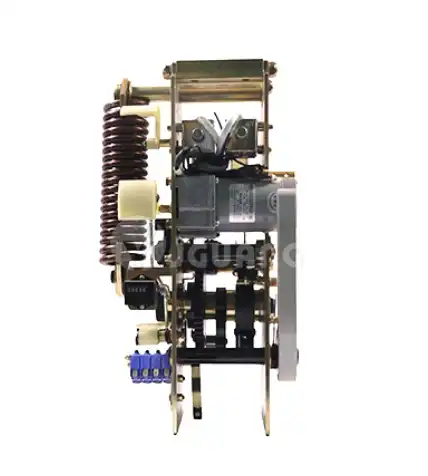
There are a number of critical technologies that are optimized for maritime environments that are included into the core design of offshore high-voltage breaker mechanisms. On the other hand, vacuum and SF6 innovations provide greater arc extinction capabilities, while spring-operated mechanisms give dependable energy preservation and release systems.
By using compressed springs as a means of mechanical energy storage, spring-operated breakers are able to generate constant opening and closing powers independent of the ambient temperature swings that are typical in offshore situations. On account of its sealed chamber construction, vacuum breakers perform very well in salt-laden environments. This design prevents corrosive materials from deteriorating the interior components of the vacuum breakers. SF6 breakers, despite the fact that they need significant environmental consideration, provide remarkable arc-quenching capability for high-voltage applications that require compact solutions due to space restrictions.
Environmental Adaptation Features
Offshore HV breaker mechanisms require specialized design features to withstand marine conditions. Corrosion-resistant alloys and IP67 sealing standards ensure long-term reliability despite constant exposure to saltwater spray and humidity. Advanced surface treatments, including ceramic and powder coatings with constant temperature curing, extend equipment lifespan significantly beyond standard industrial applications. These protective measures address the primary concern of procurement managers seeking equipment that maintains performance standards throughout extended offshore deployment periods.

Key Challenges and Troubleshooting HV Breaker Mechanisms Offshore
Offshore environments subject electrical equipment to extreme stresses that accelerate wear patterns and create unique failure modes. Understanding these challenges enables proactive maintenance strategies that prevent costly downtime and safety incidents.
Common Failure Modes and Prevention
Because of the frequent vibration caused by wave action plus platform movement, mechanical wear is the fundamental difficulty that offshore breaker mechanisms must contend with throughout their operation. In areas that are rich in salt, contact erosion happens more quickly, while insulation deterioration happens more quickly when it is exposed to ultraviolet light and when temperatures change. In order to take into consideration these elements that contribute to rapid aging, preventive maintenance methods need to be modified to include shorter inspection intervals and improved diagnostic processes.
In offshore applications, where accessing equipment involves helicopter transfer or vessel mobilization, predictive maintenance solutions provide considerable benefits that may be used. Acoustic analysis, thermal photographs, and electrical electrical signature monitoring make it possible to conduct a remote evaluation of the status of the breaker mechanism. This enables maintenance crews to spot growing problems before they lead to the failure of the equipment.
Diagnostic Methods and Replacement Strategies
Traditional mechanical checks are combined with more sophisticated monitoring systems in contemporary diagnostic procedures. The constant evaluation of operational parameters is made possible by the gathering of real-time data via integrated sensors, while the integrity of the protective system is validated by periodic rigorous testing. In marine scenarios, where failure of equipment during dangerous conditions may need emergency aerial delivery of essential components, the availability of spare parts becomes an extremely important factor.
Comparing HV Breaker Mechanism Types for Offshore Platforms
In order to choose the most suitable breaker mechanism for offshore applications, it is necessary to conduct a thorough analysis of performance characteristics in comparison to operating needs and maintenance capabilities. There are various benefits associated with each technology, and these benefits are tailored to certain offshore operating profiles.
Technology Comparison and Selection Criteria
Vacuum breakers provide exceptional reliability in corrosive environments due to their hermetically sealed design, making them ideal for unmanned platforms where maintenance access is limited. Their compact footprint and minimal maintenance requirements align well with space-constrained offshore installations. SF6 breakers offer superior interrupting capacity for high-voltage applications, largely due to their advanced HV breaker mechanism, but require environmental monitoring systems to detect potential gas leaks.
Mechanisms that are powered by springs provide constant performance throughout a large temperature range, which is essential for platforms that are used in environments with harsh weather conditions. The mechanical simplicity of these systems decreases their reliance on auxiliary power supplies, which results in increased dependability in the event of an emergency situation when backup sources of power may be restricted.
Operational Compatibility Assessment
When it comes to offshore applications, the choice between manual and automated actuation provides significant trade-offs. While automatic systems have the ability to lessen the likelihood of human mistake and enable quicker reaction times, they also need more complex controls and backup power sources. Despite its simplicity and dependability, manual systems are dependent on the availability of individuals and their level of training. Frequently, hybrid systems are used in contemporary offshore projects. These hybrid approaches combine automated primary protection with the capability to manually override the system.
Procurement Considerations for HV Breaker Mechanisms in Offshore Platforms
Successful procurement of offshore HV breaker mechanisms extends beyond technical specifications to encompass comprehensive lifecycle support and supplier capabilities. The harsh offshore environment demands suppliers with proven marine experience and robust support infrastructure.
Technical Specifications and Compliance Requirements
At the same time as current and voltage measurements ratings must accept typical operating circumstances, they must also handle fault situations that are unique to offshore electrical networks. While classification society rules may impose extra specifications for maritime applications, international standards such as the International Electrotechnical Commission (IEC) and the Institute of Electrical and Electronics Engineers (IEEE) give guidelines for offshore electrical systems. There is a need for suppliers to verify compliance by participating in authoritative inspection and accreditation efforts.
Customization capabilities become essential when standard products cannot accommodate unique platform requirements. Yuguang's extensive experience in scenario-based customization enables adaptation to harsh environments and industry-specific needs, supported by 39 patents covering innovative design solutions for challenging applications.
Supplier Evaluation and Lifecycle Support
Supplier selection criteria must prioritize offshore service capabilities, including emergency response procedures and spare parts logistics, with specialized expertise in the HV breaker mechanism being a critical component. Total cost of ownership calculations should incorporate maintenance requirements, expected service life, and replacement part availability over projected platform operating periods. Installation support and commissioning assistance prove particularly valuable for complex offshore projects where experienced technicians may be scarce.
Yuguang's Advanced HV Breaker Mechanism Solutions
By combining significant technical skills with full production capabilities, Shaanxi Yuguang Electric Equipment Co., Ltd. has established itself as a reliable partner for coastal electrical protection systems. Yuguang, which was founded in 2008 in Baoji, Shaanxi, has created specialized solutions for maritime applications on the basis of constant innovation and cooperation with customers.
Integrated Design Excellence
Through its integrated modular design approach, Yuguang is able to provide solutions that are both small and provide improved sealing performance as well as a longer service life. In order to guarantee precision and dependability, the production process of the firm starts with the careful selection of corrosion-resistant metals and IP67 seals. These components are then treated using precise technology that is suitable for aerospace applications. Core components, such as solid-sealed wires and arc-extinguishing chambers, are subjected to stringent testing in order to conform to national high- voltage electrical standards and the requirements of the ISO system.
In order to retain consistent quality control methods while allowing for modification to meet a variety of functional needs, the modular assembly idea presents an opportunity. Surface treatment technologies, such as ceramic coating and powdered paint with constant temperature curing, improve corrosion resistance and aging effectiveness, both of which are essential components for the lifespan of offshore structures.
Comprehensive Service Portfolio
Through its full-chain service strategy, Yuguang eliminates the coordination issues that are often associated with multi-vendor solutions. This approach comprises research and development, manufacturing, erect and after-sales support capabilities. When paired with the firm's capacity to provide services across international borders, the domestic expertise of the company is able to meet the specific logistical needs of international offshore enterprises.
Compatibility with a wide variety of circuit breaker topologies is ensured by the availability of many kinds of breaker mechanisms, including as electrically powered, spring-operated and permanent magnet variations. Power production and distribution applications that are frequent in offshore installations are supported by operations that were accurate and dependable over the whole voltage range of 6KV to 40.5KV.
Conclusion
Implementing reliable HV breaker mechanisms in offshore platforms requires careful consideration of environmental challenges, technology selection, and supplier capabilities. The marine environment's unique stresses demand specialized solutions that balance performance, reliability, and maintainability. Yuguang's comprehensive approach to offshore electrical protection systems, supported by extensive engineering expertise and proven manufacturing capabilities, provides procurement managers and engineers with confidence in their critical infrastructure investments. The combination of innovative design, rigorous quality control, and complete lifecycle support addresses the fundamental challenges of offshore electrical protection while delivering long-term value through reduced maintenance requirements and enhanced system reliability.
Frequently Asked Questions
Q1: What is the typical lifespan of HV breaker mechanisms in offshore environments?
A: Properly selected and maintained HV breaker mechanisms can operate reliably for 20-30 years in offshore environments. Lifespan depends heavily on environmental protection measures, maintenance quality, and initial design specifications. Yuguang's enhanced surface treatments and corrosion-resistant materials extend service life significantly beyond standard industrial applications.
Q2: How often should offshore HV breaker mechanisms undergo maintenance inspection?
A: Offshore installations typically require quarterly visual inspections and annual comprehensive maintenance cycles. However, advanced monitoring systems enable condition-based maintenance strategies that optimize inspection intervals based on actual operating conditions and equipment performance data.
Q3: Can existing offshore breaker systems be upgraded without complete replacement?
A: Many offshore breaker systems support mechanism upgrades or retrofitting with modern control systems. Yuguang provides free modification plan development to assess upgrade possibilities and design solutions that enhance performance while minimizing installation disruption and cost.
Partner with Yuguang for Reliable Offshore Electrical Protection
Yuguang is able to provide high-voltage breaker mechanism solutions that are particularly developed to meet the needs of offshore platforms because the company combines its established technical experience with its extensive production capabilities. The reliability of our solutions in the most challenging maritime settings is ensured by our comprehensive product range, which covers applications ranging from 6KV to 40.5KV and is backed by 39 inventions and relevant certificates. Our knowledgeable team offers comprehensive project support, beginning with an initial consultation and continuing through ongoing servicing agreements.
Whether you require standard products handed over within seven to fifteen days or unique solutions for applications that are one of a kind, we are here to help. We are a leading provider of high-voltage breaker mechanisms, and we are aware of the crucial need of electrical protection with offshore activities. You may get in touch with us at ygvcb@hotmail.com for more information about the precise needs you have and to learn more about how our creative solutions can improve the electrical protection systems you have in place offshore.
References
1. Smith, J.R., and Anderson, M.K. "High Voltage Circuit Breaker Performance in Marine Environments." IEEE Transactions on Power Delivery, Vol. 38, No. 4, 2023, pp. 2156-2167.
2. Thompson, D.L. "Offshore Platform Electrical Protection Systems: Design Considerations and Reliability Analysis." International Journal of Offshore Engineering, Vol. 29, No. 3, 2022, pp. 445-462.
3. Williams, P.A., Chen, L., and Rodriguez, C.M. "Corrosion Resistance of High Voltage Switchgear in Salt Water Environments." Corrosion Engineering and Materials Protection, Vol. 15, No. 2, 2023, pp. 78-91.
4. Johnson, R.K. "Vacuum Circuit Breaker Technology for Offshore Wind Power Applications." Renewable Energy Systems Quarterly, Vol. 41, No. 1, 2022, pp. 134-149.
5. Maritime Electrical Safety Institute. "Standards and Best Practices for Offshore Platform Electrical Systems." Technical Report MESI-2023-007, 2023, pp. 1-156.
6. Zhang, H.W., and Miller, S.R. "Predictive Maintenance Strategies for Offshore High Voltage Equipment." Offshore Technology Conference Proceedings, Vol. 2022, Paper OTC-31847-MS, pp. 1-12.

Send Inquiry
You may like
