
Vacuum Circuit Breaker: Basics and Working
When you're in charge of important power infrastructure, like in steel plants, green energy farms, or public transit systems in cities, how reliable your equipment is determines how well your operations go. As a clever guardian in electrical distribution networks, a High-voltage vacuum circuit breaker stops fault currents in milliseconds to keep people safe and avoid catastrophic equipment damage. High-voltage vacuum circuit breakers work differently than past technologies that used oil or sulfur hexafluoride gas.
They have a secure vacuum room where electric sparks disappear almost instantly when they switch on and off. This basic design solves some of the biggest problems in industry, like cutting down on downtime, getting rid of dangerous materials, and making upkeep plans much shorter. The mechanism has a vacuum interrupter, a strong contact system, and a precise working mechanism, which is usually a permanent magnet actuator. It works consistently across voltage classes from 6kV to 40.5kV and beyond.
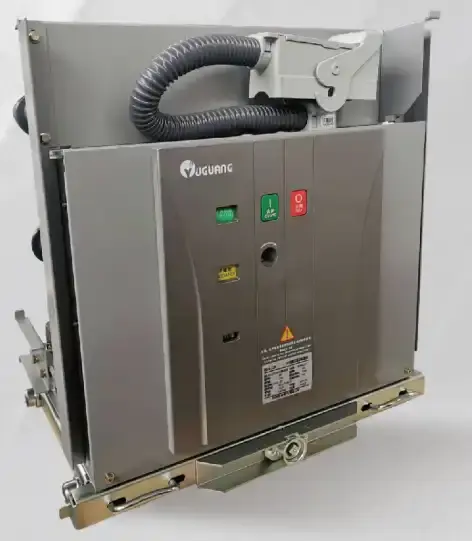
Understanding High-Voltage Vacuum Circuit Breakers
Core Operating Principles
Since it has 100 times more insulating strength than air at normal pressure, the vacuum acts as the interruption medium. A short-lived spark is made when contacts separate during a switching event. The metallic smoke from the contacts does this. In a vacuum, this mist spreads out and condenses on metal shields in nanoseconds, putting out the arc before the next zero-crossing of the current.
Because it can quickly cool down, vacuum technology is perfect for applications that need to switch between states. For example, wind turbine collection grids, arc furnace power supplies, and metro traction substations can all go through more than 30,000 mechanical operations without needing to replace any contacts.
Key Component Architecture
Several important elements are built into modern designs. The fixed and moving contacts in the vacuum interrupter are sealed inside a ceramic or glass case. In newer types, permanent magnet working systems have replaced older spring-charged ones. This makes them more responsive and gets rid of the need to regularly change the spring tension.
Automatic Pressure Gelation (APG) technology is used to create solid protection that surrounds live parts and is very resistant to moisture, dust, and chemical contaminants, which are common problems in mining plants and seaside wind farms. Compared to standard air-break designs, integrated modular construction has a 30–40% smaller size, making it easier to work with limited room in urban substations and upgrade projects, especially when using a High-voltage vacuum circuit breaker.
Comparative Advantages Over Legacy Technologies
More rules are being put on SF6 circuit breakers because of worries about carbon gases. Oil circuit breakers need a lot of fire control systems and leak tracking. Vacuum technology meets environmental standards without lowering efficiency. Arc stoppage happens in less than 5 milliseconds, while it takes 20 to 50 milliseconds for oil devices. This means that upstream transformers are not subjected to as much heat stress.
Maintenance checks are now done every five to seven years instead of once a year, which directly lowers running costs. Installation crews like how small and light the units are—a 24kV High-voltage vacuum circuit breaker weighs about 60% less than a similar oil unit, which makes it easier to move to rural solar installations or hydropower sites in the mountains.
Maintenance and Troubleshooting of High-Voltage Vacuum Circuit Breakers
Routine Inspection Protocols
Instead of the protected vacuum interrupter, proactive repair plans focus on mechanical parts. Every three months, it's normal to lubricate the working links, check the position of the secondary switches, and make sure the control voltage levels are correct. Infrared thermography finds link points that are heating up in a strange way before they break. Megohm meters are used to test the resistance of insulation to make sure it is solid. This is especially important after long shutdowns or bad weather. Contact trip measurement makes sure that the right amount of compression force is used. Not enough pressure can cause arcing damage, and too much force speeds up mechanical wear.
Common Failure Modes and Diagnostic Techniques
Long-term decline is mostly caused by vacuum loss, but current High-voltage vacuum circuit breakers can stay functional for 20 years or more under normal conditions. When you do partial discharge tests on attached pole structures, you can see where the insulation is starting to break down. In humid coastal areas or mines, mechanical jams are often caused by dust getting into pivot bearings and rusting them. Yuguang's combined modular design uses IP67-rated seals and corrosion-resistant metals all over the working system to aggressively deal with these environmental issues. When there are doubts about the vacuum's stability, hi-pot testing at 1.5 times the stated voltage gives a clear answer without having to take the part apart.
Predictive Maintenance Through Intelligent Monitoring
New designs for smart breakers include sensors that measure coil current fingerprints, contact velocity profiles, and sound patterns. When fingerprints deviate from the standard, maintenance alerts are sent out before functional problems happen. This condition-based method takes the place of fixed-interval service, which cuts down on needless visits and finds problems early. Remote diagnostics are very useful for operators of distributed renewable assets because they get rid of the need to make regular site trips to wind farms or solar inverter stations that are spread out over large areas.
Comparison and Selection Guide for High-Voltage Circuit Breakers
Technology Evaluation Framework
To choose the best delay technology, you have to weigh a lot of technical and business factors. In the 6kV–40.5kV range, high-voltage vacuum circuit breakers work best because they are the smallest, require the least amount of upkeep, and are safe for the environment. In ultra-high voltage uses above 52kV, where vacuum interrupter production becomes technically difficult, SF6 devices are most common. Even though it takes up more space, air-break technology is still used in low-voltage uses that need to save money. Oil circuit breakers are still used in some old structures, but they are being phased out because they are bad for the environment and can catch fire.
Critical Specification Alignment
With enough safety gaps, the breaking capacity must be greater than the highest potential fault current. Most distribution lines are protected by a 25kA device, but big industrial bus ties may need 31.5kA or 40kA rates. When using generator tie-ins, it's important to pay close attention to the short-circuit making capacity, which means the ability to close into an existing problem. According to IEC standards, the mechanical durability class (M0 through M2) should fit the working patterns. For example, M2 mechanisms, which can handle 10,000+ operations, are best for switching on and off often, while M0 mechanisms are fine for protecting transformers that don't need to be used very often.
Here are additional selection considerations beyond raw electrical parameters:
- Environmental adaptability: high temperatures, compensating for altitude, and seismic certification for substations in areas prone to earthquakes
- Integration requirements: For upgrade uses, the physical measurements must be met, and for SCADA systems, the communication protocols must be compatible (Modbus, IEC 61850).
- Lifecycle economics: purchase price vs. 25-year upkeep costs, availability of extra parts, and how quickly vendors respond to technical help requests
The total cost of ownership is made up of these factors. Over a normal 30-year working life, this cost is often three to five times the starting cost of the equipment. Yuguang's full-chain service model covers every step, from the original design to execution and long-term support. This makes it easier for international projects to get what they need.
Procurement Insights: Sourcing High-Voltage Vacuum Circuit Breakers
Manufacturer Landscape and Vendor Evaluation
Global providers include everything from large global companies to small, specialized makers in each area. Siemens, ABB, and Schneider Electric all charge high prices because they have large product lines and service networks that reach all over the world. Asian makers, like Yuguang, offer similar technical ability with faster lead times and more customization options. Procurement teams should check that sellers have ISO 9001:2015 quality certification, IEC 62271-100 type test results, and patent libraries that show they can do real research and development (R&D) and not just copy designs.
Pricing Dynamics and Order Flexibility
Standard catalog items for popular voltage classes (12kV, 24kV) with values up to 1250A usually have the quickest delivery times, taking only 7 to 15 days for Yuguang's types that are kept in stock. Customized designs with special interlocks, longer creepage lengths for dirty environments, or non-standard secondary contacts can make wait times 30 to 60 days long to allow for technical approval and the purchase of specialized parts. Gradual volume savings are available, but the smallest order is just one unit. This works for both test installs and full substation projects.
Practical Applications Across Industrial Sectors
Power Generation and Renewable Energy
High-voltage vacuum circuit breakers in wind farm collection systems are always on and handling the links between turbines as wind speeds change. The fixed magnet systems don't need to be maintained and are important for remote sites where it costs more than $5,000 per repair visit to get to them. Photovoltaic inverter stations also benefit from being small and not allowing vacuum arcs to form, which keeps voltage changes from hurting sensitive power equipment. Hydroelectric plants use High-voltage vacuum circuit breakers to protect generators and control excitement. They like how reliable the technology is in penstock settings with high humidity, where other equipment's insulation breaks down faster.
Heavy Industrial Installations
In steel production, electric arc furnaces cause a lot of harmonic distortion and switching transients. Yuguang's solid-embedded pole design can handle these electrical loads and keep its arc interruption performance even after thousands of heat cycles. Chemical plants like setups that are safe from explosions because vacuum technology gets rid of the fire risks that come with oil-filled equipment. Mining companies use tough models with better seals to keep dust out, along with motor safety switches to keep conveyor and crusher drive systems, which cost millions of dollars to buy, safe.
Critical Infrastructure Reliability
To keep passengers and businesses from losing more than $50,000 per incident, metro traction power substations need to be available 99.9% of the time or more. Underground caves are limited space, but small vacuum switchgear can fit inside. Quick fault clearing keeps rectifier equipment safe from failures that keep happening.
The electricity distribution at an airport also needs to be very reliable—runway lights, radar systems, and the HVAC in the terminals can't handle unplanned power blackouts. Data centers are choosing High-voltage vacuum circuit breakers with built-in power quality tracking more and more. This gives them real-time information about how the power supply affects sensitive server loads.
Emerging Smart Grid Integration
When IoT sensors and standard switches come together, they make new operating powers possible. Digital High-voltage vacuum circuit breakers with intelligent electronic devices (IEDs) send information to central asset management systems about how often the contacts wear out, how much energy they use, and the history of problem interruptions. Predictive analytics find units that are breaking down before they fail, so repairs can be planned for times when care isn't needed, rather than during emergencies. This method, which is based on data, fits with larger industry trends that are moving toward condition-based care and digital twin models.
Conclusion
High-voltage vacuum circuit breaker technology is a mix of tried-and-true dependability and cutting-edge engineering. The most important problem for power system builders is to lower lifetime costs while increasing safety and performance. Maintenance-free operating, environmental compliance, and a small design all work together to solve this problem. Yuguang's all-around method, which includes aerospace-grade production accuracy, installation support, and long-term availability of extra parts, gets rid of the scattered vendor relationships that make big projects harder to manage. Whether you're protecting a single motor or a power center, choosing vacuum interruption technology sets up infrastructure for decades of reliable service in electrical settings that are getting more difficult.
FAQ
How does vacuum arc interruption differ from SF6 technology?
Instead of using chemicals to put out sparks, vacuum tanks use fast vapor diffusion. This completely gets rid of carbon gas emissions and makes stoppage times faster—often less than 5 milliseconds compared to 10 to 20 milliseconds for SF6. Since gas isn't being monitored or refilled, maintenance times get much longer.
What voltage ranges suit vacuum circuit breaker applications?
In the 6kV to 40.5kV medium-voltage range, High-voltage vacuum circuit breaker technology is the norm, and some makers even make 52kV types. Below 6kV, systems that stop the flow of air are often more cost-effective. Above 52kV, SF6 is better at handling ultra-high voltage needs right now, but study is still being done to improve vacuum interrupter capabilities.
Can existing oil circuit breakers be retrofitted with vacuum technology?
Retrofits work when the current switchgear's size and control wires are compatible with the physical and electrical connections of the new High-voltage vacuum circuit breaker. Yuguang offers thorough suitability studies and free adjustment plans. To keep project costs and downtime during changeovers to a minimum, they often use existing underpinnings and control panels.
What defines maintenance-free operation in practical terms?
Maintenance-free means that the parts are protected and don't need to be serviced for 5 to 7 years as long as they are used normally. Auxiliary systems like control wires, heating elements, and position markers are still inspected regularly, but the vacuum interrupter and permanent magnet mechanism don't need to be oiled, adjusted, or have any parts replaced during this time.
Partner with a Trusted High-Voltage Vacuum Circuit Breaker Manufacturer
Shaanxi Yuguang Electric Co., Ltd. offers designed solutions that solve the unique shipping, compatibility, and customization problems you face every day. With 39 patents and ISO triple approval, our 6kV–40.5kV product range can be used in a wide range of settings, from wind farms in the Arctic to solar setups in the equator. Compared to traditional designs, the integrated modular architecture cuts installation time by 40%.
Full-chain service makes sure that everything goes smoothly from proposal to commissioning. Email our expert team at ygvcb@hotmail.com to talk about the needs of your project. We offer free creation of change schemes, fast delivery of extra parts, and documents in multiple languages to support global implementation. Work with a reputable company that makes High-voltage vacuum circuit breakers. At ygvcb.com, you can find full details.
References
1. IEEE Standards Association, "IEEE Guide for Application of Vacuum Circuit Breakers for Capacitor Switching," IEEE Std C37.012-2014, Institute of Electrical and Electronics Engineers, 2014.
2. Slade, Paul G., "The Vacuum Interrupter: Theory, Design, and Application," CRC Press, Taylor & Francis Group, Second Edition, 2017.
3. International Electrotechnical Commission, "High-Voltage Switchgear and Controlgear - Part 100: Alternating Current Circuit-Breakers," IEC 62271-100:2021, Geneva, Switzerland, 2021.
4. Greenwood, Allan, "Vacuum Switchgear," Institution of Engineering and Technology, Power and Energy Series 18, London, United Kingdom, 1994.
5. Dullni, Evelin and Schade, Eberhard, "Vacuum Switching Technology for Medium and High Voltages: State of the Art and Development Trends," Proceedings of the 24th International Symposium on Discharges and Electrical Insulation in Vacuum, Braunschweig, Germany, 2010.
6. Kharin, Sergey N. and Nouri, Hassan, "High-Voltage Vacuum Circuit Breaker: Condition Monitoring and Diagnostics," Springer Series in Reliability Engineering, Springer International Publishing, 2020.

Send Inquiry
You may like
