
Vacuum Contactor vs Traditional Contactor Which Is Better
When switching medium-voltage loads frequently, such as motors, pumps, fans, and capacitor banks, a vacuum contactor is typically preferable. It puts out the arc inside a sealed vacuum interrupter, which limits the arc's reach and makes it easier to maintain parts that control the arc. If you want to save money right away, a traditional contactor like an air-break or low-voltage AC contactor is still a good choice for small, low-voltage, or lightly switched loads. The right answer depends on the service level, duty cycle, and voltage class. I'll compare the two types below and show how Yuguang helps buyers find equipment that works well in real-world situations.
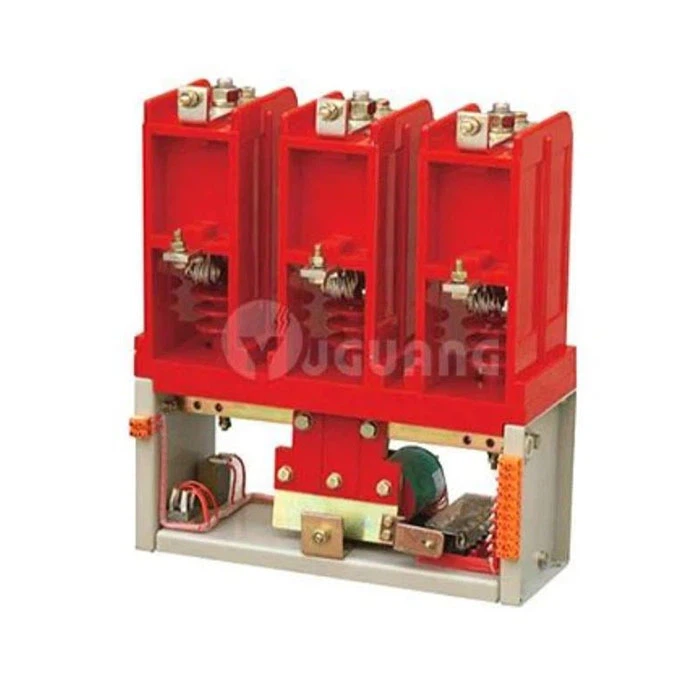
What Is a Vacuum Contactor and How Does It Work?
Main Parts of a Vacuum Contactor
For frequent load control on three-phase AC circuits, a vacuum contactor is a switching device. The vacuum interrupter is its main part. It's a sealed bottle that has one fixed contact and one moving contact inside it. The working part, closing coil, springs, extra contacts, insulation, and interlock circuits are all arranged around it. Clay or cast resin are often used for insulation. Most of the time, engineers pair the contactor with high-voltage fuses to make an F-C circuit. Short circuits are fixed by the fuses, and normal starts and stops are taken care of by the contactor. The Yuguang JCZ series makes sense in this way and is designed for indoor switchgear that needs to switch a lot of times.
How the Arc Is Extinguished
The steps for running the program are easy. The coil is turned on by a control signal, the contacts are closed by the mechanism, and current flows. They separate and an arc forms when the signal goes out. The arc stops when there is no more current in the vacuum bottle because there is no air to keep it going. A contactor with an air break works in a different way. Weatherproofing, arc chutes, and magnetic blowout parts are used to stretch and cool the arc. Every time those parts are used, they are directly exposed to the arc, so they need to be checked often.
Vacuum Contactor vs Vacuum Circuit Breaker
People buy these two devices together, but they're not the same. A vacuum circuit breaker cuts off high fault currents and separates feeders that aren't working right. When under load, a vacuum contactor performs many common tasks. The Yuguang JCZ 12 kV is made for AC-3 and AC-4 duty, which means it switches on and off a lot, not just once in a while. If you give fault duty to a contactor, you could damage equipment or make it unsafe to use. Always add short-circuit protection upstream, like fuses or a breaker with a protection relay, and make sure everything works together before you finish the design.
Vacuum Contactor vs Traditional Contactor: Key Performance Differences
Voltage Class, Ratings, and Insulation
Most of the time, voltage class comes first when comparing. IEC says that low-voltage contactors can handle circuits with up to 1,000 V AC. Medium-voltage motors usually run at 4.16 kV, 6.6 kV, or 11 kV, and they need contactors that can handle the same amount of making and breaking voltage. The JCZ 12 kV product data says that it can work with either 50 Hz or 60 Hz power and a rated voltage range of 7.2 kV to 12 kV. It can also handle rated currents of 160 A to 630 A. As a whole, you can look at the rated voltage, current, short-time withstand current, control voltage, and utilization category. If one value isn't met, a low price doesn't mean much.
Switching Duty and Endurance
The main difference between the two is endurance. The JCZ 12 kV product data says that it can handle loads that start and stop many times a day. Its mechanical life is 300,000 to 1,000,000 operations. Air-break contactors can also be used often, but their contacts and arc chutes get worn down by the arc and need to be checked on a regular basis. Also, switching transients are important. Vacuum devices can cut off current and cause too much voltage, so the material of the contact is important. The JCZ 12 kV uses contact materials that have a low chopping current (less than 0.5 A), which keeps the motor windings from being overworked.
Advantages and Limits of Vacuum Contactors
This is a fair point of view. Vacuum contactors are good for controlling medium-voltage motors, using them often, and making switchgear smaller. The sealed bottle lowers the risk of arc exposure and the maintenance needed on parts that control arcs. But the trade-offs are real. The price to buy is higher, testing needs special tools, spare parts are model-specific, and protection against upstream short-circuits is needed. For low-voltage, small, or lightly switched loads, traditional contactors are the best choice at first glance. Also, many maintenance teams already know how to use them well. During a sealed interruption, teams still check the mechanisms, external insulation, and terminals. This means that not all service work is done.
Which Is Better for Different Industrial Applications?
Motors, Pumps, Fans, and Conveyors
A vacuum contactor works well with medium-voltage motors that start and stop. Inrush current is made by many things, like pumps, compressors, fans, conveyors, crushers, and hoists. For HVAC plants and pumps, check the inrush current, the temperature, the humidity, the remote control, and the coordination of the protection. In mining, you need to think about dust, vibration, and enclosures. This JCZ 7.2 kV is used in underground mine conveyors and metallurgical rolling mills. The arc stays away from dusty or volatile air in these places because the vacuum chamber is sealed. When compared to open air-break switching, that sealing lowers the risk of an explosion.
Capacitor Banks, Furnaces, and Railway Systems
A contactor can't handle all loads as well as a motor can. Capacitor banks produce a lot of current at start-up and a quick voltage recovery, so the contactor needs to have the right rating and be built so that it doesn't reset easily. Electric arc furnace supplies switch is often under a lot of stress, with noise and vibration from the electricity nearby. Thermal cycling and harmonics are added by railroad and traction systems. Ask for ratings that are specific to the application in each case, not a catalog default. The JCZ 7.2 kV is used to switch capacitors in power factor correction and to power furnaces. Before giving you a quote, our engineers can look at your duty cycle.
When a Traditional Contactor Is Enough
Vacuum contactor is not always the best solution. Most of the time, a standard AC contactor is enough to power low-voltage commercial and light industrial loads like small HVAC units, lighting banks, and small motors. It costs less at first, it's easy to find parts, and technicians know how to use the equipment. Follow this easy rule. For medium-voltage, frequent, or arc-sensitive duty, a vacuum contactor is best. If the duty is low voltage, small, or lightly switched, pick a traditional contactor. If you need to stop a short circuit, protect a feeder, or separate two circuits, choose a vacuum circuit breaker.
How to Choose a Vacuum Contactor and Compare Costs
A Five-Step Selection Method
Start with the plan. Keep track of the voltage, frequency, grounding, fault level, height, and conditions at the site. Next, describe the load by its full-load current, starting current, duty cycle, switching frequency, and the amount of growth that is planned. Next, check the upstream protection device, the short-time withstand current, and the making and breaking capacity. Check the interlocks, mounting dimensions, terminal layout, coil voltage, and the fit of the switchgear. Lastly, ask about service, such as how to replace the interrupter, spare coils, extra contacts, test procedures, and drawings. For U.S. projects, check early on if there are any UL 347 or NEMA ICS 3 requirements, as owners and inspectors may ask for them.
Total Cost, Not Unit Price
There's more to a fair price comparison than just the quote line. Voltage class, current, operating mechanism, control voltage, certification, enclosure, customization, and order quantity all affect the price of a vacuum contactor. Early research is aided by searches like "medium-voltage Vacuum contactor for sale," but technical equivalence can only be determined by a datasheet. Then add downtime, spare parts, training for technicians, and breaks between replacements. It may cost more to buy a cheaper unit that stops a pump line for a day than to buy one that works better. When the volume makes sense, ask for OEM labeling, custom coils, or long-term supply terms.
Common Procurement Mistakes
Most mistakes can be traced back to a few mistakes. People look at prices but don't match the voltage, current, usage category, coil voltage, or dimensions. A contactor is used in the same way as a circuit breaker. They only use motor kW or horsepower to size. When you need to replace something, check the mounting points, terminal positions, phase spacing, auxiliary contacts, and interlocks. Before you place an order, make sure you have the datasheets, test reports, wiring diagrams, certificates, warranty terms, and records of the factory inspections. Plan ahead for spare vacuum interrupters, coils, and mechanisms to be used at important sites. These steps lower the chances of having to wait and do more work.
Installation, Maintenance, and Troubleshooting
Installation and Commissioning
Read the manual that came with the product instead of any random diagram. Check the nameplate, look over the unit after it's been moved, mount it, and look at the torque values. Check the insulation and grounding. After wiring the power terminals, coil terminals, and auxiliary contacts, you need to connect the PLC signals, the overcurrent relay, the emergency stop circuit, and the undervoltage protection. First, test the functions and interlocks without any load. Then, do a controlled load test. Yuguang helps teams with tight schedules avoid compatibility surprises by giving them advice on installation and technical support during commissioning.
Routine Maintenance
There is less maintenance than with air-break units for a Vacuum contactor, but there is still some. Check the contacts, insulation, movement of the mechanism, coil resistance, auxiliary contacts, noise, vibration, heat, and cleanliness of the enclosure on a regular basis. The JCZ 12 kV factory checks show which values are important. A vacuum level less than 1.33×10^-2 Pa, a 42 kV, one-minute power-frequency withstand test, and loop resistance measured by DC voltage drop with current above 100 A are some of them. The closing difference between three phases stays less than 2 ms, and the closing bounce stays less than 2 ms. Keep an eye on these values over time to find drift early.
Troubleshooting Common Faults
Put the equipment in a safe place and lock it up before you look at it. It's important to check the control voltage, coil continuity, interlocks, and mechanism travel if a contactor won't close. Check the release circuit, latch, and linkage if it won't open. Strange noises or heat are often signs of loose terminals or a mechanism that isn't lined up right. As the contacts wear down, the loop resistance goes up. A vacuum interrupter test, using the tools and steps suggested by the manufacturer, confirms that the bottle is solid. When spare coils are on hand, it's easy to change the coils. Keeping a fault log will help you figure out why something keeps happening.
Why Buyers Choose Yuguang Vacuum Contactor Solutions?
Company Background and Qualifications
A company called Shaanxi Yuguang Electric Co., Ltd. was founded in 2008 in Baoji, Shaanxi, which is known for making vacuum circuit breakers. The high-voltage equipment we make, install, and provide service for after the sale ranges from 6 kV to 40.5 kV. Yuguang is known as a High and New Technology Enterprise and has 39 patents. We have national inspection reports for a number of years and our quality systems are certified by ISO 9001, ISO 14001, and ISO 45001. Our goods are used in projects for railroads, petrochemicals, mining, electricity, and metalworking.
Design and Manufacturing Process
Our integrated modular design makes sure that units are small, well-sealed, and last a long time. Before they are used, corrosion-resistant alloys and IP67 seals are used to start the production process. Precision technology and special tools used in aerospace are used to make core parts like solid-sealed poles and arc-extinguishing chambers. Key parts are put together ahead of time and then attached to the frame and shell. Ceramic coating and powder coating, followed by curing at a constant temperature, make things less likely to rust and break down over time. Multiple rounds of tests compare the ability to put out arcs, insulate, and adapt to different loads to national high-voltage standards and ISO standards. Wooden packaging that is resistant to moisture and shock meets international standards for orders going to other countries.
Customization, Delivery, and Service
We can customize based on scenarios for harsh environments and industry-specific needs. This fills in gaps in compatibility and special-use needs. As long as you order at least one unit or set, you can do pilot projects and small batches. You can also customize a lot of items at once. It takes 7 to 15 days to deliver standard items, and 30 to 60 days to deliver customized items. Support after the sale includes help with installation, maintenance agreements, spare parts, and a free plan for making changes. We also offer OEM and ODM services, as well as cross-border shipping with technical support. This means that one partner takes care of R&D, production, installation, and customer service after the sale.
Conclusion
Because its sealed interrupter limits arc exposure and lowers maintenance on arc-control parts, a vacuum contactor is suitable for frequent medium-voltage switching. For small, low-voltage, or lightly switched loads, a traditional air-break or low-voltage contactor is still a cheap option. Neither can be used instead of a vacuum circuit breaker, which stops the flow of electricity when there is a fault and protects the feeder. This means that contactors need upstream protection like fuses. Which one is better depends on the voltage class, duty cycle, type of load, and service capacity. Different jobs, like those in a furnace, a capacitor, or a railroad, need different ratings. It's more fair to compare total cost, which includes downtime, spares, and maintenance, than unit price. Most compatibility issues can be avoided by matching the ratings, dimensions, coil voltage, and documentation before buying.
FAQ
Q1: Is a vacuum contactor better than a traditional contactor?
A: It usually is for medium-voltage switching that happens often. A traditional contactor may work well and cost less for small low-voltage loads. It's up to the voltage class and duty cycle.
Q2: Can a vacuum contactor replace a vacuum circuit breaker?
A: No, a breaker stops fault current, while a contactor switches loads on and off. You can connect the contactor to fuses or an upstream breaker.
Q3: What should I send with a quotation request?
A: Send the system voltage, rated current, frequency, load type, switching frequency, control voltage, mounting dimensions, the number of extra contacts needed, the destination, and the system voltage.
Q4: How do I confirm a replacement is compatible?
A: The original datasheet and drawings should be used to compare the ratings, coil voltage, mounting points, terminal positions, phase spacing, interlocks, and auxiliary contacts.
Request a Yuguang Vacuum Contactor Recommendation for Your Application
Yuguang can be reached at ygvcb@hotmail.com with your voltage, current, load type, and site conditions. We first consider compatibility as a Vacuum contactor manufacturer with 39 patents, ISO-certified systems, and OEM and ODM service. Then we give you price quotes, datasheets, test documents, and lead times. The first order is one unit.
References
1. IEC 62271-106: High-voltage switchgear and controlgear – Alternating current contactors, contactor-based controllers and motor-starters, 2021
2. IEC 60470: High-voltage alternating current contactors and contactor-based motor-starters, 1999
3. NEMA ICS 3: Medium-Voltage Controllers Rated 2001 to 7200 V AC, 2005
4. Vacuum Switchgear (Allan Greenwood, Institution of Electrical Engineers), 1994
5. Electrical Contacts: Principles and Applications (Paul G. Slade, CRC Press), 2014
6. High Voltage Circuit Breakers: Design and Applications (Ruben D. Garzon, CRC Press), 2002

Send Inquiry
You may like
