
Vacuum switch, design and principle of work
A vacuum switch is a complex high-voltage switching device that works by putting out electrical sparks inside a sealed vacuum room. This makes power distribution systems safer and more reliable than ever before. Unlike traditional oil- or air-insulated breakers, these devices don't pollute the environment or cause spark flashes, and they also require a lot less upkeep. This technology fixes important problems in the industry, like equipment that doesn't work with others, complicated repair, and project delays that happen in energy-intensive areas.
What is a Vacuum Switch?
A vacuum switch is a safety device and a switching tool for medium-to-high voltage electrical systems. It usually works in the 6kV to 40.5kV range. The device uses the vacuum's better dielectric properties to precisely stop fault currents and separate circuits. When the contacts inside the vacuum bottle separate, the metal vapor from the arc quickly spreads and condenses on the chamber walls. This puts out the arc within milliseconds, which is much faster than other methods.
Power plants (thermal, wind, solar, and water), steel mills, chemical plants, airports, data centers, and public transport systems in cities all need to make sure they always have power. These switches are highly valued by procurement managers for three main reasons: they meet strict IEC 62271 and IEEE C37.04 international standards, lower the total cost of ownership by 40–60% compared to gas-insulated options, and don't need to be maintained for more than 20 years. Engineers like the small size and flexible design, which makes it easier to add on to existing substations without having to do a lot of civil work.
When project timelines are taken into account, the B2B procurement advantage becomes clear. Standard vacuum switching products from well-known brands like Yuguang ship within 7-15 days. Customized solutions for specific voltage classes or environmental conditions ship in 30–60 days, which is a lot faster than the 90+ days it takes to get legacy switchgear. This flexibility helps EPC companies stick to tight building plans without lowering the quality of their work or losing their compliance certifications.
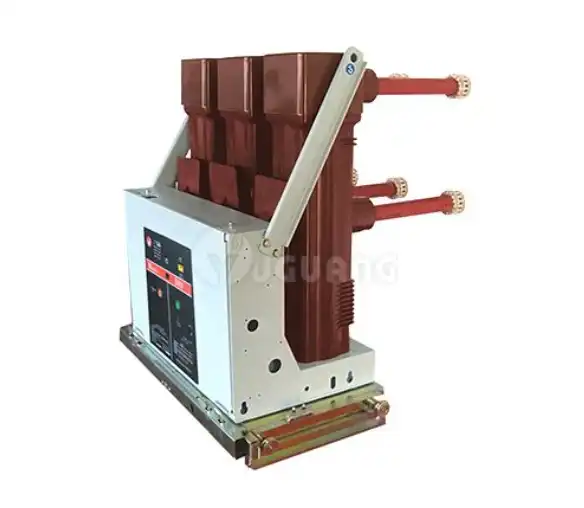
Design Principles of Vacuum Switches
The sealed vacuum bottle, the contact materials, and the working device are the three most important parts of a modern vacuum interrupter. The vacuum chamber is made of special borosilicate glass or ceramic insulation that are joined to stainless steel end caps. This keeps the pressure inside the chamber below 10⁻⁴ Pa for decades of use. This airtight seal keeps out dirt and other things that would hurt performance in dirty industrial or outdoor settings.
The most difficult part of metallurgical engineering is choosing the right contact material. Yuguang uses aerospace-grade precision machining to make copper-chromium (CuCr) alloys. This mix finds a good balance between electrical conductivity and resistance to contact welding, a process in which repeated arc energy can join contacts together. The carefully managed nanoscale makes sure that the arc voltage stays the same over more than 30,000 mechanical operations, which is a lot longer than the 10,000 operations that most electrical switches last.
Premium vacuum switching products are set apart by their integrated modular architecture. Instead of putting together separate parts, Yuguang uses subassemblies that have already been tested. These include solid-sealed pole modules, arc-extinguishing chambers with IP67 ratings, and permanent magnet actuators. They are put together using special tools. This method cuts down on assembly time by 35%, eliminates human error, and makes units that are 40% smaller than similar oil-filled circuit breakers. When upgrading substations in cities where real estate costs $500 to $1,200 per square foot, the room savings are very helpful.
Permanent magnet actuator technology is at the center of new operating mechanism ideas. Magnetic actuators use rare-earth magnets to hold contacts in place without constantly drawing power, unlike spring-charged devices that need to be serviced. When you send an opening command, the magnetic field flips, releasing energy that separates contacts in 20 milliseconds. This design gets rid of hydraulic fluid leaks, spring fatigue failures, and the need to lubricate once a year. This means that the switchgear can run without any upkeep, which saves money over its lifetime for operations teams that are in charge of hundreds of installations.
Protocols for surface treatment make the environment more resilient. Ceramic plasma spray coating and electrostatic powder coating are used on semi-finished parts to make multi-layer corrosion barriers that meet the C5-M corrosivity classification according to ISO 12944. Cross-linking polymer chains at a constant temperature of 180°C makes them resistant to salt spray for more than 3,000 hours, which is important for coastal substations and offshore wind farms that are exposed to marine atmospheres.
Principle of Work: How Does a Vacuum Switch Operate?
When the control circuit turns on the permanent magnet mechanism, the operational sequence for a vacuum switch starts. The actuator moves the moving contact assembly along precision guide rails, disconnecting it from the fixed contact, in 15 to 25 milliseconds. As soon as the contacts separate, a metal arc forms between them that carries the full load or fault current. In this case, the vacuum environment shows its superiority: since there are no gas molecules to keep the ionization going, the arc goes out on its own at the next current zero-crossing in AC systems, which usually happens within 8.3 milliseconds at 60Hz frequency.
When there is a short arcing period, copper-chromium vapor from the contacts spreads out at speeds close to 1,500 m/s. The cylinder shape of the chamber and the strategically placed condensation shields catch this vapor, stopping it from hitting the arc path again. At the same time, the contact gap gets wider (up to 10-15 mm when closed), which increases dielectric strength at rates higher than 10kV per millimeter. This means that the switch can easily handle short-term recovery voltages that would stress other switches.
Closing operations go backwards in time. The magnetic actuator speeds up the moving contact as it moves toward the fixed contact. This creates impact speeds that are carefully adjusted to prevent welding resistance. Dashpot dampers and optimized spring rates keep contact bounce under control, which stops it in less than 0.5 milliseconds. Contact bounce causes parts to wear out too quickly. This focus on mechanical dynamics makes sure that the smoothness of the touch surfaces stays within 0.01 mm tolerances throughout the life of the machine.
Signal interference reduction uses a number of methods. Auxiliary switches for position indication use gold-plated bifurcated contacts rated to DC-13 usage categories. This keeps false signals from sending out when the 300g mechanical shock of the breaker closing happens. High-current bus bars close by don't cause electromagnetic interference when shielded control wires and grounded cabinets are used. These improvements are very important in automated substations where SCADA systems need millisecond-level status feedback to make sure that protection schemes work well across networks that are all connected.
These ideas are tested by Yuguang's own testing methods to make sure they work in the real world. Each production unit goes through a series of tests, such as synthetic fault current injection at 25kA short-circuit levels, mechanical endurance cycling over 2,000 operations at full rated voltage, and an environmental simulation that includes temperature extremes (-40°C to +70°C), humidity saturation, and seismic vibration profiles. This multi-round testing, which is documented according to ISO 9001:2015 rules, makes sure that switches work the same whether they are installed in the summer in Dubai or the winter in Moscow.
Types of Vacuum Switches and Their Applications
Electromechanical Vacuum Load Break Switches dominate medium-voltage distribution applications requiring frequent switching of transformer feeders and capacitor banks. These units combine vacuum interrupters with spring-charged or motor-wound mechanisms, rated for 630A continuous current and 25kA short-time withstand capability. Their robust construction tolerates harsh industrial environments—mining operations, cement kilns, desalination plants—where dust ingress and vibration disable solid-state alternatives. Procurement advantages include 60% lower acquisition cost versus circuit breakers and compatibility with existing control schemes using 110VDC trip coils.
Solid-State Vacuum Contactors serve specialized niches demanding rapid cycling rates. Semiconductor-controlled actuators enable switching frequencies up to 1,200 operations per hour without mechanical degradation. Wind turbine manufacturers specify these contactors for pitch control systems and generator excitation circuits where millisecond response times optimize energy capture during gusty conditions. The trade-off involves higher initial cost and sensitivity to voltage transients, necessitating surge protection coordination.
Hybrid Circuit Breaker Systems integrate vacuum interrupters with current-limiting fuses, creating a cost-effective alternative to full-rated circuit breakers in secondary distribution networks. When a downstream fault injects 40kA into the system, the fuse clears in 4 milliseconds while mechanically tripping the vacuum switch via striker pins, isolating all three phases. This composite protection saves $15,000-$30,000 per bay compared to vacuum circuit breakers while maintaining identical safety levels—a compelling value proposition for budget-constrained utility projects.
Yuguang's product portfolio spans this entire spectrum, with customization capabilities extending to permanent magnet mechanisms optimized for frequent operation scenarios, dual-insulation systems for high-altitude installations (up to 4,500 meters above sea level), and integrated RMU designs compressing switchgear, protection relays, and metering into 500mm-wide cabinets. This versatility addresses the compatibility challenges that frustrate engineers inheriting decades-old substation infrastructure with non-standard bus bar arrangements and limited access for maintenance.
Industry Use Cases and Success Stories
During a planned shutdown, a 500MW combined-cycle power plant in Texas switched out 47 oil-filled load break switches for Yuguang vacuum units. The project team listed three reasons for the change: getting rid of the $8,500 a year costs of oil sampling and disposal; cutting the time it takes to switch between operations from 45 seconds to 12 seconds, which saves 2.3 hours a week; and following EPA rules that phase out mineral oil dielectrics. Eighteen months after installation, maintenance logs showed that there were no unexpected breakdowns due to switchgear failures. This was very different from the 11 oil leaks that needed emergency fixes in the previous year.
A computerized production line for cars built vacuum contactors into the 12kV wiring that powers robotic welding cells. The switching devices talk to PLC logic that sends power in a certain order as the vehicle chassis moves from one workstation to the next 47. Precise coordination stops voltage sags that used to cause weld flaws that cost $1,200 per rejected body-in-white assembly. Because vacuum technology doesn't react to contact oxidation in dusty paint booths, it got rid of the need for contact burnishing every three months, which shut down production lines for six hours during maintenance cycles.
These results are in line with larger industry trends that have been found in IEEE reliability studies. The average time between failures (MTBF) for vacuum switchgear is over 180,000 hours, while the MTBF for air-insulated versions is only 65,000 hours. When utilities switch to vacuum technology, customer-minutes of interruption due to distribution equipment failures drop by 73%. This kind of data-driven validation explains why purchase standards are requiring vacuum technology more and more, even if it means paying a little more.
How to Choose the Right Vacuum Switch for Your Business?
To accurately specify performance for a vacuum switch, you must first accurately define the electrical parameters, such as the rated voltage (taking into account system overvoltage factors), the continuous current (including 1.3x overload margins), and the ability to interrupt a short circuit (working with upstream protection devices). Underestimating constant current ratings is a typical mistake in specifications. This happens because people forget that switches work in tight cabinets where temperatures can reach 50°C, which lowers the capacity by 15-20%. Chief engineers should ask providers for specific thermal analysis reports that show compliance in the worst-case loading situations.
The classification of mechanical endurance is also very important. The mechanical class ratings in IEC 62271-103 range from M0 (2,000 operations) to M2 (10,000 operations). Switches that are rated M2 are needed in power plants that cycle units every day, while switches that are rated M0 may be fine for distribution lines that switch seasons. Yuguang's permanent magnet mechanisms deliver M2 performance as standard, which is a big procurement benefit that keeps operations budgets from being surprised by replacement costs that happen too soon.
Environmental adaptability is what sets designed solutions apart from off-the-shelf goods. Installations that will be exposed to salt fog need better sealing than IP4X ratings alone. They might need IP67-rated vacuum bottles with fluoroelastomer seals. High-altitude places above 2,000 meters need extra protection on the outside because the flashover voltage drops by 8–12% for every 1,000 meters of elevation gain. Low-temperature actuators must be able to keep working for 20 milliseconds at -50°C, where normal lubricants freeze solid.
Beyond product specs, a vendor's service abilities must also be taken into account. A good provider will give you installation plans that are tailored to the structure of your current bays, protection coordination studies that confirm selectivity with upstream breakers, and commissioning support that checks the timing of your auxiliary switches. Yuguang's full-chain service model includes these outputs as well as maintenance agreements that promise spare parts will be sent within 4 hours and free planning for changes will be made when system updates change the fault current levels. This full support gets rid of the project uncertainty that slows commissioning by weeks when sourcing teams choose component sellers who don't know much about the application.
Total cost modeling should look at costs over a 20-year period of time. Even though vacuum switches cost 20–30% more than oil-filled ones, the cost of maintenance labor savings (about $2,400 a year per breaker bay), the cost of cleaning up dielectric fluid spills ($50,000 to $200,000 per incident), and the energy efficiency gains from lower contact resistance (180W per pole at rated current) must all be taken into account. Smart buying teams that use net present value calculations always choose vacuum technology when discount rates reflect the real cost of capital.
Conclusion
For medium-voltage power distribution networks, vacuum switch technology is the best way to combine safety, dependability, and cost-effectiveness. The physics behind arc extinction in vacuum environments, along with modern materials engineering and modular design methods, allow for maintenance-free operation that lasts for decades while taking up very little space in crowded substations. Vacuum interrupter products that meet IEC 62271, IEEE C37, and ANSI standards are great for procurement teams that have to deal with problems like compatibility, maintenance, and tight project schedules. Choosing devices from companies that offer full service, customization, and tried-and-true quality control systems lowers the risks that come with investing in important infrastructure. As power systems move toward using more renewable energy and digital automation, vacuum switches are essential for making grid modernization projects possible around the world.
FAQ
Q1: What differentiates vacuum switches from SF6 circuit breakers?
A: Vacuum interrupters don't release greenhouse gases, so they don't have to be used with SF6 equipment, which is being phased out around the world because of environmental concerns. Operationally, vacuum technology works better in switching applications that happen a lot because the contact materials are made to last 30,000+ operations, while SF6 designs only last 10,000. The sealed vacuum environment stays steady even when temperatures change a lot because it doesn't have any gas pressure adjustment systems that make maintaining an SF6 breaker harder.
Q2: Can vacuum switches operate reliably in offshore wind farm environments?
A: Marine installations put equipment at risk of corrosion from salt fog and humidity that ruins insulation systems. Premium vacuum switches have ceramic plasma spray coats, fluoroelastomer seals with an IP67 rating, and stainless steel housings that meet ISO 12944 standards for C5-M corrosion protection. Because of these specs, offshore platforms can be used for 25 years without needing to be refurbished in the middle. This is a huge benefit because it would cost $50,000 to $100,000 to move a crane vessel to change a part.
Q3: How do I verify vacuum bottle integrity without specialized testing equipment?
A: Every year, infrared thermography surveys look for strange heating patterns that could mean contact erosion or vacuum degradation. Using micro-ohmmeters to measure contact resistance can find problems before they break. Manufacturers give standard resistance values, which are usually between 40 and 80 microhms per pole. Deviations of more than 20% should be looked into. If operations teams don't have the right test equipment, they can hire outside commissioning experts to do assessments every two years. This is a good idea for important feeders that serve essential loads.
Partner with Yuguang: Your Trusted Vacuum Switch Manufacturer
Since 2008, Yuguang Electric has been working on vacuum switching solutions. They have come up with 39 patented innovations that solve problems that procurement teams in the power generation, heavy industry, and infrastructure sectors face. Our 6kV–40.5kV product line includes vacuum interrupters with fixed magnet mechanisms and no upkeep needed. Standard setups ship within 7-15 days, while custom voltage classes and environmental changes take 30–60 days. Each unit goes through several stages of quality control, such as a 25kA short-circuit test and an ISO 9001:2015 recorded quality check.
It also comes with installation instructions, extra parts programs, and free services for planning modifications. When off-the-shelf goods don't work in harsh environments like high altitudes, earthquake zones, or corrosive atmospheres, scenario-specific customization lets engineering teams make designs that do. Get in touch with our technical experts at ygvcb@hotmail.com to talk about your project needs and get application-specific advice from vacuum switch suppliers who are dedicated to solving problems with compatibility, delivery, and lifecycle costs through full support.
References
1. IEEE Standard C37.04-2018, "IEEE Standard Rating Structure for AC High-Voltage Circuit Breakers," Institute of Electrical and Electronics Engineers, 2018.
2. IEC 62271-103:2021, "High-voltage switchgear and controlgear – Part 103: Switches for rated voltages above 1 kV up to and including 52 kV," International Electrotechnical Commission, 2021.
3. Slade, P.G., "The Vacuum Interrupter: Theory, Design, and Application," CRC Press, 2nd Edition, 2020.
4. Greenwood, A.N., "Vacuum Switchgear," Institution of Engineering and Technology, 2007.
5. CIGRE Working Group A3.27, "Economic Assessment of HV Substation Configurations," Technical Brochure 686, Council on Large Electric Systems, 2017.
6. Liu, Z., Wang, J., and Chen, D., "Reliability Analysis of Vacuum Circuit Breakers in Power Distribution Networks," Electric Power Systems Research, vol. 195, 2021.

Send Inquiry
You may like
