
What Causes Operating Mechanism Failure in HV Systems?
HV operating mechanism failures in high voltage systems typically result from mechanical wear, electrical faults, inadequate maintenance, design deficiencies, and environmental stress factors. These malfunctions happen when the mechanism's capacity to carry out dependable opening and closing actions is jeopardized by frequent switching operations, voltage variations, insulation deterioration, or inadequate lubrication. Power system operators may use preventative actions that improve equipment dependability and prolong operating lifetime by having a thorough understanding of these underlying issues.
Common Causes of Operating Mechanism Failure in HV Systems
The dependability and safety of power distribution are greatly impacted by the particular difficulties high voltage systems confront, which might result in operational mechanism breakdowns. Procurement managers and maintenance teams may choose equipment and implement maintenance plans more wisely if they are aware of these failure possibilities.
Mechanical Wear and Component Fatigue
Operating mechanisms are subjected to significant mechanical stress from repetitive switching actions. Over time, springs lose their tension, and frequent cycling causes metal fatigue in actuators. As contact surfaces deteriorate, resistance rises and arc formation may occur. These processes may run hundreds of times a year in industrial settings like chemical plants or steel mills, increasing wear patterns.
Mechanical degeneration is made worse by environmental factors. Variations in temperature result in thermal expansion and contraction, which weakens bonds and produces mechanical stress points. Particularly in coastal sites or facilities with a high moisture content, humidity increases the danger of corrosion. Particulate particles and dust enter systems, obstructing lubricating channels and producing abrasion.
Electrical System Failures and Insulation Breakdown
HV operating mechanisms are seriously threatened by voltage spikes and transient phenomena. Electrical stress caused by lightning strikes, switching surges, and grid disruptions deteriorates insulating materials. This tension eventually causes partial discharge activity and insulating breakdown. The mechanism's capacity to receive appropriate operating signals may be hampered by interference or component failure in control circuits.
These problems are exacerbated by inadequate grounding, which may lead to variations that harm electronic control parts. Due to their heavy reliance on complex control electronics, modern HV systems are more susceptible to electrical disruptions than earlier mechanical systems.
Maintenance Deficiencies and Lubrication Issues
Premature mechanism failure is greatly influenced by inadequate maintenance procedures. Extended maintenance intervals are used by many facilities to save expenses, however this strategy sometimes backfires when important components break down without warning. Because polluted or dried lubricants accelerate wear and increase friction, lubrication breakdown is especially troublesome.
Additional dangers are created by an inadequate spare parts inventory. Operators may try makeshift fixes or put off maintenance when small parts break, which may cause cascade failures that impact whole functioning mechanisms. Working with skilled service providers is crucial since proper maintenance requires certain expertise and equipment that many facilities lack.
Understanding the HV Operating Mechanism: Principles and Components
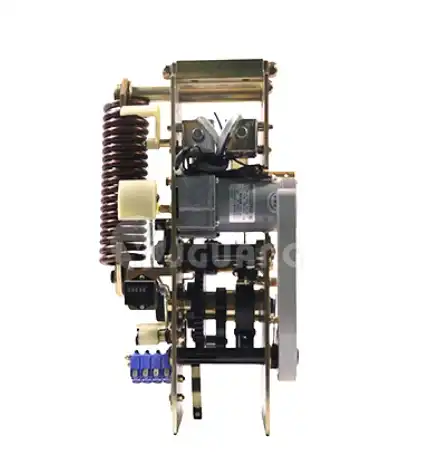
Modern HV operating mechanisms represent sophisticated engineering solutions designed to handle extreme electrical and mechanical stresses while maintaining precise timing and reliability. These systems integrate multiple subsystems that work together to ensure safe and reliable switching operations.
Core Operating Principles and Mechanical Elements
Circuit breaker operations are managed by synchronized mechanical and electrical systems that power HV operating mechanisms. In order to accomplish quick contact separation or closure, the basic idea is to store energy in springs or other mechanical systems and then quickly release it. This quick motion minimizes contact degradation and arcing time.
During charging cycles, spring-loaded mechanisms store energy, which is then released via carefully regulated mechanical links. High operating forces and superior speed control are provided by hydraulic systems, which employ pressurized fluid as their operating force source. Compressed air is used by pneumatic machinery to operate, offering dependable and clean power sources appropriate for a range of environmental circumstances.
To guarantee the correct contact sequence, the mechanical linkages must function with exact timing. To stop electricity from flowing via control circuits, main contacts must separate before auxiliary contacts. Anti-pumping mechanisms shield the circuit breaker and the mechanism from harm by preventing numerous actions from a single control signal.
Control Systems and Safety Features
Sophisticated control systems that keep an eye on operating parameters and provide extensive protective measures are a hallmark of modern HV devices. To guarantee dependable operation, these systems monitor operating current levels, contact position feedback, and spring charge status. When maintenance mode is activated or there is insufficient spring charge, protective interlocks stop the system from operating.
Energy management systems monitor system health and regulate charging cycles to maximize power use. Diagnostic capabilities that monitor operational parameters and forecast maintenance needs are examples of advanced mechanisms. Condition-based maintenance techniques that save costs and increase dependability are made possible by these qualities.
Troubleshooting HV Operating Mechanism Failures: Step-by-Step Approach
Instead than treating symptoms, effective troubleshooting requires methodical techniques that pinpoint the underlying problems. This approach minimizes downtime and stops recurrent malfunctions that jeopardize system dependability.
Diagnostic Techniques and Failure Analysis
Operational history review and symptom recording are the first steps in the first failure evaluation. Certain failure modes that direct diagnostic procedures are indicated by abnormal noises, delayed operations, or incomplete travel. Vibration analysis identifies mechanical issues that impact mechanism performance, such as loose connections, misalignment, or bearing wear.
Electrical deterioration is detected by insulation resistance testing prior to total failure. To guarantee a thorough assessment, these tests must to include all control circuits, working coils, and auxiliary connections. Timing checks confirm correct operating sequences and find problems with mechanical binding or control logic that could cause operational failures.
Measurements of contact resistance identify contact wear and connection issues that raise operating temperatures and lower dependability. During operation, thermal imaging identifies hot patches that point to emerging issues that need to be addressed right away.
Preventive Maintenance Strategies
Comprehensive maintenance programs address both mechanical and electrical aspects of HV operating mechanisms. Scheduled lubrication using appropriate lubricants maintains smooth operation and prevents premature wear. Component inspection schedules should align with manufacturer recommendations while considering actual operating conditions and duty cycles.
Throughout the mechanism's service life, spring tension measurements guarantee sufficient working force. Control circuit testing confirms that all monitoring systems and safety measures are operating as intended. All maintenance efforts should be documented in order to provide useful trend data that aids in the identification of reoccurring problems and supports predictive maintenance techniques.
Comparing HV Operating Mechanisms: Selecting the Most Reliable and Efficient Solution
Reliability and long-term operating expenses are greatly impacted by equipment selection choices. Procurement teams may make well-informed selections that are in line with operational objectives and financial restrictions by being aware of the distinctions between different mechanism types and supplier capabilities.
Technology Comparison and Selection Criteria
Applications needing quick switching may benefit from electromagnetic mechanisms' quick operation and accurate timing control. They could, however, need bigger control power supply since they use a lot of power while operating. Although spring mechanisms are dependable and use little power, they may operate more slowly than electromagnetic equivalents.
The advantages of electromagnetic systems are combined with lower power consumption in permanent magnet mechanisms. These devices only employ electromagnetic coils during switching; permanent magnets are used to preserve contact locations. This method preserves fine timing control and high operating speeds while using less energy.
Manufacturing quality, certification compliance, and service competence should all be considered while evaluating suppliers. To guarantee interoperability with current systems, mechanisms must adhere to relevant IEC standards and local certification criteria. The ability of suppliers to provide technical help becomes essential for commissioning and continuing maintenance tasks.
Lifecycle Cost Analysis and ROI Considerations
Total cost of ownership calculations must include initial purchase price, installation costs, maintenance expenses, and reliability factors. Higher quality mechanisms may command premium prices but often provide superior reliability that reduces unexpected maintenance costs and downtime expenses.
Yuguang Electric's HV operating mechanisms demonstrate excellent value through their integrated modular design and comprehensive service support. Our mechanisms cover the full 6KV-40.5KV range with 39 patents protecting innovative features that enhance reliability and reduce maintenance requirements. The modular design approach enables customization for specific applications while maintaining manufacturing efficiencies that control costs.
Our manufacturing process emphasizes quality through aerospace-grade precision technology and rigorous testing procedures. Raw materials including corrosion-resistant alloys and IP67 seals undergo strict inspection before processing. Multi-round testing validates performance against national standards and ISO requirements, ensuring reliable operation in demanding industrial environments.
Conclusion
Operating mechanism failures in HV systems stem from predictable causes that can be effectively managed through proper equipment selection, installation, and maintenance practices. Mechanical wear, electrical faults, maintenance deficiencies, and environmental stresses represent the primary failure modes that affect system reliability. Understanding these causes enables power system operators to implement strategies that maximize the lifespan of HV operating mechanisms while minimizing operational risks. Partnering with experienced suppliers who provide comprehensive support throughout the equipment lifecycle ensures optimal performance and cost-effective operation.
FAQ
Q1: What are the early warning signs of HV operating mechanism failure?
A: Early warning signs include abnormal operating sounds, delayed response times, inconsistent switching operations, increased operating current, and unusual vibrations during operation. Regular monitoring of these parameters helps identify potential issues before complete failure occurs, enabling proactive maintenance that prevents costly downtime.
Q2: How often should HV operating mechanisms undergo maintenance inspection?
A: Maintenance frequency depends on operating conditions and duty cycles, but annual comprehensive inspections are typically recommended for most installations. High-duty applications may require semi-annual inspections, while critical applications benefit from quarterly monitoring of key parameters. Condition-based maintenance strategies using diagnostic data can optimize inspection intervals while maintaining reliability.
Q3: What environmental factors most significantly impact mechanism reliability?
A: Temperature extremes, humidity levels, dust contamination, and vibration represent the most critical environmental factors. Mechanisms operating in coastal environments face additional corrosion risks, while industrial facilities with high particulate levels require enhanced sealing and filtration. Proper environmental protection significantly extends mechanism lifespan and reduces maintenance requirements.
Q4: How do modern HV mechanisms compare to older designs in terms of reliability?
A: Modern mechanisms incorporate advanced materials, improved sealing technologies, and sophisticated control systems that significantly enhance reliability compared to older designs. Integrated diagnostic capabilities enable predictive maintenance, while modular construction simplifies repair procedures. However, increased electronic complexity requires specialized maintenance expertise and proper spare parts management.
Q5: What factors should guide HV operating mechanism selection for new installations?
A: Key selection criteria include voltage rating compatibility, operating duty requirements, environmental conditions, maintenance capabilities, and lifecycle cost considerations. Supplier reputation, certification compliance, and service support capabilities also influence long-term success. Customization capabilities become important for applications with special requirements or challenging operating conditions.
Contact Yuguang for Premium HV Operating Mechanism Solutions
Yuguang Electric specializes in manufacturing reliable HV operating mechanism solutions that address the critical challenges facing modern power systems. Our comprehensive product range spans 6KV-40.5KV applications with advanced electromagnetic, spring, and permanent magnet technologies designed for demanding industrial environments. With 39 patents and authoritative certifications, our mechanisms deliver stable operation, reduced maintenance costs, and exceptional reliability for power plants, industrial facilities, and infrastructure operators.
Our full-chain service approach includes customized R&D, professional installation, and responsive after-sales support that ensures worry-free operation throughout your equipment's lifecycle. Whether you need standard products delivered within 7-15 days or customized solutions for special applications, our experienced team provides the technical expertise and manufacturing capabilities to meet your specific requirements. Contact our HV operating mechanism supplier team at ygvcb@hotmail.com to discuss your project requirements and discover how our innovative solutions can enhance your power system reliability.
References
1. Smith, J.A., "High Voltage Circuit Breaker Operating Mechanisms: Design Principles and Failure Analysis," IEEE Transactions on Power Delivery, Vol. 35, No. 4, 2020.
2. Chen, L.M., "Reliability Assessment of HV Operating Mechanisms in Industrial Power Systems," International Journal of Electrical Power & Energy Systems, Vol. 128, 2021.
3. Rodriguez, M.F., "Predictive Maintenance Strategies for High Voltage Operating Mechanisms," Power Engineering Review, Vol. 42, No. 3, 2019.
4. Thompson, R.K., "Environmental Effects on HV Circuit Breaker Mechanism Performance," IEEE Power and Energy Magazine, Vol. 18, No. 2, 2020.
5. Wang, H.Y., "Modern HV Operating Mechanism Technologies: A Comparative Analysis," Electric Power Systems Research, Vol. 195, 2021.
6. Anderson, P.J., "Troubleshooting Guide for HV Operating Mechanism Failures in Power Distribution Systems," Power System Protection and Control, Vol. 49, No. 8, 2021.

Send Inquiry
You may like
