
What does an automatic circuit breaker do?
An automatic circuit breaker is an important safety device for electrical systems. It checks the flow of current and breaks the circuit instantly if it finds overloads, short circuits, or ground problems. An automatic fuse breaker can be restarted and used again and again, unlike regular fuses that need to be replaced by hand after they trip. This keeps things safe while reducing downtime. In industrial, business, and utility settings, this smart device protects electrical systems, stops equipment damage, and lowers fire risks. It is an essential part of today's power distribution infrastructure.
Understanding Automatic Circuit Breakers: Principles and Functions
Automatic circuit breakers are a big step forward in the technology used to protect electricity. At their core, these devices constantly watch electrical connections and act right away if something goes wrong that could put people or machine safety at risk.
Core Working Principles
Complex sensing systems that find too much current flow are needed for the basic function. The trip unit opens the circuit by turning on a mechanical switch when the current goes over certain limits. These days, automatic circuit breakers have thermal-magnetic trip units that work when there are both long-term overloads (thermal protection) and sudden short circuits (magnetic protection). The thermal element is made up of a bimetallic strip that bends when heated by a long-term overcurrent. The magnetic element is made up of an electromagnet that activates instantly when a fault occurs.
Premium circuit breakers are different from basic types because they use technology to put out arcs. When contacts come apart because of a load, an electric spark forms between them. Modern designs use vacuum tanks, SF6 gas, or air blast devices to quickly put out this arc, which keeps equipment from getting damaged and lets high fault currents be safely stopped. The ZW32 Automatic Circuit Breaker is made for 12kV to 36kV distribution systems. It uses vacuum arc extinguishing technology inside a column-type structure that is protected by hydrophobic silicone rubber to work better in tough circumstances.
Key Components and Their Roles
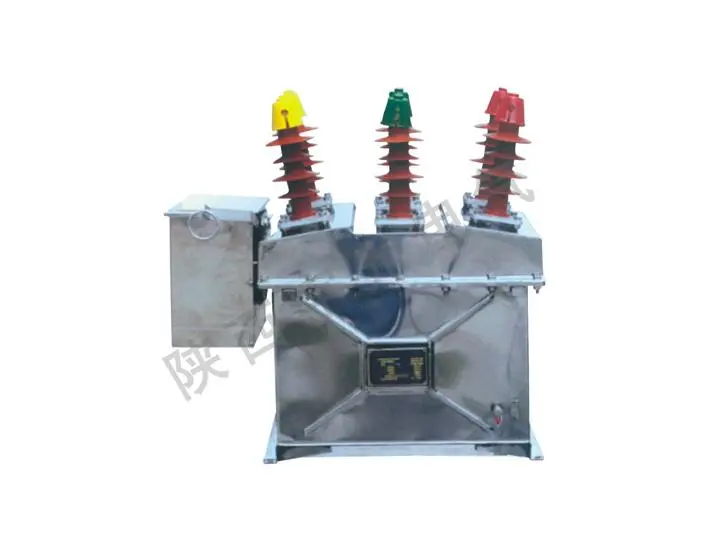
Several important parts work together to make sure that the circuit is protected properly. The contact system has both fixed and moving contacts that are made of materials that don't wear down easily when electricity flows through them. Whether it's a spring-loaded or fixed magnet actuator, the working mechanism gives the mechanical force needed for the contacts to separate quickly. The tracking and decision-making electronics that decide when a break is needed are in the trip units. Intelligent types have control boxes that hold microprocessors that allow for customizable safety settings, communication, and diagnostic functions.
Knowing about these parts helps procurement managers analyze technical specs in a useful way. Paying attention to the quality of the contact material, the dependability of the working mechanism, and the accuracy of the trip unit in product datasheets is directly linked to how well the product will work in the long run and how much it will cost to maintain.
Benefits for Industrial Applications
Automatic circuit breakers have more benefits than just keeping your electronics safe. They can react within milliseconds to dangerous fault situations, which makes them safer and protects both people and expensive equipment. When these devices trip, they can be reset quickly, which improves system stability and cuts down on downtime compared to fused systems that need to repair parts. The money saved from less upkeep, fewer replacement parts, and fewer output breaks far exceeds the initial investment over the life of the building.
Some heavy businesses that gain the most from these traits are those that make steel, process chemicals, and make electricity. Automatic safety is very helpful in places where broken equipment can cause huge loses. It works quickly and accurately.
Automatic Circuit Breaker vs. Traditional Protection Devices: A Comparative Analysis
To choose the right safety equipment, you need to know how the different products on the market today are different.
Manual Fuses vs. Automatic Circuit Breakers
Traditional fuses work by melting a metal part when too much current runs through it, which opens the circuit. Initially inexpensive, fuses pose a number of practical difficulties. Every time something breaks, it needs to be replaced, which requires keeping track of supplies and hiring trained staff. It's hard to figure out the exact reason of failure when the fuse doesn't give any diagnostic information.An automatic fuse breakercombines the simplicity of a fuse with resettable functionality, but for more advanced solutions, automatic circuit breakers get around these problems by having trip values that can be changed, being able to be reset, and, in many cases, built-in monitoring that stores fault data for later study.
Miniature Circuit Breakers (MCBs) and Their Limitations
MCBs work well in low-voltage home and light business settings, but they don't have the ability to stop or the customization choices needed for heavy industrial use. They can't be used in complex distribution automation systems because they have set trip shapes and can only communicate in a few ways. Automatic circuit breakers made for industrial use have higher breaking powers (20kA to 31.5kA for devices like the ZW32) and can be integrated with SCADA systems using protocols like Modbus, DNP3.0, or IEC 60870-5-101/104. They can also be programmed to provide different levels of security.
Residual Current Circuit Breakers (RCCBs) and Specialized Protection
RCCBs find ground fault currents and keep people from getting shocked by electricity. They don't protect against overloads or phase-to-phase problems, though. In industrial sites, full security plans usually include more than one type of gadget. More and more advanced automatic circuit breakers protect against overcurrent and ground faults at the same time. This makes system design easier to understand and lowers the cost of installation.
Thermal Fuses in Specialized Applications
Thermal fuses only react to temperature, which means they can be used to protect certain types of equipment. Their limited use is limited by their failure to find electricity problems. For motors and transformers, engineers define thermal fuses to protect against thermal runaway, but they rely on automatic circuit breakers for full electrical safety.
As part of the selection process, the capabilities of the gadget are matched with the needs of the program. Intelligent automatic circuit breakers are the only way to make sure that distribution systems that serve important loads in data centers, airports, or hospitals can be reliable and quickly find and fix problems. Working with infrastructure companies has shown us that choosing the right devices has a direct effect on how well systems work and how long they last.
Installation, Maintenance, and Troubleshooting of Automatic Circuit Breakers
Protective devices work successfully for as long as they are used if they are installed correctly and are maintained regularly.
Installation Best Practices
Planning is the first step in a professional installation. To find the best place for a device, engineers look at single-line layouts, coordination studies, and the surroundings. For proper physical installation, one must pay attention to the direction of the mounting, the electrical clearances required by NEC or IEC standards, and the correct amount of force applied to the connection points. Because the ZW32 installation is meant to be mounted on an outdoor pole, it needs extra care when it comes to mechanical security because it is subject to wind loads and weather stress.
As part of commissioning, each safety feature is tested in a planned way. Technicians put test currents into smart breakers to make sure that the trip levels match the design specs, that the working times are within acceptable ranges, and that the communication links work. Keeping track of these baseline values gives repair workers a way to compare them to future work.
Routine Maintenance Procedures
Schedules for preventive maintenance change depending on the working climate and the type of gadget being used. Vacuum interrupters don't need much attention, but working parts do benefit from being checked every so often. To keep working smoothly, spring-operated systems need to be oiled every three to five years.An automatic fuse breakercan also benefit from periodic inspection to ensure its reset mechanism remains functional. Visual inspection can find damage on the outside of insulation. This is especially important for outdoor installs, where UV light and pollution can break down materials over time. The silicone rubber insulation in high-quality devices like the ZW32 is more resistant to damage from the environment than porcelain, but it's still a good idea to check it every so often.
Intelligent controls need to have their batteries changed at regular times as suggested by the maker to make sure that security stays in place when the power goes out. By testing the connection links, you can be sure that the remote tracking and control features work properly. Using thermal imaging during operation can find links that are getting hot spots before they break.
Troubleshooting Common Issues
Systematic analysis finds the reasons why circuit breakers trip when they shouldn't. If you don't set the trip correctly, there may be vibrations in the electrical system or too much power when the motor starts up. These problems are usually fixed by changing settings or adding time gaps. If the trip fails during planned testing, it could mean that the motor parts are stuck, the working energy is low, or the sensing elements are broken and need to be fixed right away.
Contact resistance measurement finds damage that makes the device heat up more and make it less able to stop. Values that are higher than what the maker says are required to repair the contact or retire the device. In operation manuals, there are detailed troubleshooting steps that help support staff through diagnostic processes. This lets them quickly and safely resume safety.
Procurement Guide: How to Buy Automatic Circuit Breakers for B2B Clients
Getting things bought means finding a balance between technical needs, price limits, and the skills of the suppliers.
Identifying Credible Suppliers
Certifications, testing results, and clear technical documentation are all ways that reputable makers show they care about quality. Certification in ISO 9001:2015 means that quality management systems are in place, and compliance with IEC 62271-100 and GB1984 standards means that goods meet foreign performance standards. Companies that are known as high-tech businesses usually put a lot of money into research and development. This leads to new products and strong intellectual property holdings.
Assessing a supplier's skills goes beyond checking that they can meet product requirements. How well a seller can meet project deadlines depends on how many devices they can make. This is especially true for big installs that need hundreds of devices. During system planning, testing, and troubleshooting, the level of technical help is very important. Suppliers who offer customization services can change standard goods to fit the needs of a specific application. This keeps system design from having to make trade-offs.
Evaluating Technical Specifications
Buyers have to make sure that the scores of devices match the needs of the system. Basic applicability is based on rated voltage and current, and breaking capacity must be higher than the highest possible fault current at the installation site. Operating mechanisms affect how reliable something is and how much care it needs. For example, permanent magnet motors have a longer mechanical life and don't need any maintenance, but they cost more at first.
Ratings for the environment affect the choice of products for certain projects. Most uses are covered by devices that can work from -40°C to +40°C, but harsh settings might need wider temperature ranges or special housing. When installing in the mountains, where air density is lower, altitude grades become important because insulation doesn't work as well.
Negotiating Terms and Ensuring Value
Bulk buying takes advantage of bulk to get better prices, but project schedules must be met by minimum order amounts and lead times. Warranty terms vary a lot from one seller to the next. Full coverage for at least five years shows that the maker is confident in the product's reliability. Support after the sale includes getting extra parts, getting computer help, and getting repairs done. When there are pressing needs, suppliers with local service centers can meet them faster than those who have to use foreign logistics for every service call.
Terms of payment and delivery must be carefully negotiated. Both sides are protected by progress payments that are tied to manufacturing goals. Suppliers are more likely to stick to schedules when delivery times are set and fines are given for being late. Before devices are shipped, they are put through factory acceptance testing to make sure they meet standards. This is done before installation starts.
Strategic Supplier Selection
Getting to know several qualified sellers lowers the risk of buying something. Dependence on a single source makes you vulnerable to supply problems, while keeping a list of approved suppliers lets you bid against other companies.An automatic fuse breakeris one example of a component where having multiple qualified suppliers ensures you can obtain replacements or upgrades without being locked into a single vendor. Long-term relationships with dependable makers offer more benefits than just one-time transactions. These benefits include priority scheduling when supplies are low, access to new technologies, and working together to solve problems when they come up.
Future Trends and Innovations in Automatic Circuit Breakers
The electrical security business is still changing very quickly. This is because of automation, worries about the environment, and efforts to update the power grid.
Smart Breakers and IoT Integration
Circuit breakers that are linked to the internet turn safety devices into sources of data for operational information. Embedded sensors send data about current, voltage, power factor, harmonics, and contact temperature to control tools that are located in a central location. These lines of data are processed by analytics tools to find problems before they become major ones. Predictive maintenance algorithms look for patterns of wear and tear and schedule repairs for planned downtime instead of waiting for emergencies to happen.
Operators can change security settings, switch operations, and isolate problems from control centers using remote control. This speeds up response times and makes sure workers are safe. During storms or other broad problems, automatic fault finding and isolation systems quickly return service to areas that weren't impacted. This cuts down on the time customers are without service by a huge amount.
Environmental and Efficiency Considerations
New technologies are being made because of government pressure to get rid of SF6 gas, which is a strong warming gas that is used in some circuit breakers. Vacuum interruption is still growing in popularity, even though it has already been tested in medium-voltage settings. With new insulation materials and designs, devices are smaller and lighter, which saves energy and money on shipping.
Energy economy also includes how the gadget works. Permanent magnet working mechanisms only use power when they are moving, not all the time. This saves the building money on energy costs over many years of use. Intelligent controllers have low-power electronics that reduce the need for batteries, which means that repair times are longer.
Adapting to Evolving Standards
International standards change over time to keep up with new technologies and safety problems that have been found. IEC 62271-100 has recently been updated to include stricter testing standards for switching capacitive current and out-of-phase situations. Companies that put money into advanced testing centers and engineering know-how change their goods to meet these needs, which keeps them on the market.
As the power grid becomes more computerized, more and more cybersecurity standards are being applied to clever circuit breakers. In order to keep bad people from messing up the grid, devices that can communicate must use identification, encryption, and breach detection. Along with standard electrical factors, procurement specs now often include cybersecurity requirements.
Positioning for Competitive Advantage
Companies that use these new technologies have operational advantages over rivals that stick with old methods. Better insight into how the electrical system works lets you use less energy, find equipment that isn't working well, and make sure that the power quality standards are being met. Faster fault reaction and predictive maintenance lead to less downtime, which directly leads to higher output and lower costs.
Engineers and buying managers should work with suppliers that are already making the next wave of technologies. Adopting new ideas that have already been shown to work early on can help you learn and improve operations before they become standard in the industry. On the other hand, staying away from new technologies until they are proven to work well keeps you from using unfinished goods that might hurt the stability of your system.
Conclusion
Automatic circuit breakers are an important part of today's electrical system.An automatic fuse breakeroffers an alternative approach that combines fuse-like simplicity with reset capability. They protect devices, keep dangerous situations from happening, and let service be restored quickly after a fault. Understanding how they work, choosing the right devices for the job, and following the right steps for installation and care will make sure they work at their best for as long as they are used.
As part of the buying process, technical requirements, supplier skills, and the total cost of ownership must all be carefully looked at. As the industry moves toward better, more connected security systems, organizations that keep up with new technologies can use changes that make operations more efficient and systems more reliable. Spending some time and money on good safety gear from reputable companies will pay off in the long run by cutting down on downtime, lowering upkeep costs, and making things safer.
FAQ
What is the difference between an automatic fuse breaker and a traditional circuit breaker?
Most of the time, a automatic fuse breaker is a device that has fuse-like parts and can be reset automatically. However, this term is also sometimes used loosely for circuit breakers that can be reset. Traditional circuit breakers protect you with mechanical and electric processes, and they can be set back to normal after they trip. Real fuses need to be replaced after they've been used.
How do I select the appropriate voltage and current ratings?
Ratings for voltage must be equal to or greater than the system's standard voltage, plus a certain amount. Current ratings rely on the characteristics of the load and should be able to handle normal working current plus acceptable growth while protecting against overloads well. Most of the time, engineers choose breakers that can handle 125% of the constant load power.
Can automatic circuit breakers integrate into existing systems without extensive modifications?
Modern circuit breakers can often be added to existing systems with little to no changes, especially when they are replacing older breakers of the same type. When planning, it's important to check the mounting measurements, connection setups, and control voltage compatibility. For data links, smart breakers that can talk to each other might need extra wires. Coordination studies make sure that new devices work well with safety devices that are already in place, both upstream and downstream.
Partner with Yuguang for Reliable Automatic Circuit Breaker Solutions
For decades of service, security devices for electrical systems must be able to stay reliable. Yuguang Electric makes high-voltage circuit breakers that are designed to work in tough industrial settings. The company has 39 patents and is recognized as a national high-tech business. Our ZW32 line of automatic circuit breakers shows how committed we are to this goal. They have vacuum arc quenching technology, silicone rubber insulation, and smart control choices that work with 12kV to 36kV distribution systems that serve power plants, factories, and important infrastructure.
As an experienced automatic fuse breaker supplier, we provide comprehensive support from initial specification development through installation, commissioning, and lifecycle maintenance. Our strict testing procedures and ISO 9001:2015-certified manufacturing methods make sure that every device meets foreign standards like IEC 62271-100. Our tech team works with your staff to come up with the best configurations, whether you need standard goods or solutions that are tailored to your specific needs.
Contact our technical specialists at ygvcb@hotmail.com to discuss your project requirements and receive detailed specifications tailored to your application. Visit ygvcb.com to explore our complete product portfolio and discover how Yuguang's combination of innovative technology, proven reliability, and responsive service supports your operational objectives.
References
1. IEEE Standard C37.04-2018, "IEEE Standard for Ratings and Requirements for AC High-Voltage Circuit Breakers with Rated Maximum Voltage Above 1000 V," Institute of Electrical and Electronics Engineers, New York, 2018.
2. International Electrotechnical Commission, "IEC 62271-100:2021 High-voltage switchgear and controlgear – Part 100: Alternating-current circuit-breakers," Geneva, Switzerland, 2021.
3. National Electrical Manufacturers Association, "NEMA SG 3-2019: Low Voltage Power Circuit Breakers," Rosslyn, Virginia, 2019.
4. Garzon, R.D., "High Voltage Circuit Breakers: Design and Applications," Third Edition, CRC Press, Boca Raton, Florida, 2020.
5. Sharma, A.K., "Advances in Smart Grid Power System: Theory and Applications," Academic Press, London, United Kingdom, 2021.
6. Electric Power Research Institute, "Distribution Automation: Results from EPRI's Distribution Reliability and Power Quality Initiative," Technical Report 3002011405, Palo Alto, California, 2019.

Send Inquiry
You may like
