
What is a switch interrupter used for?
A switch interrupter is a special kind of electrical part that is made to stop and control the flow of current safely in medium- to high-voltage power systems. The switch interrupter is the brain of devices like vacuum circuit breakers and load break switches. It separates circuits for repair, guards against overcurrent faults, and handles normal switching tasks. These devices use advanced arc-quenching technologies, usually vacuum or SF6 gas insulation, to make sure that electrical arcs go out quickly at current zero-crossing points. This protects people, equipment, and the stability of the grid in substations, industrial plants, and renewable energy installations with voltages from 1.14kV to 40.5kV and higher.
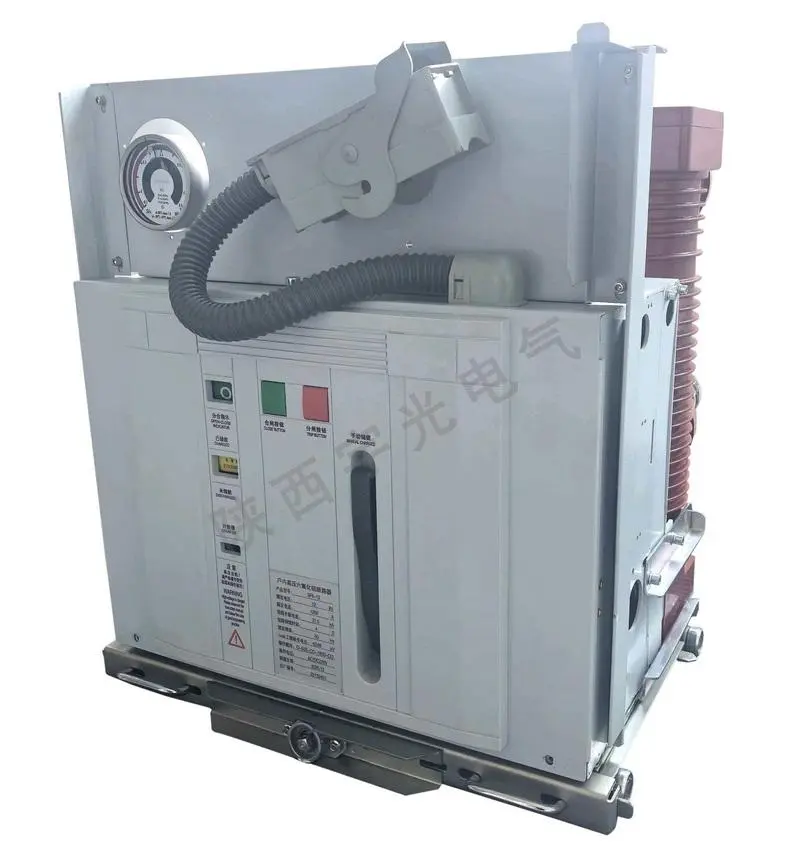
Introduction to Switch Interrupters
Controlling and isolating power safely is an important part of modern electrical infrastructure for both operating efficiency and worker safety. Switch interrupters are the active switching parts of circuit breakers, contactors, and load switches that direct how energy is distributed across utility and industrial networks. They are the building blocks of this control system.
Defining Switch Interrupters and Their Role in Power Distribution
Switch interrupters are carefully made parts that are meant to make and break electrical circuits when there is normal load and when there is a fault. These devices, unlike simple mechanical switches, deal with the complicated physics of arc formation and suppression that happen when high-voltage contacts separate under load. When built into vacuum circuit breakers or gas-insulated switchgear, they are the main way that parts of the power grid are separated, protecting equipment further down the line, and allowing safe repair processes. These parts work all the time in substations that serve data centers, factories, and utility transfer networks to keep the system stable and answer right away to any problems that happen.
Core Working Principles and Key Components
The ability of a switch interrupter to work depends on complex interactions between mechanical and electrical forces. When contacts separate during switching, current keeps flowing through a gas or vapor of metal that is charged with electricity. This creates an electric arc. The arc-quenching medium, which could be oil, SF6 gas, or vacuum, quickly de-ionizes this plasma channel, which restores the insulation strength in milliseconds.
Modern vacuum interrupters work on this idea because they keep the vacuum pressure around 10^-5 Pa by having a sealed glass or ceramic case. The bellows system moves the moving contact away from the fixed contact, and the vacuum environment keeps the arc plasma in a narrow column. Copper-chromium metal contacts work best because they have a high interrupting capacity while also having low contact welding and current cutting. This mechanical accuracy, along with the vacuum's faster dielectric recovery rate, makes it possible to interrupt within the first current zero-crossing. This is a very important benefit for keeping sensitive equipment safe from voltage spikes that could damage it.
When engineers look at specs, they have to think about the makeup of the contact material, the vacuum integrity over the device's 30-year life, and the bellows' ability to fight fatigue after 10,000 to 30,000 mechanical operations. By knowing these basic technical concepts, buying teams can tell the difference between common goods and designed solutions that can work reliably in tough situations.
Core Functions and Applications of Switch Interrupters
Switch interrupters perform a number of important tasks that keep operations running smoothly and keep people safe in a variety of electrical settings, in addition to providing basic on-off control.
Safely Interrupting Current During Normal and Fault Conditions
The main job is to stop the flow of current safely, without creating damaging overvoltages or long-lasting arcing that could make equipment harm worse. When planned switching operations happen, like moving load between transformers or isolating areas for repair, the interrupter controls inductive and capacitive currents and limits voltage changes. When fault currents rise because of short circuits or ground faults, the device has to stop currents that could be 20 to 40 times normal operating levels within cycles. It does this by working with protective switches to cut off only the damaged circuit section.
Because they can do two things, switch interrupters are different from simple isolators, which can only work when there is no load, and fuses, which blow when there is only one problem. Temporary faults happen a lot in overhead distribution networks, so being able to stop and then successfully reopen after them gives big practical and economic benefits by keeping service going.
Typical Use Cases Across Industrial Environments
Switch interrupters are used in almost every industry that uses medium-voltage power transfer. In steel mills and chemical processing plants, these vacuum contactors handle the high-voltage motors that power crushers, pumps, and compressors. They do this thousands of times a year without breaking down. As a result of the frequent operation capability, the manufacturing sector can start and stop processes as needed to meet output plans without adding to the maintenance work.
Vacuum circuit breakers with advanced interrupters protect the distribution lines that bring power to hospitals, transit systems, and business neighborhoods in urban areas. For these systems to work, the devices need to be able to handle temperature changes of -40°C to +85°C and keep working even when the load changes with the seasons. The vacuum seal stops wetness and germs from getting in, which can happen with air-insulated options in marine or industrial settings.
Modern interrupters are good at dealing with the unique problems that come up with renewable energy systems. Because turbine power changes with the wind, load currents and harmonic distortions change in wind farm collection systems. To manage battery storage integration and grid synchronization, photovoltaic plants need to be switched on and off often. For these uses, switch interrupters are made with contact materials and arc control shapes that work best with non-sinusoidal currents. This makes sure that they work reliably even when the power quality changes, which would speed up the wear and tear on regular designs.
Advantages Over Alternative Switching Technologies
Railway electrification systems utilize specialized load break switches for traction power distribution along track sections. These devices must handle regenerative braking currents flowing backward from trains into the catenary system while maintaining compact dimensions for installation within confined right-of-way spaces.The switch interrupteris a key example of such a device. The fact that these interrupters can handle current going in both directions and have a small size shows how application-specific designs can work with the space and function limitations of infrastructure controllers.
There are a number of reasons why current vacuum interrupters are better than older switching technologies that procurement managers look at. Oil circuit breakers used to be common in medium-voltage settings, but they need to be checked for oil regularly and eventually replaced with flammable insulation fluid, which is bad for the environment and costs a lot to maintain. Even though SF6 gas circuit breakers work, they are getting more and more attention from regulators because sulfur hexafluoride is a warming gas, and some places have started to phase them out.
These worries are taken away by vacuum technology, which works without any problems for many years without needing any repairs. The lack of replaceable arc-quenching materials lowers lifetime costs, and the compact form factor makes it possible for switchgear to be 40–60% smaller than similar air-insulated equipment. This is a huge benefit when upgrading old substations or reducing the size of new buildings. Gains in operational efficiency are shown by shorter outages during switching operations and faster problem clearing times that keep equipment from getting too stressed. The reliability measures that utility execs watch closely are SAIFI (System Average Interruption Frequency Index) and SAIDI (System Average Interruption Duration Index).
Types of Switch Interrupters and How to Choose the Right One
To choose the right interrupter technology, you need to make sure that the device's features match the needs of the program and the working setting.
Comprehensive Overview of Switch Interrupter Technologies
Vacuum Interrupters are most common in medium-voltage uses from 7.2kV to 40.5kV. As technology improves, they will soon be able to handle systems up to 145kV. These devices work great in situations where they need to be used often, be small, and need little upkeep. The sealed vacuum bottle design makes sure that the contact state stays perfect throughout the service life, even if weather factors change outside the bottle. Copper-chromium alloys are often used in contact materials because they offer the best balance between interrupting performance and contact life.
SF6 Gas Interrupters are still better in places where proven technology with a long history of use is required and in situations with very high power. Sulfur hexafluoride has a higher insulating strength, which lets transmission voltage designs be smaller. However, environmental laws are making it harder to put new systems. Manufacturers are now making alternatives to SF6 that don't contain it by mixing clean air or fluoronitrile gases to answer worries about the environment while keeping the same performance levels.
Load Break Interrupters are a special type of device that is made to switch load currents but not fault current interruption. These devices, which are usually built into pad-mounted transformers and distribution switches, let you isolate equipment without having to use full circuit breaker safety. It is very important to know the difference between load break capability and fault interruption duty. Using load break switches when fault protection is needed causes unacceptable safety risks.
Critical Comparative Insights with Related Protective Devices
A lot of electricians have trouble telling the difference between circuit breakers, contactors, switch interrupters, and other safety devices. A circuit breaker is a full assembly that includes a switch interrupter as its main switching part, as well as safety relay connections, working mechanisms, and control systems. The true function of stopping the current is done by the interrupter, while the circuit breaker case combines this part into a working unit.
Contactors are different from circuit breakers because they are meant to be used often under normal load conditions instead of protecting against faults. Even though contactors have interrupters (usually vacuum types for medium-voltage uses), they don't have the strong fault-current stopping and safe coordination features that circuit breakers do. If you choose contactors for fault prevention or circuit breakers for normal motor control, you will either have safety problems or have to pay too much for the equipment.
Fuses protect against overcurrent by destroying themselves. They are cheap to buy at first, but they need to be replaced after every use. Because these things are used up quickly, they create practical costs and supply chain dependencies that switch interrupter-based safety doesn't have. Relays can sense and control things, but they need switching devices with interrupters to directly stop the flow of electricity. Full safety plans use switches to find problems and circuit breakers with the right interrupters to stop them.
Selection Criteria Aligned with Technical Requirements
To pick the best interrupter technology, you need to carefully look at it in a number of different performance areas. The voltage rating must match the standard voltage of the system plus a suitable margin. For example, a 15kV switchgear system will usually have 17.5kV rated parts as a safety buffer. The interrupting capacity, given in kA, must be greater than the highest fault current that can flow at the placement point, which can be found by analyzing short circuits. Under-specifying stopping capacity increases the risk of catastrophic failure when problems happen, while over-specifying raises the cost of the equipment without improving its functionality.The switch interruptermust be evaluated within this framework, as its bidirectional current handling and compact form directly influence how these trade-offs are managed in practice.
Environmental factors include more than just high temperatures. They also include altitude (which changes how well air is insulated), humidity, earthquake activity, and levels of contamination. Coastal sites need better protection against corrosion, while desert areas need security against dust getting in. Because they are sealed, vacuum interrupters work well in all kinds of environments. On the other hand, air-insulated technologies need to be carefully evaluated for pollution class and safety steps.
Specifications for mechanical endurance show how long something is expected to work. For example, vacuum interrupters can usually handle 10,000 to 30,000 mechanical processes at maximum current. However, electrical endurance is limited by contact erosion. For applications that switch between states often, mechanical longevity rates must be high to keep the parts from breaking too soon. Certifications are a fair way to check the quality of a product. For example, the IEC 62271 series sets rules for medium-voltage switchgear and controlgear, and the IEEE standards cover specific performance issues.
Maintenance, Safety Features, and Best Practices for Switch Interrupters
Strategies for proactive repair make equipment more reliable while reducing unplanned downtime and safety issues.
Recommended Maintenance Practices and Troubleshooting
Modern vacuum circuit breakers with interrupters need a lot less upkeep than older technologies, but they still need to be checked on a regular basis. Maintenance intervals can be anywhere from once a year for eye checks to three to five years for thorough tests, based on how often they are used and the weather. Visual checks make sure that the control has power, that there is no moisture or contamination, and that the switch state is clearly shown. These easy checks, which take 15 to 30 minutes per gadget, find problems before they become major ones.
As part of detailed maintenance processes, contact wear is measured (if possible), vacuum integrity is checked, the working mechanism is oiled, and timing tests are done to make sure the contacts are in the right order. To check for contact wear, you have to compare the position markers of the contacts with the baseline readings that were taken during commissioning. If there are too many wear signs, it means that the interrupter needs to be replaced. When checking for vacuum integrity, high voltage is applied between contacts with the device open. Loss of vacuum shows up as lower dielectric strength, which means the interrupter needs to be replaced.
The health of the operating mechanism affects how well the interrupter works because incorrect contact velocity or bounce during shutting operations speeds up contact wear. Timing readings make sure the contacts move properly, and working energy checks make sure the device sends enough force along its path. Using specialized test tools, these readings give us numerical information about mechanical problems that are starting to show up before they become so bad that they stop working.
Modern Safety Enhancements and Risk Mitigation
Modern switch interrupter safety features protect against arc dangers, electrical shock, and mechanical breakdowns. Arc-quenching technology is the most important safety feature. Vacuum interrupters keep the arc plasma inside the sealed bottle, stopping it from spreading outside and hurting people or damaging nearby equipment. Contact materials that are made to have low wear and little gas release during arcing keep the vacuum from breaking down and keep the stopping ability throughout the service life.
During repair and regular function, the interrupter is protected from electrical shock by systems that surround it. Molded resin casings or ceramic housings keep the voltages on the touchable surfaces safe, even when high voltages are applied to the internal parts. By making sure that isolation switches open before access doors unlock, mechanical interlocks keep people from accidentally touching live parts. These interlocks must be deliberately broken in order to be broken.
Pressure release devices protect against the small chance of an internal failure that lets gas escape from protected areas. These devices let out high-pressure gases in controlled directions, away from people who are working inside. This keeps the enclosure from breaking, which could send pieces flying across the switchgear room. When interrupters are properly maintained, they rarely have internal failures. However, these safety steps provide a defense-in-depth safety policy.
Compliance with International Standards and Certifications
Global electricity standards make sure that safety rules are the same everywhere, even if application methods vary from place to place. IEC 62271-1 sets the general requirements for medium-voltage switchgear. Subsidiary standards, like IEC 62271-100 for circuit breakers and IEC 62271-103 for switches for rated voltages above 1kV, cover particular types of devices.The switch interrupterfalls under such standards, requiring compliance with bidirectional current handling and compact form factor provisions where applicable. These guidelines say that designs must be validated through type testing, regular production testing, and rules for documentation that makes sure they can be tracked.
Standards like IEC 61936 and national electrical codes set the rules for installation practices. These rules include distance requirements, grounding rules, and safety rules for repair activities. Specifications for purchases should clearly list any relevant standards, making sure that sellers provide equipment that meets the rules in the area. Certification marks from well-known testing labs like KEMA, CESI, and CPRI provide independent proof that standards are met, which lowers the buyer's risk when it comes to performance claims.
Conclusion
In conclusion, switch interrupters are very important for making sure that medium-voltage electrical distribution systems work safely and reliably in infrastructure, utility, and industry settings. Understanding how they work, what applications they need, and how to choose them gives procurement workers and developers the power to choose the right technologies that meet performance goals and minimize lifecycle costs. Vacuum interrupter technology has become the best choice for most medium-voltage tasks because it doesn't need to be maintained and is smaller and better for the environment than older technologies.
A good procurement strategy looks at both the device's specs and the seller's abilities. This makes sure that parts will always be available and that the supplier can provide technical help. As electrical infrastructure changes to include more green energy and digital tracking, switch interrupter technologies keep getting better to meet new application needs while keeping the basic safety and dependability features that power systems need to work.
FAQ
What distinguishes a switch interrupter from a circuit breaker?
A switch interrupter is the part of a circuit breaker that physically splits contacts and puts out the electrical spark that happens when they touch. The interrupter, working device, enclosure, and control systems are all part of the circuit breaker as a whole. This difference is important for upkeep and replacement, because interrupters can be changed out as sealed parts instead of the whole circuit breaker assembly. This saves money and time.
How frequently should switch interrupters undergo maintenance?
How often maintenance is done relies on the job of the machine and the conditions of the surroundings. Vacuum circuit breakers usually need to be visually checked once a year and given more thorough repair every three to five years. Applications that are heavy-duty and switch between tasks often may need to be inspected more often. Manufacturers set up repair plans based on the number of operational cycles. For example, vacuum interrupters that are rated for 30,000 operations should be inspected every 10,000 operations to make sure that contact wear stays within accepted limits.
Can switch interrupters be customized for specific industrial applications?
Customization options include choosing the right contact material for the type of current, adjusting the working voltage within the rated range, and making the environmental protection better for harsh circumstances. Manufacturers offer consultation services during the development of specifications and suggest setups that meet the individual needs of each application. Custom solutions have longer wait times and need to be approved by engineers before they can be used, but they work perfectly in tough situations where standard catalog goods fall short.
Partner with Yuguang for Reliable Switch Interrupter Solutions
The dependability of electrical infrastructure depends on choosing good switch interrupters that come with technical support and help that is quick to respond. Shaanxi Yuguang Electric Co., Ltd. was founded in 2008 in the center of China's vacuum circuit breaker making. The company specializes in medium-voltage switching equipment for power utilities, industrial facilities, and infrastructure owners around the world. Our vacuum interrupters were created by us and are covered by 39 utility model patents. They work reliably in situations ranging from 6kV to 40.5kV, meet IEC 62271 standards, and come with national inspection certifications.
As a high-tech company that is ISO 9001:2015 certified, we offer full support throughout the lifetime of equipment, from special planning and production to installation help and long-term service after the sale. Our specialized vacuum interrupters work great in tough places like wind power sites, metallurgical facilities, and utility substations where safety, dependability, and low upkeep costs are key to success. Our expert team works with your engineers to find the best solutions, whether they are looking for switch interrupter parts to be integrated into products or whole vacuum circuit breaker systems to be installed on a project.
Email our procurement experts at ygvcb@hotmail.com to talk about the specifics of your application and get full technical proposals. We are a dedicated switch interrupter maker with a lot of experience in vacuum technology. We offer reasonable prices, guaranteed delivery dates, and the technical support your projects need. Visit ygvcb.com to look through our full catalog of products and learn how Yuguang's advanced production can help you reach your goals for your electricity infrastructure with reliable, low-cost solutions.
References
1. IEEE Standards Association. (2015). IEEE Guide for Automatic Reclosing of Circuit Breakers for AC Distribution and Transmission Lines. IEEE Std C37.104-2012.
2. International Electrotechnical Commission. (2017). High-voltage Switchgear and Controlgear – Part 100: Alternating Current Circuit-breakers. IEC 62271-100:2017.
3. Slade, P. G. (2014). The Vacuum Interrupter: Theory, Design, and Application. CRC Press.
4. Greenwood, A. (1991). Electrical Transients in Power Systems. Wiley-Interscience.
5. Flurscheim, C. H. (1982). Power Circuit Breaker Theory and Design. Institution of Electrical Engineers.
6. Nakanishi, K. (2012). Switching Phenomena in High-Voltage Circuit Breakers. Taylor & Francis Group.

Send Inquiry
You may like
