
What Is A Vacuum Load Break Switch?
A vacuum load switch, formally known as a vacuum load break switch, is a specialized medium-voltage switchgear device designed to safely interrupt and isolate load currents, loop currents, and transformer charging currents in three-phase AC power systems. Unlike conventional air-insulated or oil-immersed switches, this equipment leverages vacuum interrupter technology to extinguish electrical arcs within a sealed chamber, delivering zero-emission operation, superior dielectric recovery speed, and minimal maintenance requirements. Its primary function is ensuring operator safety during scheduled maintenance and protecting distribution networks from overload conditions, making it indispensable in industrial power systems, renewable energy installations, and urban ring main units.
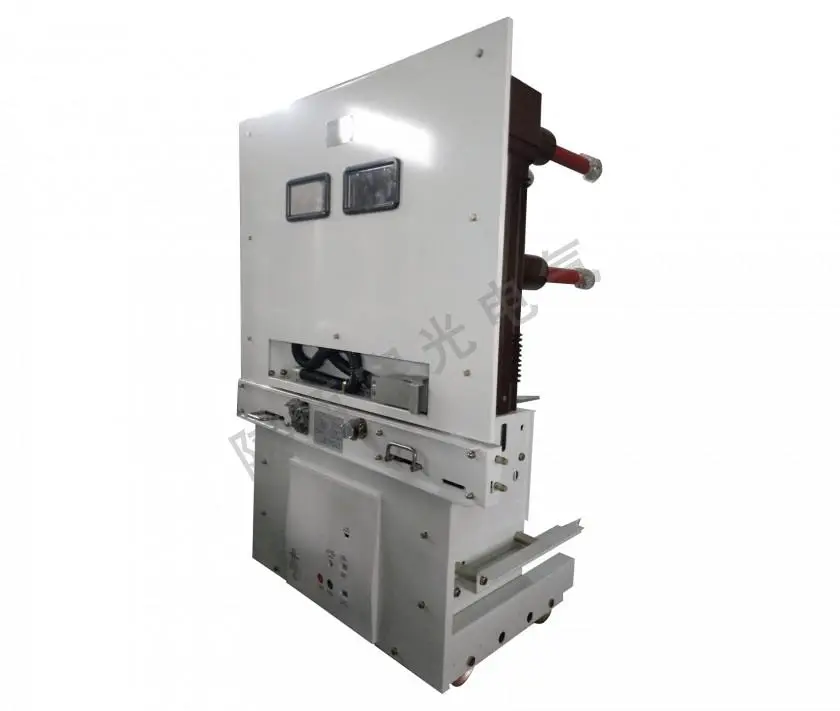
Comprehending Vacuum Load Break Switches: Definition and Operating Principle
How Vacuum Technology Transforms Arc Extinction?
When a vacuum load switch opens its contacts when it is under load, an electrical spark forms between the two poles that are far apart for a short time. Within the vacuum interrupter, a room with a pressure below 10⁻⁴ Pa, this arc acts very differently compared to when it is outside in the atmosphere. The arc can't keep going by ionization because there are no air molecules around. For a short time, metal mist from the contacts moves the current, but the arc ends very quickly because of fast diffusion and condensation on metal shields, usually before the first current zero in AC systems. This system stops the powerful arc blasts and harmful results of decomposition that happen in SF6 or oil switches.
Core Components Enabling Reliable Operation
Three important elements work together. The fixed and moving contacts are inside the vacuum interrupter case, which is made of copper-chromium metals that are strong against welding and erosion. The controlling mechanism—whether it's spring-loaded, electric, or manual—makes sure that the contact moves at the right time and speed so that the arc is always broken. Solid-cast epoxy resin or ceramic insulators are used to keep the dielectric strength high across open connections. This means that the system can handle short-term overvoltages of up to 2.5 times the standard voltage in industrial networks.
Industrial Applications Driving Global Adoption
Whenvacuum load switchesare used with medium-voltage motors in factories, they can switch between modes often without any damage. These switches are used in solar substations and wind farms to handle sudden surges in power from inverter systems. In cities, where room is limited, small circuit breakers are built into ring main units instead of big ones. When mining in places with a lot of dust and corrosion, sealed vacuum technology is needed because regular air switches would break down early from touch contamination.
Technical Dimensions of Vacuum Load Break Switches
Voltage Classes and Current Ratings
Around the world, medium-voltage distribution usually works between 6kV and 40.5kV. Yuguang's product line covers the whole range and can be used with a variety of grid designs. The FZN21-40.5 line can handle constant currents of up to 630A and is designed to protect transformers with a rating of 3150kVA or higher. The 12kV types, like the YGFZN25B series, can handle loop currents up to 31.5kA, which is enough for secondary substations in towns with lots of people. The current grades are in line with IEC 62271-103 standards, which means they are compatible with buying rules around the world.
Critical Component Engineering
Vacuum interrupters are put through a lot of tests to make sure they work well for a long time. They have been proven to work after 10,000 mechanical operations and 100 full-load current interrupts. The contact method uses wires with a spiral shape that create radial magnetic fields. These fields spread arc energy out equally to reduce erosion. Solid-cast epoxy insulation covers live parts and achieves IP67 entry protection against water and particles getting in. This is a big improvement over air-insulated options in chemical plants and seaside substations. Compared to standard three-position disconnect switch assemblies, Yuguang's combined modular design cuts cabinet width to less than 500 mm, making the best use of space.
Performance Comparison with Air Load Switches
Because rust and arcing damage contacts, air load switches need to have their contacts checked and replaced every 5,000 actions. This gap can be ten times longer with vacuum load switch technology, and fire risks from arc-generated hot gases are eliminated. Breaking capacity stays the same over the working lifetime. However, air switches lose their ability to break as their contacts wear out, which means they need to be replaced too soon. In vacuum, dielectric healing after a current interruption happens 100 times faster. This lowers the voltage stress on equipment nearby and makes the system more stable during transients.
Vacuum Load Break Switch vs. Other Switchgear Options—Informed Decision-Making
Environmental and Operational Distinctions from SF6 Technology
SF6 gas-insulated load switches are coming under more and more regulatory pressure because they release greenhouse gases that are 23,500 times more powerful than CO2 at warming the Earth. Vacuum load switch units don't release any gases, which is in line with environmental rules in California and the European Union. Maintenance requirements vary greatly. For example, SF6 systems need to be checked for gas density and leaks on a regular basis, and they need expensive recycling processes when they are turned off. According to utility comparison data, vacuum units lower the total cost of ownership by 30–40% over a 25-year service life because they get rid of these practical problems.
Clarifying the Distinction Between Load Switches and Circuit Breakers
Vacuum load switches cut off currents up to the point where they can break, which is usually enough to stop load currents and transformer magnetizing inrush. They don't have the ability to automatically find faults or cut off short circuits above 31.5kA. Vacuum circuit breakers have advanced relay safety systems and can handle breaking loads of more than 100kA, making them good for protecting feeders and connecting generators. Load switches are a cheap option when used with current-limiting fuses. For example, the FZRN21-40.5D has a vacuum switch and high-voltage fuses that work together to protect against short-circuits just like circuit breakers but cost 60% less to install.
Evaluating Manufacturer Reliability and Service Networks
Legacy installations are mostly made by well-known names like ABB and Siemens, but delivery times for custom designs can be as long as 16–24 weeks. New makers, like Yuguang, use flexible production methods to make standard models in 7–15 days and custom units in 30–60 days. This helps them meet the tight project schedules that come with EPC contracts. Yuguang has ISO9001:2015 quality management certification, ISO14001 environmental compliance certification, and a national high-tech company title backed by 39 utility model patents. These are all official certificates that prove performance. Independent testing according to IEC and GB standards makes sure that the equipment can work with equipment from other countries' grids.
Procurement and After-Sales: Buying and Maintaining Vacuum Load Break Switches
Strategic Sourcing Considerations
When purchasing managers try to find the best balance between price and reliability, they look for providers that offer clear technical documentation and the ability to change the numbers they buy. Yuguang can handle small orders all the way up to big deliveries of many units, making it suitable for both pilot projects and large-scale grid growth. Moisture-proof wooden packing that meets ISPM-15 standards protects the integrity of shipments going overseas during travel. Risks can be reduced by having warranties that last for 24 months after the machine is put into service, and getting extra parts from regional distribution centers cuts down on downtime when parts need to be replaced.
Installation Best Practices
Professional installation instructions forvacuum load switchesmake sure that the mechanical connection and electrical linking with nearby switches are done correctly. Specifications for torque in terminal connections stop hotspots that lower contact resistance over time. Pre-commissioning checks, such as measuring contact resistance, checking insulation resistance at 2500V DC, and counting mechanical operations, make sure the system is ready to be turned on. Yuguang's technical support teams work with EPC contractors to make sure that the delivery of equipment doesn't interfere with important building goals. This keeps the project on schedule and on budget.
Maintenance Protocols Extending Service Life
Every year, routine checkups check the vacuum load switches' integrity and contact wear signs by checking the AC withstand voltage. External checks focus on lubricating the working gear and making sure the auxiliary circuit stays connected. The sealed vacuum interrupter doesn't need any upkeep on the inside. It's easy to figure out what's wrong with common problems: failure to close usually means fuses have blown, setting off mechanical interlocks; contact burning means the terminals aren't torqued enough. Yuguang's maintenance agreements include yearly site visits, free small repairs, and priority access to technical hotlines. Compared to installations that are self-maintained, these agreements cut the time of unplanned outages by 50%.
Why Choose Yuguang Vacuum Load Break Switch Solutions?
Customisation Addressing Industry-Specific Challenges
Renewable energy projects have special needs, like having to deal with a lot of switching cycles, patterns that are full of harmonics, and big changes in temperature in outdoor substations. The YGFZN25B line from Yuguang has better contact materials that can withstand 30,000 operations and ceramic coatings that make them more resistant to rust in salt-fog coastal settings. Explosion-proof containers that meet IECEx standards and keep internal arcing problems from spreading to the outside are useful in mining. Metallurgical plants need to be able to work with arc furnaces. Customized spring systems give these plants the fast closing speeds they need to power reactive loads without contact bounce.
Manufacturing Excellence Driving Product Reliability
Forvacuum load switches, copper metals that don't rust and plastic seals with an IP67 rating are the first raw materials that are chosen after a quality check. Precision cutting with aerospace-grade CNC tools makes sure that the dimensions for vacuum bottle assembly are accurate to within 0.01 mm. The surface is treated with a ceramic coating, then a powder coating, and curing at a steady temperature. This gives the product salt spray protection of more than 1000 hours, as tested by ASTM B117. Type testing according to GB1984 high-voltage switchgear standards, regular testing of every production unit, and accelerated life testing selecting one unit per batch to prove mechanical endurance are all parts of multi-stage verification.
Comprehensive Service Model Differentiating Market Position
Yuguang's value offering goes beyond just selling products; it also includes full-lifecycle partnerships. As part of pre-sales engineering help, load flow estimates, short-circuit analyses, and switchgear layout optimization based on site limits are all done. As part of the promises made after the sale, installation control, operator training programs, and free changes to the plan when grid configurations change are all included.
Equipment transformation services help utilities move from oil-filled switchgear to maintenance-free vacuum load switch technology. They do this by providing full upgrade solutions that include engineering plans, logistics for removal, and planning for disposal. This unified method lowers the project's risk and speeds up the return on investment, making Yuguang more of a strategic partner than a transactional provider.
Proven Performance in Demanding Applications
In the Midwest of the United States, a 500MW wind farm put 36 units of Yuguang FZN21-40.5 switches in collector substations. Over three years, the farm had 99.7% uptime and no unplanned repair events. A steel mill in the Southeast replaced old SF6 switchgear with YGFZN25B units. This cut the annual cost of maintenance by $47,000 and met state environmental requirements. The results that have been confirmed show that Yuguang's vacuum load switch technology makes a difference in a lot of different industries.
Conclusion
To choose the right vacuum load switch, you have to weigh the technical specs, the costs over its lifetime, and the trustworthiness of the seller. Vacuum interrupter technology has grown into the best way to switch medium-voltages because it is safer, better for the environment, and easier to maintain than older versions that use air or gas insulation. When considering suppliers, procurement teams should give more weight to makers that can show they have strong certifications, open customization options, and extensive service networks. Yuguang has been making vacuum switchgear for 16 years and has 39 patents and is recognized as a national high-tech enterprise. This makes the company a reliable partner for utilities, industrial plants, and infrastructure developers who need reliable, cost-effective solutions to their power distribution problems.
FAQ
What is the typical lifespan of a vacuum load switch?
Modern vacuum load switch models have mechanical lives that last more than 10,000 operations and electrical lives that last 100 full-load delays before the contacts need to be replaced. The actual service life relies on how it is used; systems that don't switch on and off often and are in mild environments usually last 25 to 30 years. This may only last 15–20 years if it is used a lot or if the temperature is very high or very low. However, the protected vacuum interrupter usually lasts longer than other parts of switchgear.
How does vacuum technology improve safety over traditional air switches?
Vacuum arc extinction takes place inside a sealed room, which stops the building of explosive pressure and the release of hot ionized gas that can cause burns in air switches. Since there is no toxic shielding oil, there is no chance of a fire at all. Maintenance workers aren't exposed to any harmful results of decomposition, and the small size cuts down on the approach lengths needed for safe operation, which makes processes involving energized equipment safer for workers.
Can vacuum load switches integrate into existing switchgear?
Standardized installation measurements according to IEC 62271-200 make sure that they work with modular switchgear boxes that are made of metal. Electrical linking follows standard procedures; extra contacts work without any problems with current control circuits. Replacing oil-filled switchgear with vacuum-filled ones usually only needs minor changes to the busbar, which are usually done during planned breaks. Yuguang offers full interface drawings and on-site testing help to speed up integration projects and keep system downtime to a minimum during upgrades.
Partner with Yuguang for Reliable Vacuum Load Switch Solutions
Yuguang solves the most important problems that power system users face when they try to buy things: not knowing if the parts will work together, having to do a lot of maintenance, waiting for deliveries, and not having enough help for specific uses. We offer a range of vacuum load switch units from 6kV to 40.5kV that fully comply with IEC and GB standards. These switches can be customized based on specific situations and are built using combined modules. We also offer full service from engineering advice to installation and ongoing technical support. Yuguang is a certified vacuum load switch maker with 39 patented innovations and ISO9001 certification. They offer reliable operation, low costs, and stress-free project completion. You can email our engineering team at ygvcb@hotmail.com.
References
1.IEEE Standard C37.07-2020, IEEE Guide for Selection of Switchgear. Institute of Electrical and Electronics Engineers, 2020.
2.Slade, Paul G. The Vacuum Interrupter: Theory, Design, and Application. CRC Press, 2017.
3.IEC 62271-103:2021, High-voltage switchgear and controlgear – Part 103: Switches for rated voltages above 1 kV up to and including 52 kV. International Electrotechnical Commission, 2021.
4.Rao, K. Prakasa. Switchgear Protection and Power Systems. 12th Edition, Khanna Publishers, 2019.
5.CIGRE Working Group A3.27. Vacuum Switchgear. Technical Brochure 706, International Council on Large Electric Systems, 2017.
6.GB 1984-2014, High-voltage alternating current circuit-breakers. Standards Press of China, 2014.

Send Inquiry
You may like
