
What is switchgear and power distribution?
Electrical infrastructure's brain is made up of switchgear and power distribution, which monitor and control the flow of electricity in utility, business, and industrial settings. Electrical circuits are protected, controlled, and kept separate by power distribution switchgear, which includes things like circuit breakers, disconnect switches, busbars, safety relays, and measuring devices that work together to safely handle electrical loads. At its heart, switchgear makes sure that power keeps flowing and protects people and equipment from breakdowns, overloads, and short circuits across voltage levels from 480V to over 40.5kV in harsh industrial settings.
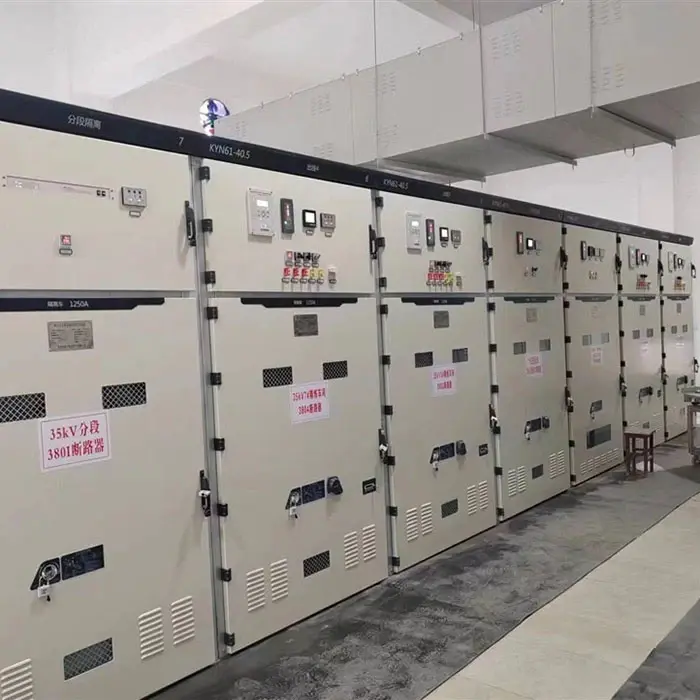
Understanding Switchgear and Power Distribution Fundamentals
Defining Switchgear Components and Their Functions
Modern power distribution systems depend on many linked parts working together well. Circuit breakers stop the flow of electricity when something goes wrong. They are automatic safety devices. Busbars, which are made of copper or aluminum, carry power to many lines easily. Protective switches constantly check the system's settings and set off breakers when they find problems. Instrument transformers detect voltage and current so that they can be used to set meters and keep things safe. Control panels give workers ways to check on the state of the system and make switching operations locally or remotely.
These parts fit inside enclosures that are made to meet certain protection standards, ranging from IP54 for controlled indoor settings to IP67 for harsh outdoor locations that are exposed to dust, water, and temperature changes. The form of the enclosure has a direct effect on how long the equipment lasts and how often it needs to be maintained during its working lifecycle.
Medium Voltage vs. Low Voltage Switchgear Applications
Which voltage rating to use depends on how much power is needed, how far the power is being sent, and safety concerns. Most of the time, business buildings, smaller factories, and final distribution points are served by low voltage systems (below 1kV). Medium voltage switchgear (1kV to 52kV) distributes a lot of power in utility substations, big factories, renewable energy facilities, and building projects that need to send power over long distances with little loss.
Yuguang focuses on middle voltages between 6kV and 40.5kV, meeting the unique needs of power companies, steel mills, mining operations, petrochemical complexes, and wind farms where stability directly affects the safety and continuity of operations. Our tech team comes up with solutions that meet voltage class standards and work well with the infrastructure that's already in place.
Metal-Clad, Metal-Enclosed, and Modular Configurations
Accessibility for upkeep, safety, and the use of room are all greatly affected by the structural design of power distribution switchgear. Metal-clad switchgear has fully enclosed sections with circuit breaker elements that can be taken out for repair without having to shut down the system. Metal-enclosed versions are cheaper, and fixed-mount breakers work well for cycles that happen less often.
It takes up more space but is easier to maintain because air-insulated switchgear (AIS) uses air in the atmosphere as the main shielding medium. Gas-insulated switchgear (GIS) uses SF6 gas in protected chambers to drastically reduce physical dimensions while providing better performance in confined or dirty areas.
The integrated modular method used by Yuguang blends the best parts of old-fashioned designs with the latest ways of making things. Our small layouts make installations about 30% smaller than with regular layouts, and the sealed construction achieves IP67 ratings, which are good for coastal areas, chemical processing zones, and underground installations where corrosive atmospheres could damage equipment.
Benefits and Safety Features of Power Distribution Switchgear
Operational Reliability and System Uptime
Higher-quality equipment directly leads to less unexpected downtime and longer asset life. When equipment fails in vital facilities like data centers that need to be available 99.99% of the time, hospitals that support life-safety systems, or factories that use continuous processes, there are big financial loses and safety risks. Modern medium voltage switchgear with vacuum interruption technology and permanent magnet working mechanisms gets rid of the wear and tear that comes with hydraulic or spring-charged motors.
Yuguang's vacuum circuit breakers have fixed magnet systems that don't need to be adjusted or oiled and can do more than 30,000 mechanical operations without any problems. The vacuum arc extinction process takes place in sealed rooms and doesn't need any new mediums for the equipment's 30-year design life. If procurement workers look at the total cost of ownership instead of just the purchase price, this means that lifetime costs will be much lower.
Arc Flash Protection and Personnel Safety
Arc flashes are one of the most dangerous things that can happen in electrical repair because they can seriously hurt people and damage buildings. Advanced switchgear has many layers of safety features, such as pressure release vents that direct explosive energy away from workers, arc-resistant construction that has been tested to meet IEEE C37.20.7 standards, and built-in arc flash recognition systems that shut down the power right away within milliseconds. This lets people work near powered systems with known levels of risk because equipment ratings show where people can go during arcing problems.
When we do engineering, we build safety in from the start, instead of adding safety features after the fact. With compartmentalized building, grounded barriers separate functional zones like breaker compartments, busbar sections, and wire termination areas. Mechanical interlocks stop dangerous actions like racking breakers while they're loaded or opening room doors while circuits are still live. Visual signs make it easy to see where the breakers are and whether they are isolated, which cuts down on mistakes made by humans during repair procedures.
Addressing Common Failure Modes Through Design
A lot of switchgear breakdowns are caused by overheating, which can be caused by loose connections, wires that are too small, or not enough air flow. Localized heat from high-resistance joints breaks down insulation and speeds up the failure of components. Yuguang handles heat management with aerospace-grade precision-machined contact surfaces, silver-plated connection points that reduce contact resistance, and thermographic inspection methods that are used during production. Our ceramic coating and powder coating surface treatments help move heat away from surfaces while also protecting them from rust. This makes them last longer in harsh settings.
Degradation of insulation is another important cause of failure, especially in wet or dirty environments. Our solid-sealed pole design covers living parts in epoxy resin, so there are no gaps in the seal where moisture or dirt can get in. With this method of construction and external separators made of silicone rubber that don't track or wear away, the device will work reliably in temperatures from -40°C to +60°C without needing to be cleaned or replaced every so often.
Comparing Power Distribution Switchgear Options for Informed Decisions
Evaluating Insulation Technologies and Environmental Suitability
Air-insulated power distribution switchgear is easy to use and can be inspected visually, but it needs to be installed in a climate-controlled area and takes up a lot of room. Gas-insulated options for power distribution switchgear have a much smaller size and provide the same electrical performance in 10–15 percent of the space. But SF6 gas is bad for the environment because it can cause a lot of global warming. This means that regulators are looking closely at it and there may be limits on some markets in the future.
Yuguang's circuit breakers are based on vacuum insulation technology, which doesn't harm the environment and gives better stopping performance. Vacuum interrupters quickly put out sparks without making breakdown products, which keeps the dielectric strength high throughout the life of the equipment. Because the room is sealed, it keeps out moisture and contamination. This makes vacuum technology perfect for use in steel mills with metal dust, chemical plants with corrosive vapors, or marine settings with salty air.
Withdrawable vs. Fixed Circuit Breaker Configurations
The theory of maintenance has a big impact on the choice of setup. Fixed-mounted breakers are cheaper at first, but they make the power loss last longer while repairs or tests are being done because the whole piece of switchgear has to be turned off. Breakers that are fixed on trucks and can be pulled out of service can be stacked out of the way to create separate areas where they can be replaced or tested without interrupting service to nearby feeds. Standardized breaker interchangeability lets facilities keep spare units on hand so that they can be quickly fixed without having to wait for repair cycles or vendor service responses.
Our detachable circuit breaker switchgear uses precise ball-bearing guided racking mechanisms that need less than 300N of entry force. This means that a single user can handle it without any mechanical help. Positive mechanical interlocks stop racking when the load is on them, and clear position signs (fully detached, test position, connected) make switching actions clear. The racking process is finished in less than two minutes, which cuts down on contact time during live work procedures and the need for repair windows, which is very important in industries that use continuous processes.
Comparing Manufacturer Capabilities and Support Infrastructure
Global equipment makers like Schneider Electric, Siemens, ABB, and GE control international markets with a wide range of products, well-established approval databases, and service networks that reach all over the world. These benefits are especially helpful for international companies that need to make sure that all of their sites and projects follow the same set of rules. But procurement professionals are becoming more and more aware that specialist makers offer clear benefits in terms of customization options, quick technical support, and lowering costs over the lifecycle.
Yuguang fills this gap with our unique mix of specific knowledge and cross-border service skills. Our 39 protected technologies show that we have really come up with new ideas instead of just copying old designs. As a national high-tech company that has been certified by ISO 9001:2015, ISO 14001, and ISO 45001, we have quality systems that are on par with those of international companies, but we can customize our products in ways that they can't do cheaply. For custom engineering jobs with large minimum order sizes, well-known manufacturers usually need six to nine months. Yuguang can make custom solutions in 30 to 60 days, and the smallest order is just one unit. They can do this for trial projects, emergency replacements, or sites that need specifics.
Procurement and Maintenance Considerations for B2B Clients
Strategic Sourcing Channels and Supplier Selection Criteria
Direct connections with manufacturers can save you money, let you work together on technical issues, and make your supply chain more clear, but they may require longer wait times and higher minimum order amounts. Specialized wholesalers make sure that there is enough inventory, that shipping is streamlined, and that customers in the area can get help, all while raising the cost of the equipment. There is used equipment and old spare parts on secondary markets that you can't get from the original makers. However, you need to carefully check the quality and make sure the guarantee is valid.
Procurement workers should look at more than just price when they are comparing medium voltage power distribution switchgear sources. Customization options and shipping depend on how well the seller can make things. For example, can the supplier meet project-specific standards for busbar configurations, protective relay specifications, or environmental ratings? Quality standards make sure that the process is disciplined and can be tracked back to the source, which is important for insurance purposes, following the rules, and expecting long-term dependability. Having the right technical help during the installation and testing phases can make the difference between successful projects and ones that go wrong and need expensive fixes.
Yuguang's vertically integrated operations cover the whole value chain, from processing raw materials to helping with final execution. We choose corrosion-resistant metals and IP67-rated seals by carefully inspecting them when they come in. We use precision shearing and pressing to make structural parts, and aerospace-grade machining to make important parts like solid-sealed poles and arc extinction chambers. This end-to-end control gets rid of the weaknesses in the supply chain and the inconsistent quality that come with outsourcing manufacturing. It also makes sure that every part meets our performance standards.
Customization Requirements and Lead Time Management
Standard stock items don't always fit perfectly with building infrastructure that was built up over many years with a variety of tools. Engineering changes are often needed because of differences in busbar spacing, wire entry points, the need to integrate protective relays, and the need to make sure that communication protocols work with each other. Suppliers who offer true customization options instead of small changes to set designs provide measured value through lower installation costs, better working efficiency, and smooth system integration.
Our scenario-based approach to customization solves problems that are unique to each application in a methodical way. Installations for wind power need to be able to handle salt fog, shaking, and connecting to SCADA systems that watch over turbine farms. Explosion-proof ratings, success in extreme temperatures, and resistance to conductive dust buildup are all things that mining companies need. For railroad electricity projects to work, the layouts have to be small enough to fit in narrow right-of-way areas and work with signaling systems. Instead of forcing applications to fit into normal product limits, Yuguang's tech team comes up with solutions based on what the business needs.
The schedule for delivery has a big effect on the project's finances through the critical path and the amount of operating capital that is needed. Standard goods that ship in 7–15 days can be quickly put to use for planned repair or emergency replacements. Customized designs, on the other hand, need to be ordered earlier because they take 30–60 days to make. We keep you informed about every step of the engineering and manufacturing process by sending you weekly progress reports and working around your busy plans when the needs of the project call for faster delivery.
Installation Support and Preventative Maintenance Planning
Because of how complicated the equipment is and how important safety is, skilled fitting help is required, not just optional. When torque values on busbar links are wrong, high-resistance joints form, which causes the joints to fail early. When safety relays are set incorrectly, they trip for no reason or don't protect against faults well enough. Not following the right steps when terminating a wire can lead to tracking and, eventually, insulation failure. Installation guidance from the manufacturer makes sure that the system is properly set up and documented so that it can be used for future maintenance.
As a normal service, Yuguang gives full assembly instructions. This is not an extra service that costs extra. Our field techs work together with customer staff to place equipment, connect it to other systems, test its functionality, and teach operators how to use it. We provide full as-built paperwork that includes single-line diagrams, security coordination studies, and maintenance schedules that are based on real working conditions instead of general suggestions. This base makes it possible for building maintenance teams to do preventative maintenance well, which keeps equipment reliable and extends its life over the 30-year plan horizon.
Scheduling preventative maintenance strikes a mix between how often inspections are done and how much they affect operations. Every three months, thermographic scans find hot spots that are starting to form before they fail. Every year, functional tests are done to make sure that the safety relays and circuit breakers are working correctly. Measurements of insulation resistance done every three years look for signs of wear and tear that need fixing. As part of our maintenance agreements, we provide extra parts, expert advice for fixing problems, and free planning for modifications when building changes or load changes mean that equipment needs to be updated.
Power Distribution Switchgear Standards, Regulations, and Compliance
International and Regional Certification Requirements
As a minimum, global standards organizations set basic requirements for safety and efficiency. IEC 62271-200 lists the technical standards for medium-voltage metal-enclosed switchgear that are accepted in developing, Asian, and European countries. IEEE C37.20.1 lists the standards that are most common in North American locations. There are some small changes in how they are tested and rated, though. UL 1558 is a third-party safety approval that is needed for many insurance plans and city electrical checks. NEMA standards cover consistent sizes and instructions for use, which makes it easier to switch out equipment.
Instead of trusting verbal claims, procurement workers must check the supplier's compliance paperwork. Type test records from approved labs show that the design of the equipment meets standard requirements. These reports include tests for dielectric strength, temperature rise, short-circuit resistance, and mechanical endurance. Routine test papers prove that certain pieces of equipment went through the required testing at the plant before being sent out. Yuguang keeps full test records that can be linked to specific batch numbers. This gives the necessary paperwork for governmental approval and asset management systems.
In addition to basic safety and efficiency norms, environmental laws are having a bigger impact on the choice of power distribution switchgear. RoHS rules limit the use of dangerous materials in electrical goods sold in countries in the European Union. Chemicals that need to be registered and given permission are controlled by REACH rules. Even though SF6 gas-insulated power distribution switchgear is still legal, many organizations are looking at vacuum technology options because of concerns about their carbon footprint and the possibility of future limits. Our vacuum interruption method for power distribution switchgear gets rid of worries about carbon gases while providing the same or better technical performance across the medium voltage range.
Future-Proofing Investments Through Compliance Awareness
Regulatory environments are always changing, which means that tools made to meet the bare standards of the past could become obsolete. In many places over the last 20 years, arc flash danger analysis has become law, which means that older switchgear that doesn't have incident energy values needs to be fixed or replaced. As SCADA systems moved from separate networks to infrastructure linked to the internet, cybersecurity standards for networked protective devices came into being. After earthquakes damaged power lines in areas prone to shaking, seismic training became more important.
Yuguang designs equipment anticipating regulatory evolution rather than reacting to minimum current requirements. Our arc-resistant construction meets the testing standards set by IEEE C37.20.7, which means that it provides recorded safety levels for areas that can be reached during internal arcing faults. Modern standards like Modbus, DNP3, and IEC 61850 can be used for communication, making it compatible with digital substation designs and smart grid projects. According to IEEE 693, seismic quality testing shows that structures are strong and work properly during and after earthquakes, which protects investments in important infrastructure.
Understanding legal standards includes more than just the power distribution switchgear itself. It also includes how to set it and how to use it. The National Electrical Code (NEC) sets the rules for working spaces, grounding, and arc flash marking for sites in the United States. The Canadian Electrical Code (CEC) sets the same standards for projects in Canada. Occupational safety rules in the US (OSHA) or similar groups around the world require electrical safety programs, trained staff training, and personal protective equipment that fits the amount of incident energy exposure.
Conclusion
Power distribution switchgear is an important investment for the long-term success of a building, the safety of its workers, and the reliability of its operations. Understanding the functions of components, voltage classifications, insulation technologies, and configuration choices lets procurement professionals choose equipment that really meets practical needs instead of just going with well-known names or the cheapest ones at first.
The things that are being judged must take into account how customizable the product is, how reliable the shipping is, how good the professional help is, and how much it will cost over its entire 30-year lifecycle. Checking for regulatory compliance and planning for the future protect investments from becoming useless and make sure they can legally work in environments where standards are changing. When you work with makers that show they have real technical skills, a strict quality system, and a commitment to quick service, you get measured benefits during the project execution and operational phases.
FAQ
What voltage levels are most common in industrial power distribution switchgear?
For commercial use, medium voltage switchgear usually works between 4.16kV and 38kV. The most common regulated voltage classes around the world are 6.6kV, 11kV, 22kV, and 33kV. For bulk power transfer, utility-scale systems can go up to 40.5kV. Choosing the right voltage relies on how much power is needed, how far it needs to be sent, and how the utility wants to connect to the system. Yuguang's product line includes everything from 6kV to 40.5kV, meeting a wide range of regional standards and application needs.
How frequently should power distribution switchgear undergo maintenance inspections?
The frequency of inspections relies on the working setting, how much the equipment is used, and how it was designed. Every three months, thermographic scans find new heat problems without stopping operations. An annual checkup usually includes a visual check, making sure the motor parts work, and making sure the safety relays work. Every three to five years, a full test is done that includes measuring the insulation resistance, checking the contact resistance, and doing a full mechanical review. Vacuum circuit breakers with fixed magnet systems require much less maintenance than air-magnetic or oil circuit breakers that need to be serviced on a regular basis.
Can switchgear be customized for unique industrial specifications?
Modern makers offer different levels of personalization, from small changes to the design to fully engineered solutions. Changes could include special busbar arrangements, built-in protection for green energy interconnections, the use of communication protocols, higher environmental ratings, or small footprints for sites with limited room. Yuguang's engineering skills allow for a lot of customization to fit harsh conditions, the needs of specific industries, and the ability to work with existing infrastructure. You can place an order as little as one unit, so you don't have to worry about big production runs.
Partner with Yuguang for Reliable Medium Voltage Switchgear Solutions
For electrical infrastructure projects to be successful in the long term, they need more than just stock goods. They also need partners who understand operations problems and can deliver custom solutions. With 39 patents and recognition as a national high-tech business, Shaanxi Yuguang Electric Co., Ltd. is a production excellence company that specializes in 6kV-40.5kV power distribution switchgear. Our modular, integrated designs take up less space during installation and offer IP67 weather protection, making them perfect for tough uses in power generation, heavy industry, green energy, and important infrastructure. As a well-known company that has a lot of quality standards and can provide service across borders, we can give procurement professionals the customization options, quick shipping, and full-lifecycle support they need. Get in touch with our expert team at ygvcb@hotmail.com to talk about your unique needs and find out how Yuguang's mix of innovation, quality, and service can help your next project in a way that you can measure.
References
1. IEEE Standards Association. (2015). IEEE Standard for Metal-Enclosed Low-Voltage AC and DC Switchgear – C37.20.1-2015. Institute of Electrical and Electronics Engineers.
2. International Electrotechnical Commission. (2021). High-Voltage Switchgear and Controlgear – Part 200: AC Metal-Enclosed Switchgear and Controlgear for Rated Voltages Above 1 kV and Up to and Including 52 kV. IEC 62271-200:2021.
3. Zhang, L., & Wang, H. (2019). Vacuum Circuit Breaker Technology and Applications in Medium Voltage Power Distribution Systems. Journal of Electrical Engineering & Technology, 14(3), 1127-1139.
4. National Fire Protection Association. (2023). NFPA 70E: Standard for Electrical Safety in the Workplace. National Fire Protection Association Publications.
5. Chandra, A. K., & Singh, B. (2018). Medium Voltage Switchgear: Design, Testing, and Maintenance Practices for Industrial Applications. Electric Power Systems Research, 165, 234-247.
6. Das, J. C. (2017). Arc Flash Hazard Analysis and Mitigation in Power Distribution Systems. IEEE Industry Applications Magazine, 23(2), 40-52.

Send Inquiry
You may like
