
What is the difference between a load switch and a switch disconnector?
If you are choosing electrical tools for high-voltage distribution systems, it is important to know the differences between switching devices and how they work. This will help you avoid costly delays and safety risks. A Load switch is made to safely stop the flow of current when it's working normally, and it comes with arc-extinguishing features for use with live circuits. On the other hand, a Switch disconnector's major job is to provide obvious separation for maintenance reasons. More recent versions can also do some load-breaking tasks. By knowing these differences, you can be sure that the tools you choose meets your working needs, safety rules, and compliance standards.
Understanding Load Switches
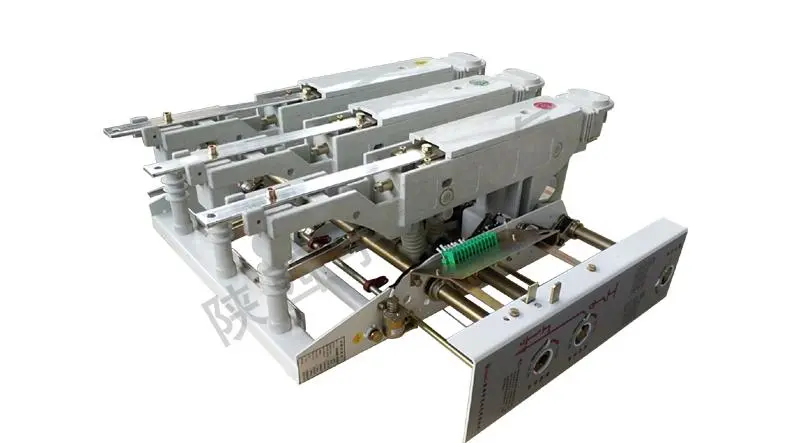
Load switches are active control parts of electrical networks that can make and break circuits while carrying the full current. In contrast to simple isolators, these gadgets have safety features that put out the electrical arc that happens when the two wires are disconnected while the load is on them.
Core Functionality and Design
Modern Load switches have spring-operated parts that separate contacts very quickly, usually in less than 100 milliseconds. This quick-action design cuts down on the length of the arc, which lowers the risk of contact damage and heat stress on the insulation around it. Some types are mechanical and use vacuum or SF6 gas tanks to stop arcs, while more modern electronic types use semiconductor switching to precisely control the time. In most medium-voltage situations, the estimated current capacity is between 200A and 630A, and the short-circuit value is between 20A and 25kA for three seconds.
Industrial Application Scenarios
These gadgets work great when you need to switch things around a lot without putting safety at risk. In photovoltaic power plants, they are in charge of connecting and disconnecting inverter panels during the daily rounds of starting up and shutting down. They are used to handle the feeder circuits that bring reactor agitators and mixing tools to chemical processing plants. Because they can stop magnetizing currents, they are very useful in transformer switching situations where a rapid break can cause dangerous voltage spikes. Today's sealed construction choices are good for harsh environments because they keep internal contacts safe from corrosive gases, conductive dust, and water that can get in from places like mines and metals.
Performance Limitations
Even though Load switches are very flexible, they have limits on how many problem interruptions they can handle. They can't safely stop short-circuit currents, so they need to work with circuit breakers or fuses that are further up the line. The switching speed is fine for normal activities, but it might be slower than the circuit breaker's reaction time when something goes wrong. The number of switching cycles and the features of the load determine how often maintenance needs to be done. Under full load, contacts should be inspected every 5,000 to 10,000 processes.
Understanding Switch Disconnectors
Visible circuit isolation is a top priority for Switch disconnectors. They create a clear air gap that proves electrical separation during repair tasks. Their main job is to make sure that people are safe, not to switch between operations.
Isolation Principles and Variants
With these tools, you can see that the contact has been separated because the blades are open or the walls are clear. Overcurrent protection is built into fuse-combination disconnectors, which have high-voltage fuses built into the body of the disconnector to protect against both short-circuits and separation. Non-fused versions only focus on separation and need their own safety equipment. The Load-break disconnectors are a mixed type that can switch inductive currents and cable charging loads with basic arc-interrupt capability. However, they still can't break loads as well as dedicated Load switches.
Maintenance and Safety Applications
Switch disconnectors are useful for infrastructure workers who need to follow lockout-tagout methods when servicing equipment. They are used by workers in data centers to safely disconnect UPS systems and generator feeds before they do maintenance on batteries or fixes to coolant systems. They are used to make safe work areas at airport electrical substations when changing transformers or improving switchgear parts. The mechanical connecting features keep the circuits from accidentally closing onto grounded ones, which is a major safety issue in high-voltage areas.
Operational Constraints
Most Switch disconnectors don't have the speed and arc-management technology that are needed to switch loads often. If you run them under a lot of power, they could get damaged by contact welding and insulation. Their scores for mechanical life are based on occasional use rather than thousands of switching cycles. Because they have limits on how much current they can break, they can't stop fault currents and can't be used as main protection devices.
Comparative Analysis: Load Switch vs. Switch Disconnector
Modern devices have a lot of functions that overlap, which can make it hard to tell them apart, but their main goals are still different. Figuring out where each device does its best helps with buying choices.
Switching Capability Differences
In addition to handling resistive and inductive loads with estimated breaking capacity, Load switches also handle energized circuit interruption as their main purpose. Isolation with obvious separation is what Switch disconnectors do. They are only good for no-load or minimal-current switching. Load switches provide the arc-interrupt technology you need when your application needs to switch operations often, like when you need to handle motor feeds, capacitor banks, or distribution transformers. Switch disconnectors with visual proof are useful for projects that need clear isolation points for repair access.
Standards and Things to Think About When Rating
The rules for Load switches are set by IEC 62271-103, which lists the different levels of mechanical and electrical durability, from E3 (1,000 load operations) to E6 (10,000 operations). IEC 62271-102 says that Switch disconnectors should focus on separation integrity and interlocking dependability instead of breaking performance. UL 98 and UL 98B are North American standards for industrial control tools that can switch between tasks. When looking at the supplier's paperwork, make sure you check the device's rated voltage (12kV to 40.5kV for medium-voltage uses), rated current (200A to 630A is a usual range), and short-time withstand current, which shows that the structure is still solid when there is a problem.
Real-World Selection Examples
In factories with automatic production lines, Load switches are installed on the feeds of each piece of process equipment. This lets the equipment be turned off from a distance, without workers having to access panels that are on. When EPC companies build wind farms, they put Load switches in ring main units (RMUs) at the base of each turbine. These switches are switched often so that repair rotation plans can be met. At the same time, Switch disconnectors protect isolation points at the main links of substation transformers, where work only happens during planned downtime. Both types of devices are used in urban train transit systems. Load switches control the sectioning of traction power, and Switch disconnectors keep repair workers from accessing rectifier stations.
How to Choose Between a Load Switch and a Switch Disconnector?
To choose the right switching equipment, you need to carefully look at working needs, safety standards, and equipment lifecycle issues. This organized method avoids expensive mistakes when gadget features don't match up with what an application requires.
Assessing Operational Requirements
Write down your change frequency to start. Applications that need to run every day or several times a week need Load switches with the right electrical durability ratings. Figure out what kind of load you have. Motors produce inrush currents that put different amounts of stress on switching contacts than resistive heating loads. Because of the trapped charge, capacitor banks pose special problems when they need to be disconnected. Harsh environmental factors are very important.
Coastal sites have to deal with rust from salt spray, mine operations have to deal with conductive dust, and outdoor substations have to deal with high temperatures. Yuguang handles these situations by making custom designs with sealings that are marked IP67, alloys that don't rust, and ceramic coatings that make the goods last longer than standard ones.
Evaluating Technical Specifications
With the right amount of safety cushion, compare the stated voltage to the voltage in your system. A device rated at 12kV can work with 11kV circuits, leaving room for short-term overvoltages. To keep the temperature from dropping, the rated current must be at least 25% higher than the maximum load current. Short-circuit withstand ratings make sure that the structure stays strong during fault conditions.
Compare this number to the upstream safety device let-through energy. The mechanical endurance ratings show how long something is supposed to work. Yuguang uses aerospace-grade precision technology for core parts like solid-sealed poles and arc-extinguishing chambers, which makes their modular assembly method reliable for tens of thousands of cycles. The combined design lowers the area needed, which is helpful when adding on to existing substations that don't have a lot of room.
Balancing Cost and Reliability
When you add up the costs of upkeep, spare parts, and lost time, the initial cost of the tools is only 20 to 30 percent of the total cost over its lifetime. Load switches cost more to buy, but they need less upkeep because they have better contact materials and arc-management systems. Switch disconnectors are cheaper up front, but they may need to be inspected and serviced more often in difficult situations.
People who are in charge of buying things should ask for a lot of scientific information, like component-level drawings and test papers that prove the product meets IEC standards. Yuguang's 39 patents show that he is always coming up with new ideas in important areas like sealing technology, mechanical connecting systems, and touch materials. Our trustworthy credentials, including ISO9001, ISO14001, and ISO45001 certifications and national high-tech company recognition, give us the trustworthiness that big projects need.
Industry Trends and Future Outlook for Switching Devices
Digitalization, worries about the environment, and efforts to update the power grid are all changing the electrical equipment industry. Investing in facilities that will last helps to understand these trends.
Challenges in Traditional Equipment
Traditional switching devices have trouble integrating with smart grids because they don't have communication links that allow tracking and control from afar. The need for manual operation raises the cost of labor and the time it takes to respond to problems with the grid. Even though SF6 gas is a great insulator, it is 23,000 times more likely to cause global warming than CO2. This has led to pressure from regulators for other insulation materials. Even though switching equipment losses are small on their own, they add up over thousands of distribution points and lower the efficiency of the grid as a whole.
Emerging Technologies and Solutions
Smart Load switches now have sensors built in that check the temperature of the contacts, look for signs of mechanical wear, and record partial discharge activity. These data lines make it possible for predictive repair plans to be made that schedule service before problems happen. This cuts down on unplanned downtime. Intelligent disconnectors are powered and give feedback on their position. They can also be connected to SCADA systems and have event logging that keeps track of all operations for compliance reporting.
As vacuum interrupter technology keeps improving, it becomes possible for them to work for longer periods of time without any upkeep or gaseous protection. Yuguang's study is mostly about making goods that meet both Chinese GB standards and foreign IEC standards by combining knowledge of how to make things in China with knowledge of how to provide services in other countries. Our full-chain service model, which includes research and development, production, installation, and assistance after the sale, meets the growing need for complete solutions instead of just buying parts.
Strategic Procurement Approaches
Having long-term relationships with suppliers has benefits beyond just getting better prices. Preferred sellers offer engineering support during the planning phase, which helps improve equipment specs before they are bought. Flexible minimum order amounts allow for both trial projects and large-scale deployments. Yuguang accepts orders from as few as one unit up to large quantities, which helps with the building of infrastructure at any size. The success of a project schedule depends on how reliable the delivery is.
Standard items that ship within 7–15 days are good for replacements that need to be done quickly, while customized solutions that take 30–60 days work with planned building plans. Full help after the sale, including installation instructions, upkeep agreements, access to spare parts, and free change plans, keeps your investment safe for as long as it works.
Conclusion
To tell the difference between Load switches and switch disconnectors, you need to know what they're used for. Load switches control operating switching when the power is on and make sure that the arc is properly interrupted. They are best for repetitive operation cycles. Switch disconnectors separate two wires and make the disconnections clear for servicing safety. They mostly work during controlled outages. Instead of using these products interchangeably, your choice should be based on their real operational needs, the surroundings, and safety rules. Technical specs, following standards, and a supplier's skills all affect how well equipment works and how much it's worth over its lifetime. Working with makers that offer full technical support, the ability to customize products, and a track record of dependability will make sure that your electrical infrastructure meets both short-term and long-term operating needs.
FAQ
Can a load switch replace a switch disconnector in my installation?
Load switches can break the circuit, but they might not have the clear separation gap that is needed for repair work to follow safety rules. Many places require clear visible proof of circuit separation before people can touch equipment that is on. There are hybrid devices that can do both of these things, but check your local electricity code rules before using one.
Which safety standards apply to these devices?
IEC 62271-103 talks about Load switches, and IEC 62271-102 talks about Switch disconnectors. UL 98B is used in areas in North America. UL listing or a similar NRTL approval should be on equipment that is sold in the United States. The Chinese GB standards are very similar to the IEC requirements, but they have their own testing rules. Always make sure that the maker gives you test reports from approved labs that show they meet the standards.
How does device choice affect maintenance schedules?
Load switches with sealed vacuum or SF6 interrupters don't need much upkeep; during planned downtime, they usually only need to be looked at visually. Over thousands of processes, contact wear happens slowly. Switch disconnectors need to be checked and cleaned mechanically on a regular basis. This is especially important in dirty places where dust or moisture can damage bare wires. Motorized devices need extra care when it comes to calibrating the position sensor and lubricating the drive system, which makes servicing take longer and more complicated.
Choosing the Right Load Switch Supplier for Your Power Distribution Needs
Yuguang offers unique medium-voltage switching solutions that are backed by 39 patents and cover all product ranges from 6KV to 40.5KV. Our engineering team solves problems with compatibility by making designs that work in a wide range of difficult conditions, from seaside substations that have to deal with salt spray to mines that have to deal with conductive dust. The combined modular method cuts down on space requirements while improving dependability through better sealing and precise assembly. We don't just make parts; we make whole systems. We also help with installation planning and testing, which keeps your project on track. Standard types of Load switches ship within 7 to 15 days.
Customized setups take 30 to 60 days, and you can see exactly how far along the process is. Our promise to you after the sale includes installation help, upkeep agreements, spare parts that are easy to find, and free plans for changes that you can make as your business needs change. Email our team at ygvcb@hotmail.com to talk about your unique application needs and get expert advice that fits your project's needs. Check out our FZN21-40.5 and YGFZN25B lines at ygvcb.com. They are made for ring network power supply and have a high breaking capacity and are easy to use.
References
1.International Electrotechnical Commission. "High-Voltage Switchgear and Controlgear – Part 103: Switches for Rated Voltages Above 1 kV up to and Including 52 kV." IEC 62271-103:2021 Standard Documentation.
2.Institute of Electrical and Electronics Engineers. "IEEE Guide for the Selection of Monitoring for Circuit Breakers and Switchgear." IEEE Power and Energy Society Technical Report C37.10.1-2018.
3.Garzon, R.D. "High Voltage Circuit Breakers: Design and Applications." Marcel Dekker Electrical Engineering Series, 2nd Edition, 2002.
4.Ryan, Hugh M. "High Voltage Engineering and Testing." Institution of Engineering and Technology Power and Energy Series, 3rd Edition, 2013.
5.Naidu, M.S. and Kamaraju, V. "High Voltage Engineering." McGraw-Hill Education, 5th Edition, 2013.
6.Gremmel, Horst. "Switching Equipment for Medium Voltage Networks: Operation and Maintenance." Siemens Technical Publications, Industrial Applications Division, 2019.

Send Inquiry
You may like
