
What is the purpose of a vacuum circuit breaker?
In electrical power systems, vacuum circuit breakers are very important safety devices that stop fault currents and separate equipment during repair or emergencies. Vacuum technology is used in these high-tech switching devices to safely break electrical circuits. They are essential for medium and high-voltage uses from 6kV to 40.5kV. They're not just there to stop the flow of current; they also protect the whole electrical system, keep operations safe, stop equipment damage, and keep the power quality stable in a wide range of industrial settings.
Understanding Vacuum Circuit Breakers: Working Principle and Core Components
Making and keeping a vacuum environment is necessary for vacuum circuit breakers to work. This lets electrical contacts separate without keeping a spark going. When there is a fault, the working device of the breaker moves the moving contact away from the fixed contact in the vacuum interrupter. Any electrical spark that forms goes out right away in a vacuum because there aren't enough particles to keep ionization going.
Core Components and Their Functions
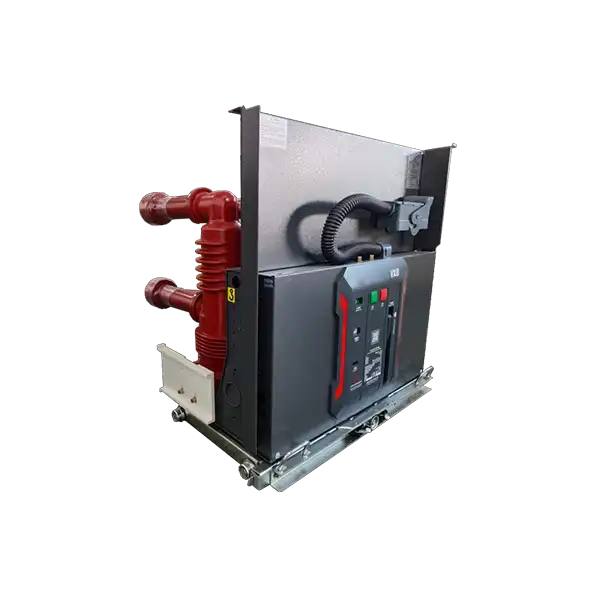
The vacuum interrupter is the most important part of the system. It has carefully designed contacts made from a copper-chromium alloy or a similar material that doesn't weld when the current is high. For the whole life of the gadget, the vacuum must stay at least 10^-4 torr inside a sealed glass or ceramic case that these contacts are inside.
Operating methods are different based on the need, with magnetic actuator systems, spring-operated systems, and systems that store energy all having their own benefits. For regular switching tasks, spring-operated mechanisms work reliably, while stored energy systems provide the quick reaction time needed for fault protection. Magnetic actuators are great for automated systems because they are easy to handle and don't need as much upkeep.
Supporting systems include insulation structures that provide mechanical support and dielectric strength, control units that talk to safety switches and SCADA systems, and extra contacts that let you know how things are working. When these parts are put together, they make a complete security system that can handle the tough needs of modern electricity infrastructure.
Comparative Analysis: Vacuum Circuit Breaker vs Other Breaking Technologies
It has been shown that vacuum circuit breakers work better than other technologies in a number of different operating areas. Knowing these differences helps people who work in procurement make smart choices based on the needs of the program and long-term practical factors.
Performance Comparison with Alternative Technologies
Air circuit breakers operate effectively in low and medium voltage situations but struggle with arc extinction at higher voltages, which means they need to be maintained more often and take up more space. Oil circuit breakers are a tried-and-true technology, but they can cause oil leaks that are bad for the environment and need to be tested and replaced with new oil on a regular basis, which raises costs and risks for the environment.
Even though SF6 circuit breakers work very well, they are getting more and more attention from regulators because sulfur hexafluoride is a warming gas. SF6 is 23,500 times more likely to cause global warming than carbon dioxide, which makes it hard to comply with regulations in places that care about the environment.
Voltage Level Applications and Selection Criteria
Medium voltage uses usually fall between 1kV and 35kV. Vacuum technology works very well in these situations because it is small and doesn't need any upkeep. For high voltage tasks above 35kV, you might need to use a different technology. However, as vacuum technology improves, the highest voltage that these devices can handle keeps going up.
As part of the decision process, breaking capacity needs, working job cycles, environmental conditions, and long-term maintenance plans are all looked at. Vacuum technology proves particularly advantageous in applications requiring frequent switching operations, such as motor control centers and distribution automation systems.
Advantages and Maintenance Tips for Vacuum Circuit Breakers
The high dependability of vacuum circuit breakers comes from the fact that they are well-designed and don't need much upkeep. For industry and utility uses, these traits directly lead to lower running costs and higher system availability.
Key Operational Advantages
One big benefit is that vacuum breaks are safe for the environment because they don't contain any oil or greenhouse gases that could harm the air or land. The lack of burning materials lowers the risk of fire, and the sealed vacuum environment stops wetness and contamination that can happen with other types of breakers. With touch separation happening in as little as 20 milliseconds, switching speeds are faster than those of most other technologies. This quick reaction lowers the size of the fault current and eases the load on equipment further down the line, which increases the total life of system components.
Maintenance Best Practices
As part of routine repair, external parts are looked at visually, control circuit operation is checked, and mechanical and electrical parameters are tested on a regular basis. Measurements of contact resistance should stay below what the maker says is acceptable, which is usually less than 100 micro-ohms for middle voltage uses. Monitoring vacuum integrity is the most important part of upkeep, since losing vacuum directly affects the ability to stop. Modern breakers have vacuum tracking systems that constantly check the state of the interrupter. This means that vacuum testing isn't needed as often, which saves money on maintenance costs.
Procurement Considerations: How to Choose and Buy Vacuum Circuit Breakers
To choose the right vacuum breaking technology, you need to carefully look at the electrical factors, the surroundings, and the needs for integration. The people who work in procurement have to weigh the short-term costs of an item against its long-term operating benefits and total cost of ownership.
Critical Selection Parameters
Ratings for voltage must match or be higher than the system's working voltages, with enough room for safety. Ratings for current should be able to handle normal load currents plus expected growth. Specifications for breaking capacity must take into account the highest fault currents that can flow, as well as any changes to the system that could cause more faults over the equipment's lifetime.
Environmental factors affect the choice of materials and design features. For example, installations near the coast need materials that are more resistant to rust, while installations at high elevations need derating to lower the air density. Both electrical and motor performance are affected by high temperatures, so environmental standards are very important for stable operation.
Supplier Evaluation and Quality Assurance
Reputable makers show that their products meet international standards like IEC 62271-100 and IEEE C37.06. This lets a third party check the performance. Quality standards, like ISO 9001, show that there are organized ways to handle quality that make sure products are always of high quality and can be relied on.
It is getting more and more important to have technical help skills as systems get more complicated and merging needs grow. Suppliers who offer full technical support, customization options, and quick customer service after the sale add a lot of value beyond the cost of the product itself.
Installation, Testing, and Troubleshooting Vacuum Circuit Breakers
Proper installation and commissioning procedures ensure optimal performance and maximum service life from vacuum circuit breakers. These critical activities require specialized knowledge and appropriate testing equipment to verify all operational parameters meet design specifications.
Installation Requirements and Procedures
Preparing a site means making sure there are enough spaces for operation and upkeep, the right foundation systems to keep the structure stable, and environmental protection that works with the area. It is important to pay close attention to the contact resistance and thermal growth of electrical links, especially when they are used for high currents.
As part of mechanical installation processes, it is important to make sure that the elements that can be removed are perfectly lined up, that bolted connections are torqued correctly, and that interlocking systems that stop dangerous operations are checked. Control wiring has to follow the rules set by electrical codes and keep the power and control lines properly separated.
Testing Protocols and Performance Verification
Electrical testing includes measuring insulator resistance, checking contact resistance, and time tests that make sure the right order of operations is followed. As part of mechanical testing, the contact distance is measured, the working force is checked, and the auxiliary contact time is confirmed.
As closely as possible, commissioning tests should be like real-life operations. These tests should include injecting load current and making sure that the safety system works together properly. Keeping track of all test results gives you a starting point for future maintenance tasks and analyzing performance trends.
Conclusion
Vacuum circuit breakers are the best way to protect medium-voltage electrical systems because they offer the best technical performance while also being environmentally friendly and cost-effective to run. They are the best choice for modern electrical infrastructure projects because they can reliably interrupt power while requiring little upkeep. The technology has been used successfully in many different settings, from factories to green energy projects. This shows how flexible and reliable it is at protecting important electrical systems.
FAQ
What are the optimal servicing intervals for industrial vacuum circuit breakers?
Industrial vacuum circuit breakers typically require comprehensive maintenance every 5 to 7 years under normal working conditions. However, the exact time intervals depend on the job cycle of the machine and the environment. Every year, there should be routine checks that focus on the functionality of the external parts, control systems, and other tools.
What key safety features are embedded in vacuum circuit breaker designs?
Modern vacuum circuit breakers have many safety features, such as mechanical interlocks that stop dangerous operations, vacuum tracking systems that find when an interrupter is wearing out, and arc-resistant designs that keep people safe from internal faults. Ground fault prevention and anti-pumping circuits add to the safety of operations.
Are vacuum circuit breakers suitable for renewable energy systems?
Vacuum circuit breakers are great for green energy uses because they can switch on and off quickly and don't harm the environment. Wind and solar systems are good because they can respond quickly and don't need any upkeep. They also take up little room, which is good for green energy facilities that are limited on space.
Partner with Yuguang for Superior Vacuum Circuit Breaker Solutions
Yuguang Electric makes vacuum circuit breakers that are the best in the business. They are designed to be very reliable and work well in a wide range of challenging industrial settings. Our wide choice of products covers voltages from 6kV to 40.5kV, and we have 39 patents and ISO 9001:2015 certification to back them up. This makes sure that we always deliver quality and new ideas. As a reliable company that makes vacuum circuit breakers, we mix cutting-edge research and development with years of experience in making high-quality products to offer unique solutions for infrastructure, metallurgy, and power generation projects all over the world. Get in touch with our professional engineers at ygvcb@hotmail.com to talk about your needs and find out how Yuguang's technical know-how can help you get the most out of your electrical protection systems in terms of safety and economy.
References
1. IEEE Standard C37.06-2009: "AC High-Voltage Circuit Breakers Rated on a Symmetrical Current Basis - Preferred Ratings and Capabilities for Voltages Above 1000 V"
2. IEC 62271-100:2021: "High-voltage switchgear and controlgear - Part 100: Alternating current circuit-breakers"
3. Slade, Paul G. "The Vacuum Interrupter: Theory, Design, and Application." CRC Press, 2017.
4. Greenwood, Allan. "Vacuum Switchgear." Institution of Engineering and Technology, 2007.
5. CIGRE Working Group A3.27: "The Impact of the Application of Vacuum Switchgear at Transmission Voltages." Technical Brochure 599, 2014.
6. Ryan, Hugh M. "High Voltage Engineering and Testing, 3rd Edition." Institution of Engineering and Technology, 2013.

Send Inquiry
You may like
