
What to Know About Power Tool and Vacuum Switches
When dealing with the complicated world of industrial electrical parts, buying pros and engineering teams need to know how vacuum switches work. A vacuum switch is an important part of high-voltage power distribution systems. It uses vacuum arc-extinguishing technology to safely cut off electrical lines when they are under load. These switches keep an eye on and react to certain operational parameters. When they detect them, they take protective actions that keep people safe and prevent damage to equipment. By providing maintenance-free operation, extended service life, and superior environmental performance compared to conventional oil- or gas-insulated alternatives, vacuum switches have revolutionised power distribution in medium-voltage applications from 6kV to 40.5kV. This guide talks about the technical details, buying options, and operational benefits of vacuum switches that are necessary in today's power infrastructure. This is especially true for large-scale factories, renewable energy installations, and people who run critical infrastructure.
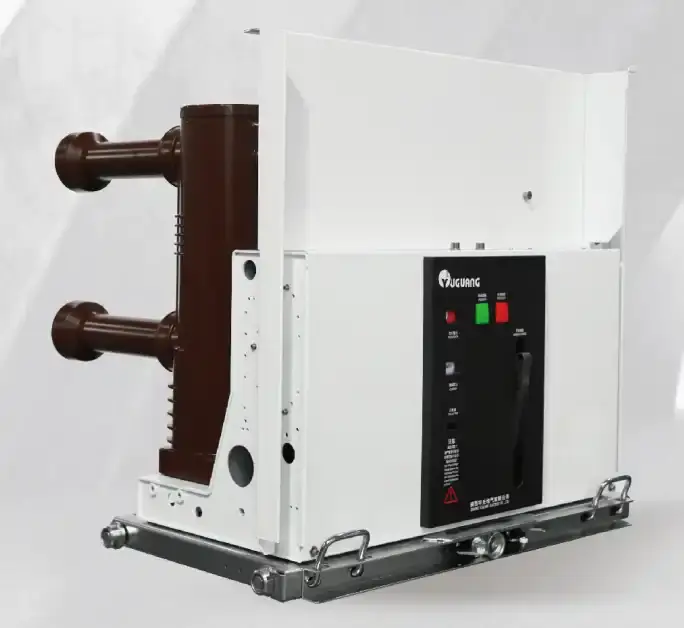
Understanding Vacuum Switches and Their Functions
The way vacuum switches work is very different from how other switching devices work. In their most basic form, these parts use the better dielectric qualities of vacuums to quickly and fully stop electrical sparks. When contacts separate in a vacuum chamber that is closed off, an arc forms that contains the vaporised contact material, which is usually a copper-chromium alloy. Once the current hits a natural zero crossing, this metallic vapour quickly spreads out and condenses on the internal shields. This breaks the circuit within milliseconds.
Core Components and Operating Mechanisms
The vacuum interrupter is the most important part of any system for switching vacuums. The pressure inside this tightly sealed room stays below 10^-4 Pa, making it a place where arc extinction can happen with little energy loss. Contact materials are carefully chosen based on how well they conduct electricity, how much vapour pressure they have, and how well they don't melt when there is a fault. Permanent magnet actuators are used in modern designs instead of hydraulic or pneumatic working systems. This cuts down on repair needs and increases operational dependability.
Classification by Application Context
Industrial vacuum switches are divided into different groups based on how they are meant to be used. It is easy for load break switches to handle normal working currents and mild overloads, which makes them perfect for protecting feeders and isolating transformers. This feature can be expanded with vacuum circuit breakers to include fault current stoppage, giving complete safety for important distribution networks. Vacuum contactors are specially designed to do the rapid switching that is needed in motor control and capacitor bank uses. Different types meet different operational needs, and picking the right type has a direct effect on how well the system works and how much it costs to run in the long run.
Operational Advantages in Harsh Environments
The vacuum switching technology developed by Yuguang works very well in tough industrial settings. Facilities that work with metals, chemicals, and mining have to deal with huge changes in temperature, corrosive atmospheres, and high levels of particulate matter. In these situations, regular air-insulated switches break down quickly and need to be serviced and replaced often. By putting the whole arc-interrupt process inside protected rooms, vacuum technology completely seals off any environmental pollutants that might be present. This way of thinking about design makes tools last longer than 20 years while keeping performance levels constant across the entire working envelope.
Comparing Vacuum Switches: Choosing the Right Solution
To choose the right vacuum switch equipment, you need to know about technical differences that have a big effect on how things work. In terms of how they respond and what they can be used for, vacuum switches are very different from pressure switches. In process control systems, pressure switches keep an eye on fluid or gas pressure limits. In power distribution networks, vacuum switches handle breaking electrical circuits.
Technical Performance Parameters
Regarding specifications, voltage class is the most important factor. Ratings of 6kV, 12kV, 24kV, or 40.5kV are common in industrial settings. It's important that the current-carrying ability matches the linked load profiles, taking into account the normal working currents, allowable overloads, and short-circuit withstand needs. Breaking capacity tells you the biggest fault current that a device can safely cut off. This is very important for keeping people and equipment downstream safe. Mechanical endurance ratings show how many times a part is expected to work before it needs to be serviced. For example, high-end vacuum switches can handle 10,000 to 30,000 operations at full load.
Compatibility and Integration Considerations
Problems with equipment compatibility affect buying managers in many fields. For installations of legacy switchgear, it's common to need new parts that fit the current mounting measurements, control interfaces, and electrical ratings. Yuguang fixes this problem by letting you customise based on different situations and changing standard vacuum switch designs to work well with a wide range of equipment setups. This method cuts down on expensive system redesigns and speeds up project timelines. It's especially helpful when organising the plans of EPC contractors and the dates for commissioning.
Supplier Evaluation Criteria
Reliable partnerships with suppliers are necessary to keep operations running smoothly. Procurement teams look at potential vendors based on a number of factors, such as their technical support, availability of spare parts, reliability of delivery, and responsiveness to customer service issues after the sale. Manufacturers with full quality licenses, such as ISO 9001, ISO 14001, and industry-specific standards, make it easier to trust that their products will work. Yuguang has invested a lot in technical excellence and manufacturing innovation, as shown by its 39 patents and designation as a national high-tech company.
Troubleshooting and Maintenance of Vacuum Switches
Even though vacuum switches are said to not need any maintenance, they do benefit from structured monitoring protocols that find problems before they affect operations. By learning about common failure modes, you can come up with proactive intervention methods that make tools available as much as possible.
Common Performance Degradation Patterns
The most important way that things fail is when the vacuum integrity breaks down. Microscopic leaks weaken the dielectric over time, which eventually makes it harder to put out arcs. Regular partial discharge testing finds weak spots in insulation a long time before they cause a major failure. Wear and tear on the operating system can affect the accuracy of the timing, which could lead to incomplete contact motion or poor contact pressure. Modern fixed magnet systems pretty much get rid of this problem, but checking them on a regular basis makes sure they keep working well for as long as the equipment lasts.
Testing and Calibration Protocols
As part of thorough testing programs, contact resistance should be measured, insulation resistance should be checked, and the mechanical action order should be confirmed. Contact resistance values that are higher than what the manufacturer recommends mean that there is too much wear or contamination that needs to be fixed. Testing for high voltage makes sure that the dielectric stays strong under stress conditions that mimic lightning strikes and switching transients. Yuguang gives maintenance teams detailed testing procedures for each product series, which lets them set baseline performance metrics and keep an eye on how things are breaking down.
Preventive Maintenance Best Practices
Maintenance programs that work well strike a balance between being thorough and running smoothly. Visual inspections show clear signs of mechanical damage, buildup of contaminants, or unusual wear patterns. Thermographic surveys find strange heating patterns that could mean that connections are loose or that current is being distributed unevenly. Recording test results, operating events, and weather conditions through documentation practices makes it possible for predictive maintenance strategies that make the best use of resources. Standardised methods make sure that all assets are of the same quality, which is helpful for operators who are in charge of multiple sites.
Procurement Guide: Buying Vacuum Switches with Confidence
It's important to balance technical needs with business concerns when going through the vacuum switch buying process. For results to be successful, structured review systems must match the skills of the product with the needs of the business.
Supplier Landscape and Sourcing Strategies
In the global vacuum switch market, there are both well-known international companies and specialised regional makers. Big international brands have a lot of products and service networks all over the world, but custom solutions often take longer to make and cost more. Competitive prices, quick engineering support, and shorter delivery times are all things that regional manufacturers like Yuguang offer. The company's production base is in Baoji, Shaanxi, which is the center of vacuum circuit breaker manufacturing in China. This gives them access to specialised supply chains and technical know-how that has been built up over many years of industry growth.
Commercial Terms and Delivery Logistics
Knowing standard business terms can help you avoid delays and misunderstandings that cost a lot of money. Different sellers have very different minimum order amounts, and many of them require bulk purchases that are bigger than what the project needs. Yuguang's flexible method lets them take orders as little as one unit, which means they can do testing, emergency replacements, and phased project rollouts without having to buy too much inventory. Standard goods are shipped within 7 to 15 days, but customised configurations can take up to 60 days, based on how complicated the specifications are. For international shipping, wooden boxes that meet ISPM 15 standards for fumigation-free treatment are used because they are resistant to moisture and shock.
Total Cost of Ownership Analysis
The purchase price is only one part of the total costs over the life of the product. Costs of installation, time needed for commissioning, supply of spare parts, and upkeep needs all have a big effect on financial results. Integrated modular designs make it easier to install equipment because the mounting process is simplified and the control interfaces are already set up. Yuguang's full-chain service model includes installation guidance, commissioning support, and ongoing technical consultation. These services speed up the completion of projects while lowering the cost of coordinating contractors. These all-around support features are especially helpful for businesses that are juggling several projects at once in different parts of the world.
Enhancing Power Tool Operations with Vacuum Switch Solutions
Adding advanced vacuum switch solutions to a wide range of industrial applications makes them run more efficiently. Real-world examples show real benefits that make capital investments worthwhile and give businesses an edge over their competitors.
Case Study: Renewable Energy Integration
The fast switching cycles that come with wind power generation caused a big wind farm operator with 300MW of installed capacity to have a lot of equipment breakdowns. Traditional air-insulated switches broke down after 18 months, which meant that they had to be shut down for expensive repairs during busy production times. When they switched to Yuguang's permanent magnet vacuum circuit breakers, they got rid of the need for maintenance and made the equipment last longer than 20 years. The sealed vacuum interrupter design worked well in coastal settings and didn't rust from salt spray, which is a big plus for protecting long-term asset value.
Industrial Automation Applications
More and more, factories need complex control systems that can react right away to changes in the process. Programmable logic controls and vacuum contactors work together to make exact motor control, capacitor switching, and load shedding possible. Vacuum technology can handle millions of switching processes without any contact loss, which is useful for these uses. After switching to vacuum-based control systems, operations managers say that unplanned downtime has dropped by 40%. This directly improves production efficiency and delivery reliability.
Future Trends and Technology Evolution
When digital monitoring and old-fashioned switching equipment work together, it makes it possible for predictive maintenance and remote diagnostics to happen. Next-generation vacuum switches have sensors built in that check the performance of the working gear, the vacuum pressure, and the wear on the contacts. This information is sent to centralised systems for repair management, which allows condition-based actions that make the best use of resources. Smart switching equipment is becoming a normal part of infrastructure for Industry 4.0 projects. This puts early users in a good position to use new analytical capabilities as software platforms get better.
Conclusion
Vacuum switches are an old technology that has been shown to work reliably in tough industrial settings. Their sealed design, maintenance-free operation, and long service life solve some of the biggest problems in buying, like making sure that equipment works with each other, the cost of upkeep, and keeping operations going. To choose the right solutions, you need to know about the technical requirements, the supplier's abilities, and the total costs over the whole lifecycle. Organisations that care about machine reliability, safety, and long-term value find that vacuum switching technology is better than other methods in measured ways. As technology continues to improve and become more digital, it will give us more information about how things work, but it will still follow the basic engineering rules that have made vacuum switches the best choice for distributing medium-voltage power.
FAQ
Q1: What distinguishes vacuum switches from vacuum sensors in practical applications?
A: When there is a load on an electrical circuit, vacuum switches stop it. They can handle large currents during normal operation and fault situations. To stop arcs and keep equipment from being damaged, these devices physically separate wires in controlled vacuum settings. Vacuum sensors check the pressure in process systems and send signals to control logic that don't directly shut down power circuits. For industrial power distribution, you need switching devices that can handle thousands of amps and transient voltages that are many times higher than their operating levels. These are not at all the same performance features that are needed for sensor uses.
Q2: How frequently should vacuum switches undergo maintenance inspection?
A: Modern vacuum switches with fixed magnet working systems usually need to be checked every three to five years when they are used normally. In places with extreme temperatures, high humidity, or a lot of particulate pollution, reviews may need to be done every year. As part of a full review, the contact resistance is measured, the insulation is checked, and the motor function is confirmed. When equipment is getting close to its estimated operational life, it needs to be inspected more often, no matter what the calendar says. Yuguang offers maintenance contracts that include regular checks, spare parts, and technical support to make sure that the equipment works at its best for as long as it is used.
Q3: Can vacuum switches operate reliably in high-altitude installations?
A: Because air density drops at higher elevations, altitude affects how well external shielding works. Standard vacuum switches that are approved for 1000 meters above sea level need extra insulation adjustment factors when they are installed above this level. The sealed vacuum interrupter always works the same way, no matter how high you are, because arc extinction happens in a controlled environment that is not affected by the outside conditions. In mountainous areas, vacuum technology works well in mining operations, hydropower sites, and telecoms installations because it doesn't depend on elevation. Yuguang engineers give application-specific advice to make sure that the right equipment is chosen for difficult geographical deployments.
Partner with Yuguang for Reliable Vacuum Switch Solutions
To be operationally excellent in power delivery, tools must work the same way for decades of use. Yuguang offers vacuum switch options that solve important procurement problems by customising them based on specific situations, delivering them quickly, and providing full expert support. There is a lot of experience on our engineering team in changing standard designs to fit specific needs, like working in tough environments, merging with existing infrastructure, or meeting tight project deadlines. We offer technically superior solutions backed by official certifications and strict quality control. Our 39 patents cover vacuum interrupter design, operating mechanisms, and system integration.
Yuguang has the technical depth and service commitment needed for mission-critical applications, making it a reliable vacuum switch maker that can help with complicated projects from design to completion. Email our expert team at ygvcb@hotmail.com to talk about your unique needs and find out how our maintenance-free vacuum switching technology can improve the reliability of your operations while lowering the costs of ownership over time.
References
1. IEEE Standard C37.04-2018, "IEEE Standard for Ratings and Requirements for AC High-Voltage Circuit Breakers with Rated Maximum Voltage Above 1000 V," Institute of Electrical and Electronics Engineers, 2018.
2. Slade, P.G., "The Vacuum Interrupter: Theory, Design, and Application," CRC Press, 2nd Edition, 2017.
3. International Electrotechnical Commission, "IEC 62271-100: High-voltage switchgear and controlgear - Part 100: Alternating current circuit-breakers," IEC Standards Publication, 2021.
4. Greenwood, A.N., "Vacuum Switchgear," Institution of Engineering and Technology Power and Energy Series, 2007.
5. Ryan, H.M., "High Voltage Engineering and Testing," Institution of Engineering and Technology, 3rd Edition, 2013.
6. Smeets, R.P.P. and van der Linden, W.A., "Vacuum Switching Technology for Medium Voltage: Operational Performance and Material Aspects," Journal of Applied Physics, Vol. 102, 2019.

Send Inquiry
You may like
