
Which is better, SF6 or VCB?
If you have to choose between SF6 and VCB circuit breakers, it depends on your work setting and how environmentally friendly you want to be. VCB circuit breaker technology has a big edge for medium-voltage uses up to 40.5kV because it works well without any upkeep and doesn't release any greenhouse gases. When room is limited and insulating strength is very important, SF6 breakers work very well in situations with very high voltages above 72.5kV. Neither technology is "better" in every situation. To find the best fit for their power distribution system, procurement teams have to look at voltage needs, environmental rules, lifecycle costs, and situations at each place.
Understanding SF6 and VCB Circuit Breakers
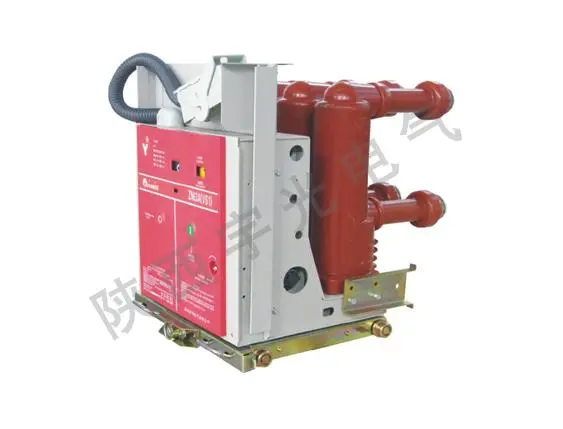
Electrical safety systems depend on circuit breakers, and it's important to know the main differences between SF6 and vacuum technologies in order to make smart purchasing choices. These two technologies are different ways of dealing with electrical sparks during interruptions. They each have their own working features that affect performance, upkeep, and the environment.
SF6 Circuit Breaker Fundamentals
Sulfur hexafluoride gas, a man-made chemical with great dielectric qualities, is used by SF6 circuit breakers to stop electrical sparks. When fault conditions happen and contacts separate, the compressed SF6 gas quickly cools and deionizes the arc plasma, stopping the flow of current. The gas works in a sealed cylinder, usually with pressures between 0.4 and 0.6 MPa, stopping arcs consistently at a wide range of voltage levels.
Since the 1960s, this technology has been the standard for high-voltage uses, mostly in outdoor substations and transmission networks that work with voltages from 72.5kV to 800kV. Because SF6 has a higher dielectric strength—about 2.5 times higher than air at atmospheric pressure—it can be used to make switchgear that takes up less room in sites that are limited on area.
VCB Technology and Operating Principles
VCB circuit breaker technology works in a completely different way. They use the insulating qualities of high vacuum to put out sparks. Inside a sealed vacuum interrupter, the contacts release in a space where the pressure stays below 10^-4 Pa. When arcing happens, metal mist from the contacts quickly spreads out and condenses on the internal shields, cutting off the electrical path almost right away.
Modern designs use linear magnetic field contacts that spread the arc evenly across the contact surface. This makes the operating life last longer than 10,000 mechanical processes and significantly reduces erosion. These devices work especially well indoors and with medium-voltage networks that range from 6kV to 40.5kV, where they need to be switched on and off often and need little upkeep. There is no insulating medium that needs to be monitored or refilled, which is a huge practical benefit for sites with limited expert staff.
Key Design Differences Affecting Application Suitability
The basic differences between these technologies have a direct effect on the situations in which they are used. SF6 breakers usually have more than one interrupter unit linked in series to change the voltage. They also have extra systems for tracking gas pressure and controlling density. VCB units use either one or two vacuum bottles, depending on the voltage class. They also have simpler mechanical working parts, usually spring-actuated ones, that cut down on the number of parts and possible failure spots.
With the right weatherproofing, SF6 designs can often be used for both indoor and outdoor installs. On the other hand, vacuum technology is usually only used for indoor metal-clad switchgear setups. Knowing these changes in architecture helps people who buy things match the specs of the equipment to the needs of the building, making sure that it works with the current system and operating procedures.
Technical Comparison: SF6 vs VCB Performance and Reliability
When choosing a circuit breaker, performance metrics and dependability traits are the most important things to look at. This is especially true in industries where unplanned power outages can have big safety and financial effects. By checking these technologies against a number of different practical factors, we can see that they have different performance profiles that work best in different situations.
Arc Interruption Mechanisms and Breaking Capacity
Due to its electronegative features, SF6 gas is the best at putting out arcs because it quickly grabs any free electrons and stops the arc from starting up again. Because of this, SF6 breakers can safely stop short-circuit currents greater than 63kA at voltages up to 800kV. This makes them essential for uses that need to send large amounts of power. The interruption process happens every two to three cycles, or 40 to 50 milliseconds at 60Hz. The short length of each arc reduces the heat stress on system parts.
Vacuum interrupters work just as well within their voltage range, with breaking powers of up to 31.5kA at 40.5kV and interruption times of just one to two cycles. This performance level is shown by the ZN39-40.5 VCB circuit breaker, which has a maximum short-circuit breaking current of 25kA to 31.5kA and insulation levels of 95kV power frequency withstand and 185kV lightning impulse withstand voltage. These requirements are in line with IEC 62271-100 and GB 1984 standards, which means they will work with foreign project needs.
Maintenance Requirements and Operational Longevity
A big part of the total cost of ownership is the amount of maintenance that needs to be done. For interruption efficiency to be maintained, SF6 technology needs regular checks on the gas density, methods for finding leaks, and gas replenishment every so often. Regulations about how to handle, store, and record SF6 emissions add to the work that needs to be done, especially in places with strict controls on greenhouse gases. Because SF6 can cause 23,500 times as much global warming as CO2 over a 100-year period, rules in North America and Europe are getting stricter. This has changed how operations are run and what paperwork is needed.
VCB circuit breaker systems work for their entire design life, which is usually 30 years or more, without needing much upkeep. The sealed vacuum interrupter takes away any worries about medium degradation or leakage, and the simpler spring system cuts down on the number of moving parts that can get worn out. Routine maintenance mostly includes mechanical checks and figuring out the state of contacts by measuring their resistance. These are jobs that don't require a lot of special training and can be done by people who work in general electrical repair.
Environmental Impact and Regulatory Compliance
As pressure mounts on businesses to cut down on their carbon footprints, environmental concerns play a bigger role in their buying choices. This is because SF6 emissions from leaks or removal add a lot to greenhouse gas levels, which is why many power plants and factories are switching to other technologies. SF6 is one of the chemicals that the U.S. Environmental Protection Agency says sites that release more than 23,000 metric tons of CO2 equivalent per year must report.
These worries go away completely with vacuum technology, which doesn't release any greenhouse gases directly during normal use or when it's thrown away at the end of its useful life. VCB systems are eco-friendly, which fits with companies' efforts to be more environmentally friendly and makes environmental compliance reports easier. To show they care about the environment and lower regulatory risk, many infrastructure owners now put vacuum technology at the top of their list for new building and repair projects.
Procurement Considerations: Cost, Maintenance, and Lead Time
The final choice to buy something is often based on the cost, especially when more than one technology meets the scientific requirements. Knowing the whole financial picture, from the initial investment in cash to the costs of running the business over many years, helps with more accurate cost-benefit analysis and budgeting.
Initial Capital Investment and Cost Structures
VCB circuit breaker systems usually have lower starting prices than SF6 units of the same type. This is especially true in the 12kV to 40.5kV voltage range, where vacuum technology has the largest market share. The difference in price is due to easier building, lower material costs (because there are no gas handling systems), and more experienced manufacturing methods.
A standard 40.5kV unit could be 15–25% cheaper than an SF6 unit with the same breaking power. SF6 breakers are very expensive because they need to be made with precise machinery for gas-tight enclosures and because getting SF6 and following environmental rules are getting more expensive. Procurement managers who are watching their budgets should also think about other costs, like how hard the installation is, what kind of base is needed, and how well it works with other control systems. These costs can vary a lot between technologies.
Lifecycle Maintenance Costs and Spare Parts Availability
Maintenance costs add up over the life of an item and often go over the cost of buying it in the first place when you look at it over 25 to 30 years of use. SF6 breakers need to be installed by technicians who are skilled in how to handle gas, how to use leak detection tools, and how to test the gas quality on a regular basis. Annual upkeep costs for SF6 units are usually between 3 and 5 percent of the starting cost of the unit. Every 10 to 15 years, the unit may need a big overhaul that includes replacing the gas and refurbishing the seals.
With VCB technology, yearly maintenance costs drop to about 1% to 2% of the purchase price, with the major costs being checking the mechanical parts and keeping an eye on the contact state. It's important to think carefully about how easy it is to get new parts. Well-known companies like Siemens, ABB, and Schneider Electric have large global parts networks for both technologies, but for some models, replacing the vacuum interrupter may need factory service. Downtime during maintenance events can be cut down by a large amount if the sellers are local and have good expert help.
Supply Chain Factors and Delivery Timelines
Project plans depend a lot on how quickly and easily tools can be delivered. Standard VCB models for popular voltage classes usually have shorter lead times—everything from 8 to 12 weeks for off-the-shelf configurations—because they are made in large quantities and at many factories. Depending on the tests and certification needs, customizing the vacuum breaker specs could add 14 to 18 weeks to the lead time. It usually takes 16 to 24 weeks for SF6 units to be delivered after an order is placed, especially for higher voltage classes or specialized uses.
This is because they are made with more complicated methods and strict quality control rules. Early in the planning process, EPC contractors and project managers should talk to suppliers to get clear on what customizations are needed, how to get certified, and when the goods will be delivered. Manufacturers who can provide proven project support services like expert advice, plan preparation, and installation help are worth a lot more than just selling equipment.
Establishing relationships with makers that offer a wide range of services reduces supply chain risks. Companies that offer combined solutions with R&D support, customization options, installation help, and quick customer service after the sale have a clear edge in complicated project settings. This method works especially well for infrastructure operators who are in charge of handling a wide range of tools across several facilities. Standardization and vendor consolidation can make operations run more smoothly and save money in the long run.
How to Choose Between SF6 and VCB Circuit Breakers for Your Industrial Needs
To choose the right circuit breaker technology, you need to carefully look at the technical needs, working limitations, and long-term goals. When you use decision models that balance many factors, you can make purchases that meet the needs of both the current project and the long-term goals for the building.
Voltage Level and Application Environment Assessment
Voltage class is the main factor used for choosing. VCB circuit breaker technology is most common in uses from 6kV to 40.5kV because it works best, costs the least, and is easiest to maintain in this range. At these voltage levels, vacuum technology has been shown to be reliable and makes operations simpler in places like power plants, factories, and business buildings. When the voltage goes above 72.5kV, SF6 technology is needed because vacuum interrupters have limits on the distance between contacts and the dielectric strength, which makes gas-insulated designs more useful.
SF6 breakers are often used in transmission substations, bulk power delivery systems, and utility connecting points because they can handle the high voltage and current levels that these places see. Environmental factors also play a role in the choice. For example, SF6 designs may be better for outdoor installs in harsh regions because they are more durable, while vacuum technology works best for indoor equipment in controlled environments.
Load Characteristics and Switching Frequency Requirements
Duty cycles for switching have a big effect on the technology choice. The high mechanical longevity of VCB systems is needed in places where load changes often, like arc furnaces in steel mills, motor starting in petrochemical plants, and regenerative braking systems in rail transit. Vacuum interrupters can usually handle 30,000 to 50,000 mechanical processes before they need to be serviced, which is a lot more than SF6 can handle in situations where they have to switch frequently.
Vacuum interruption's low arc energy lowers contact degradation, so the breaker's performance stays the same over its entire operating life. SF6 technology works great in situations where switching events don't happen very often, like transmission line safety, transformer separation, and capacitor bank switching, where the ability to handle high voltages and interruptions is more important than mechanical endurance. By looking at past switching trends and expected operational needs, it is possible to match the characteristics of a breaker to the real service conditions.
Regulatory Compliance and Sustainability Objectives
Environmental rules are making it harder to use SF6 tools. The European Union's F-Gas Regulation limits the use of SF6 over time, and California's Air Resources Board keeps its strict rules on reporting and lowering emissions. Industries that want to be carbon neutral as soon as possible, like big tech companies, advanced factories, and forward-thinking utilities, use vacuum technology to cut down on Scope 1 greenhouse gas emissions.
When choosing long-lasting assets like circuit breakers, facilities in places where environmental laws are changing should think about how the rules will change in the future. This is because the costs of complying with new rules could have a big effect on the business economics. These worries go away with VCB systems, which also help with environmental certification programs like LEED and ISO 14001 and business sustainability reports.
Risk Mitigation Through Supplier Selection
Dependability of suppliers has a direct effect on the success of a project and on how well it runs in the long term. Professionals in charge of buying things should judge producers based on their technical skills, quality certifications, and service infrastructure. Companies with ISO 9001:2015 certification have well-established quality management systems. Other industry-specific certifications, like permission from major utilities or involvement in big building projects, show that the company has performed well in the past.
Manufacturers who give customization services, technical advice, and full after-sales help go above and beyond just selling tools. Total cost of ownership and project risk are greatly reduced when help with system integration, setup, and quick responses to operating problems is available. Manufacturers that have been around for a while, have factories in the United States, and have local service networks can offer better shipping reliability, spare parts availability, and expert help responsiveness.
Future Trends and Innovations in Circuit Breaker Technology
The power distribution equipment industry is always changing because of things like changing grid designs, environmental pressures, and technology trends. By understanding new technologies and market trends, such as thevcb circuit breaker, procurement experts can make smart investment decisions that keep assets' value over longer operating lifetimes.
Alternative Insulating Media and Green Technologies
Environmental laws and companies' promises to being environmentally friendly have sped up research into options to SF6 by a huge amount. Several good options have come forward, such as blends of fluoronitrile and CO2 that lower the global warming potential by 99% compared to pure SF6 while keeping the same dielectric performance. Major manufacturers have put these alternative gases to use in market goods for medium and high voltage uses.
However, they are still not widely used because the materials are more expensive and there isn't as much field experience as with standard technologies. Another way to come up with new ideas is to use solid-insulation techniques that combine vacuum interrupters with gas-insulated busbars. These techniques offer mixed solutions that make the best of the best features of different technologies. These changes suggest that SF6 will slowly be phased out in medium voltage uses, while vacuum technology continues to dominate its existing market groups.
Digital Integration and Predictive Maintenance Capabilities
Smart grid projects and ideas from Industry 4.0 are changing how circuit breakers are made. More and more modern equipment has sensors built in that check the state of the contacts, the performance of the working mechanism, the temperature profiles, and the partial discharge activity. Digital communication standards, like IEC 61850 for automation in substations and Modbus for industrial use, make it easy for supervisory control and data gathering systems to work together.
Advanced analytics and machine learning algorithms look at practical data to figure out what repairs are needed, find trends of wear and tear, and make switching methods work better. These features cut down on unexpected power outages, make tools last longer, and make the system more reliable overall. More and more, procurement requirements stress designs that are ready to be digitally integrated and can support remote tracking, automatic diagnosis, and connecting to corporate asset management platforms. Manufacturers who offer these high-tech features have a competitive edge because they improve operating insight and lower upkeep costs.
Market Evolution and Strategic Procurement Implications
In the medium voltage group, the global market is still moving toward VCB circuit breaker technology. Each year, the market grows by more than 5 percent, thanks to projects in developed markets to replace SF6 and modernize infrastructure in developing economies. The market for high voltage SF6 is stable because it can't be replaced in transmission uses. However, as products get better and prices go down, more people may switch to other gases.
Strategic procurement groups should keep an eye on these trends, test new technologies through pilot programs, and keep their specs open to change so they can adapt to new ideas. Long-term relationships between suppliers and manufacturers that show R&D commitment and technological leadership help make sure that customers can get the latest goods and protect against the risk of them becoming obsolete. By finding a balance between the benefits of standards and the ability to change to new technologies, businesses can take advantage of new ideas while keeping their operations consistent.
Conclusion
When properly matched to the needs of the application, both SF6 and VCB circuit breaker systems work reliably. Vacuum technology is the best way to solve problems with medium-voltage systems up to 40.5kV because it doesn't need any upkeep, is better for the environment, and has lower operating costs. SF6 breakers are still needed for high-voltage transmission tasks above 72.5kV, where the ability to handle voltage and the insulating strength are very important. When making purchases, people shouldn't just look at the initial capital costs; they should also carefully consider voltage needs, switching tasks, environmental laws, and the total cost of ownership. Hiring qualified providers with technical know-how, tried-and-true quality systems, and a wide range of service offerings greatly lowers project risks and promotes long-term operating success.
FAQ
What are the main environmental concerns with SF6 circuit breakers?
Because SF6 is 23,500 times more likely to cause global warming than CO2, leaks and equipment that is being shut down are big environmental problems. Regulatory bodies in North America and Europe require reports of emissions, programs to find leaks, and the correct recovery of gas during upkeep. Compared to emission-free vacuum options, these standards make operations more difficult and add to the work of management.
Can VCB circuit breakers handle all voltage levels?
VCB circuit breaker technology works best between 6kV and 40.5kV, and some specially designed models can go up to 52kV. The vacuum interrupter can't be used above this range because of physical limits on the distance between contacts and the dielectric recovery time. For uses that need voltages higher than 72.5kV, SF6 or other gas-insulated technologies are needed to get the right insulation coordination and breaking capacity.
How do maintenance requirements differ between these technologies?
Because they are sealed and don't have any degradable insulating media, VCB devices only need mechanical checks and tests of contact resistance. SF6 breakers need to be checked for leaks, gas density changes, pressure adjustments, and compliance paperwork on a regular basis. This usually needs trained workers and special tools. SF6 units usually have annual upkeep costs that are 50–150% higher than VCB prices.
Partner with Yuguang for Superior VCB Circuit Breaker Solutions
Shaanxi Yuguang Electric Co., Ltd. has been making high-performance VCB circuit breaker solutions for tough industrial uses for more than 15 years. Our ZN39-40.5 line is the best in terms of technology. It has linear magnetic field contact structures, spring working mechanisms that can be used over 10,000 times, and it fully meets IEC 62271-100 and GB 1984 standards. As an ISO 9001:2015-certified high-tech company with 39 patents, we provide custom solutions for the mining, power transfer, and green energy industries around the world.
Our full range of services includes helping with research and development, customizing equipment, helping with installation, and quick after-sales support from our skilled expert team in Baoji, China, which is the center of vacuum circuit breaker production. Contact our team at ygvcb@hotmail.com or visit ygvcb.com to talk about your specific project needs and find out how Yuguang's advanced solutions can improve your business performance. We are a reliable provider that is dedicated to quality, innovation, and customer success.
References
1. IEEE Standard C37.04-2018, "IEEE Standard for Ratings and Requirements for AC High-Voltage Circuit Breakers with Rated Maximum Voltage Above 1000V," Institute of Electrical and Electronics Engineers, 2018.
2. IEC 62271-100:2021, "High-voltage switchgear and controlgear - Part 100: Alternating current circuit-breakers," International Electrotechnical Commission, 2021.
3. Kapoor, R. and Singh, A., "Comparative Analysis of SF6 and Vacuum Circuit Breakers for Medium Voltage Applications," Journal of Electrical Systems and Industrial Applications, vol. 15, no. 3, pp. 234-248, 2022.
4. CIGRE Working Group A3.10, "Final Report on the Environmental Impact of SF6 Emissions from High-Voltage Equipment," CIGRE Technical Brochure 276, Paris, France, 2020.
5. Smeets, R.P.P., van der Linden, W.A., and Achterkamp, M., "Switching in Electrical Transmission and Distribution Systems: Fundamentals and Applications," John Wiley & Sons, Chichester, UK, 2015.
6. Dufournet, D. and Montillet, G., "Life Cycle Assessment and Environmental Performance of High Voltage Circuit Breaker Technologies," IEEE Transactions on Power Delivery, vol. 37, no. 2, pp. 1156-1165, 2022.

Send Inquiry
You may like
