
Why Choose Vacuum Circuit Breakers for High Voltage?
High-voltage vacuum circuit breakers are the most important part of current electrical safety systems. They work perfectly with installations that are working at 6kV to 40.5kV and are very reliable. Vacuum circuit breakers use vacuum interrupter technology to quickly and safely put out electrical sparks, unlike older technologies that use SF6 gas, oil, or compressed air. Because they don't take up much space, don't harm the environment, and don't need any upkeep, they are the best choice for power plants, factories, and green energy projects. As rules around greenhouse gas emissions and operating safety get stricter around the world, procurement managers, chief engineers, and project workers need to know why vacuum technology works better than other options if they want to cut down on downtime risks and make sure they follow the rules.
Understanding High-Voltage Vacuum Circuit Breakers
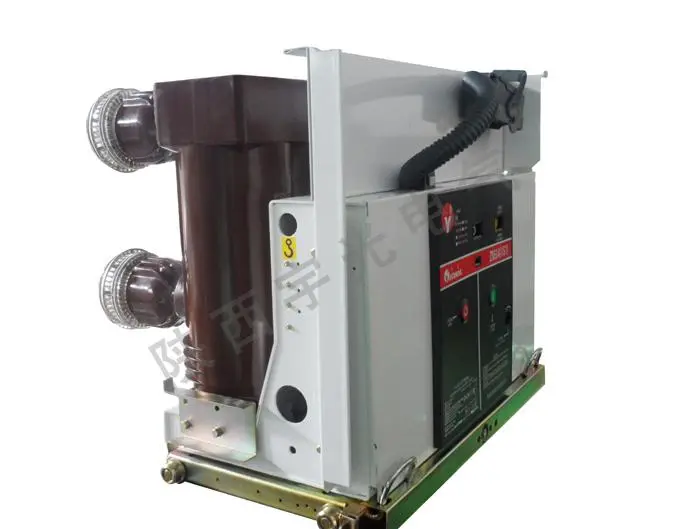
Core Technology and Operating Principles
Vacuum circuit breakers work on a simple but complex idea: when contacts separate in a vacuum room that is shut off, the lack of air molecules stops an arc from forming and stops the current quickly. The vacuum interrupter is at the center of the system. It is protected by thick epoxy resin cases. This method is used by Yuguang in their VXB series, which has APG (Automatic Pressure Gelation) technology that covers the whole arc-extinguishing chamber in high-quality shielding material. This design keeps the breakers from being exposed to water, dust, and chemicals, which is a common problem in industrial plants and coastal wind farms where other types of breakers fail too soon.
Yuguang's fixed magnet working system gets rid of the need for hydraulic or pneumatic systems. This new idea means that the machine will last longer than 30,000 processes, which is called M2-class stability according to IEC 62271-100 standards. Permanent magnet actuators have consistent closing and opening speeds between 0.9 and 1.2 meters per second, unlike spring-operated mechanisms that need to be oiled and adjusted on a regular basis. This means that they will always work as expected, even in situations where they switch between tasks often, like in electric arc furnaces or traction power substations.
Key Advantages Over Traditional Technologies
Vacuum circuit breakers solve three major problems that businesses face: tools not working with each other, too much upkeep, and not being able to meet environmental standards. The solid-sealed pole design stops phase-to-phase flashovers, which happen a lot in places with a lot of humidity because oil-filled breakers lose their shielding. Even though SF6 breakers work, they come with a lot of legal risk because the gas is 23,500 times more harmful to the environment than CO2. This is why countries like the European Union have set deadlines for phase-out.
These worries are taken care of completely by Yuguang'sHigh-voltage vacuum circuit breakers. The process of making something starts with aerospace-grade corrosion-resistant metals and IP67-rated seals that are carefully analyzed using spectroscopy before they are machined. Core parts are carefully machined with special tools that keep errors to within 0.01 mm. This creates an airtight seal that keeps the vacuum integrity of the product for 25 years of use. Ceramic coating and powder finishing on the surface, followed by constant-temperature curing, make these units resistant to UV degradation and industrial corrosives. This means they can be used in both manufacturing sites and desert solar systems.
Comparing Vacuum Circuit Breakers with Other Technologies
Environmental and Operational Performance
Procurement managers have to look at a lot of things when choosing a circuit breaker technology. These include the technology's carbon footprint, how often it needs to be maintained, safety standards, and the total cost of ownership. For decades, SF6 breakers ruled the market because they were better at stopping arcs at high voltages. However, their environmental impact is now greater than their technical benefits. A single 40.5kV SF6 breaker holds about 8 kg of the gas, which is the same as 188,000 kg of CO2 over its lifetime if you take into account how much it leaks.
Oil circuit breakers can start fires and need to be checked for carbonization products every year by sampling the oil. Air-blast switches need to be maintained by the blower and use a lot of electricity when they're working. All of these problems can't happen with Yuguang's vacuum technology. The lack of any dangerous materials makes decommissioning and dumping easier. This is in line with Yuguang's ISO 14001 environmental management standards, which are in addition to its ISO 9001 and ISO 45001 approvals.
Selection Criteria for Industrial Applications
To pick the right circuit breaker, you need to match its technical specs to the needs of the application. Industries that use a lot of energy, like chemical plants and steel mills, need breakers that can handle transient recovery voltages (TRV) and harmonic distortion caused by variable-frequency drives. Yuguang's VXB-24P series can handle short-circuit currents of up to 31.5kA. It uses copper-chromium contact materials that reduce chopping current, which is very important when moving capacitor banks in power factor correction systems.
Yuguang's production line uses flexible assembly, which lets them make changes without having to re-engineer whole systems. Utilities that are in charge of wind farm collector lines get breakers that are better at resisting salt spray, and rail companies in cities get units that are designed to fit snugly in underground switch rooms. Yuguang is different from companies that sell rigid catalog goods that drive customers to make bad choices because they can customize based on different scenarios. This feature is backed by 39 patents.
Maintenance and Troubleshooting of High-Voltage Vacuum Circuit Breakers
Routine Inspection Protocols
Maintenance-free running doesn't mean that nothing needs to be done. Predictive tracking is an important part of good asset management because it helps find wear patterns before they become problems. For vacuum breakers, the main problem is contact deterioration from being exposed to arcs over and over again. The VXB-12(i) smart breaker line from Yuguang has built-in sensors that measure the temperature at the contact arms and look at the patterns of mechanical vibrations while the breaker is in use. These tests find strange things like more close resistance or delayed motion. This lets maintenance teams plan replacements for planned outages instead of having to go out on emergency trips.
Visual checks should be done to make sure that the vacuum interrupter glass packets stay clear and don't have any metal layers on them. Internal arcing, which usually happens after 50 to 100 full-rated short-circuit breaks, is shown by discoloration. Every production unit at Yuguang goes through a multi-round testing routine that includes arc-extinguishing tests, load adaptability checks, and insulation resistance measures that are 15% higher than national standards. This gives the company a safety gap that lets them wait longer between service intervals.
Comprehensive After-Sales Support
Yuguang offers a full-chain service approach forHigh-voltage vacuum circuit breakersthat goes beyond just delivering goods. Installation instructions include on-site commissioning help to make sure the system works properly with any current switchgear and safety relay schemes. Annual checks, spare parts from regional stores, and free change plans are all part of maintenance agreements. When system upgrades need breaker adaptation, these plans are also included. This all-in-one method gets rid of the common frustration that comes from equipment providers going away after the sale, leaving operators to deal with technical problems on their own.
The company's cross-border service meets the specific needs of projects that take place in different countries. The packaging meets the ISPM-15 standards for heat-treated wood and has designs that keep out water and noise so it can withstand shipping by sea and rough operations in the middle of the country. Deliveries of basic 12kV and 24kV units take between 7 and 15 days, while customized 40.5kV versions ship within 30 to 60 days. This is a lot faster than the industry average of 90 days or more.
Leading Brands and Procurement Insights for High-Voltage Vacuum Circuit Breakers
Market Landscape and Manufacturer Positioning
There are both large multinational companies and small, niche producers in the global vacuum circuit breaker market. ABB, Siemens, and Schneider Electric are at the top because they have large R&D funds and global service networks. However, mid-sized utilities and manufacturing facilities often can't afford their prices. Yuguang fills a strategic gap by mixing advanced manufacturing skills with low prices made possible by vertical integration and its position in Baoji, which is known as the province's vacuum breaker production hub.
Yuguang has been around since 2008 and has over 16 years of field data from systems in power lines, metallurgical operations, mine sites, and petrochemical plants. This experience guides rounds of ongoing improvement that have led to 39 utility model patents and national inspection reports that back up performance claims. The company's dedication to dependability and new ideas is shown by its numerous awards as a Quality and Trustworthy Unit and as a High and New Technology Enterprise.
Procurement Strategies for Cost-Effective Sourcing
When you buy directly from makers, you don't have to pay markups to distributors, which can add 20 to 30 percent to the cost of a job. Yuguang's variable minimum order number, which starts at just one unit, makes it possible for both small-scale tests and large-scale rollouts. Buying in bulk can get you savings, and the company's OEM and ODM services let builders add their own labels to products to make them stand out.
Instead of just talking about the price up front, negotiations should center on the total cost of ownership. A 15% cheaper breaker that needs to be replaced every 15 years costs more than a high-quality unit that lasts 25 years and doesn't need any upkeep. Lifecycle value is higher for Yuguang's combined modular design because it is small, has strong closing, and lasts longer. The permanent magnet device doesn't have any parts that wear out, which is very different from spring systems that break down and need expensive repairs.
Why Vacuum Circuit Breakers Are the Preferred Choice in Modern Power Systems?
Environmental Compliance and Regulatory Trends
Governments around the world are making it harder to use SF6. The California Air Resources Board fines up to $10,000 per violation for not tracking leaks and reporting them every year for all equipment that uses SF6. The F-Gas Regulation in the European Union requires phase-down plans that aim to cut emissions by 79% by 2030. High-voltage vacuum circuit breakers get rid of this whole legal load, protecting infrastructure investments against changes in regulations that could make SF6 equipment useless too soon.
Yuguang's vacuum arc-extinguishing technology fits with the ideas of sustainable power system design that EPC contractors and infrastructure owners are asking for more and more. A lot of attention is paid to how airports, data centers, and metro systems affect the environment. By specifying vacuum breaks, you show that you are committed to decarbonization goals and save money on operations by cutting down on repair work and getting rid of the need to handle gas.
Reliability Enhancements for Critical Infrastructure
In places with a lot at stake, like hospitals, electronics factories, or telecoms hubs, unplanned outages can cost millions of dollars per hour. The failure rate for vacuum circuit breakers is less than 0.1% per year, while the failure rate for oil breakers is 0.5% and the failure rate for SF6 units is 0.3%. Vacuum interrupters are very reliable because they are simple to build. They don't have any moving parts, fluids that could leak, or pressure parts that could break down.
From choosing the raw materials to checking them one last time, Yuguang's quality control system makes sure that every breaker meets its rated specs with little variation. Testing for functional performance makes sure that the insulation can handle 1.5 times the maximum voltage, the arc extinguishing under realistic fault conditions, and the load adaptability across temperature ranges from -40°C to +60°C. These steps of verification are the same ones that tier-one makers use. This gives customers faith that smaller orders are looked at with the same level of care as utility-scale contracts.
Conclusion
ChoosingHigh-voltage vacuum circuit breakersfor high-voltage uses solves three of the biggest problems in today's electrical infrastructure: keeping it running reliably, taking care of the environment, and keeping costs down over its whole lifeYuguang's wide range of products, covering voltage classes from 6kV to 40.5kV, offers situation-specific solutions backed by unique innovations and official certifications. With an integrated method that includes research and development, production, installation support, and service after the sale, the business turns procurement from a one-time purchase into a long-term relationship. As power systems become more automated and environmentally friendly, vacuum technology makes it possible for all kinds of businesses to run safely, efficiently, and legally.
FAQ
What voltage ratings are available for Yuguang vacuum circuit breakers?
Yuguang makes vacuum breakers for 6kV, 12kV, 24kV, and 40.5kV classes. Their rated currents range from 630A to 4000A, and they can break short circuits up to 40kA. This wide range covers medium-voltage transmission networks, industry substations, and utility distribution networks.
How does maintenance-free operation reduce total cost of ownership?
Traditional breaks need hydraulic fluids, spring refills, and lubrication cycles. Permanent magnet systems do not need any of those things. Over the course of 25 years, upkeep savings are more than $15,000 per unit, and unplanned downtime, which can cost over $50,000 per event, is avoided.
Can Yuguang breakers withstand harsh environmental conditions?
With IP67-rated casings and a solid-sealed pole design, the device is safe from water, dust, and chemicals. Units used in dry solar farms, offshore wind platforms, and tropical substations show insulation and rust resistance that is significantly higher than standard designs.
Partner with Yuguang for High-Voltage Vacuum Circuit Breaker Solutions
If you need help protecting your electricity, Yuguang Electric has tried-and-true vacuum circuit breaker technology that can help. Our 39 patents and full agreement with IEC and ISO standards make sure that the equipment you get meets the highest standards for safety and efficiency. Our flexible MOQ and quick delivery times keep your projects on track, whether you need a single unit for testing or a large order for wide deployment. You can email our technical team at ygvcb@hotmail.com to talk about custom setups, ask for technical data, or get quotes from a reliable High-voltage vacuum circuit breaker maker.
References
1.IEEE Standards Association (2021). "IEEE Std C37.04-2018: Standard Rating Structure for AC High-Voltage Circuit Breakers." Institute of Electrical and Electronics Engineers, New York.
2.CIGRE Working Group A3.28 (2020). "Vacuum Circuit Breaker Technology and Applications in Modern Power Systems." International Council on Large Electric Systems, Paris.
3.International Electrotechnical Commission (2021). "IEC 62271-100:2021 High-voltage switchgear and controlgear - Part 100: Alternating-current circuit-breakers." Geneva, Switzerland.
4.Slade, P.G. (2017). "The Vacuum Interrupter: Theory, Design, and Application, Second Edition." CRC Press, Boca Raton, Florida.
5.Electric Power Research Institute (2019). "Environmental and Economic Assessment of SF6 Alternatives for High-Voltage Circuit Breakers." EPRI Technical Report 3002015628, Palo Alto, California.
6.National Electric Manufacturers Association (2022). "ANSI C37.09-2018: Test Procedure for AC High-Voltage Circuit Breakers with Rated Maximum Voltage Above 1000V." Rosslyn, Virginia.

Send Inquiry
You may like
