
Why Circuit Breaker Mechanism Compatibility Is Critical in Retrofit
When planning a retrofit project for aging power distribution equipment, overlooking circuit breaker mechanism compatibility can lead to catastrophic operational failures, unplanned downtime, and cascading safety hazards. Compatibility ensures that the operating mechanism—whether electromagnetic, spring-operated, or permanent magnet—integrates seamlessly with existing infrastructure, maintaining precise trip characteristics and mechanical synchronization.
Incompatible mechanisms cause mis-coordination during fault conditions, accelerated wear, and expensive emergency repairs. This challenge is particularly acute in high-voltage environments where reliability and adherence to stringent safety standards are non-negotiable.
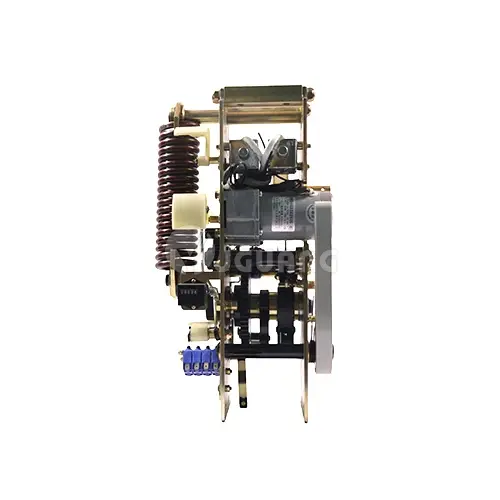
Understanding Circuit Breaker Mechanisms in Retrofit Projects
Core Working Principles of Operating Mechanisms
Every circuit breaker has an operating mechanism that closes and opens contacts when the circuit is normal and when there is a fault. Thermal mechanisms depend on bimetallic strips that bend when an overcurrent lasts for a long time, which sets off a trip. Magnetic devices use electromagnetic bands that react right away to currents that run short. Hybrid or electronic mechanisms use both of these ideas and are controlled by microprocessors, which make them precise and programmable. It is important to know the difference between these terms because retrofit projects often involve improving or removing old parts while keeping some of the original system.
Retrofit vs. New Installations: Why Compatibility Matters
In greenfield installs, every part is chosen from start. But with retrofits, interface compatibility needs to be carefully considered. Physical and electrical limitations are caused by existing enclosures, bus bars, control wiring, and mounting arrangements. If there is a problem with the mechanism's mechanical stroke, close speed, or control voltage, the whole switchgear system might not work right.
Yuguang has seen many instances where, because of tight project schedules, procurement teams chose technically sound breakers that didn't physically fit or electrically didn't work with legacy protection relays. This caused expensive rework and schedule delays.
Common Types Used in Retrofit Scenarios
There are low voltage (up to 1kV) and medium-to-high voltage (6kV to 40.5kV) retrofit uses. Molded case circuit breakers (MCCBs) with thermal-magnetic trip units are often used in low voltage retrofits. These are popular in business and manufacturing buildings. Vacuum circuit breakers (VCBs) with spring or permanent magnet mechanisms are used in high voltage retrofits, especially in substations and industrial facilities. Yuguang's product line includes everything from 6kV to 40.5kV, and its modular designs make it easy to upgrade in a wide range of industries, such as power production, metallurgy, petrochemicals, and rail travel.
Challenges and Risks of Incompatible Circuit Breaker Mechanisms
Operational Faults from Mechanism Mismatch
Incompatible systems create more than one way for something to go wrong. Circuit breaker mechanism issues are a central part of this problem. Mis-tripping happens when the trip unit's tuning doesn't match the assumptions made in the load profile or coordination study. This causes shutdowns that aren't needed during normal operations. Not tripping when there is a real fault is much more dangerous because fault currents can stay in place and damage equipment or put people in danger. Mismatched closing forces or poor alignment speed up mechanical wear, lowering the breaker's rated mechanical life from tens of thousands of operations to just a few thousand.
Physical, Electrical, and Control Integration Issues
When two pieces of equipment are physically incompatible, the fixing holes may not line up, the mechanism box may be too small, or they may interfere. Incompatibility may be caused by control voltage mismatches (such as converting from 110V DC to 220V DC without altering the auxiliary supply), incorrect auxiliary contact configurations, or incompatible shunt trip/undervoltage release coils. Adding electronic trip units to electromechanical relay panels might cause control integration issues. This may need interface modules and firmware upgrades.
Real-World Consequences: A Case Study
A big steel mill in the U.S. Midwest did a retrofit of a substation, replacing old oil circuit breakers with more up-to-date vacuum interrupters. The project team chose mechanisms based only on their breaking ability ratings, without looking at how they would fit together mechanically.
During commissioning, two breakers wouldn't close properly because the spring mechanisms weren't calibrated to work with the existing operating linkage. Over the course of two months, the plant had three unplanned outages. Each one cost about $180,000 in missed output and emergency contractor fees. This situation shows how important it is to do proper compatibility testing for both financial and operational reasons.
How to Ensure Circuit Breaker Mechanism Compatibility During Retrofit
Assess Existing Systems and Protection Requirements
Start by taking a close look at the current arrangement. Write down the physical dimensions, control voltage, auxiliary circuits, and ratings for the current breakers. Look at the most recent coordination study to learn about the trip features and time-current shapes that are needed. Check the state of the bus bars, the ends of the cables, and the soundness of the enclosure. These things affect the choice of mechanism. Yuguang's technical team regularly offers free assessment support, looking at the conditions of the site and suggesting fitting solutions that are tailored to each operating profile.
Match Trip Mechanism Types and Timing Settings
Choose systems whose trip traits fit with your idea of safety. If a building has a lot of motor starts, it might need time-delay settings that can be changed to avoid unnecessary trips. Electronic trip units are best for this. For high-speed defense against arc flash, you need magnetic trips that happen instantly and have exact current limits. To keep the arc interruption performance, make sure that the closing and opening speeds are the same as or faster than what was originally specified. It is very important for devices upstream and downstream to work together on timing; even a 50-millisecond difference can hurt selection.
Utilize Manufacturer Resources and Compatibility Charts
Major manufacturers provide extensive cross-reference guides and compatibility matrices. These tools match old model numbers to current product lines and indicate adapter kits or mounting alterations. Yuguang's thorough data on all major brands make it easier to connect new goods to ABB, Siemens, Schneider Electric, Eaton, and Mitsubishi systems. A flexible interface design in one of our 39 patented technologies simplifies retrofitting diverse equipment. This reduces engineering time and trial-and-error purchase.
Engage Professional Testing and Maintenance Support
Testing after installation makes sure that Circuit breaker mechanism works and is compatible. The trip is accurate across the whole current range, as shown by primary injection tests. Secondary injection checks that the protection relays are working together. Testing the mechanical operation checks the response time of the mechanism, the travel of the contacts, and the sequencing of the auxiliary switches.
Risk is lower when you work with a supplier that offers full-lifecycle help, from planning to commissioning. Yuguang offers installation advice, on-site commissioning help, and full after-sales service, including providing spare parts and free modification plans when changes are needed in the field.
Comparing Circuit Breaker Mechanisms for Retrofit – A Rational Choice Approach
Trip Characteristics: Thermal, Magnetic, and Electronic
When there is a risk of slow overload and only a few operation cycles, thermal-only systems are a good choice. Magnetic-only mechanisms are great at protecting against short circuits but not so good at sensing overloads. Electronic mechanisms are the most adaptable because they can provide ground fault protection, short-time, rapid, and long-term protection all in one unit. The choice relies on the type of load and the safety system that is already in place. When adding electronic parts to systems that were made for mechanical ones, the control wires may need to be upgraded or more interface switches may need to be added.
Low Voltage vs. High Voltage Retrofit Considerations
Low voltage retrofits focus on being cost-effective, easy to install, and having as little downtime as possible. Usually, procurement managers stress competitive pricing and fast delivery (7–15 days for standard units). It's more difficult to do high voltage retrofits because you have to follow IEC 62271-100 and IEEE standards, do a lot of testing, and work with utility companies.
Projects often need to be customized to work around problems that are unique to the place, like limited room or harsh weather. Yuguang's combined modular design works great for confined retrofits because it is small, has an IP67 rating for closing against dust and moisture, and has ceramic coating and powder-coated finishes that make it last longer.
Circuit Breakers vs. Fuses and Reclosers
Fuse is easy to use and doesn't cost much, but it can't be selective and needs to be replaced after each use. Circuit breakers are better for critical applications because they can be reset, their protection can be changed, and their status can be shown.
Reclosers are useful for certain distribution tasks because they automatically re-energize, but they make retrofitting more difficult because they need special control requirements. The choice depends on how reliable you want it to be, how easy it is to maintain, and how much it will cost you in total to own it. Yuguang's spring and permanent magnet mechanisms work for more than 10,000 mechanical cycles without any upkeep, which lowers long-term running costs.
Where and How to Source Compatible Circuit Breaker Mechanisms
Identifying Reliable Suppliers and Trusted Brands
Evaluation of suppliers is the first step to successful procurement. Check for certifications like ISO 9001:2015 for quality management, ISO 14001 for environmental compliance, and ISO 45001 for health and safety at work. Check that the product meets the IEC, GB, ANSI, and UL standards that apply to your area. Check out the technical support infrastructure of the provider, including their expertise in Circuit breaker mechanism design and performance.
Can they provide engineering estimates, coordination studies, and unique drawings? Yuguang was founded in 2008 and is now a recognized national high-tech company. It has a number of important licenses and has completed projects in the power, steel, and rail infrastructure sectors, showing that it is skilled at working in tough retrofit situations.
Evaluating Quality, Certifications, and After-Sales Support
Beyond the initial purchase, you should also think about the supplier's commitment after the sale. How long does the guarantee cover things? How quickly can they send out service technicians or ship new parts? Are there repair agreements? Yuguang offers installation help, preventative maintenance plans, a large inventory of spare parts, and free modification plans in case of unexpected compatibility problems.
Before being shipped, every unit goes through a series of strict tests that check for arc extinguishing, insulation integrity, load adaptability, and weather stress. These tests make sure that every unit meets national high-voltage device standards and ISO system requirements.
Procurement Guide: Ensuring OEM Compatibility and Value
When looking for mechanisms that can be retrofitted, you should include not only electrical ratings but also mechanical interface measurements, control voltage, secondary contact setups, and environmental ratings. Ask for written confirmation of compatibility, along with test reports and technical drawings. Look at the total landing cost, which includes freight, customs fees, and work for installation.
Yuguang offers a flexible MOQ that starts at just one unit, which makes it easy for pilot retrofits and phased implementations. Standard products are delivered in 7–15 days, and custom solutions take 30–60 days. Wooden wrapping that is resistant to moisture and shock keeps the product's integrity while it's being shipped internationally, passing strict export standards.
Conclusion
Circuit breaker mechanism compatibility is a key part of successful repair projects because it has a direct effect on how safe, reliable, and cost-effective the new system is. Every choice needs to be carefully thought out and backed up by expert advice, from understanding basic mechanism types to figuring out how to combine physical and electrical parts.
The risks of incompatibility, which can range from annoying trips to catastrophic equipment breakdowns, make it even more important to work with makers that offer proven retrofit knowledge, full support, and flexible product lines. Carefully choosing a provider and making sure that everything works together can turn problems with retrofits into chances to improve performance and make assets last longer.
FAQ
What happens if I install an incompatible mechanism during a retrofit?
Incompatible mechanisms can cause immediate operational failures such as improper trip calibration, mechanical binding, or control circuit malfunctions. Long-term consequences include accelerated component wear, increased maintenance frequency, and potential safety hazards during fault conditions. Electrical incompatibility may also void warranties and violate regulatory compliance requirements.
How do I determine if my existing breaker can accept a modern mechanism?
Consult the original equipment manufacturer's documentation for dimensional drawings, control schematics, and interface specifications. Cross-reference these with the replacement mechanism's technical data sheets. Engage a qualified engineer to conduct a site assessment, verifying mounting compatibility, control voltage, auxiliary contact requirements, and mechanical clearances.
Can Yuguang provide mechanisms compatible with ABB or Siemens breakers?
Yuguang maintains extensive cross-compatibility resources and has successfully delivered retrofit solutions integrating with major global brands. Our modular designs often include adapter kits and interface modules that facilitate seamless integration. Contact our technical team with your specific model information for a detailed compatibility assessment and tailored recommendation.
Contact Yuguang: Your Trusted Circuit Breaker Mechanism Supplier
Yuguang specializes in providing operating parts that can be retrofitted and work with 6kV to 40.5kV uses. Our integrated modular design, which is backed by 39 patented innovations and strict aerospace-grade manufacturing processes, makes it possible for different installations to work together without any problems. We offer personalized research and development, full-chain service from production to installation, and quick after-sales support to make sure your business runs smoothly and saves you money.
Our team provides technical solutions that fit your schedule and budget, whether it's updating old substations or adding new safety features to panels that are already there. Contact Yuguang today at ygvcb@hotmail.com or visit ygvcb.com to talk about your retrofit needs and find out why top power companies, industrial companies, and EPC contractors depend on Yuguang for worry-free, legal equipment solutions.
References
1. IEEE Standard C37.09-2018, "IEEE Standard Test Procedures for AC High-Voltage Circuit Breakers with Rated Maximum Voltage Above 1000V," Institute of Electrical and Electronics Engineers, 2018.
2. National Electrical Manufacturers Association (NEMA), "Application Guide for AC High-Voltage Circuit Breakers Rated on a Symmetrical Current Basis," NEMA SG 4-2020, Rosslyn, VA, 2020.
3. International Electrotechnical Commission, "IEC 62271-100: High-Voltage Switchgear and Controlgear – Part 100: Alternating-Current Circuit-Breakers," Edition 3.0, Geneva, Switzerland, 2021.
4. Smith, R.K., and Johnson, T.L., "Retrofit Strategies for Aging Substation Equipment: A Practical Engineering Approach," Power Systems Engineering Journal, Vol. 34, No. 2, pp. 112-128, 2022.
5. Electric Power Research Institute (EPRI), "Guide for Retrofit and Life Extension of Medium-Voltage Switchgear," EPRI Technical Update 3002015892, Palo Alto, CA, 2019.
6. Zhang, W., and Patel, M., "Compatibility Assessment Methodologies for Circuit Breaker Mechanism Retrofits in Industrial Applications," Proceedings of the International Conference on Electrical Distribution Systems, Melbourne, Australia, pp. 456-463, 2023.

Send Inquiry
You may like
