
Why High Voltage Vacuum Contactor Improves Power Distribution Safety
A high-voltage vacuum contactor makes power distribution safer by stopping the flow of current inside a sealed vacuum interrupter. If you don't switch normally, you have to deal with oil, air, and SF6 gas, so the arc goes out quickly. So there is less chance of an arc, the contacts wear out more slowly, and you can control how often the motor, transformer, and capacitor turn on and off. This is not the same as a circuit breaker, though. It does the daily work, and fuses or breakers take care of problems with short circuits. In this guide, I explain how the device works, how to pick one, and how Yuguang helps buyers from the planning stage to service after the sale.
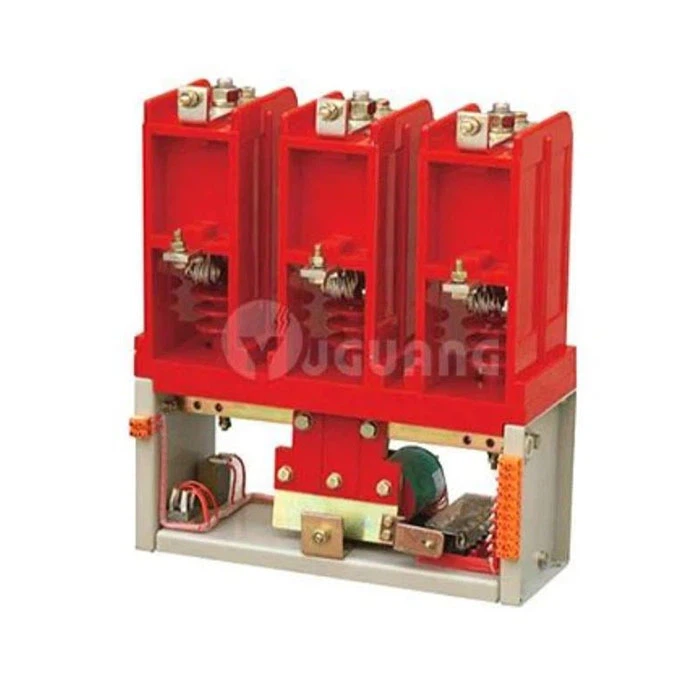
How a High-Voltage Vacuum Contactor Improves Power Distribution Safety?
Arc Extinction Inside a Sealed Vacuum Interrupter
When the contacts break apart, the current keeps going for a short time as a metal-vapor arc. If the current stops, that arc can't keep going in a vacuum, and in microseconds, the gap goes back to being able to keep out electricity. With the lid on tight, the arc stays inside a bottle that keeps sparks and hot gas out of the cabinet. People who work near switchgear should know this. Two U.S. safety rules, NFPA 70E and the IEEE 1584 calculation guide, say that arc flash is a very serious burn risk. There is another risk that routine switching does not add to. A sealed interrupter stops it. An open arc can't happen in places like mines and petrochemical plants that are dusty or unstable because of a sealed break.
Construction and Working Principle
A high-voltage vacuum contactor consists of the main contacts, the electromagnetic actuator, the operating mechanism, the insulation, the auxiliary contacts, and the terminals. The contacts are closed by the mechanism, and when the control circuit turns on the coil, current flows to the load. When the coil's power goes out, an opening spring separates the contacts, stopping the arc. Most of the time, the control circuit adds safety features like overload protection, position feedback, start and stop commands, and interlocks. Held things come in two types. When the power goes out, a contactor that is held by electricity opens. Auto-latched ones stay closed until a trip signal comes in. Choose the type that works best for your process, and make sure that the plans you use to wire it are correct.
Controlled Switching for Motors, Transformers, and Capacitors
Each load puts stress on a switch in a different way. A lot of electricity is needed to get a motor going. When transformers are turned on, they bring in a very strong magnetic field. Heavy inrush is caused by capacitor banks, and restrike can also happen because of them. A vacuum contactor does this many times every day. It is possible for current to stop before it reaches zero when vacuum switching happens.
This can lead to a short-lived overvoltage. To protect the motor insulation, RC absorbers or zinc-oxide surge arresters are often added. You need an F-C unit to connect the contactor to high-voltage fuses. The fuses fix short circuits, and the contactor handles normal starts and stops. This split keeps each device close to its rated duty, which lowers the chance of an accident or power outage. I'll now show you which ratings decide that fit.
Specifications and Applications of a High-Voltage Vacuum Contactor
Ratings That Determine Safety and Performance
Rated current isn't enough to pick the right High-voltage vacuum contactor by itself. Go ahead and look at the rated voltage. Then, compare it to the system voltage that changes the fastest. Check the levels of power frequency and the ability to withstand lightning strikes. A 12 kV class device is usually tested for one minute at 75 kV impulse and 42 kV across open contacts. Then talk about how it works with fuses further upstream, how much power it can make, how much power it can break, and how long it can last. Include the control voltage, the switching frequency, and the life span. Some models with 7.2 kV can handle up to 1,000,000 mechanical tasks. It will last less long, though, if your load current is high, so ask for the endurance data. What's around us is also important. Air gaps outside need to be lowered above 2,000 m.
Applications in Mining, Metallurgy, Power, and Infrastructure
In every field I look at, the work is always the same: big loads start and stop a lot. An underground conveyor belt or a metallurgical rolling mill will often have motors that are turned on and off. In dusty places, people wear sealed vacuum breaking suits. In power plants, the fans, pumps, and compressors are turned on and off. So that the power factor stays the same, big plants and utilities switch capacitor banks. Metal plants that use electric arc furnaces have supply circuits that use contactors.
Because these circuits vibrate and change duty cycles quickly, they are hard on the parts they use. Water treatment, HVAC, rail, and other infrastructure projects often need to be small. This is on top of the fact that they need more space and paperwork. You should make sure the model is approved for your load type and switching setup before you order it. This is because a capacitor duty rating is not the same as a motor duty rating.
Vacuum Contactor vs. Vacuum Circuit Breaker and Other Technologies
The device can be picked based on its fault level, switching frequency, and how it protects itself. A vacuum circuit breaker keeps feeders safe and stops big short-circuit currents, but it only needs to be used once in a while. When you turn things on and off a lot, a vacuum contactor works great. But when there is a short circuit, it needs fuses or an upstream breaker.
Air-break contactors can work at lower voltages, but contacts on vacuum units tend to last longer and need less maintenance when the voltage is medium. This is because oxygen can't get to the contacts because they are sealed off. SF6 devices clean the air and deal with gasses in a way that vacuums don't. Early on, make sure you know whether your system is AC or DC. They need different ways to turn off and manage the power. Once you know the basics, you can make a good selection process.
Selection, Installation, and Maintenance of a High-Voltage Vacuum Contactor
A Step-by-Step Selection Guide for B2B Buyers
Mistakes don't cost a lot of money when you plan them well. First, you need to name the load, the duty cycle, the normal current, the starting current (also called the inrush current), and the frequency of the switch. Second, look at the voltage, insulation level, duty category (such as AC-3 or AC-4), making and breaking capacity, and connections to make sure there are no short circuits.
Third, make sure that the installation sizes, control voltage, and auxiliary contacts of the switchgear are all the same. Fourth, write down what the site is like, like its height, temperature, pollution, humidity, and vibrations. Fifth, ask for test reports, drawings, wiring diagrams, lists of spare parts, and details about how long the product will last. Top engineers can use paper to make sure everything works together, and buyers can use the same technical base to compare prices. I think the supplier should do a technical review before approving the purchase.
Installation and Safety Checks
For safe putting in, start at the dock. For the nameplate, packaging, insulators, terminals, and mechanism, make sure that they all meet the approved specification. Once that is done, trained professionals should look at the phase spacing, grounding, mounting orientation, terminal torque, cable clearances, control wiring, and interlocks. Finally, they need to make sure that the fuses and overload relays work with each other.
An air gap interrupter in the field is sealed for a High-voltage vacuum contactor, so no one should be able to open it. Do the functional and insulation checks that the manufacturer tells you to do before you turn it on. Then, compare the results to the limits that the manufacturer sets. NFPA 70E says that jobs that involve switchgear need a written risk assessment and a place that is safe to work with electricity. The maintenance team will also have a clean base to work from when they need to compare things later on if the commissioning goes well.
Maintenance and Troubleshooting
When you do regular checks, you should hear for odd noises, vibrations, too much heat, loose connections, mechanical wear, and issues with the secondary contacts. To make sure the vacuum is solid, a power-frequency withstand test can be run across the open gap. The test should pass if the vacuum is broken and the interrupter needs to be changed. You should first separate a unit that won't close. Next, check the control voltage, coil rating, interlocks, fuses, and emergency stop circuits. A lot of the time, contact welding means that there is too much inrush, the wrong duty category, mechanical binding, or bad coordination of the protection. A lot of the time, overheating is caused by loose terminals, phase imbalance, overload, or not enough air flow. When maintenance records are clear, it's easier to find each problem.
How Yuguang Builds and Supports Its High-Voltage Vacuum Contactor Range?
Company Background and Scenario-Based Customization
A company called Shaanxi Yuguang Electric Co., Ltd. was set up in Baoji, Shaanxi, in 2008 to make vacuum circuit breakers. We do research and development, design, production, installation, and service for high-voltage equipment from 6 kV to 40.5 kV after the sale. It took 39 patents from researchers who worked alone. The company has ISO 9001:2015, ISO 14001, and ISO 45001 certifications. It is also known as a High and New Technology Enterprise. Our JCZ series has vacuum contactors with 7.2 kV and 12 kV voltage. We make things that can work in harsh conditions and meet the needs of the mining, metallurgy, petrochemical, and power industries. We can also do OEM and ODM work for you. They will change the settings to make it work after you tell them about the site and the load.
Manufacturing and Testing Process
We make things that last and keep them sealed. Corrosion-resistant alloys and IP67 seals are used to process raw materials, and all of them are checked. Cutting and stamping are used to make the structural parts. To make the solid-sealed poles and arc-extinguishing chambers, aerospace-grade precision and special tools are used. Important parts are put together ahead of time on special tools, and then they are joined to the frame and shell. This keeps the size small.
On the outside, ceramic and powder coating are used. The material is then hardened at a steady temperature to make it less likely to rust and wear down. Then, arc-flashing, insulation, and load adaptability are checked in more than one round of testing. It also checks to see if the product meets national standards for high-voltage electrical appliances and the needs of the ISO system. It's only units that pass that get packed.
Delivery, MOQ, and After-Sales Support
A High-voltage vacuum contactor project stays on track if it meets its service and schedule goals. Customized items take 30 to 60 days, while non-customized items take 7 to 15 days. You can order as little as one unit or set from us, so you can make small orders for replacements or big orders for unique projects. For orders going to other countries, we follow international standards and put units in wooden cases that can handle shock and water. After delivery, we give you free plans for changes, instructions on how to install, maintenance agreements, and spare parts. We can also fix broken things and help people in other countries with tech problems. We take care of everything, from research and development to service after the sale, so you only have to deal with one team.
Evaluating a High-Voltage Vacuum Contactor Manufacturer or Supplier
What a Dependable Supplier Should Show?
You should ask them to show you proof that they know how to use medium-voltage contactors, vacuum interrupters, and switchgear integration. Check out the different options for control, mounting, voltage, current, and extra contacts. Not only that, but also ask about OEM, replacement, and international projects. Quality assurance includes checking the parts as they come in, keeping an eye on the assembly process, testing for dielectrics and contact resistance, checking how well the parts work, keeping track of them, and writing test reports.
Check to see if the certifications meet the bid rules. Quality, safety, and the environment all have their own systems. ISO 9001, ISO 14001, and ISO 45001 certificates are proof of this. You should also ask the technical team for drawings and math. Problems with compatibility can be avoided later by getting help during the design phase.
RFQ Checklist
It takes less time to get a correct quote when you have a full RFQ. Describe the purpose, the type of load, the system voltage and frequency, the running current, the starting or inrush current, the switching frequency, the short-circuit level, the control voltage, the installation size, the conditions at the site, the standards that apply, and anything else that you think is important. Find out how long the product will last, how it can make and break things, how it tests for vacuum integrity, what replacement coils, interrupters, auxiliary contacts, lead time, minimum order quantity, and paperwork are available. You need to be clear about whether you need IEC, GB, or ANSI/IEEE alignment for U.S. projects. Once that is done, ask the supplier to write down the standards that the product meets.
Comparing Quotes by Lifecycle Cost
When you compare quotes, you should think about technical things like tests, certifications, packaging, shipping, warranties, customization, spare parts, and engineering support. Costs like downtime, slow spare parts, or a model that doesn't work right can be hidden by a low unit price. Part of the lifecycle cost is the time it takes to fix a problem, the chance of an outage, and the cost of service calls. Ops teams should find out how quickly the supplier responds to calls about problems and whether it keeps coils, interrupters, and mechanisms in stock. The project manager should make sure that everyone will work together on-site, and the procurement manager should confirm delivery dates in writing. There is a sweet spot between safety, dependability, compatibility, and long-term value in the best choice.
Conclusion
A high-voltage vacuum contactor improves the safety of power distribution by stopping current inside a sealed vacuum interrupter when motors, transformers, and capacitor banks are turned on and off frequently. It works best next to breakers or fuses because it can do normal things while they fix short circuits. It's important to check that the load is compatible with the voltage, current, duty category, inrush behavior, site conditions, and surge protection. If you install it correctly, test the vacuum's integrity, and check on it regularly, that performance will stay the same. Costs and downtime in the long run are also affected by the checks we've talked about here. These checks include certifications, test reports, delivery terms, spare parts, and customer service after the sale.
FAQ
Q1: What is the difference between a vacuum contactor and a vacuum circuit breaker?
A: When switching things that need to be done often, a contactor works well. However, it's not very good at stopping short circuits, so it needs fuses. When you need to protect something that doesn't need to be protected very often, a circuit breaker is the best choice.
Q2: Does a vacuum contactor need overvoltage protection?
A: Yes, a lot of the time. To keep motor insulation safe, RC absorbers or zinc-oxide surge arresters are often used. This is because overvoltage can happen quickly when the current changes.
Q3: How do I know if the vacuum has leaked?
A: The vacuum has been lost if the power-frequency withstand test across the open gap fails. Most of the time, electrical testing is done, but some models have a gettering indicator.
Q4: Can it operate above 2,000 m?
A: The gap inside the vacuum doesn't change. Either the switchgear needs to be redesigned or the distances between the air insulation on the outside need to be cut down.
Q5: What information do you need for a quote?
A: Send the system's voltage, flow rate, type of load, switching frequency, control voltage, site conditions, and mounting dimensions.
Request a High-Voltage Vacuum Contactor Quote from Yuguang
Let Yuguang know about your site and electricity so he can take a look. If you need a High-Voltage Vacuum Contactor Supplier for replacements, OEM projects, or bulk orders, our team brings 6 kV–40.5 kV focus, 39 patents, scenario-based customization, and full-chain service. Send an email to ygvcb@hotmail.com to find out more. Orders start at one unit, and we'll let you know about the fit and when it will be delivered.
References
1. IEC 62271-106: High-voltage switchgear and controlgear – Part 106: Alternating current contactors, contactor-based controllers and motor-starters, 2021
2. NFPA 70E: Standard for Electrical Safety in the Workplace, 2024
3. IEEE 1584: Guide for Performing Arc-Flash Hazard Calculations, 2018
4. NFPA 70B: Standard for Electrical Equipment Maintenance, 2023
5. The Vacuum Interrupter: Theory, Design, and Application (Paul G. Slade), 2008
6. IEC 62271-1: High-voltage switchgear and controlgear – Part 1: Common specifications, 2017

Send Inquiry
You may like
