
Why Reliable Vacuum Contactor Ensures Continuous Production
Heavy industries, like steel mills and renewable energy substations, can lose a lot of money if they have even one unplanned shutdown. This can throw off production schedules and put a strain on supply chains. Vacuum contactors are the first line of defence against these kinds of interruptions. They use sealed vacuum arc-extinguishing tanks to reliably handle high-voltage circuits. Vacuum-based designs are safer than traditional air-break or oil-immersed switches because they don't pose a fire risk, need less upkeep (up to 70% less), and run quietly for millions of switching cycles. When procurement managers choose tested and approved Vacuum contactor technologies, they not only make sure that their equipment works, but they also gain a competitive edge by making sure that operations run smoothly and predictably.
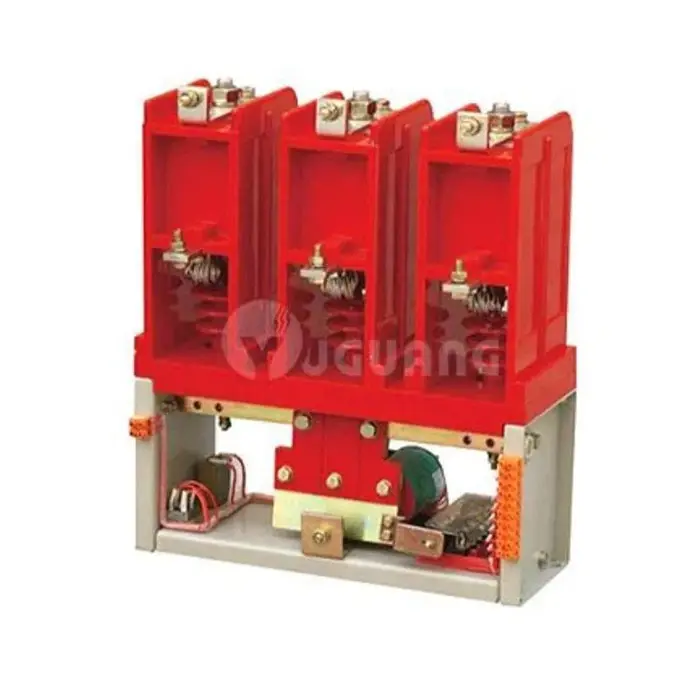
Understanding Vacuum Contactors and Their Role in Continuous Production
What Makes Vacuum Arc Extinction Superior?
Vacuum contactors separate contacts inside a sealed vacuum bottle, where the lack of air molecules prevents an arc from forming for a long time. When the contacts come under load, metal vapour ionises for a short time and then disappears within microseconds. This puts out the arc much faster than traditional methods that use air or gas to insulate them. This feature keeps motors and transformers further down the line safe from voltage spikes and increases the life of the contacts well beyond the estimated 500,000 operations.
Core Applications Driving Industrial Reliability
When controlling motors for things like conveyor belts, crushers, and air fans that start and stop a lot, these devices work really well because they don't put too much stress on the electrical system. Vacuum contactors are used by reactive power compensation banks in substations to switch capacitor groups dozens of times a day without any damage. When making steel, electric arc furnace power sources need to work quickly and with a lot of electromagnetic interference. This is exactly the kind of situation where vacuum technology keeps working well. Dependable switching directly leads to higher output and fewer emergency calls in the mining, metals, and building sectors.
Voltage Range and Technical Specifications
The medium- and high-voltage distribution networks that are common in big industrial plants can be accommodated by modern Vacuum contactors, which have rates ranging from 6 kV to 40.5 kV. Rated currents range from 200 A to 1,250 A, so they can handle a wide range of loads, from controlling the pitch of wind turbines to pumping petrochemicals. It is safe to use smart-grid safety switches and programmable logic controllers because the insulation levels meet IEC 62271 and GB standards. Engineers make sure that voltage class, current capacity, and environmental grades are all in line with the conditions at the spot. If they aren't, it could cause thermal runaway or unnecessary trips.
Why Reliability Matters: Impact of Vacuum Contactor Performance on Production Continuity
Financial and Operational Costs of Downtime
Industry standards say that downtime in steel rolling mills and auto assembly plants costs an average of $260,000 per hour. A broken Vacuum contactor can stop whole production lines, leaving hundreds of workers idle and customer orders behind schedule. Unplanned stoppages cause instant loss of income, as well as fees for faster shipping, overtime work, and possibly contractual penalties. More and more, procurement teams are realising that buying high-reliability switchgear lowers the total cost of ownership by keeping just-in-time supply promises and lowering these hidden costs.
Common Failure Modes and Prevention Strategies
Coil voltage drift, which is often caused by unstable auxiliary power supplies, causes contacts to weld together when the coil doesn't close all the way or opens too slowly. The dielectric strength of insulation weakens over time due to changes in temperature and humidity, which increases the chance of phase-to-ground problems. Vacuum bottle lids get clogged up with dust or chemical vapours, which makes arc extinction less effective. Regular checking procedures should check the stability of the vacuum using magnetron discharge tests, check the resistance of the loop to find rust, and make sure that all three phases are mechanically in sync within 2 ms. Yuguang's integrated modular design uses IP67-rated seals and corrosion-resistant alloys to fix these problems at the material level and make maintenance intervals at least 36 months.
Safety Hazards Linked to Unreliable Switching
A catastrophic failure of a contactor can cause an arc flash with energy above 20 cal/cm², which can put people in danger and set off nearby burning materials. At high elevations, where the air pressure goes below sea level, insulation breaks down faster, which makes partial discharge activity worse. This is a problem that is made worse by hill mining operations. To meet OSHA and NFPA 70E arc-flash safety standards, Yuguang's plateau-type Vacuum contactors have longer creepage lengths and aerospace-grade precise tooling. Reliable operation saves both people and things, which improves the company's safety record and standing with regulators.
Comparing Vacuum Contactors with Alternative Solutions: Making the Right Choice
Vacuum Versus Air-Break and SF6 Technologies
Due to oxidation and arc erosion, air-break contactors need to replace their contacts more often, which raises maintenance costs and increases the number of times they need to be shut down. Even though SF6 gas-insulated units are small, they are closely watched by regulators because they release strong greenhouse gases and need special care when they are being installed and taken down. Vacuum contactors get rid of both of these problems because they don't produce any pollution, require little upkeep, and are quiet when they're working (below 40 dB). Over the course of 15 years, vacuum designs have 40% lower total ownership costs than air-break equivalents. This makes them the best choice for procurement strategies that focus on sustainability.
Balancing Cost and Performance
Solid-state contactors can switch quickly and precisely, but they cost more up front and can be damaged by short-term overvoltages. When used with low voltages, electromagnetic contactors work well. But when used with medium voltages, they have trouble with high inrush currents and mechanical wear. Vacuum technology is in the sweet spot because it can handle heavy loads and doesn't cost too much. Yuguang has a wide range of products, from 6 kV to 40.5 kV, and is protected by 39 utility model patents. These patents allow engineers to exactly match contactor specifications to load characteristics, so they don't have to choose between too many specifications that drive up costs or too few specifications that cause the product to fail too soon.
Technical Checklist for Procurement Managers
When choosing a contactor, compare the rated making and breaking capacity to the short-circuit current levels that were found during system studies. Make sure that the mechanical endurance rates are at least 20% higher than the expected yearly activities. Check the environmental certifications for high and low temperatures, humidity, and elevation, especially if you are putting them to use in desert solar farms or hydroelectric stations at high elevations. Ask for test records from the factory that show the power-frequency withstand voltage, contact travel measures, and vacuum integrity results. Yuguang's multi-round testing process, which includes arc-extinguishing validation and ISO 9001:2015 compliance checks, gives clear quality guarantee that makes it easier to qualify vendors and speeds up price evaluations.
Sourcing Reliable Vacuum Contactors: Procurement Best Practices
Partnering with Certified Manufacturers
Suppliers with good reputations have ISO 9001, ISO 14001, and ISO 45001 standards, which show they care about quality, the environment, and worker health. National high-tech enterprise designations show that a company is committed to long-term research and development (R&D) and can come up with new ideas. This is important for making sure that products can adapt to changing safety and grid codes. Yuguang was founded in 2008 in Baoji, which is known as the manufacturing hub for vacuum circuit breakers in China. The company combines the benefits of a local supply chain with the ability to provide services across borders, working with projects for both domestic state grids and international EPC contractors. Our 39 patents cover advances in solid-sealed poles, modular building methods, and changes for harsh environments. This means that we can offer unique solutions that are tailored to each situation.
Negotiating Delivery Timelines and MOQ Flexibility
Global supply chain problems have made lead times longer for specialised electrical parts, so how quickly a seller responds is an important factor in choosing one. Vacuum contactors in standard form should be shipped within 7 to 15 days, while customised versions for high altitudes or corrosive atmospheres need 30 to 60 days for technical approval and manufacturing. Yuguang takes orders for as little as one unit, so they can handle both pilot installations and bulk fleet upgrades. Wooden packing that is resistant to moisture and shock and meets international standards (ISPM 15) protects equipment while it is being shipped overseas, which cuts down on damage claims and repair delays.
Verifying Technical Support and After-Sales Infrastructure
If you buy a full warranty, it should cover installation instructions, on-site commissioning help, and free modification plans for adding contactors to old switchgear. The mean time to fix during unexpected failures depends on how readily available spare parts are, especially vacuum bottles and working mechanisms. Yuguang's full-chain service model includes more than just selling products. It also includes custom research and development, designing transformation schemes for oil-free retrofits, and having repair teams that work only after the sale. Plant operators can quickly fix problems by using technical datasheets, maintenance manuals, and the engineering hotline (ygvcb@hotmail.com), which is open 24 hours a day, seven days a week. This cuts down on the need for outside contractors and keeps production schedules on track.
Case Studies: How Reliable Vacuum Contactors Deliver Continuous Production?
Motor Control in Underground Mining
A copper mine that was 3,800 meters above sea level had a lot of contactor failures because of insulation stress caused by the altitude and temperature changes of -15°C to +35°C. When we switched to Yuguang plateau-type Vacuum contactors, we got rid of annoying trips and cut down on maintenance visits from once a month to three times a year thanks to their longer creepage distances and ceramic-coated housings. Over two years, the operation recorded 1.2 million switching cycles without any contact loss. This kept the conveyor up and running more than 98% of the time, which helped the mine regularly meet its production goals.
Capacitor Bank Switching in Utility Substations
A regional power grid that controls 12 kV distribution networks had to quickly change the reactive power to keep voltage profiles stable during times of high demand. Inrush currents greater than 100 times the rated values caused contact welding in traditional air-break contactors. The capacitor bank's reliability was restored by the use of Yuguang JCZ12kV high-voltage Vacuum contactors, which have closing bounce times of less than 2 ms and loop resistances of less than 500. Over a three-year monitoring period, the utility reported no unplanned outages caused by contactor faults. This made customers happier and put off expensive substation upgrades.
Electric Arc Furnace Power Supply Reliability
The 75 MVA arc furnace in a steel mill turned the power on and off up to 300 times per shift, which caused contactors to be subjected to a lot of electromagnetic interference and mechanical vibration. In the past, the contacts had to be replaced every six months, which cost $15,000 in parts and labour for each event. When you switch to Yuguang Vacuum contactors with aerospace-grade arc-extinguishing chambers and modular construction, you can go 24 months between replacements, which cuts annual maintenance costs by 65%. The mill's operations manager said that this improvement made it possible for output to go up by 8% without spending any more money on new equipment. This shows that reliable equipment directly leads to a competitive edge.
Conclusion
In order to protect high-voltage circuits from arc damage and provide decades of maintenance-free service, reliable Vacuum contactors are essential to maintaining uninterrupted industrial operations. Yuguang's scenario-based customisation tools, which are backed by 39 patents and a wide range of ISO certifications, help with a lot of buying problems, from adapting to tough environments to fast delivery and full lifecycle support. By choosing vacuum switching options that have been tested thoroughly and have a responsive after-sales system, procurement managers can save money right away and ensure stable production in the long run. Buying certified, high-reliability contactors lowers the risk of failure, improves safety, and puts businesses in a good position to handle rising throughput demands with trust.
FAQ
What is the typical lifespan of a vacuum contactor?
Under rated conditions, high-quality Vacuum contactors can withstand more than 500,000 full-load cycles and have a mechanical longevity value of 1 million operations. Lifespan changes depending on the job cycle, the surroundings, and how well it is maintained. In clean, temperature-controlled substations, devices often last longer than 20 years. However, in dusty, high-vibration mining environments, vacuum bottles may need to be replaced every 12 to 15 years. Regular checking of vacuum integrity and loop resistance can help figure out when something is nearing the end of its useful life, so it can be replaced before it stops production.
How do I know when to replace or repair a vacuum contactor?
Keep an eye out for danger signs like a longer closing bounce time (more than 2 ms), a rise in loop resistance above the manufacturer's limits, or obvious contact erosion when checking the circuit visually. Vacuum degree degradation, which can be found using magnetron discharge methods, means that the seal is broken and the bottle needs to be replaced. Yuguang offers thorough maintenance contracts and extra parts, which makes sure that repair choices are based on facts rather than feelings. With real-time condition monitoring and planned maintenance every 24 to 36 months, you can get the most out of your replacements and avoid having to shut down in an emergency.
Are vacuum contactors suitable for harsh industrial environments?
Modern styles use sealings that are marked IP67, metals that don't rust, and powder-coated surfaces that can handle chemical vapours, salt spray, and temperature changes from -40°C to +55°C. Plateau-type versions have better protection for use above 3,000 meters, and explosion-proof shelters are best for places that could go off. Yuguang's combined modular construction reduces the number of entry points for water and other substances. Multiple rounds of environmental testing prove performance in simulated field conditions, proving suitability for tough uses in mining, offshore platforms, and desert solar sites.
Partner with Yuguang for Reliable Vacuum Contactor Solutions
Yuguang offers tried-and-true Vacuum contactor technologies that are designed to cut down on production delays and overall costs in the power, metallurgy, and renewable energy industries. Our knowledge, which comes from Baoji's history of making vacuum switchgear and is backed up by 39 patents, lets us create custom solutions for high elevations, toxic environments, and high-duty-cycle needs that are hard for standard designs. Yuguang makes it easier to buy things for both test projects and fleet-wide upgrades by offering flexible MOQs starting at just one unit, fast delivery times (7–15 days for stock items), and full after-sales support that includes installation help and extra parts. Email our technical team at ygvcb@hotmail.com to talk about the needs of your application and to ask for certified test reports.
References
1. International Electrotechnical Commission. (2021). High-Voltage Switchgear and Controlgear – Part 103: Switches for Rated Voltages Above 1 kV up to and Including 52 kV (IEC 62271-103:2021).
2. Zhang, L., & Wang, H. (2020). Vacuum Arc Phenomena and Interruption Performance in Medium-Voltage Contactors. Journal of Electrical Engineering & Technology, 15(4), 1823-1835.
3. National Fire Protection Association. (2021). NFPA 70E: Standard for Electrical Safety in the Workplace (2021 Edition). Quincy, MA: NFPA.
4. Smith, R. K. (2019). Reliability Analysis of High-Voltage Switching Equipment in Industrial Power Systems. IEEE Transactions on Industry Applications, 55(3), 2704-2713.
5. Chen, M., Liu, Y., & Zhou, X. (2022). Environmental Adaptation of Vacuum Interrupters for High-Altitude and Extreme Climate Applications. Electric Power Systems Research, 208, 107891.
6. Occupational Safety and Health Administration. (2020). Arc Flash Hazards and Protection Strategies in Industrial Settings. U.S. Department of Labor Technical Report.

Send Inquiry
You may like
