
Why Stable Operating Mechanism Ensures Power System Reliability
When we talk about the dependability of a power system, the Operating mechanism is like the breath that controls how well or badly electricity networks work. An Operating mechanism is the part of circuit breakers and switchgear that stores, releases, and regulates the mechanical energy needed to open or close electrical contacts when everything is working normally and when there is a fault. This part has a direct effect on the speed at which the arc ends, the speed at which the contacts separate, and the exact timing at the millisecond level that keeps equipment from breaking and the power from going out. Stability of these mechanisms is shown by consistent force delivery, low mechanical wear, and reliable latching performance. This directly leads to less downtime, lower maintenance costs, and higher safety across power distribution networks that serve utilities, critical infrastructure, and industrial plants.
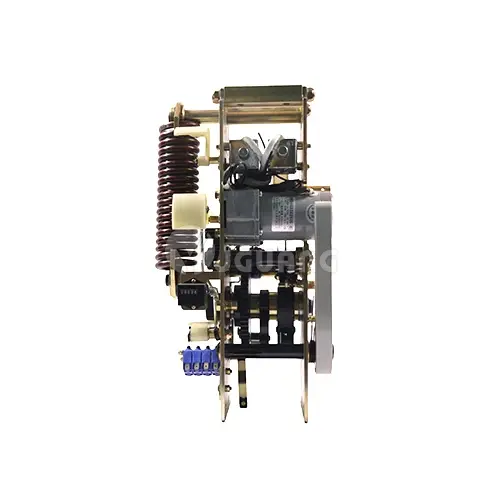
Understanding Operating Mechanisms in Power Systems
What Are Operating Mechanisms and How Do They Work?
Within high-voltage and medium-voltage circuit breakers, Operating mechanisms are precisely engineered systems that transform stored energy into controlled mechanical motion. As the "muscle" behind switching operations, they make sure that contacts open and close at the right times to stop dangerous electrical sparks and keep equipment safe. The basic idea is that energy is stored in the form of compressed springs, electromagnetic coils, or pneumatic pressure. When a trip or close command is sent, the energy is controlled to be released. This stored energy has to keep its force constant over thousands of cycles while following strict timing rules.
Today's mechanisms have complex locking systems, buffer devices, and extra switches that work with control systems. The mechanical strength of these parts has a direct effect on how well the contacts line up, how well the arc chamber works and finally, how well the circuit breaker can safely stop fault currents. When buying teams understand these principles, they can see why Operating mechanism stability can't be sacrificed. This is especially true in mission-critical applications, where a single failure can cause widespread outages.
Key Components Enabling Reliable Operation
To ensure dependable operation, a number of important elements collaborate within the operating mechanisms. The part that stores energy—usually high-tensile alloy springs in spring mechanisms or electromagnetic coils in solenoid systems—needs to keep its physical properties even when the temperature changes and the system is under a lot of stress. Chrome-vanadium steel springs made with aerospace-grade precision tools are used in Yuguang's mechanisms. This makes sure that the force doesn't change much over the rated 10,000+ mechanical endurance cycles.
Another important part is the locking and release method. This system firmly stores energy until a command signal tells it to let go. It needs cam surfaces that don't wear down easily and tight tolerances. Our flexible design keeps the motor charging unit separate from the mechanical drive. This way, electrical problems can't damage the saved energy. Bearing surfaces are oiled with a special low-viscosity oil that keeps them working in temperatures from -40°C to +55°C. This is good for harsh environments like mines, solar farms in the desert, and substations in the arctic.
The last part of motion is controlled by buffer and damping devices, which keep contacts safe from too much pressure. Modern styles include hydraulic dampers that can be adjusted to smoothly absorb kinetic energy. This makes the contacts last longer and lowers the noise level during switching operations.
Types of Operating Mechanisms: From Manual to Smart Systems
The technologies used to activate circuit breakers have changed a lot over the years, providing a wide range of options for different operational situations. The easiest way to do things is with hand-cranked devices that store energy and can be used for low-frequency switches in small distribution systems. Even though they are cheap and automatically fail-safe during power outages, their slow speed and need for an operator to be present limit their use to non-critical circuits.
Modern systems are mostly made up of automatic devices, which can be spring, electromagnetic, pneumatic, or hydraulic. Yuguang's main speciality is spring-operated systems, which store energy physically through motor-driven spring compression. These systems are very reliable and don't pose any risks of fluid leaks. Our CT19N and modular spring systems work better in retrofit projects that can't use oil-filled hydraulic units because of lack of room or worries about the environment. Electromagnetic mechanisms like the CD17 series respond instantly through solenoid actuation. This makes them perfect for fast reclosing processes in transmission lines where fault clearance speed is very important.
In hybrid configurations, technologies are used together in a smart way. An electromagnetic trip release could be built into a spring system to make it open faster while still storing mechanical shutting energy. Because of this, engineers can find the best settings for certain performance factors, like closing force, opening speed, and auxiliary power use, without affecting the overall reliability. IoT sensors are being used in a new type of smart Operating mechanisms to track things like coil temperature, spring compression force, and the number of cycles the mechanism has been used. This lets maintenance plans predict problems before they happen and stop them before they happen.
Why Stability in Operating Mechanisms is Crucial for Power System Reliability?
How Mechanism Instability Triggers System-Wide Disruptions?
Operating mechanism problems don't happen by themselves very often. If a circuit breaker doesn't open during a fault because the spring force is weak or the latching parts are stuck, fault currents keep flowing and damage transformers, busbars, and feeders nearby. We looked into situations in metallurgical plants where one breaker wouldn't trip, stopping the production of molten metal at a cost of hundreds of thousands of dollars per hour. The main reason was not maintaining the spring tension properly and corrosion in the release connection. These problems could have been avoided by designing a stable system and choosing the right materials.
On the other hand, important processes are stopped unnecessarily when latch wear or an overheated electromagnetic coil cause the door to open by accident. When power goes out unexpectedly, chemical plants that use reactions that depend on temperature lose products and put stress on their equipment. These situations show why stability is so important for power security. Stability means that the system will work the same way over and over again for the whole working life. Yuguang reduces these risks by using multi-round testing methods that put mechanisms through 1.5 times their estimated number of working cycles while temperatures change quickly. This makes sure that the mechanisms will be stable in the long term before they are released to the public.
The effect on the economy goes beyond the costs of the outage itself. Frequent failures of mechanisms raise the need for extra parts, put a strain on upkeep funds, and lower trust in the electrical system as a whole. When power quality measures drop because of poor switchgear, utilities that serve airports and data centers are legally required to pay extra. Because of this, buyers look for suppliers that can show they are stable by showing official certifications and clear performance data.
Design Principles for Robust and Durable Mechanisms
Long-term security can only be achieved by following basic engineering rules during the planning phase. The choice of material is the most important thing to think about. For example, Yuguang uses corrosion-resistant alloys for structural parts and IP67-rated seals to protect them from the environment. When these materials come in, they are carefully inspected, and core parts like solid-sealed poles and arc-extinguishing chambers are made with special tools to make sure they are the right size and the seals stay in place.
Compared to monolithic designs, the integrated modular idea is a big step forward. By making separate, swappable subassemblies like the charging module, the latching/drive module, and the damping module, the complexity of upkeep is greatly reduced. Technicians can replace a broken charge motor without changing the spring tension that has already been set or taking the whole breaker apart. The modularity cuts the mean time to repair (MTTR) from days to hours, which is a huge benefit for infrastructure operators who have to work with limited maintenance windows.
Single-point failures can't happen because of fail-safe features. Two extra switches make sure the mechanism is in the right place, and mechanical interlocks stop the close and trip orders from happening at the same time. Our electromagnetic systems have thermal overload safety that turns off the power to the coil before damage to the insulation happens. Surface treatments, like ceramic coating, powder coating, and constant-temperature curing, improve rust resistance and ageing performance. This makes it possible for safe operation in coastal substations where salt fog speeds up the breakdown of steel parts that haven't been treated.
Real-World Performance in Critical Applications
Field performance data makes it clear how useful stable Operating mechanisms are in real life. Over the course of three years and more than 15,000 operations, a large steel company that used forty 12kV vacuum circuit breakers with Yuguang spring mechanisms had no unexpected failures. The new installation removed old pneumatic systems that had problems with air engine breakdowns and moisture contamination. The spring mechanisms got rid of extra support equipment in the substation, which made it easier to use, saved 300kW of energy a year, and gave repair staff more time to do other important chores.
Wind farm operators have to deal with a lot of problems, such as frequent switching cycles when turbines start up and shut down, being exposed to extreme temperatures, and being in remote areas where service response times are slow. Our combined electrical equipment for wind power uses optimised Operating mechanisms that are made to last 30,000 mechanical cycles, which is three times the standard industrial rating. Accelerated life testing confirms performance under constant shaking conditions that are like building a tower. One company that builds offshore wind farms in rough marine environments chose Yuguang mechanisms because they are sealed and made of materials that don't rust. Over the course of five years of operation, these mechanisms have been available 99.7% of the time in 200 turbine installations.
Comparing Different Operating Mechanisms for Power Systems
Manual vs. Automatic: Operational Trade-offs
Despite automation trends, manual Operating mechanisms are still useful in some situations. Because they are mechanically so simple—hand-crank spring charging with manual trip levers—they don't need any extra power sources. In the event of a grid blackout, workers can physically charge springs and flip circuit breakers to change the way power flows or separate damaged areas. In emergency repair situations, this feature is very useful.
During normal activities, the limits become clear. Manually charging a spring takes a lot of continuous physical effort and 30 to 60 seconds per action, which is too long for circuits that need to quickly close or switch. Variability is caused by human factors, like when an operator is tired and the spring doesn't compress all the way, there isn't enough contact pressure, and the arc could end. When substations need staff 24 hours a day, seven days a week to do routine switching tasks, labour costs go up.
These problems can be solved automatically by motor-driven energy storage and the ability to control them from a distance. Yuguang's automatic spring mechanisms finish charging cycles in 8 to 12 seconds and always deliver the same amount of force, even when the operator isn't there. SCADA integration allows for centralised control of entire substations, which cuts down on staffing needs and speeds up response times when there is a fault. The trade-off is higher starting cost and reliance on secondary DC power systems, which can be lessened by battery backup and the ability to overrule manually in good designs.
Electric vs. Mechanical: Performance Characteristics
With closing times of less than 40ms, electromagnetic systems offer very fast response times, making them useful for specialised uses like quick bus transfer schemes. This is possible with the CD17 series electromagnetic mechanism because it has a well-designed magnetic circuit that makes high actuator force from small coil assemblies. The motor doesn't have to run all the time, so it uses less energy. Power is only used when switching commands are sent, not when the spring is being compressed.
On the other hand, mechanical spring systems are more stable when storing energy. When springs are compressed, the stored energy is always available, and no electricity is used and there is no risk of coil burnout from using the energy for too long. Because of this, spring mechanisms are the best choice for installations where backup power isn't stable or where processes don't happen for long periods of time. The CT19N spring mechanism works especially well for brownfield retrofit projects because it can fit into small cabinet areas and still meet current reliability standards.
Cost analysis shows benefits that depend on the situation. Electromagnetic mechanisms usually cost 15-20% less at first, but they need a strong DC supply system with low-impedance cables to handle the high currents that come in when the coil is turned on. Spring mechanisms have higher initial costs, but they don't need much extra power and don't need to be serviced as often. When you add up the cost of energy, replacement parts, labour, and 20 years of use, spring systems often have a lower total cost of ownership in situations where they are used a lot or where the power supply isn't stable.
Aligning Mechanism Selection With System Requirements
When making procurement choices, you should match the features of an Operating mechanism to its specific operating needs. High-frequency switching tasks, like capacitor bank switching, motor starting duty, and furnace supply circuits, are made easier by electromagnetic mechanisms' quick response time and ability to work 24 hours a day. Since mechanical spring fatigue doesn't happen, there is no way for the device to fail under heavy duty cycles.
On the other hand, important isolation points and circuits that don't operate very often favour spring devices. The stored energy method makes sure that the system can still work if the station's batteries die, which is an important safety factor for emergency disconnects. Yuguang's modular spring mechanisms are perfect for these uses because they have a small size, don't need to be serviced for 12 to 18 months, and work with both vacuum and SF6 circuit breakers across a voltage range of 6kV to 40.5kV.
Environmental factors have a big effect on selection. Mining operations that deal with a lot of shaking, coastal substations that have to deal with salt fog, and high-altitude sites that have to deal with less dense air for cooling all benefit from the fact that spring systems are completely mechanical and sealed. Our mechanisms are sealed with IP67-rated materials and have ceramic surface treatments that keep them working well in these harsh conditions. Our technical consulting services help project managers choose mechanisms that meet both immediate needs and long-term economics, while also keeping performance requirements and budget constraints in mind.
Procuring Reliable Operating Mechanisms: A Buyer's Guide
Evaluating Supplier Credentials and Track Record
For procurement to go well, suppliers must first be carefully evaluated based on their qualifications and experience, which can be checked. The basic quality management standard is ISO 9001:2015 certification, but a closer look shows operational maturity. The three certifications that Yuguang has—ISO 9001, ISO 14001 for environmental management, and ISO 45001 for worker health—show that the company has a well-integrated system that lowers the risk of not meeting standards in all of its production processes.
Patent files show real R&D spending versus production of goods. Our 39 utility model patents cover new ways of making mechanisms, such as buffer designs, modular architectures, and methods for sealing out the environment that work in the real world. Recognising us as a national high-tech enterprise is proof that the government agrees with our technical skills. Purchasing managers should ask for specific patent information that is relevant to their needs and make sure that the claimed improvements actually solve real operating problems rather than just making small changes to the way things are designed.
Performance data from the field is more reliable than test results from the lab. Ask for customer references from similar uses in terms of voltage class, duty cycle, and environmental conditions. Then, talk to those references directly about failure rates, service response, and lifecycle costs. Yuguang has installations in power plants, steel mills, mines, and green energy projects. These give potential buyers a wide range of reference options where they can check the reliability promises made in the real world by themselves.
Customization Capabilities and Technical Support
Standard catalogue items rarely work best for certain project requirements without being changed. Suppliers who can really customise, not just change the size, but also change how the product works, offer better value. We can customise based on different situations, such as changing the spring force for non-standard contact masses, adding different motor voltages to existing DC systems, and making the construction more durable for use in harsh places like arctic mining sites or desert solar installations.
The level of technical support is what sets engineering partners apart from commodity suppliers. In addition to basic product specs, buyers need help with problems related to integration, making sure that the new system will work with current control systems, and fixing problems during commissioning. Yuguang gives engineers all the information they need during the design process, such as CAD drawings, force-displacement curves, timing diagrams, and protection coordination data. Our team provides free modification plan design for projects that change equipment. We also do the technical analysis that proves the value of retrofit investments by showing how they will increase reliability and save money.
OEM and ODM services help equipment makers and EPC companies stand out in competitive markets by letting them make products that are different from others. We can help with unique branding, testing methods that go beyond what is required by law, and working together to create different versions of Operating mechanisms that work best with specific circuit breaker designs. Because of these services, sellers are no longer just fighting on price, but are instead strategic partners who help make the market unique.
Managing Supply Chain and Delivery Expectations
Predictable delivery is one of the most important things for buying, especially for projects with liquidated damages terms that are tied to commissioning dates. Yuguang deals with this problem by giving clear lead time estimates: 7–15 days for standard spring and electromagnetic mechanisms from current production runs; 30–60 days for custom configurations that need special tools or parts. Our advanced production lines and organised manufacturing process—from checking the quality of the raw materials to testing them multiple times and packing them in accordance with international standards—ensure that we stay on schedule without sacrificing quality.
Minimum order adaptability helps buyers in a range of cases. Unlike suppliers who need to buy multiple units to justify production runs, we can handle orders ranging from a single unit for spare parts to large quantities for projects involving multiple substations. This adaptability comes in handy during staged upgrade programs, where buyers test performance with small orders first before committing to bigger deployments.
Long-term working stability depends on how easy it is to get spare parts. Our complete spare parts supply program keeps important wearing parts like springs, buffer assemblies, auxiliary switches, and electromagnetic coils in stock. We promise to ship standard items within 48 hours and make custom parts faster. Field experience tells procurement teams how many extra parts they should have based on the number of installed units, how often they are used, and how long it has been since they were last replaced. This proactive method avoids expensive rush freight fees and longer downtime when parts suddenly reach the end of their useful life.
Future Trends and Innovations in Operating Mechanisms for Power Systems
IoT Integration and Predictive Maintenance Revolution
The coming together of mechanism design and Industrial IoT technologies opens up possibilities for reliability that have never been seen before. Smart Operating mechanisms now include sensors that measure important factors like coil temperature, spring tension force, damper fluid viscosity, operating cycle counters, and auxiliary contact wear. This constant flow of data makes it possible for condition-based maintenance strategies to replace service based on time with actions that are driven by real signs of wear and tear.
Implementation has benefits that can be measured. Instead of randomly overhauling mechanisms every 12 months, no matter how much they are used, maintenance only happens when sensor data shows that parameters are drifting toward alarm thresholds. A utility company that was in charge of 500 circuit breakers used predictive analytics to cut the number of annual mechanism maintenance events by 60%. At the same time, targeted interventions before failures happened increased reliability. Within two years of use, the savings in labour and spare parts more than covered the cost of the sensor system.
The digital transformation is finished with the addition of SCADA and asset management platforms. Computerised maintenance management systems (CMMS) automatically receive data on the health of Operating mechanisms. These systems then create work orders, keep asset lifecycle models up to date, and look for trends across groups of equipment. On Yuguang's development plan, there are retrofit sensor packages for existing mechanism setups. This lets utilities add current monitoring features to old equipment without having to replace it all.
Material Science and Design Innovation
Step-change improvements in mechanism performance and lifespan are caused by progress in metallurgy and composite materials. In situations where they are not supporting weight, high-strength polymer composites are used instead of standard steel parts. This lowers the weight and inertia of the system, which increases its speed while keeping its structural integrity. These materials are better at resisting corrosion in seaside and industrial settings, which gets rid of a big way that traditional designs fail.
With additive manufacturing, you can make shapes that are too complicated to be possible with standard machining. This improves stress distribution and lowers the number of wear spots that are in one place. We are looking into using 3D-printed titanium metal parts for ultra-high-cycle uses where regular materials break down after a long time of use. Nano-coatings put on using physical vapour deposition make surfaces that are very hard and don't have much friction. This makes upkeep much less frequent than with regular lubrication methods.
New ideas for storing energy are meant to make it more efficient. When wound with a gradually changing pitch, variable-rate springs provide the best force curves throughout the charging cycle. This lowers the peak motor current needs and makes it possible for smaller, less expensive motor/gearbox assemblies. Rare-earth permanent magnets make electromagnetic Operating mechanisms stronger by increasing the density of the force. This means that the overall size of the mechanism can be smaller while still having the same or better performance than bigger standard designs.
Strategic Sourcing in an Industry 4.0 Landscape
Strategies for buying things must change along with changes in technology. The old method of choosing the lowest bid that meets the requirements doesn't work well with today's complex needs for customisation, technical support, digital integration, and lifecycle services. Along with traditional price, quality, and delivery metrics, leading buyers use strategic sourcing frameworks that focus on a supplier's ability to innovate, willingness to work with others on development, and possibility for a long-term relationship.
Digital readiness—being able to provide 3D CAD models for BIM integration, IoT-enabled products with open communication protocols, and data analytics support—is becoming a bigger part of how suppliers are judged. Yuguang has put money into modern production lines with automated quality monitoring and digital twin simulation tools. This makes us a forward-thinking partner for buyers who are putting in place smart grid projects and digital substation architectures.
Spreading out the risks in the production chain takes on new aspects. Smart buyers don't just look at multiple suppliers for the same products; instead, they build portfolios that include different mechanism technologies, such as spring, electromagnetic, and permanent magnet, that are matched to specific application categories. This approach lowers the risk of technology-specific failure while keeping primary providers under pressure to stay competitive. For execution to go well, there needs to be enough technical detail to handle different versions of the product and sellers who offer real consultations instead of just doing business.
Conclusion
Operating mechanism stability is a fundamental requirement for the reliability of power systems. It has a direct impact on the number of outages, the cost of maintenance, and the safety of operations in both industrial and utility settings. When applied with strict engineering discipline, the technical principles that guide mechanism design—such as the integrity of energy storage, the accuracy of the mechanics, and the ability to withstand external stress—lead to measurable business results. Infrastructure performance is determined for decades by choices about purchases that weigh beginning costs against total lifetime value, instant availability against long-term support, and standard goods against custom solutions. Yuguang's unique innovations, thorough testing procedures, flexible designs, and full-lifecycle service capabilities solve the most important problems that operations and buying teams face every day. As power systems change to include smart grids and renewable energy, suppliers of Operating mechanisms that are both technically excellent and focused on strategic partnerships will give their customers a competitive edge by making their systems more reliable and efficient.
FAQ
What are the primary components of an operating mechanism?
These are the main parts: the energy storage system (which could be made of springs, electromagnetic coils or pneumatic accumulators); the latching and release assembly; the gearbox linkage; the devices that turn stored energy into contact motion; the buffering and damping devices that control the final motion phases; and the extra switches that let you know where the device is. To make sure reliable performance, each part must keep its exact tolerances and material properties for thousands of operating cycles.
How do automatic mechanisms improve power system reliability compared to manual systems?
Automatic mechanisms make sure that the force and timing are always the same, so human error and fatigue don't play a role in any operation. They allow for quick fault reaction through remote control, cut change time from minutes to seconds, and work reliably even when no one is there. When you integrate with security systems, organised automatic reactions can be made to system disturbances. This cuts down on outages and failure risks by a large amount compared to when you have to do it by hand.
What factors should procurement professionals prioritize when selecting operating mechanism suppliers?
Certifications (ISO 9001, product testing reports), proven performance in the field through verifiable customer references, the ability to customise to meet specific application needs, a high level of technical support that includes engineering advice and troubleshooting help, the availability of spare parts with guaranteed delivery times, and a total lifecycle cost analysis that takes into account maintenance intervals, energy use, and expected service life all warrant careful evaluation before selection.
Partner With Yuguang for Reliable Operating Mechanism Solutions
Selecting the right Operating mechanism supplier affects your power system performance for decades. Shaanxi Yuguang Electric Co., Ltd. combines 15 years of specialized manufacturing experience with 39 patented innovations covering the complete 6kV-40.5kV voltage range. Our spring, electromagnetic, and modular mechanisms solve compatibility challenges, accelerate delivery timelines, and adapt to the harshest operating environments—from high-altitude mining operations to coastal wind farms. Every mechanism undergoes multi-round testing to IEC and ISO standards, backed by comprehensive certifications that satisfy the most rigorous procurement requirements.
We deliver more than products. Our full-chain service model encompasses customized R&D aligned with your specific project constraints, professional installation guidance ensuring smooth commissioning, and responsive after-sales support including maintenance agreements and spare parts supply. Bulk orders and single-unit requirements receive equal attention through our flexible MOQ policy. Whether you're an equipment manufacturer seeking an OEM partner or an infrastructure operator upgrading aging assets, our technical team provides free consultation and modification scheme design translating your operational challenges into engineered solutions.
Connect with Yuguang today to discuss your Operating mechanism requirements. Contact us at ygvcb@hotmail.com to explore our complete product catalog, technical specifications, and case studies demonstrating proven reliability across diverse applications. Let us help you reduce procurement uncertainty and enhance your power system reliability through proven mechanisms trusted by utilities, industrial plants, and infrastructure operators worldwide.
References
1. IEEE Standards Association. (2020). "IEEE Guide for the Selection and Application of Circuit Breakers in Medium-Voltage Industrial and Commercial Power Systems." IEEE Std 141-2020.
2. International Electrotechnical Commission. (2021). "High-Voltage Switchgear and Controlgear – Part 100: Alternating Current Circuit-Breakers." IEC 62271-100 Edition 3.0.
3. Smith, Robert L., and Zhang, Wei. (2019). "Operating Mechanism Reliability in High-Voltage Circuit Breakers: A Comprehensive Analysis of Failure Modes and Design Solutions." Journal of Electrical Power Systems Research, Volume 172, pp. 134-147.
4. National Electrical Manufacturers Association. (2018). "Application Guide for AC High-Voltage Circuit Breakers Rated on a Symmetrical Current Basis." NEMA SG 4-2018.
5. Johnson, David M. (2022). "Predictive Maintenance Strategies for Power Distribution Equipment: IoT Integration and Lifecycle Cost Optimization." Power Systems Engineering Quarterly, Volume 48, Issue 3, pp. 78-95.
6. Chen, Yufeng, and Martinez, Carlos. (2021). "Material Science Innovations in Circuit Breaker Operating Mechanisms: Performance Enhancement Through Advanced Alloys and Surface Treatments." International Journal of Electrical Power & Energy Systems, Volume 126, Article 106589.

Send Inquiry
You may like
