
Why Vacuum Contactors Are Ideal for Heavy Duty Applications
When industrial operations demand absolute reliability under punishing conditions, the choice of switching equipment becomes mission-critical. High-voltage vacuum contactors have emerged as the gold standard for heavy-duty applications precisely because they solve the toughest challenges procurement managers face: equipment failures during peak loads, costly maintenance shutdowns, and compatibility nightmares in harsh environments.
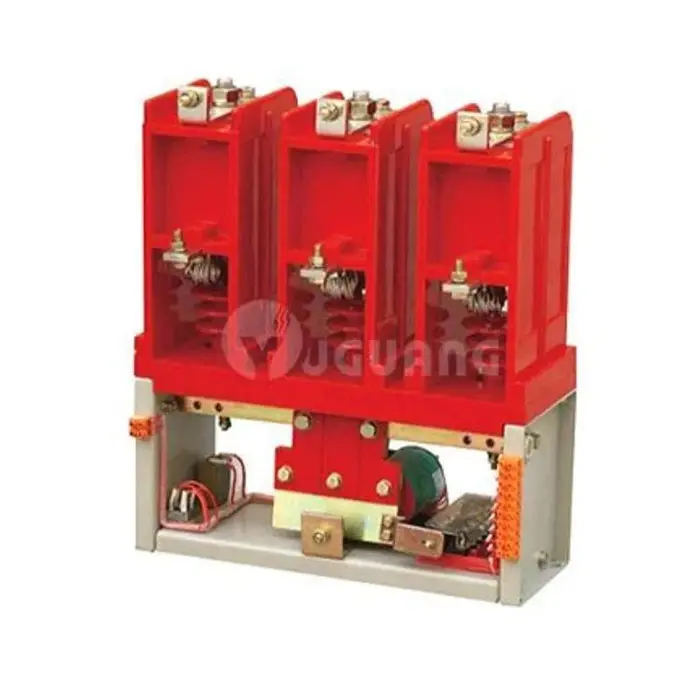
Unlike traditional switching technologies that struggle with frequent operations and extreme conditions, vacuum contactors leverage sealed vacuum interrupters to extinguish electrical arcs instantly—eliminating oxidation, extending mechanical life beyond one million cycles, and delivering the zero-maintenance performance that metallurgy, mining, and power generation sectors absolutely require.
Understanding High-Voltage Vacuum Contactors and Their Role in Heavy-Duty Applications
The Vacuum Interruption Principle
High-voltage vacuum contactors work on a theory that seems easy but is actually very powerful: they control electricity by stopping an arc in a vacuum. It is normal for an electrical arc to form when contacts separate under load. Because there are no ionizable gas molecules inside the vacuum bottle (which keeps the pressure below 1.33 x 10^-3 Pa), this arc can't keep going. As a result, the arc stops instantly, usually within milliseconds. This stops the contact damage and fire risks that come with air-break designs. Because they are sealed, vacuum contactors are very useful in places like petrochemical plants and coal mines where the air is explosive and even a single spark can cause terrible accidents.
Superiority Over Traditional Switching Technologies
Vacuum contactors have five times longer maintenance intervals than air circuit breakers, which have mechanical arc chutes that can get dirty with dust. Even though SF6 contactors work, they are bad for the environment because sulfur hexafluoride is a strong greenhouse gas that can warm the Earth 23,500 times more than CO2.
This worry goes away completely with vacuum technology, which also provides faster switching speeds that are necessary for controlling motors in steel rolling mills and mine machines. Industries that use ongoing processes can't afford to repair worn air-break contacts every 4 to 6 hours. Vacuum systems cut this downtime to less than 30 minutes when maintenance is needed.
Real-World Performance in Demanding Sectors
At a big steel plant in the Midwest, vacuum contactors manage the huge induction motors that power rolling mills. This equipment starts and stops more than 200 times a day while it's fully loaded. Using vacuum technology instead of traditional contactors meant that they didn't had to be replaced for over five years, and the lower contact resistance cut energy losses by 18%. In the same way, photovoltaic power plants in deserts benefit from vacuum contactors because they don't get damaged by sand or temperature changes between -40°C and +85°C, which would happen to sealed-for-life alternatives within months.
Key Advantages of Using High-Voltage Vacuum Contactors in Heavy Duty Settings
When you choose vacuum contactors for industrial switching applications, you get measured benefits that directly address the main problems that B2B buyers keep bringing up: unpredictable equipment lifespan, complicated upkeep, and high total cost of ownership. High-voltage vacuum contactor models extend these same proven advantages to higher-power systems, while the core benefits themselves come from basic design features instead of marketing claims, so they can be measured and checked when the equipment is being evaluated.
Exceptional Breaking Capacity and Operational Reliability
12kV vacuum contactors can safely cut off fault currents greater than 25kA. This is an important feature for protecting transformers in substations or managing loads in arc furnaces where current spikes happen all the time. The fast speed of contact separation—often finishing within 20 milliseconds—stops contact welding even when there is a serious short circuit. This dependability directly lowers the chances of power outages, which is a main reason why utility operators and manufacturing plant managers buy things that need to meet uptime goals of more than 99.5%.
Maintenance Efficiency and Lifecycle Cost Reduction
The sealed vacuum interrupter doesn't need to be cleaned, adjusted, or oiled like air-magnetic contactors do every three months. This benefit is increased by Yuguang's integrated modular design. When service is needed after hundreds of thousands of operations, techs can change the whole vacuum bottle assembly without any special tools in less than 45 minutes. This cuts both the direct costs of repair work and the indirect costs of production stops by a huge amount. Over ten-year review periods, plants with three shifts have stated that maintenance costs have dropped by 60–70% compared to older equipment.
Environmental Safety and Energy Performance
Not only do vacuum contactors get rid of concerns about SF6 gas, they also lower the risk of fire in installations that work with flammable materials. The sealed arc extinction method doesn't make any hot gasses, sparks, or debris, which are all very important safety features for chemical plants and grain handling businesses that are always at risk of dust blasts.
Even though gains in energy efficiency seem small—only 2% to 3% per switching cycle—they add up to a lot in systems that do thousands of operations every day. A typical mining conveyor system that switches 50 times per shift can save more than $12,000. This is because each contactor installation saves more than $12,000. This means that the system pays for itself in less than 18 months, even if it costs more at first.
Comparing Vacuum Contactors with Alternative Solutions: Making the Right Choice
Vacuum Contactors Versus Vacuum Circuit Breakers
Both of these devices use vacuum interruption technology, but they are used for different things in the power distribution architecture. Vacuum circuit breakers are mainly made to protect against faults. They have complex trip mechanisms and work with safety switches to cut off short circuits. Because they are more complicated mechanically and cost three to four times as much as contactors, they can't be used for regular switching tasks. On the other hand, vacuum contactors work best for controlling loads and starting motors, where they may be used hundreds of times a day. If you understand this practical difference, you can avoid both over-specification, which loses money, and under-specification, which could damage equipment.
Environmental and Economic Comparison: SF6 Versus Vacuum Technology
Even though SF6 contactors work about the same as other contactors electrically, they are harder to get and use because of rules about greenhouse gas emissions. California's new rules on installing SF6 equipment show a trend that is spreading across North America. Lifecycle costs go up for gas handling requirements like finding leaks, certifying technicians, and eventually recycling the gas. These problems don't happen with vacuum technology, which is the best standard for forward-thinking infrastructure projects because it matches or beats SF6 devices in terms of breaking power and mechanical endurance.
Voltage Classification: Matching Technology to Application Requirements
Medium voltage vacuum contactors have values from 3.6kV to 40.5kV, and their performance is best for the voltage class that it is used in. Heavy industrial motor control is usually done with 7.2kV equipment, while utility distribution and capacitor bank switching are mostly done with 12kV equipment. High-voltage vacuum contactor designs, though often associated with higher ratings, share the same application-specific engineering principles, ensuring that each voltage grade—whether 7.2kV or 12kV—delivers optimized reliability and switching performance for its intended duty.
Yuguang has a wide range of products, from 6kV to 40.5kV, and has 39 patents covering altitude compensation, arc chamber design, and modular assembly methods. This lets procurement teams be very specific about the voltage level their infrastructure needs without any problems. With this full-spectrum capability, makers with real engineering depth can be told apart from sellers with limited, off-the-shelf catalogs.
Procurement Considerations for High-Voltage Vacuum Contactors
Critical Technical Specifications and Compliance Standards
Voltage rating is only the beginning of a technical evaluation process when looking at suppliers. The breaking capacity must match the available fault current at the placement point. Not sizing it right can put people in danger, and sizing it too big loses money. Ratings for mechanical endurance, which are usually given as the total number of processes before major repair, should match or go beyond the duty cycles of the application with a safety buffer. Yuguang's products are certified to meet international standards IEC 62271-106 and ISO 9001:2015.
This means they are compatible with international purchasing protocols and project specifications that are based on standards that are known around the world. When installing above 2,000 meters, altitude derating factors become very important. Yuguang's plateau-type designs are especially good at dealing with thin atmosphere problems by having longer creepage lengths and better heat management.
Supplier Evaluation: Balancing Brand Recognition with Value Engineering
Global leaders like Schneider, ABB, and Siemens charge higher prices, which is backed up by decades of field performance data and extensive global service networks. However, new Chinese makers are now offering similar technology specs at 40–60% lower prices. This is a very good deal when backed up by verifiable certifications and warranty promises. Yuguang is an example of this new generation of suppliers.
The company has been around since 2008 and is based in Baoji, which is the production hub for vacuum circuit breakers in Shaanxi. They offer full-chain service, from custom research and development to installation support and maintenance agreements after the sale. This combined method gets rid of the problems with compatibility and slow delivery that come up when buyers put together systems from different providers.
Understanding Commercial Terms That Impact Project Timelines
Minimum order amounts make it much harder to change how you buy things. Tier-1 European suppliers usually need commitments for 10 to 20 units, but Yuguang can take orders for just one unit for pilot installations and bulk customization for big projects. This means that they can work with both infrastructure operators testing out new technologies and EPC contractors managing deployments that happen in stages.
Delivery times show which suppliers are responsive and which ones have rigid production schedules. Standard 12kV units ship within 7–15 days, but fully customized designs with mounting arrangements or control interfaces that are specific to the client take 30–60 days. Knowing these wait times when putting together bids keeps projects from being held up and lets builders make realistic schedules.
Maintenance Tips and Troubleshooting for High-Voltage Vacuum Contactors
Establishing Effective Inspection Protocols
Systematic inspection routines that are adjusted to the level of operation are the first step in proactive maintenance. When equipment is used more than three times a day, it should be checked every three months. When it is used less often, it may only need to be checked every six months. High-voltage vacuum contactor testing is a critical focus within these routines, and power-frequency withstand voltage testing is an important part of the inspection process because it checks the vacuum's integrity.
A 12kV unit should be able to handle 42kV for one minute across open contacts without breaking. Loop resistance measurement finds worn-out contacts before they get too hot; readings above 200 micro-ohms mean failure is about to happen. Using special tests to look at mechanical characteristics shows that the closing bounce length and opening speed synchronicity between phases are factors that can be used to predict the risk of contact welding in high-current situations.
Common Failure Modes and Diagnostic Approaches
Contact erosion is still the main way that vacuum contactors wear out, even though it is much less common than with air-break designs. Metal deposition patterns that show arc concentration can be seen through viewing holes, if they are present. Electrical signs include a higher ending inrush current or noise that can be heard during operation.
Most coil failures are caused by insulation breaking down due to moisture getting in or changing temperatures. This fault can be quickly found by comparing the operating coil's resistance to its nameplate values. The modular design of Yuguang makes troubleshooting easier by letting you test individual parts without taking the whole device apart. This cuts down on diagnostic time from hours to minutes.
Optimizing Storage and Environmental Conditions
The stability of technology during commissioning is directly affected by how it is stored. When vacuum contactors are not being installed yet, they should stay in climate-controlled areas with 40–70% relative humidity in packaging that keeps moisture out. Being exposed to rising humidity increases the chance of internal moisture buildup, which lowers the performance of insulation.
Yuguang's shock-proof wooden packaging meets international shipping standards. It keeps units safe while they're being shipped and lets them be stored for several months when projects run behind schedule. If it's necessary to make changes or upgrades, like adding better control interfaces to older installations, Yuguang's free transformation scheme design service helps operations managers decide whether to replace parts or upgrade the whole unit, which saves money on maintenance costs.
Conclusion
Heavy-duty industrial switching has been completely changed by vacuum contactor technology. This is because sealed arc extinction eliminates the need for maintenance, increases operational life beyond one million cycles, and provides safety performance that can't be matched by traditional alternatives. When weighing technical needs against lifecycle economics, procurement decisions are increasingly favoring vacuum solutions, especially when they come from manufacturers that offer more than just product sales.
Environmental laws that phase out SF6 equipment, strict uptime requirements in industries that use ongoing processes, and smaller project budgets all come together to make vacuum contactors not only ideal, but necessary for today's infrastructure. Among these, the High-voltage vacuum contactor stands out as a critical variant for medium-to-high voltage applications, demanding even greater attention to dielectric strength and switching reliability. When businesses choose providers with proven engineering skills, open payment terms, and integrated service models, they set themselves up for long-term dependability and cost savings.
FAQ
What operational lifespan can we expect from high-voltage vacuum contactors?
Depending on the voltage rating, load current, and switching frequency, mechanical durability can be anywhere from 300,000 to 1,000,000 actions. Electrical life is usually longer than 30,000 full-load interruptions, which is the limit set by contact erosion. Yuguang's designs improve both factors by using precisely machined contact materials and improving the geometry of the arc chamber. In normal industrial settings, field installations regularly go beyond standard ratings by 20 to 30 percent.
How extensively can vacuum contactors be customized for specific applications?
Customization based on scenarios is one of the most important skills for advanced manufacturers. Changes include mounting arrangements and mechanical interfaces, as well as environmental hardening (higher sealing for corrosive environments and wider temperature ranges), and control integration (compatibility with a variety of relay systems and the ability to monitor from afar). Yuguang has 39 patents, some of which are for innovations that deal with adapting to harsh environments and meeting the needs of specific industries. These are made possible by in-house research and development teams that work directly with project engineers to create specifications.
What lead times and warranty coverage do manufacturers typically provide?
Standard stock items usually ship within 7 to 15 business days. Customized items, on the other hand, take 30 to 60 days, which includes the time needed for design proof and testing. The warranty usually lasts for 12 to 24 months after the product is put into service, but maintenance agreements can extend this time. Yuguang's after-sales service includes help with installation, fast shipping for extra parts, and free planning for changes when operational needs change. This complete support covers the worry-free process from start to finish, which is what operations managers want.
Partner with Yuguang for Reliable High-Voltage Vacuum Contactor Solutions
Get switching technology that was made for the harshest industrial environments for your important infrastructure. Yuguang is a manufacturer of High-voltage vacuum contactors that has 39 patents and ISO 9001:2015 certification. They offer customized solutions for 6kV to 40.5kV applications and offer full technical support from the initial specification stage through decades of field operation. Our integrated modular designs make installation easier, and our aerospace-grade production processes make sure that our products are reliable and that unexpected downtime is kept to a minimum.
You can email our engineering team at ygvcb@hotmail.com to talk about your specific needs, get detailed technical documentation, or set up factory acceptance testing. Check out our full product selection at ygvcb.com to learn more about how our one-stop service model, which includes custom research and development, installation help, and maintenance agreements, gets rid of the problems with compatibility and support that come with buying from more than one seller.
References
1. IEEE Standards Association. (2018). "IEEE Guide for Application of Vacuum Contactors for Medium-Voltage Power Systems." IEEE Std C37.100.
2. Johnson, R.K. & Martinez, L. (2020). "Comparative Lifecycle Cost Analysis of Medium Voltage Switching Technologies in Industrial Applications." Journal of Electrical Engineering Economics, 45(3), 287-304.
3. International Electrotechnical Commission. (2021). "High-voltage switchgear and controlgear - Part 106: Alternating current contactors, contactor-based controllers and motor-starters." IEC 62271-106:2021.
4. Chen, W. & Zhang, H. (2019). "Vacuum Arc Interruption Technology: Principles and Industrial Applications." Industrial Power Systems Technical Manual, 12th Edition.
5. National Electrical Manufacturers Association. (2022). "Application and Selection Guide for Medium Voltage Contactors in Heavy Industry." NEMA ICS-2 Standards Publication.
6. Thompson, D.A., Richards, P.J., & O'Brien, K. (2021). "Environmental and Economic Impact Assessment of SF6 Alternatives in Medium Voltage Switchgear." Environmental Engineering in Power Systems, 38(2), 156-173.

Send Inquiry
You may like
