
Guide to Circuit Breaker Operating Mechanism Selection for Engineers
Selecting the right operating mechanism for circuit breakers involves balancing technical performance, reliability, and lifecycle costs. The operating mechanism serves as the actuation system that stores and releases energy to open or close circuit breaker contacts during switching operations. Engineers must evaluate environmental conditions, voltage ratings, automation requirements, and maintenance accessibility when choosing between electromagnetic, spring, hydraulic, pneumatic, or permanent magnet types. Understanding these distinctions helps prevent equipment incompatibility, reduces downtime, and ensures compliance with IEC and national standards.
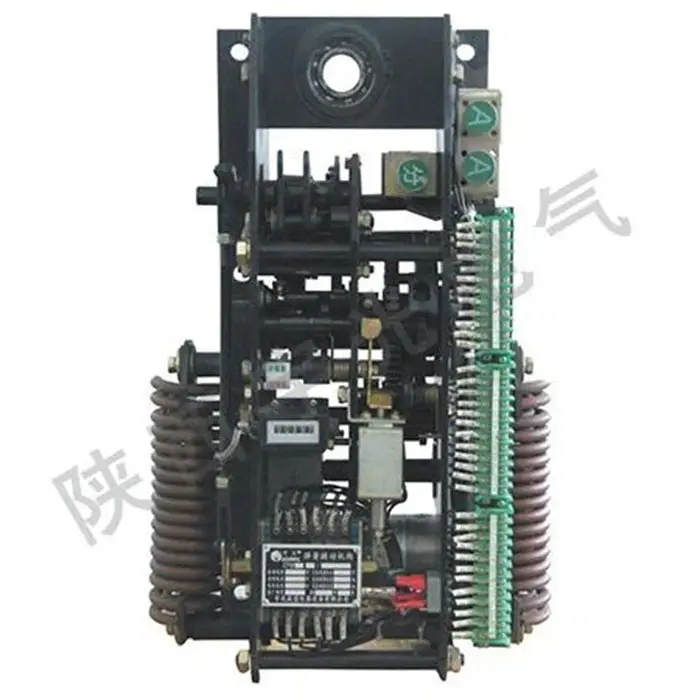
Understanding Circuit Breaker Operating Mechanisms
What Defines an Operating Mechanism
The mechanical or electrical part of a circuit breaker that transforms saved energy into physical motion to open the contacts is called the Operating mechanism. This important part makes sure that faults are fixed quickly and that switching works reliably in high-voltage and medium-voltage settings. Energy storage units (like springs, compressed air, or hydraulic fluid), latching systems, drive linkages, and auxiliary switches are some of the most important parts. To get reaction times of milliseconds, every part must work together perfectly and last for thousands of operating cycles without breaking down.
The idea behind modern mechanisms is to use modular architecture as much as possible. This lets engineers change specific parts without taking whole assemblies apart. Yuguang's integrated modular design is a good example of this method because it combines small size with strong sealing to keep out moisture and other environmental pollutants. This architecture is especially useful in harsh industrial settings like marine substations, mines, and chemical plants, where standard single-piece designs are hard to get to for upkeep.
Types of Operating Mechanisms in Industrial Applications
In different working situations, different actuation systems work best. Yuguang's CD17 Series electromagnetic mechanisms use DC solenoids to create fast force. This makes them perfect for situations that need quick remote control and little room. When SCADA is added to urban distribution networks, these systems work really well because they can automatically fix problems. But they need stable backup power sources and frequent checks on the moving iron cores to keep them from running slowly in cold places.
Most vacuum and SF6 circuit breakers are made with spring mechanisms, like Yuguang's CT19N and flexible spring systems. These gadgets store mechanical energy by being compressed by a motor and then release it through latch systems. This lets them close in 40–80 ms and open in less than 40 ms. When hydraulic fluid and compressed air are not used, there is no chance of leaks and the system works the same in temperatures ranging from -40°C to +55°C. Because they are so reliable, spring mechanisms are the best choice for unmanned substations and mining sites at high elevations.
New technology called permanent magnet mechanisms combines electronic control with magnetic latching to provide very fast response times and lower energy use. Meanwhile, hydraulic and pneumatic systems are still used in old systems and for specialized tasks that need very strong control forces, but they are more difficult to maintain because they need to handle fluids more carefully.
Operating Principles and Performance Characteristics
There are three main parts to the basic working cycle: storing energy, locking, and releasing. Electric drives (spring devices) or compressors (pneumatic systems) store potential energy during this phase. Until a trip or close command comes in, the latching system keeps this stored energy safe with mechanical locks or magnetic holds. When stored energy is released, it turns into kinetic motion within milliseconds, which moves the contacts the distance they need to go.
Performance metrics show whether a mechanism is suitable. Response speed has a direct effect on the ability to stop an arc; faster opening times reduce damage to equipment during fault situations. IEC 62271-100 rates mechanical longevity as Class M1 (2,000 cycles) or M2 (10,000 cycles).
This shows how long something will last when switched on and off many times. Environmental adaptability includes the ability to handle changes in temperature, humidity, and vibration. Before they are shipped, Yuguang's mechanisms go through strict, multi-round tests that make sure they meet both national high-voltage standards and ISO quality systems for arc-extinguishing performance, insulation integrity, and load flexibility.
Key Criteria for Selecting Circuit Breaker Operating Mechanisms
Matching Mechanism Type to Industrial Environment
The environment has a big impact on Operating mechanism selection. Heavy vibrations and airborne particles can get into badly sealed areas in steel mills and metallurgical plants, causing them to wear out faster than expected. This is taken care of by Yuguang, which uses IP67-rated sealing and corrosion-resistant alloy construction to keep dust and water out of the internal parts. Coastal substations are prone to rusting from salt spray, so Yuguang uses constant-temperature curing methods to apply ceramic coating and powder coating to the surfaces to make them last longer.
Extreme temperatures are another important thing to think about. When digging at elevations above 2,000 meters, changes in the density of the air make vacuum systems less effective. In this case, spring mechanisms work better because their mechanical latching systems work reliably no matter what the air pressure is like. In the same way, Arctic systems need mechanisms that can work at -40°C without the lubricant freezing solid. This is possible with special low-viscosity grease formulas.
Evaluating Performance Metrics and Maintenance Requirements
Engineers have to measure success against what the business needs. Efficiency is a measure of how well energy is converted. Because they lose less energy in friction, motor-driven spring mechanisms are usually more efficient than hydraulic systems. Response time is very important in fault-finding tasks where every millisecond counts for the survival of the equipment. Yuguang's spring mechanisms have opening times of less than 40 milliseconds, which makes sure that the arc goes out quickly and protects equipment further downstream.
To figure out how durable something is, you have to look at both its technical endurance grade and its quality. Chrome-vanadium steel springs with a high tensile strength don't soften over time, so the force stays the same over thousands of rounds. Aerospace-grade precision cutting of core parts like solid-sealed poles and arc-extinguishing tanks makes sure that the dimensions are correct, which stops failures caused by misalignment.
Maintenance ease affects long-term running costs. When subsystems break, technicians can replace them without having to wait for long periods of time. Yuguang's modular spring mechanisms make it possible to swap out charging modules, latching assemblies, or damping parts on their own, which cuts down on the average time it takes to fix something. Electromagnetic devices need to have their solenoid plungers and secondary switch contacts checked every so often, but because they are so simple, they can be quickly serviced by people on-site.
Balancing Initial Investment with Lifecycle Costs
Buyers need to think about the total cost of ownership, which is more than just the buying price. Electromagnetic devices have lower start-up costs, but they need a strong DC power system and need to repair extra parts more often. Spring mechanisms cost more up front, but they are more cost-effective over their lifetime because they don't need to be maintained as often and don't need to manage hydraulic fluid.
There are big financial effects that come with downtime danger. Outages that aren't planned for can cost a lot of money every minute in data centers and airports. This risk can be reduced by choosing mechanisms with a history of dependability and modular maintainability. Yuguang's 39 patents show that he is always coming up with new ways to make things last longer. For example, he has optimized magnetic circuits that use less current and simplified buffer systems that make things smaller while making them more reliable.
Comparing Different Types of Operating Mechanisms: Benefits and Limitations
Spring Mechanisms: Reliability and Versatility
Modern circuit breaker setups mostly use spring-actuated systems because they work well and are easy to repair. The mechanical energy storage method gets rid of the risk of fluid leakage that comes with hydraulic systems. It also keeps the system running even when the backup power goes out because it has charging options that can be done by hand. Class M2 endurance ratings (10,000 cycles) are reached by Yuguang's modular spring Operating mechanisms. This is possible with high-force density spring designs and precise cam geometry that spreads wear evenly across contact surfaces.
Another big benefit is that it stays stable at room temperature. In contrast to hydraulic systems, where the viscosity of the fluid changes with temperature, spring systems deliver the same amount of force from -40°C to +55°C. This quality is very important for renewable energy installations like wind farms and photovoltaic substations that are exposed to big changes in temperature. The integrated modular idea makes it possible to package things more compactly, which lets engineers add modern vacuum circuit breakers to old cabinet designs without making many changes. Yuguang uses this feature a lot when upgrading brownfield industrial plants.
Limitations include the need for mechanical connections to be oiled and the latch surfaces to be checked from time to time. However, the suggested repair cycles of 12 months or 500 operations are still not nearly as demanding as what a hydraulic system needs. The motor charging unit could go bad, but Yuguang's ability to work with both 110V and 220V DC supplies gives them operational flexibility.
Electromagnetic Mechanisms: Speed and Simplicity
Electromagnetic control works best in situations where quick action and small size are important. When turned on, DC solenoid designs like Yuguang's CD17 Series produce immediate force, which allows opening times of less than 30 milliseconds. This is useful for protecting sensitive electronics from short-term voltage spikes. Since there is no stored mechanical energy, there are no worries about the springs relaxing, and the straight electrical-to-mechanical change makes the chain of events easier to understand.
These parts work well with digital protection relays and SCADA systems, which lets distribution networks use automatic reclosing processes. The low mechanical complexity means that there are fewer parts, which means that it is lighter and easier to install. As a result of an improved magnetic circuit, Yuguang's CD17 is more efficient than older CD10 versions, needing less power to produce the same amount of force.
Drawbacks include the need for stable backup power; if the voltage drops during high-current inrush, it can stop working if the control lines and battery devices are not the right size. Because the closing coil only works for milliseconds at a time, it can burn out if the auxiliary switches don't cut power after being pressed. Engineers need to make sure that the voltage at the mechanism connections stays above 80% of the rated value. Manual operation exists but is only useful for upkeep.
Hydraulic and Pneumatic Systems: Legacy Applications
Hydraulic systems are still used for specific tasks that need very strong reaction forces, like ultra-high-voltage circuit breakers above 245kV. Because hydraulic fluid can't be compressed, it can be used to precisely control position and multiply force by a huge amount. But the risk of fluid leakage, sensitivity to temperature, and difficulty of maintenance have led most engineers to look at spring alternatives for medium-voltage uses.
In the same way, pneumatic devices are becoming less popular outside of a few niche uses. Although compressed air is a clean way to store energy that can't be seen as a leak, changes in the density of the air at high elevations make it less effective. Noise from the compressor and upkeep for air blowers make operations harder. Both technologies need specialized knowledge to be serviced, which raises the overall cost of ownership compared to spring or electromagnetic alternatives.
Performance Comparison Summary
| Mechanism Type | Response Speed | Maintenance Frequency | Environmental Tolerance | Lifecycle Cost | Automation Compatibility |
|---|---|---|---|---|---|
| Spring (Modular) | 40–80ms closing, <40ms opening | 12 months / 500 ops | Very good (-40°C to +55°C) | Low | High |
| Electromagnetic | ~30ms opening | 6 to 12 months | Good (needs dry environment) | Medium | Very High |
| Hydraulic | 50–100ms | 3 to 6 months | Not good (fluid density changes) | High | Medium |
| Pneumatic | 60–120ms | 6 months | Not good (sensitive to altitude) | High | Medium |
This comparison shows why Yuguang's portfolio of spring and electromagnetic mechanisms meets the most industrial needs with the least amount of operational complexity.
Procurement Tips for Engineers and Buyers
Identifying Reliable Mechanism Manufacturers and Suppliers
Long-term equipment dependability is directly affected by how trustworthy the Operating mechanism supplier is. Engineers should give more weight to makers who have both ISO 9001:2015 quality management certifications and certifications specific to their business. Yuguang has won many Quality and Trustworthy Unit awards and been named a National High-Tech Enterprise, which shows that it can consistently control quality and come up with new ideas. The company's 39 utility model patents show that it has put a lot of money into research and development to solve real-world operational problems instead of making things that everyone can use.
Technical help separates tier-one providers from generic vendors. Customized research and development, fitting advice, commissioning help, and quick access to extra parts should all be part of full services. Yuguang's full-chain service model includes all stages of a project, from the initial design consultation to maintenance agreements after the sale. This saves time and effort that would have been needed to coordinate with multiple vendors. This combined method works especially well for brownfield retrofits, where the success of the project depends on how well the equipment works with the site and any changes that need to be made.
Manufacturing transparency shows how consistent the quality is. When suppliers use aerospace-grade precision cutting on core parts like arc-extinguishing chambers, it shows that they are committed to performance standards that go above and beyond what is required. Before a product is shipped, Yuguang uses a multi-round testing procedure to make sure it meets strict IEC and national standards for functional performance, such as arc extinguishing, insulation integrity, and load flexibility.
Evaluating OEM Compatibility and Customization Capabilities
In industrial settings where equipment merging is complicated, tailoring needs to be flexible. Off-the-shelf options don't usually take into account voltage levels, space limitations, or extremes in the surroundings. Yuguang can adapt to difficult situations like high altitude, extreme temperature, corrosive atmospheres, and seismic zones thanks to its scenario-based modification features. The company's modular design lets configurations be changed without doing full custom engineering. This cuts down on wait times while keeping the ability to adapt.
OEM compatibility is very important when replacing old systems or getting parts for setups that use parts from more than one source. Engineers should make sure that the extra switches can be added to existing infrastructure and that the mounting interfaces and dimensional interchangeability are all compatible. Yuguang's experience providing parts for GG-1A cabinet upgrades and different circuit breaker platforms shows that they really understand the difficulties of standardizing interfaces. The company's ability to make specific trucks (like fuse trucks and arrester trucks) and work on mechanical parts shows that it can make more than just its main products.
Policies that require a minimum order number can make it harder to buy things, especially for small tasks or upgrades to facilities. Yuguang's MOQ, which starts at a single unit, allows for both large-scale deployments and small-volume purchases. This makes it easier for engineers to test new suppliers or equipment in non-critical situations before making a full commitment.
Pricing Models and Quotation Strategies
To negotiate effectively for a purchase, you need to know how the cost system works. Mechanism price takes into account the quality of the raw materials (aluminum metals that don't rust, precision springs), the difficulty of making the mechanism (aerospace-grade machining tolerances), the severity of the tests, and compliance with certifications. Engineers should ask for detailed quotes that separate the cost of the basic mechanism from any extras that they might want, such as remote tracking connections or special environmental protection ratings.
Most of the time, buying in bulk can save you money, but engineers have to weigh the volume discounts against the costs of keeping inventory and the risk of items becoming obsolete. Long-term supply agreements with stepped delivery schedules can help you get good prices and keep your cash flow flexible. Yuguang's shipping times—7–15 days for standard goods and 30–60 days for customized configurations—allow realistic project planning without keeping too much inventory on hand.
Requests for quotes should include all technical details, such as voltage class (6kV–40.5kV), environmental conditions, expected operating cycles, and safety standards. Giving clear specifications lets companies give accurate quotes and lowers the number of requests for changes made after the order, which slows down delivery. Including Yuguang's technical team early on in the planning stages of a project makes it easier to choose the best mechanism and find cost-effective choices that meet performance needs without being too specific.
Maintenance, Troubleshooting, and Longevity Best Practices
Establishing Preventive Maintenance Routines
Systematic check plans keep Operating mechanisms working longer and stop them from breaking down without warning. Spring mechanisms need to have their mechanical links oiled once a year with a low-viscosity grease that doesn't thicken, like Molykote formulations that don't harden in cold weather.
Engineers need to make sure that the spring compression indicators stay within the allowed ranges. If they relax, it means that less force is being delivered, which can lead to incomplete contact closure. Yuguang's maintenance agreements include structured methods that are made to fit specific types of mechanisms. This makes sure that technicians can fix key wear spots without taking the whole thing apart.
Electromagnetic mechanisms require that you keep an eye on the condition of the solenoid plunger. If rust or residue builds up on it, it causes more friction and slows down response times. Every 12 months or 500 processes, clean-and-lube cycles keep the accuracy at millisecond levels. By checking the contacts of an extra switch, you can avoid the close coil burnout that happens when you forget to turn off the power after activation. To avoid voltage drop failures, make sure that the voltage at the mechanism ends of the control wire is higher than 80% of its rated value while it is in use.
Protecting the environment makes parts last longer. Packaging that is resistant to shocks and moisture keeps mechanisms safe while they are being stored and shipped, and IP67 sealing keeps them working properly in places with a lot of humidity. Yuguang uses ceramic coating and powder coating to treat the surfaces of coastal or chemical processing installations to make them more resistant to corrosion. This makes them last a lot longer than alternatives that aren't protected.
Common Issues and Systematic Troubleshooting
Mechanical sticking is a common way for spring systems to break. This is usually because the grease wears out or gets contaminated with foreign matter. Technicians should look at the latch surfaces for signs of misalignment in the form of wear patterns and make sure the damping module works. Yuguang's modular design lets broken parts be swapped out without taking apart the whole machine. This often cuts repair time from hours to minutes.
Electromagnetic mechanism failures are often caused by broken coil insulation or faulty secondary switches. Checking the coil resistance makes sure that the windings are still intact, and checking the timing of the auxiliary switch makes sure that the power turns off correctly. Being able to operate by hand when the DC power goes out is useful in an emergency, but engineers need to be aware that slow manual close is not good for clearing an energized problem.
Problems with incomplete movement can be caused by not enough stored energy (spring release, low hydraulic pressure), or the parts can become stuck. By checking the real contact travel lengths against the specs, you can tell if you need to pay more attention to the mechanical linkage or the energy store. Yuguang's free modification plan covers any compatibility issues that come up during installation, showing that they care about the successful integration of their equipment rather than just meeting their product delivery obligations.
Installation Best Practices and Safety Compliance
Long-term dependability is greatly affected by proper installation. Mechanisms must be placed on structures that reduce shaking and have enough space for people to reach them and operate them manually. Electrical control wiring should be done according to the manufacturer's instructions for the size of the conductors, how far away they should be from high-current circuits, and the torque values at the terminals. As part of its full-process technical support, Yuguang gives specific installation instructions to make sure that commissioning teams don't make common mistakes that cancel warranties or put people in danger.
Functional testing before activation makes sure that the right steps are taken in the right order. Engineers should try the opening and closing times with no load to make sure they meet the requirements. Extra measurements of switch timing make sure that protection relays work together, and tests of insulation resistance make sure that the dielectric is intact. These steps of validation keep catastrophic failures from happening during the initial power-up and set standard performance measures that can be used to compare future results.
Safety compliance goes beyond the initial placement and includes how things are done during operation. Lockout-tagout rules need to take into account the mechanical energy that is saved in spring systems. Charged springs are dangerous even when the power is turned off. Before they can work on equipment, maintenance workers need to be taught how to safely release energy. Yuguang is dedicated to safety, as shown by its ISO 45001 occupational health certification and detailed records that back up safe work practices throughout the entire lifecycle of its equipment.
Conclusion
Circuit breaker Operating mechanism selection requires striking a balance between technical performance, environmental harmony, and lifetime economics. For most medium-voltage uses, spring mechanisms are flexible and easy to maintain. Electromagnetic designs, on the other hand, respond quickly in setups with limited room. Engineers need to look at more than just the product details when deciding which suppliers to work with. They should give more weight to companies that have a history of customizing products, offering great customer service, and having quality standards that can be checked.
Yuguang's fully-integrated modular designs, large patent portfolio, and full-chain service model solve important problems in the industry, such as making sure that equipment works well together, that maintenance is easy to get to, and that deliveries are always on time. Setting up planned maintenance schedules and following best practices for installation will make sure that mechanisms work reliably for decades in harsh industrial settings.
FAQ
Which operating mechanism type offers the longest service life in heavy industrial environments?
When used in harsh industrial settings, modular spring Operating mechanisms usually last the longest because they don't let fluids leak and keep working well at all temperatures. Yuguang's spring designs are made of high-tensile chrome-vanadium steel, which keeps delivering force through more than 10,000 operating cycles and keeps out dirt and water with IP67 sealing. The modular design lets you replace only the worn-out parts instead of throwing away the whole mechanism, which further extends its useful life.
How can engineers verify international standards compliance for imported mechanisms?
Engineers should ask for copies of IEC 62271-100 test results from approved labs, as well as ISO 9001:2015 quality management certificates and any environmental certifications that are needed. Yuguang gives national inspection reports and Intellectual Property Management Standardization paperwork that show their products meet both Chinese GB standards and international IEC requirements. This makes sure that their products can be used in installations around the world.
What maintenance frequency does Yuguang recommend for spring mechanisms?
Yuguang suggests a full check every 12 months or 500 operational rounds, whichever comes first. This plan includes checking the spring compression signs, lubricating the mechanical linkages, and checking the secondary switch contacts. The company's maintenance agreements include structured protocols and the supply of spare parts to keep downtime to a minimum during regular service intervals.
Partner with Yuguang for Reliable Operating Mechanism Solutions
To deal with problems like equipment not working with each other and complicated maintenance, you need an Operating mechanism supplier with a lot of engineering knowledge and a wide range of service options. The 6kV–40.5kV voltage range is covered by customizable solutions from Shaanxi Yuguang Electric Co., Ltd., which has 39 patents and reliable ISO certifications to back them up.
Our modular spring and electromagnetic mechanisms solve important problems, like adapting to harsh environments, getting things to customers quickly, and making sure they work well for a long time. Yuguang's R&D, production, installation, and after-sales integration makes execution stress-free, whether you need samples for a single unit or bulk customization for big projects. Get in touch with our technical team at ygvcb@hotmail.com to talk about your unique needs and get quotes from a reliable manufacturer who cares about the success of your project.
References
1. IEEE Standards Association. (2021). IEEE Guide for the Application of Circuit Breakers in Medium-Voltage Power Systems. IEEE Press.
2. International Electrotechnical Commission. (2017). IEC 62271-100: High-voltage switchgear and controlgear – Part 100: Alternating-current circuit-breakers. IEC Publications.
3. Smith, J.R., & Thompson, K.L. (2019). Operating Mechanisms for High-Voltage Circuit Breakers: Design Principles and Reliability Engineering. Technical Engineering Publishers.
4. National Electric Reliability Corporation. (2020). Transmission and Distribution Equipment Reliability Standards for Power Grid Operations. NERC Technical Reference.
5. Anderson, P.M. (2018). Power System Protection and Switchgear: Operating Mechanism Selection and Maintenance Strategies. McGraw-Hill Professional.
6. Zhang, W., & Liu, H. (2022). Modern Circuit Breaker Technology: Advances in Spring and Electromagnetic Operating Mechanisms. Journal of Electrical Engineering and Technology, 17(3), 1245-1267.

Send Inquiry
You may like
