
Guide to High Voltage Circuit Breaker Accessory Compatibility Issues
When engineers and procurement managers search for answers on high voltage circuit breaker accessory compatibility, they often encounter fragmented information that fails to address real-world installation and maintenance challenges. This guide consolidates what matters most: understanding which high-voltage electrical accessories work together, why mismatches occur, and how to prevent them. Whether you manage substation upgrades, EPC projects, or industrial power systems ranging from 6KV to 40.5KV, getting accessory compatibility right is not optional — it directly determines system safety, uptime, and total lifecycle cost.
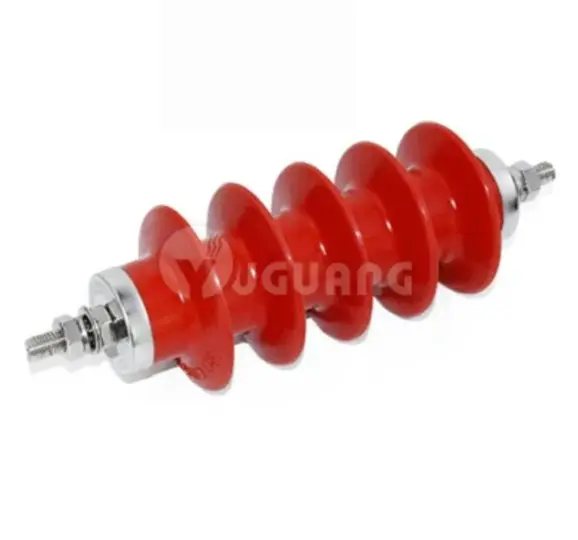
Understanding High Voltage Circuit Breaker Accessories and Common Compatibility Challenges
Accessories for high voltage circuit breakers include extra switches, position sensors, trip coils, anti-pump relays, control terminals, and different types of operating mechanisms, such as electromagnetic, spring-loaded, and permanent magnet types. As part of the larger switching and protection architecture, each part has its own specific job to do.
Where Compatibility Problems Hide
Compatibility problems don't usually let you know ahead of time. They show up during launch or, even worse, while the system is actually running. Most of the time, it's because the accessory mounting measurements don't match up with the breaker frames, the connector pinouts aren't lined up right, or the control signal voltages aren't suitable.
When accessories from different brands are mixed in one switchgear cabinet, they can cause protocol problems between intelligent electronic devices (IEDs) and trip units, which can make security behavior unpredictable. A study in IEEE Transactions on Power Delivery says that sudden trip failures in high-voltage systems are often caused by mistakes in the merging of accessories rather than problems with the main equipment.
Analyzing Causes of Compatibility Problems in High Voltage Circuit Breakers
When tech teams know what causes incompatibilities, they can stop problems before they become costly outages or safety events.
Mechanical and Electrical Mismatches
Different makers have very different tolerances for dimensions, especially when it comes to the interfaces for shaft couplings, mounting bolt patterns, and terminal block designs. One supplier's 110V DC trip coil may look the same in a catalog as another's 125V DC trip coil, but they will react to changes in voltage and current very differently. These problems are made worse by the fact that older mechanical motors and digital relay units have different firmware versions. High-voltage electrical accessories are particularly affected, since even minor dimensional inconsistencies can lead to incompatible interfaces and unreliable operation.
Environmental and Regulatory Divergence
Accessories used in seaside substations, mines, or high-altitude wind farms have to work in harsh situations like salt fog, vibration, and low air pressure that regular parts might not be able to handle. While both IEC 62271 and GB/T 1984 list requirements for environmental classification, not all accessories on the market have been tested to meet these standards. When procurement decisions put unit cost ahead of verified compliance, problems like insulation breakdown, contact corrosion, and seal failure happen later on.
When you understand these complex reasons, your buying strategy changes from a reactive crisis management mode to a thoughtful, evidence-based sourcing mode.
Principles and Best Practices for Ensuring Accessory Compatibility
Compatibility assurance is not a single checkpoint; it is a constant process that is part of the planning, procurement, and support routines.
Standardization as the Foundation
When you choose accessories that are approved to IEC 62271, IEEE C37, or GB/T standards, you set a bar for efficiency. This is especially important for projects in regulated areas like urban rail transit, big power plants, and data center infrastructure, where not following approved specs can make insurance coverage and regulatory approvals null and void.
Validation Before Integration
Cross-brand compatibility needs organized proof, not just a guess. Here are the main steps that experienced engineers take to make sure everything is correct before integrating it:
- Confirm mechanical fit: verify frame dimensions, mounting hole patterns, and shaft coupling tolerances against OEM drawings.
- Validate electrical interfaces: test control voltage compatibility, coil resistance, and signal output ranges using calibrated instruments.
- Check communication protocols: ensure IED firmware versions align with protection relay requirements, particularly in digital substations using IEC 61850.
- Conduct environmental suitability review: confirm IP rating, operating temperature range, and humidity tolerance match deployment conditions.
These steps protect project schedules and keep costly work from having to be redone during finishing. When high-voltage electrical accessories are bought from a single company that can do both design and manufacturing, like Yuguang's modular product line that covers 6KV to 40.5KV, validation is much easier because the mechanical, electrical, and communication parameters are built to work together from the start.
Troubleshooting and Maintenance Tips for Compatibility Issues
Accessories can cause problems with even the best-designed systems over time. Structured diagnostics and proactive upkeep make sure that high-voltage equipment works reliably for as long as it is used.
Diagnosing Accessory Mismatches in the Field
Diagnosis is based on patterns of symptoms. When a breaker trips without any warning signs, it could be because the voltages in the trip coil don't match up or the contacts on a secondary switch bounce. Communication problems between control units and remote screens are often caused by software that doesn't work with each other or problems with the wiring. If the machine moves slowly when it's open or closed, it could be because the springs are worn out or the lubrication has worn out in the moving parts.
Diagnostic tools like timing monitors, loop impedance meters, and insulation resistance testers help find problems at the accessory level without taking the main equipment out of service.
Preventive Maintenance Priorities
Keeping up with regular care keeps accessories working well and extends their useful life. Important things to do are:
- Inspect auxiliary switch contact surfaces every 12 months for oxidation and mechanical wear.
- Verify trip coil resistance against baseline values recorded at installation.
- Check IP67 seal integrity on terminal boxes and control cabinets in humid or corrosive environments.
- Update firmware in digital control modules according to manufacturer release schedules.
Yuguang makes electromagnetic, spring, and permanent magnet operating mechanism accessories. These have built-in corrosion-resistant alloy housings and ceramic powder coatings that make maintenance much less frequent, even in harsh industrial settings like steel mills and petrochemical plants.
Choosing the Right High Voltage Circuit Breaker Accessories for Your Business
Choosing the right items is a risk management choice at its core. There are more than just catalog specs that go into the buying process that protects long-term operating performance.
What Matters Most in Accessory Procurement
Durability, provable licensing, and the level of service provided by the seller are what set trusted high-voltage electrical accessories partners apart from transactional vendors. Yuguang's product line, which is based on 39 patents and is approved to ISO 9001:2015, ISO 14001, and ISO 45001, covers the whole range of voltages from 6KV to 40.5KV.
Because the modules are all connected and have a small size, good sealing, and aerospace-grade precision machining on the arc-extinguishing chambers and solid-sealed poles, the tools are mechanically and electrically aligned across the product family without having to be changed in the field.
Delivery dependability is just as important. Standard accessories are sent out within 7–15 days, while custom setups for situations like wind power combined electrical products, high-altitude substations, or harsh industrial settings take 30–60 days to arrive. MOQ starts at one unit, which gives purchasing managers the freedom to handle both urgent replacements and large-scale project orders.
Yuguang offers free modification planning, installation guidance, maintenance agreements, and the availability of spare parts as part of their after-sales service. This full-chain service model eliminates the uncertainty that usually comes with buying high-voltage electrical accessories from overseas suppliers.
Conclusion
Accessory compatibility in high-voltage electrical accessories for high voltage circuit breakers is a technical field that has direct effects on safety and money. Mismatches in the mechanical parts, electrical problems, environmental problems, and not following the rules can all make protection systems less reliable. These risks are cut down a lot by structured validation, sourcing that follows standards, and disciplined preventive maintenance.
The integrated approach that Yuguang uses includes research and development, precision manufacturing, certified testing, and full project support. This gives engineers and procurement teams a reliable way to go from the specification stage to long-term operation. One of the most important choices in any high-voltage project is picking the right partner at the accessory level.
FAQ
How do I verify that a circuit breaker accessory is compatible with my existing equipment?
Start by looking at the OEM technical drawings for your type of breaker. Then, compare the accessory specifications to those drawings to see which ones match the mounting measurements, control voltage values, and communication protocol needs. Ask the provider for test results that are approved by IEC 62271 or GB/T 1984. Yuguang gives full technical documentation and checks for compatibility before delivery for all product configurations.
What risks come with using incompatible accessories?
Accessories that don't work with each other can lead to unnecessary trips, failed protection during fault conditions, faster mechanical wear, and even arc flash incidents in the worst cases. These results have big effects on operations teams' financial responsibility and safety.
Which international standards govern high voltage circuit breaker accessory selection?
The main standards that apply are IEC 62271 series, IEEE C37, and GB/T 1984. GB compliance is required for projects that take place in China or use equipment made in China. IEC certification meets the needs of foreign projects, such as EPC contracts and infrastructure managers in Europe and North America.
Does Yuguang support customized accessory orders for specific industrial environments?
Yes, Yuguang can be customized to fit specific needs in areas like wind power, mining, metallurgy, and high-humidity coastal environments. Custom configurations are usually delivered within 30 to 60 days.
Partner With Yuguang — Your Trusted High-Voltage Electrical Accessories Supplier
The research team at Yuguang is ready to help you solve problems with compatibility, check technical details, and give certified solutions on time. Yuguang makes high-voltage electrical accessories that are reliable in harsh settings. Their products cover the full 6KV–40.5KV range, they have 39 patents, and their factories are ISO-certified. Our team is here to help you from the specification stage all the way through completion, whether you need normal stock or custom-engineered options. You can get a technical consultation or project quote right now by going to ygvcb.com or emailing us at ygvcb@hotmail.com.
References
1. IEEE Transactions on Power Delivery — IEEE, 2021.
2. IEC 62271-100: High-Voltage Alternating Current Circuit-Breakers — International Electrotechnical Commission, 2021.
3. GB/T 1984: High-Voltage Alternating Current Circuit-Breakers — Standardization Administration of China, 2014.
4. IEEE C37.09: IEEE Standard Test Procedure for AC High-Voltage Circuit Breakers — IEEE, 2018.
5. Electrical Power Systems Quality — Roger C. Dugan et al., McGraw-Hill, 2012.
6. Maintenance of High-Voltage Electrical Apparatus — CIGRE Technical Brochure 167, CIGRE, 2000.

Send Inquiry
You may like
