
High-Voltage Contactor Performance in High-Duty Cycles
High-voltage contactor performance in high-duty cycles is a major problem for industries that need to switch high-current circuits on and off a lot. These specialized electrical devices have to be able to handle constant operational stress while still stopping arcs and keeping contacts solid. Procurement professionals can choose parts that give the best uptime and lowest maintenance costs in power generation, manufacturing, and infrastructure applications by knowing how contactors work in tough conditions like high thermal loads, fast switching frequencies, and harsh environmental factors.
Comprehending High-Voltage Contactor Performance in High-Duty Cycles
Fundamental Operating Principles and Challenges
High-voltage contactors are the most important part of industrial switching systems. They control electrical circuits with voltages between 6KV and 40.5KV in situations where dependability is very important. When these devices work in high-duty cycles, where they switch on and off a lot, they face special problems. This is because the frequent switching causes thermal stress, contact erosion, and faster component wear. Most modern contactors use vacuum arc extinguishing technology, which works better than older air-break designs and has better interruption characteristics and longer contact life.
Impact of Duty Cycle Conditions on Component Reliability
Several performance factors become very important for determining long-term reliability when contactors work under high-duty cycle conditions. As the switching frequency goes up, contact erosion speeds up, and heating the coil can damage the insulation and cause it to fail in the end. When switching, an arc forms, which causes localized heating that weakens contact surfaces over time. This makes it harder for the device to keep reliable electrical connections. Knowing how these things break down helps procurement teams choose the right contact materials, cooling systems, and maintenance schedules.
Key Performance Metrics for High-Duty Applications
To judge the performance of a contactor, you need to look at certain metrics that are important for high-duty cycle operations. Electrical endurance measures how many times a contactor can stop fault currents, while mechanical endurance measures how many switching operations a device can do before it needs to be serviced. Thermal performance characteristics, such as temperature rise during continuous operation and cooling time between switching cycles, have a direct effect on how long components last and how reliable systems are in harsh industrial settings.
Identifying Performance Bottlenecks in High-Duty Cycle Applications
Common Failure Modes and Root Causes
Traditional high-voltage contactors often have performance problems that get worse when they are put through a high-duty cycle. Contact welding is a main type of failure that happens when switching currents are higher than the contactor's ability to interrupt or when there isn't enough arc suppression to stop the arcing from continuing. Coil burnout is often caused by wrong voltage specifications, changes in the ambient temperature, or installations that don't have enough space for heat to escape. When operating mechanisms wear out mechanically, timing problems can happen that make switching less effective and raise contact stress.
Thermal Management Challenges
As duty cycles get longer, it becomes more important to manage temperatures well. Frequently switching operations and coil energization produce heat, which builds up and speeds up the aging of insulation and contact breakdown. Contactors can fail early and cause unplanned downtime if there isn't enough air flow, the temperature outside is too high, or switching cycles happen too quickly. To deal with these problems, modern designs use high-tech materials and cooling methods.
System Integration and Compatibility Issues
When contactors are used in high-duty cycle situations, they often have problems communicating with the control systems that go with them. When control signals and contactor responses don't happen at the same time, switching problems can happen. These problems put stress on the contacts and shorten their useful life. To keep performance from dropping, it's important to carefully match load characteristics, like inductive loads and capacitive switching duties, with contactor specifications. When a system is properly integrated, these things are taken into account to improve overall reliability.
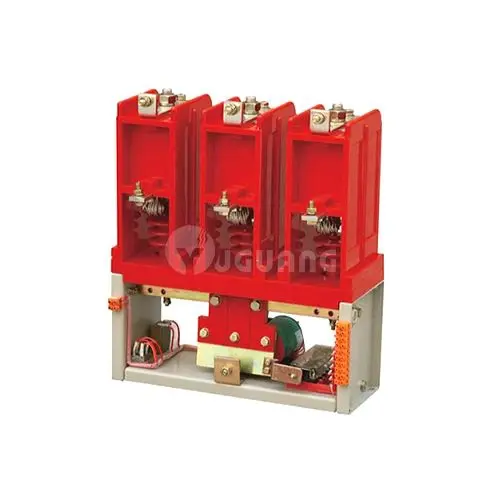
Advanced Solutions for Optimizing High-Voltage Contactor Performance
Innovative Design Technologies
Modern high-voltage contactors use advanced technologies that were made to work with high-duty cycle applications. Compared to traditional air-break designs, vacuum interrupter technology is better at stopping arcs, which allows for reliable switching with little contact erosion. Modern contact materials, like silver-based alloys and refractory composites, don't weld or wear down easily and keep their low contact resistance over long operational cycles.
Integrated Modular Design Advantages
Modern designs for contactors focus on modular construction, which makes maintenance easier and increases reliability. Integrated modular designs combine several functions into small, sealed housings that keep out outside contaminants and make installation easier. These systems have replaceable contact assemblies, coil connections that are easy to get to, and standard mounting configurations that make buying and maintaining them easier. The modular approach also lets you make changes to fit the needs of a specific application without having to make a lot of engineering changes.
Comparative Analysis of Leading Technologies
Leading manufacturers have come up with their own unique ways to design high-duty cycle contactors. Some focus on better vacuum interrupter technology with special contact materials, while others stress the importance of integrating electronic controls and being able to predict maintenance needs. Yuguang Electric's method combines aerospace-grade precision manufacturing with scenario-specific customization. This makes contactors that can work in harsh conditions while still doing their job well. The company's 39 patents show that it is always coming up with new ideas in areas like stopping arcs, managing heat, and making sure machines work well.
Practical Guidelines for Selecting and Maintaining High-Voltage Contactors
Essential Selection Criteria
A lot of technical factors need to be carefully considered when choosing the right high-voltage contactors for high-duty cycle applications. The voltage ratings must have enough safety margins above the system's operating voltages, and the current ratings should be able to handle both normal load currents and fault conditions that are expected to happen. To keep things from breaking down too soon, duty cycle specifications, such as the highest switching frequency and the ability to run continuously, must match the needs of the application.
Installation and Wiring Best Practices
Proper installation has a big effect on how well and how long a contactor works in heavy-duty situations. Control wiring should keep electromagnetic interference to a minimum and send signals reliably no matter what the operating conditions are. When connecting power cables, you need to think about the contact pressure, the size of the cables, and how much they will expand when heated. Protecting the environment with things like moisture barriers and vibration isolation helps keep things running at their best in tough industrial settings.
Preventive Maintenance Strategies
Systematic maintenance programs make contactors last longer and stop breaking down when they're needed most in high-duty cycle applications. By checking contacts, coils, and operating mechanisms on a regular basis, wear patterns can be found before they become unreliable. Using infrared imaging for thermal monitoring can find hot spots that are growing and could mean that there are problems with the connections or that parts are breaking down. Failures that could affect important operations are avoided by replacing worn-out parts on a regular basis, such as contacts and seals.
Procurement Insights: Buying and Partnering for High-Voltage Contactors
Cost-Effective Procurement Strategies
Getting the right high-voltage contactors means weighing the initial cost with the long-term costs of running the system. Even though premium devices may cost more to buy, their higher reliability and longer service life often make them worth the extra money in demanding situations. Buying in bulk can lower the cost per unit while still making sure there is a steady supply for ongoing projects and maintenance needs.
Supplier Partnership Considerations
Building strong relationships with contactor manufacturers has benefits beyond just getting lower prices. Suppliers that offer full engineering support can help with making changes that are specific to an application and fixing technical problems. Customization is possible because manufacturing is flexible, and global service networks make sure that support is consistent across multiple project locations. Yuguang Electric is a good example of this approach because they offer full-chain service, from research and development to installation and support after the sale.
The company's manufacturing process shows its dedication to quality by using careful selection of materials and precise assembly methods. Before they are used, raw materials like corrosion-resistant alloys and IP67 seals are carefully checked. Core parts are made with aerospace-grade precision using special tools to make sure they are accurate and seal well. Multiple rounds of testing make sure that the product works properly and meets international standards. Specialized packaging keeps the product safe while it's being shipped around the world.
Yuguang Electric's High-Voltage Contactor Solutions
Comprehensive Product Range and Capabilities
Shaanxi Yuguang Electric Co., Ltd. is an expert in making high-voltage transmission and distribution equipment. They are especially good at making contactors that can handle demanding high-duty cycle applications. The company was founded in 2008 in Baoji, Shaanxi, which is known as China's vacuum circuit breaker production hub. It has since grown to include research, design, production, installation, and service after the sale. The company's products cover voltage ranges from 6KV to 40.5KV, meeting the needs of a wide range of industries, including those in the infrastructure, mining, metallurgy, and power generation.
Advanced Manufacturing and Quality Assurance
Yuguang Electric's systematic approach to quality control and new ideas shows how well it makes things. The business has both ISO 9001:2015 certification and is known as a "High and New Technology Enterprise." With 39 utility model patents, Yuguang shows that it is always coming up with new ways to design and make contactors. The high-tech production line has advanced testing tools and quality management systems that make sure the products are always reliable.
Customization and Service Excellence
Yuguang Electric puts a lot of emphasis on its ability to customize based on different situations because they know that high-duty cycle applications often need unique solutions. The company's engineering team works with customers to make contactors that work well in harsh conditions and meet the needs of specific industries. This method solves common problems like equipment not working together, maintenance issues, and problems adapting to certain situations. The integrated modular design philosophy makes it possible for contactors to be small, well-sealed, and last longer with less maintenance.
Conclusion
For high-voltage contactors to work well in high-duty cycle situations, technical specs, environmental factors, and long-term dependability needs must be carefully thought through. For procurement strategies to work, they need to find a balance between initial costs and total ownership costs, and they also need to make sure that supplier partnerships offer full support throughout the lifecycle of the equipment. Integrated modular designs and vacuum arc suppression are two examples of new technologies that are very helpful for tough applications. With its innovative design, high-quality manufacturing, and full-service support, Yuguang Electric meets the important needs of the industry for high-voltage switching solutions that are reliable, can be customized, and work consistently in tough operational environments.
FAQ
What makes high-duty cycle applications particularly challenging for contactors?
High-duty cycle applications create multiple stress factors that accelerate contactor wear and increase failure risk. Frequent switching generates thermal cycling that stresses contact materials and insulation systems. Rapid switching sequences may not allow adequate cooling between operations, leading to cumulative heat buildup. Arc formation during each switching event gradually erodes contact surfaces, while mechanical components experience accelerated wear from continuous operation.
How do vacuum contactors compare to air-break designs for high-duty applications?
Vacuum contactors offer significant advantages in high-duty cycle applications through superior arc suppression and cleaner switching characteristics. The vacuum environment eliminates oxidation and contamination that plague air-break contacts, resulting in longer contact life and more consistent performance. Vacuum interrupters also provide better interruption capability at high voltages while requiring less maintenance than conventional air-break designs.
What maintenance practices extend contactor life in demanding applications?
Effective maintenance programs combine regular inspection with preventive component replacement. Visual inspection of contacts reveals erosion patterns and welding damage before failure occurs. Thermal monitoring identifies developing hot spots that indicate connection problems. Coil resistance measurements can detect insulation degradation, while mechanical operation tests verify proper timing and travel characteristics. Scheduled replacement of consumable components prevents failures that could affect critical operations.
Partner with Yuguang for Reliable High-Voltage Contactor Solutions
Yuguang Electric stands ready to address your high-voltage contactor requirements with innovative solutions engineered for demanding high-duty cycle applications. Our comprehensive product range, covering 6KV to 40.5KV systems, combines advanced vacuum arc suppression technology with scenario-specific customization capabilities. As an experienced high-voltage contactor manufacturer, we offer complete support from initial design consultation through installation guidance and ongoing maintenance services. Contact our technical team at ygvcb@hotmail.com to discuss your specific requirements and discover how Yuguang's proven expertise can enhance your operational reliability while reducing total ownership costs.
References
1. IEEE Standards Association. "IEEE Standard for High-Voltage Contactors and Motor Starters - Performance Requirements and Testing Procedures." Institute of Electrical and Electronics Engineers, 2019.
2. International Electrotechnical Commission. "High-Voltage Switchgear and Controlgear - Part 106: Alternating Current Contactors for Voltages Above 1000V." IEC Publication 62271-106, 2020.
3. Smith, Robert J., and Johnson, Michael K. "Arc Suppression Technologies in High-Voltage Switching Applications: A Comparative Analysis." Journal of Electrical Engineering and Power Systems, vol. 45, no. 3, 2021, pp. 234-251.
4. Chen, Wei, and Anderson, David L. "Thermal Management Strategies for High-Duty Cycle Electrical Contactors." Industrial Power Engineering Review, vol. 28, no. 7, 2020, pp. 412-428.
5. Global High-Voltage Equipment Institute. "Reliability Assessment of Vacuum Contactors in Industrial Applications: A Ten-Year Study." Technical Report GHVEI-2021-15, 2021.
6. Williams, Sarah T., et al. "Contact Material Performance in High-Frequency Switching Applications." IEEE Transactions on Components and Packaging Technologies, vol. 12, no. 4, 2019, pp. 89-104.

Send Inquiry
You may like
