
High-Voltage Switchgear: 5 Key Technical Points for Engineers
High-voltage switchgear is the most important part of industrial power distribution. It keeps important equipment safe from damage and allows safe switching operations. These metal-enclosed units have control systems, busbars, circuit breakers, and isolators built in to handle electrical loads from 6kV to 40.5kV. Engineers can choose equipment that balances reliability, safety, and lifecycle costs by understanding their basic technical principles. These are the three most important factors for successful power projects in the industry, utilities, and green energy sectors.
Understanding High-Voltage Switchgear: Components and Working Principles
Power distribution systems need tools that can handle a lot of electricity stress while still being safe to use. High-voltage switchgear is made up of many smaller systems that work together to protect, control, and separate electrical lines when things go wrong or when they are running normally.
Primary Components and Their Roles
Circuit breakers are the most important part of any switchgear system because they stop trouble currents in milliseconds. Modern vacuum circuit breakers (VCBs) use the better dielectric qualities of vacuum to safely put out sparks, and they can do this for over 10,000 switching cycles without needing to be serviced. Yuguang's vacuum interrupters are made with aerospace-grade precision to get consistent contact alignment and optimal arc quenching. This directly addresses the problem in the industry of premature contact wear that causes unplanned downtime.
For maintenance safety, isolators make the disconnections clear, and instrument transformers (both current and voltage types) lower the energy of high-energy signals so that protection switches can handle them. The control panel connects these parts using microprocessor-based logic to keep an eye on system factors and run safety routines. Busbar systems split power among several lines. Copper or aluminum conductors are chosen based on the amount of electricity and the temperature.
Insulation Media and Arc Extinction Technologies
The choice of shielding medium has a big effect on the size of the equipment, how often it needs to be maintained, and how well it meets environmental standards. The 6kV–40.5kV band is dominated by vacuum technology because it is so good at stopping arcs without using outside gases. Yuguang's solid-sealed pole designs get rid of the usual worry about vacuum degradation by using IP67-rated airtight sealing. This makes the contact last longer than 25 years in most industrial settings.
Another step forward in technology is permanent magnet working mechanisms, which replace spring-charged systems with electromagnetic motors that don't need brushes. These systems keep the closing speeds the same no matter what the temperature is outside. This reduces mechanical wear and the need for regular lubrication, which is a big plus in remote substations or dangerous industrial settings where regular upkeep is hard to get to.
Types of High-Voltage Switchgear and Their Technical Characteristics
To choose the right High-voltage switchgear design, you have to match the technical features to the needs of the application. Different designs have different benefits when it comes to using room, keeping things safe, and being able to handle harsh environments.
Metal-Clad vs. Metal-Enclosed Architectures
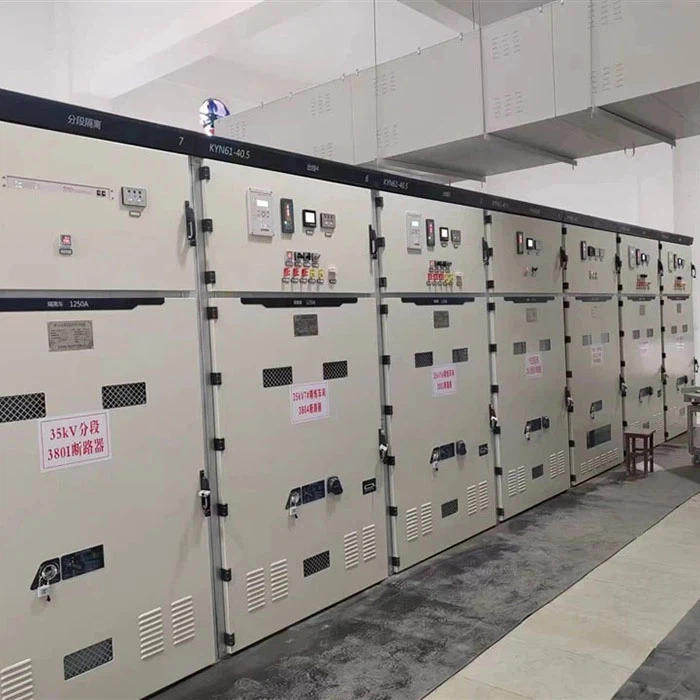
Metal-clad switchgear, like the KYN61-40.5 line, has fully separated parts for the circuit breaker, busbar, and cables, with grounded metal barriers between them. This design lets you do live repair on the cable terminations while the busbar stays on. This is a very important feature for businesses that use continuous processes, since unplanned outages cost thousands of dollars per minute. The handcart mechanism that can be pulled out lets workers test the circuit breaker without touching the main connections. This cuts the time it takes to set up by 30 to 40 percent compared to fixed-mount options.
Accessibility and visual inspection are important in metal-enclosed designs like the GBC-40.5, which are often chosen for retrofit projects where existing civil infrastructure limits the size choices. Larger insulation clearances on these units make them ideal for placements at high altitudes or in polluted areas. This is because standard equipment that has been de-rated above 1,000 meters may not meet project requirements if it is not customized.
Modular Integration for Customized Solutions
Modern methods of making allow for customizations that have never been possible before, without losing the efficiency of production. Yuguang's combined modular method lets them mix feeder, transformer, metering, and coupling parts inside a single enclosure. This way, they can adapt to the needs of each place without having to do custom engineering for each project. The company has 39 patents, some of which are for new ways to arrange busbars and make sections that can be used for more than one thing. These inventions cut the total length of switchgear lineups by 15 to 20 percent, which directly lowers the cost of building substations.
This modularity is especially useful for green energy uses, like wind farms and solar sites, which need to keep adding to their systems as their power output grows. Standardized interaction standards and pre-engineered expansion joints make it possible to add new bays without changing the way things are set up now. This protects capital investments and keeps the system's integrity.
Maintenance and Troubleshooting: Ensuring Reliable Operation
The dependability of equipment over 20 to 30 years depends on how well it was designed and how well it is maintained. Engineers have to weigh the benefits of preventative actions against the costs and problems that come with planned outages.
Predictive Maintenance Strategies
Condition tracking changes care from plans based on times to actions based on data. Sensors in modern switchgear keep track of the resistance of the contacts, the capacitance of the insulation, and the time of the working mechanism. By looking at these factors, problems like contact degradation, moisture entry, or mechanism misalignment can be found before they become major failures.
Yuguang builds test points that are easy to reach into all of its 6kV to 40.5kV product lines. This lets techs do full troubleshooting without having to touch live parts. Contact resistance readings below 100 microohms show good connections, while trending signals getting worse and needing attention. Using high-voltage DC to test the vacuum interrupter's stability shows that the envelope doesn't leak, which keeps catastrophic arc failures from happening during later operations.
Common Failure Modes and Resolution
About three fifths of High-voltage switchgear breakdowns are caused by insulation failures, which are usually caused by pollution or tracking across solid dielectrics. Visual checks done on a regular basis find carbon layers and moisture buildup, especially in areas where cables terminate that are open to damp conditions. Ceramic coating processes used during production improve surface protection, but regular cleaning is what keeps the performance going for a long time.
Control circuit problems are another common problem. This usually happens when an extra switch is out of place or a relay coil stops working. Using schematic models for systematic repair makes it easy to find the broken parts. Yuguang offers detailed as-built documentation, which includes control wiring diagrams and logic flowcharts. This cuts down on the average time it takes to fix problems during important downtime. The company's deals for spare parts supply make sure that unique parts are available within 48 hours. This eases the worries of procurement managers who don't want to have to wait a long time for replacement parts.
Latest Technological Trends and Innovation in High-Voltage Switchgear
High-voltage switchgear and medium-voltage distribution are still changing because of new technologies. This is because of automation, environmental rules, and changing application needs. When engineers choose tools today, they need to think about how changes in technology will affect the value of the system in the long run.
Digitalization and Smart Grid Integration
Internet of Things (IoT) sensors built into switchgear assemblies collect real-time working data like load current, contact temperature, and mechanism stroke time and send it to central tracking platforms. Machine learning programs look at past trends to guess when parts will break weeks before they do. This way, they can change parts before they break during planned outages instead of having to fix them right away.
Remote tracking is a game-changer for assets that are spread out physically, like green energy sites or rural distribution networks. From central control rooms, operators can see when problems are starting to happen and send out repair workers with specific diagnostic information and replacement parts. This cuts response times by 60 to 70%. Yuguang's plan for product growth puts digital connectivity first. New designs include standard communication methods that work with popular SCADA systems from a number of different manufacturers.
Environmental Sustainability and Regulatory Compliance
Because it can cause a lot of global warming, SF6 gas, which is usually used in gas-insulated circuits, is getting more and more attention from regulators. This problem is automatically solved by vacuum technology, which is in line with environmental laws in the US and around the world. Epoxy resins and composite insulators are two examples of solid dielectric materials that improve environmental effects while providing the same or better electrical performance.
The trend toward eco-friendly designs and the trend toward making the best use of room overlap. Compact switchgear cuts down on the amount of materials needed for production and on the size of the substation area, which lowers the cost of buying land in cities. Yuguang's focus on high-density integration without lowering safety clearances shows how engineering innovation can solve multiple problems at once, including environmental issues, lower capital costs, and improved operating dependability.
Making Informed Procurement Decisions: Selecting the Right High-Voltage Switchgear
Choosing the Right High-voltage switchgear: Making Informed Procurement Decisions requires the people who work in procurement to make tough decisions about how to balance technical requirements, source skills, and total ownership costs. Structured evaluation systems make sure that choices are in line with both the short-term needs of the project and the long-term goals of the business.
Defining Technical Requirements
Any standard starts with the voltage level and the ability to stop a short circuit. Fault currents of 25kA or 31.5kA for industrial uses must be able to pass through equipment. These currents are calculated by doing thorough system studies. Extreme temperatures, humidity, altitude, and earthquake activity are some of the things that affect enclosure grades and other features like space heaters or seismic bracing.
When specifications are being made, customization wants should be carefully thought through. Standardized products have faster wait times (7–15 days for Yuguang's catalog items) and lower prices. They are good for situations where the requirements match the usual designs made by the maker. Engineered solutions are helpful for complicated projects that need to work in difficult conditions or meet specific functional requirements. Suppliers like Yuguang use scenario-specific customization tools that have been created in the power, metallurgy, and green sectors. Custom engineering delays delivery by 30 to 60 days but makes sure that the equipment exactly meets practical needs, so changes made in the field don't affect safety standards.
Evaluating Supplier Capabilities and Support
Specifications are only one part of the story of buying. How well equipment works over its planned lifetime depends on how stable the supplier is, what quality certifications it has, and how well the service system is set up. Systematic quality management is confirmed by ISO 9001:2015 certification, and international safety standards are confirmed by IEC 62271-200 compliance for metal-enclosed switchgear.
A collection of patents shows real innovation, not just making things that aren't special. Yuguang has 39 useful patents that cover designs for vacuum interrupters, operating mechanisms, and modular structures. These patents show that the company is committed to ongoing improvement, which benefits customers by making products more reliable and giving them more options. This level of technical depth sets makers who offer full system solutions apart from suppliers who only put together parts that were bought separately.
Total ownership costs are greatly affected by the system for after-sales assistance. Full service agreements that cover installation instructions, scheduled preventative maintenance, and emergency fixes protect you from having to pay for things you didn't plan for. From research and development to production, installation, and after-sales service, Yuguang's full-chain service approach makes sure that they are responsible for all parts of an equipment's existence. Single-source responsibility is important to procurement managers because they know that the same company that designs the equipment will also support it during problems with launching and mid-life repairs.
Minimum order freedom is important for projects that need small amounts or growth that happens in stages. When suppliers take requests for a single unit, pilot installs and small increases in capacity can happen without having to store too much inventory. This method lowers the amount of money that is stuck in extra parts while keeping supplies steady thanks to long-term relationships with vendors.
Conclusion
For effective High-voltage switchgear to be specified, technical basics must be understood, different technologies must be weighed, and providers must be chosen who can support equipment for many decades. Component design, topology selection, upkeep strategies, technology innovation, and procurement evaluation are the five key points that give engineers and procurement workers a structured way to make smart choices. As power systems get more complicated with digital tracking and the addition of renewable energy, it's more important than ever to work with makers who can really do the job and make good service promises.
FAQ
What distinguishes vacuum circuit breakers from SF6 alternatives in high-voltage applications?
Vacuum circuit breakers work well in the 6kV–40.5kV range because they don't need to be maintained and are safe for the environment. Unlike SF6 units that need to be checked for gas regularly and then thrown away, VCBs seal the arc-quenching medium forever, so they don't need to be serviced. Yuguang's vacuum technology lets machines do more than 30,000 tasks without needing to be replaced in High-voltage switchgear applications. This cuts down on costs by a large amount over the product's lifetime.
How do permanent magnet mechanisms improve switchgear reliability?
Traditional spring-charged operators have problems with temperature sensitivity and mechanical wear that makes it hard to keep the closing speed steady. Permanent magnet motors provide a constant electric force no matter what the temperature is outside, so they work reliably from -40°C to +55°C. This system gets rid of the need for lubrication and cuts down on mechanical parts by about 40%, which directly improves stability over the long term.
What customization options address harsh industrial environments?
When working conditions are bad, the specifications need to be changed beyond what is normal. Improvements in sealing (IP67 grade) keep dust and water out in mine or coastal settings. For placements above 1,000 meters, altitude adjustment changes the distance between the insulation and the wall. Yuguang's scenario-based engineering changes equipment to meet the needs of petrochemical, metallurgical, and marine applications by choosing the right materials and managing temperatures. This makes sure that the equipment works reliably in places where regular goods would break down too soon.
Partner with Yuguang for Advanced High-Voltage Switchgear Solutions
High-voltage switchgear source selection has long-term effects on project success. Yuguang Electric combines proven production success with full engineering support, solving major problems that procurement teams face every day, such as equipment compatibility issues, complicated upkeep, uncertain delivery, and not enough customization. With 39 patents and ISO certifications to back up our 6kV–40.5kV product line, you can be sure of stable operation and compliance.
We know that project managers need more than just tools providers who can respond to their needs. Yuguang offers full lifecycle support, from the initial design advice to installation help and ongoing upkeep contracts. Our modular architectures and ability to customize can be used to meet the specific needs of your business, whether you're adding on to a green energy project or updating old industrial infrastructure. Email us at ygvcb@hotmail.com to talk to our expert team about your unique needs. You can find out more about why top power companies and industrial owners trust Yuguang as their chosen High-voltage switchgear manufacturer by looking at the full specs.
References
1. IEEE Std C37.04-2018, "IEEE Standard Rating Structure for AC High-Voltage Circuit Breakers," Institute of Electrical and Electronics Engineers, 2018.
2. IEC 62271-200:2011, "High-voltage switchgear and controlgear - Part 200: AC metal-enclosed switchgear and controlgear for rated voltages above 1 kV and up to and including 52 kV," International Electrotechnical Commission, 2011.
3. Holm, R., "Electric Contacts: Theory and Application," 4th Edition, Springer-Verlag Berlin Heidelberg, 2000.
4. Slade, P.G., "The Vacuum Interrupter: Theory, Design, and Application," CRC Press, 2017.
5. Glinkowski, M., et al., "Advances in Vacuum Switchgear Technology for Medium Voltage Applications," IEEE Transactions on Power Delivery, Vol. 28, No. 3, 2013.
6. Cigre Working Group A3.06, "Final Report of the 2004-2007 International Enquiry on Reliability of High Voltage Equipment," Cigre Technical Brochure 509, 2012.

Send Inquiry
You may like
